Ladakhi Food, Festivals and Shopping: A Cultural Guide
Want to customize this package?
Share your dates and travellers. This enquiry is free. Small changes to a standard itinerary—such as a date change or an extra day—can be discussed with our team.
Ladakh's culture is shaped by Tibetan Buddhism, by the old trade routes that crossed the region, and by the challenge of living in a high, cold desert. You will taste it in hearty noodle soups and apricot jam, see it in masked monastery dances, and feel it in the warm greeting of 'Jullay', which means hello, thank you and goodbye.
This guide covers the food to try, the main festivals and when they are held, and what to buy in Leh.
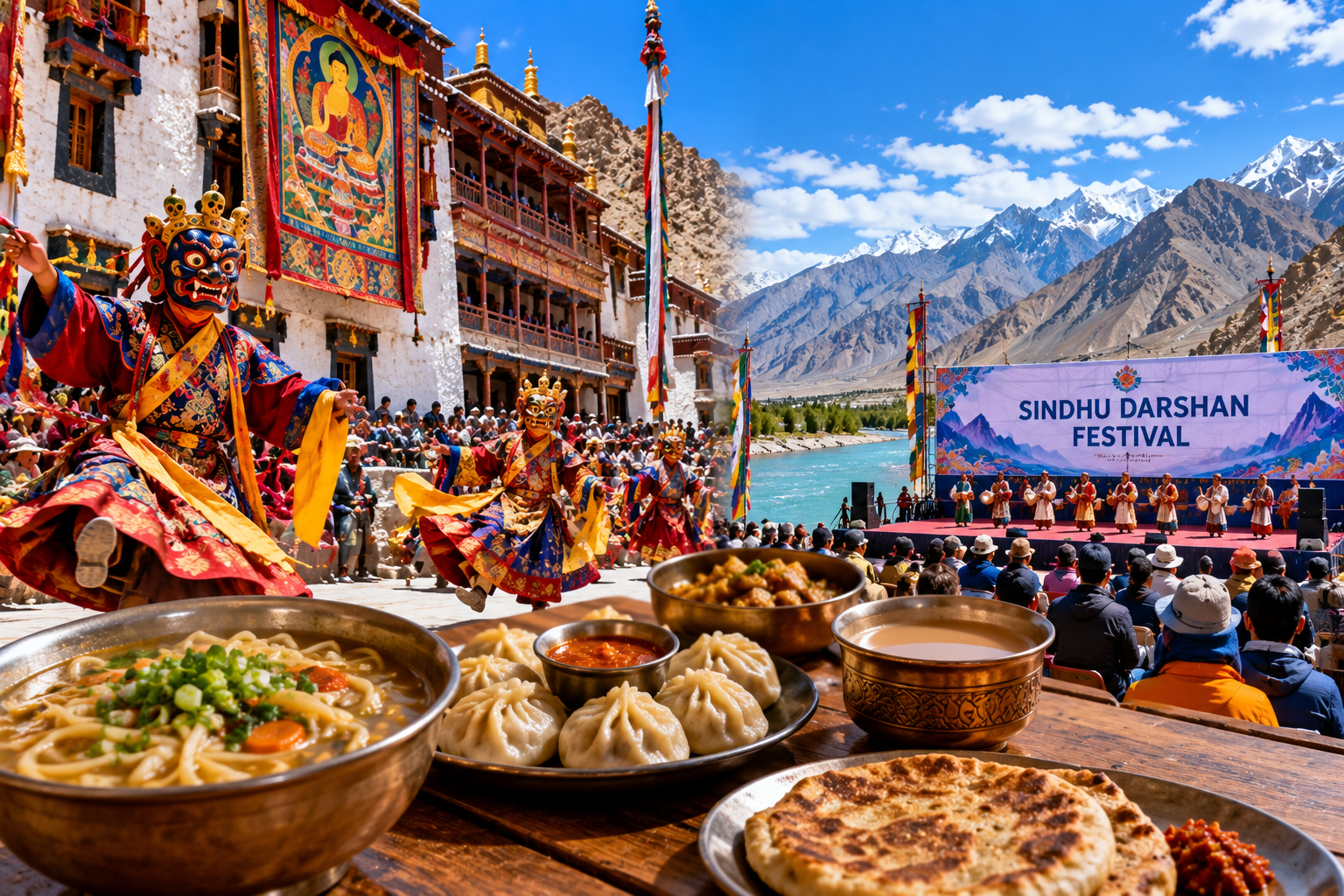
Ladakhi food to try
- Thukpa: a noodle soup with vegetables or meat, perfect on a cold evening.
- Skyu and chhutagi: hand-made pasta cooked in a stew with vegetables, a Ladakhi home favourite.
- Momos: steamed or fried dumplings, found everywhere in Leh.
- Tingmo and khambir: steamed bread and local whole-wheat bread.
- Butter tea (gur gur cha): salty tea churned with butter, an acquired taste; also try sweet milk tea.
- Apricots: fresh in August, dried all year, and as jam and apricot oil; also sea-buckthorn juice.
Leh also has plenty of Indian, Tibetan, Israeli, Italian and continental restaurants, and vegetarian and Jain food is easy to arrange.
Major festivals of Ladakh
- Losar (December or January): the Ladakhi new year, celebrated with prayers, feasts and fire rituals.
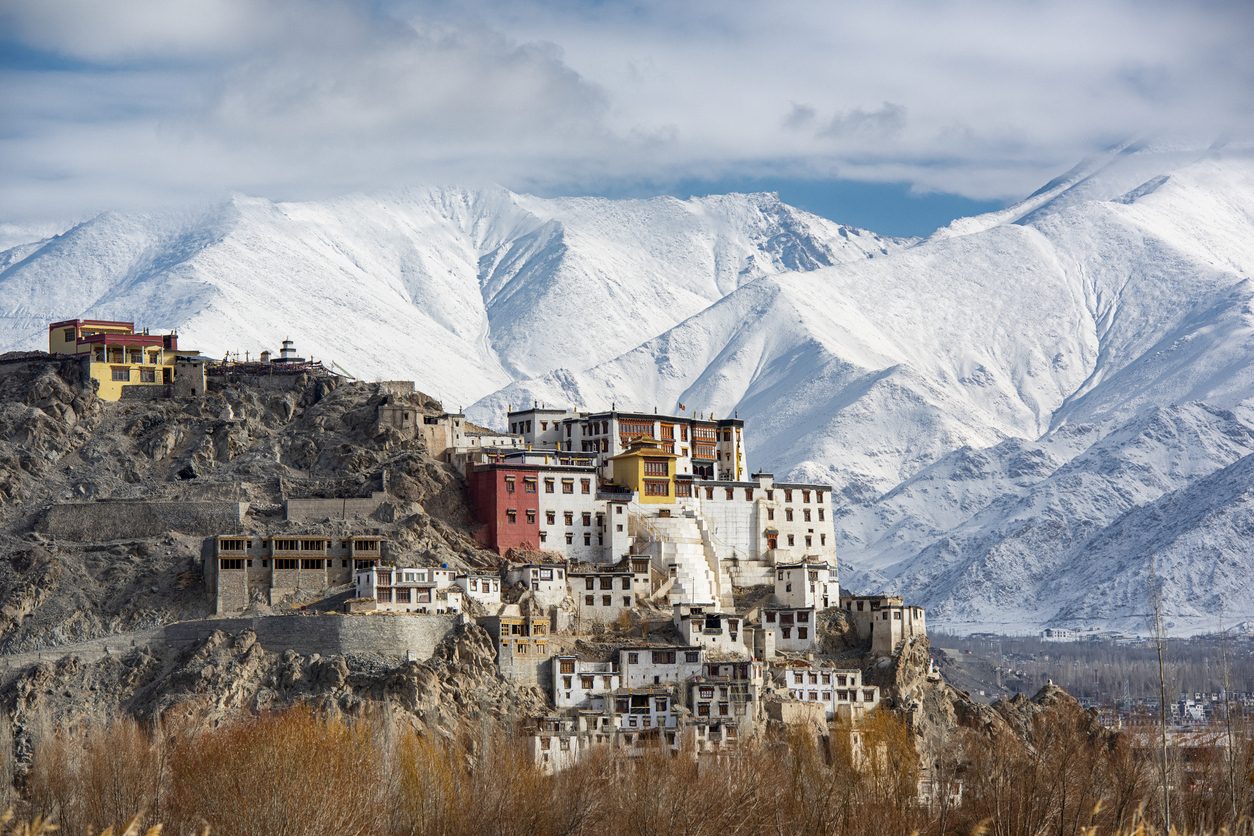
- Winter monastery festivals: Spituk Gustor, Dosmoche in Leh and Matho Nagrang, with masked dances.
- Apricot blossom (April): the lower valleys turn pink and white, and the administration has promoted a blossom festival in recent years.
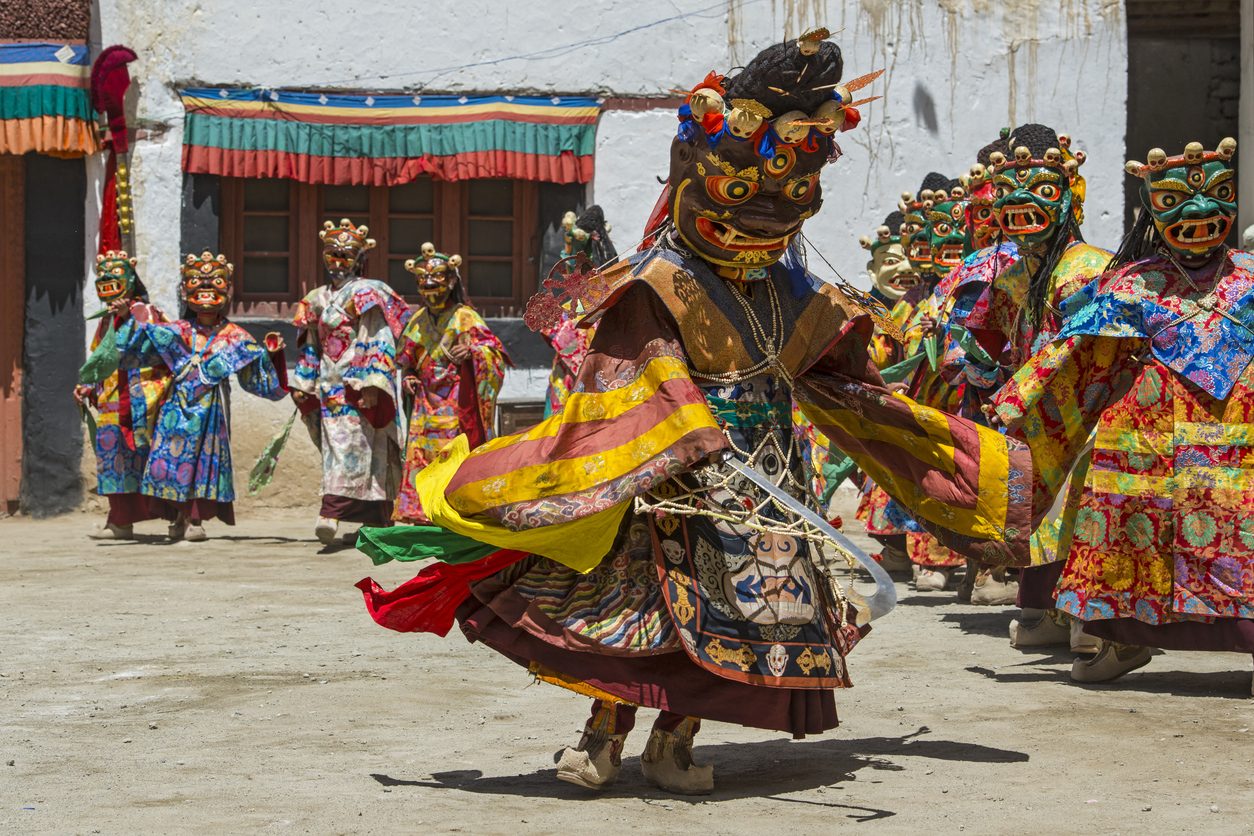
- Hemis festival (June or July): Ladakh's best-known festival, honouring Guru Padmasambhava, with masked cham dances in the courtyard of Hemis Monastery.
- Sindhu Darshan (June): a celebration on the banks of the Indus at Shey, with cultural programmes and prayers.
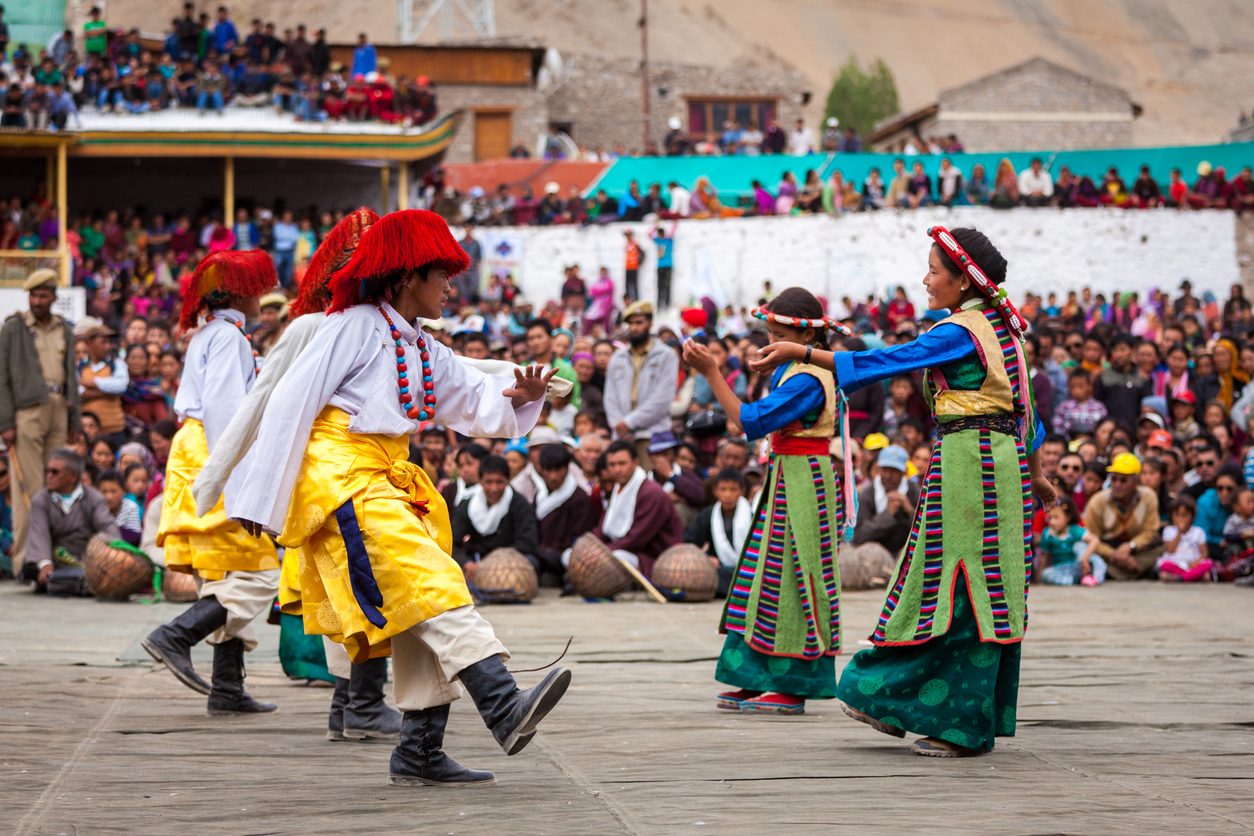
- Ladakh Festival (September): a week of parades, dances, polo and archery in and around Leh.
- Thiksey Gustor (October or November): masked dances at Thiksey Monastery.
Monastery festivals follow the Tibetan lunar calendar, so dates change each year; we confirm them when you plan your trip. See our monasteries of Ladakh.
Polo, archery and music
Polo has been played in Ladakh for centuries, and summer matches in Leh are a lively sight. Archery contests with music and dancing are held in villages, especially in summer. Some of our itineraries include a polo match and cultural show arranged by our local partner, where scheduled.
What to buy in Leh
- Pashmina shawls: buy from reputable shops, as fakes are common.
- Woollens: socks, caps, gloves and yak-wool shawls.
- Tibetan handicrafts: thangka paintings, prayer wheels, singing bowls, carpets and masks.
- Jewellery: silver, turquoise and coral.
- Food: dried apricots, apricot oil and jam, and sea-buckthorn products.
Leh Market and the Tibetan market are the main shopping areas. Bargaining is common at street stalls. See places to visit in Leh.
The people of Ladakh
Ladakh is home to several communities: Buddhist Ladakhis around Leh and the Indus valley, a largely Shia Muslim population around Kargil, Balti villagers in Turtuk, Changpa nomads on the Changthang plateau, and the Brokpa of the Aryan Valley. English and Hindi are widely understood in Leh and on the tourist routes, but a smile and a 'Jullay' go a long way everywhere.
Responsible travel in Ladakh
Water is precious in this high desert: use it sparingly, reuse towels, and refill your bottle at hotels or refill stations instead of buying plastic bottles. Buy local products such as apricots, woollens and handicrafts directly from producers when you can, and support homestays and local guides. Keep to marked tracks at lakes and in the dunes.
Local customs
Greet people with 'Jullay'. Dress modestly, especially in monasteries and in Muslim areas such as Kargil and Turtuk. Walk clockwise around stupas and mani walls, ask before photographing people, and do not touch religious objects. Ladakh's environment is fragile: refill water bottles, avoid plastic and leave no rubbish behind.
Leh Ladakh tour packages
Frequently asked questions
What is the famous food of Ladakh?
Thukpa, skyu, momos and butter tea are the most famous, along with Ladakhi apricots.
When is the Hemis festival?
In June or July each year, on dates set by the Tibetan lunar calendar.
When is the Sindhu Darshan festival?
Usually in June, on the banks of the Indus at Shey near Leh.
Is vegetarian food available in Ladakh?
Yes, widely. Many Ladakhi dishes are vegetarian, and Indian vegetarian and Jain food is available in Leh and on request at most hotels.
Plan your Ladakh trip
Want to see a festival? Tell us your dates and we will check what is on and plan around it.
Get a free quote