Altitude Sickness in Ladakh: Acclimatisation Tips and Packing List
Want to customize this package?
Share your dates and travellers. This enquiry is free. Small changes to a standard itinerary—such as a date change or an extra day—can be discussed with our team.
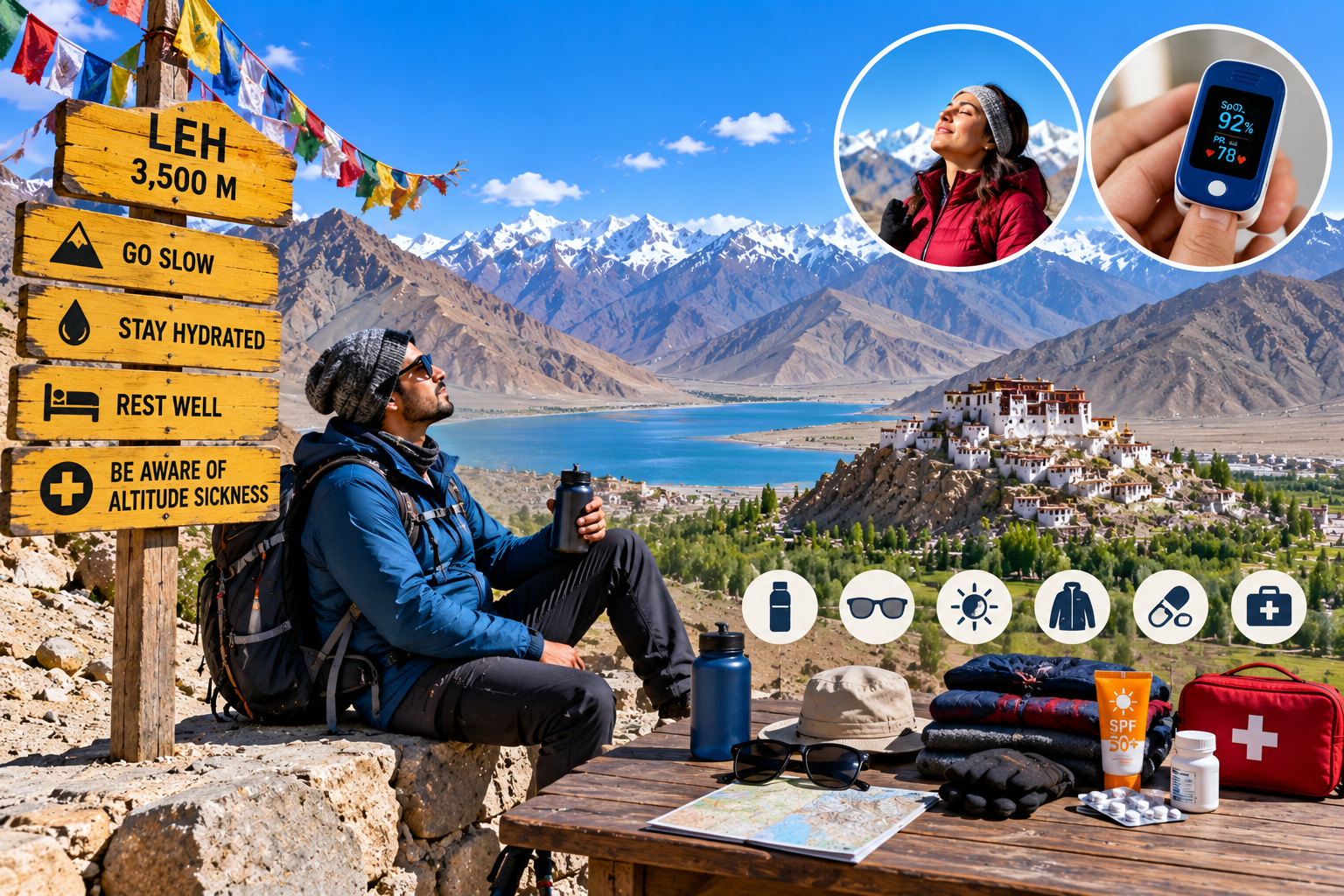
The most important thing to know before a Ladakh trip is that Leh is at about 3,500 metres, and Nubra's passes, Pangong and Hanle are higher still. At this altitude there is much less oxygen in the air, and flying straight in from the plains gives your body no time to adjust. Acute mountain sickness (AMS) can affect anyone, regardless of age or fitness, but it can usually be prevented with a sensible plan.
This guide covers how to acclimatise, the warning signs, and what to pack. It is general information, not medical advice; speak to your doctor before you travel, especially if you have a medical condition.
How to acclimatise in Ladakh
- Rest completely on day 1: no sightseeing, stairs or walks. Sleep, eat light meals and drink water.
- Stay at least two nights around Leh (or Sham Valley) before crossing Khardung La or Chang La.
- Drink 3 to 4 litres of water a day; the dry air dehydrates you quickly.
- Avoid alcohol and smoking for the first few days.
- Go up slowly: sleep at Pangong, Tso Moriri or Hanle only after you have acclimatised.
- Do not push through symptoms: rest, and descend if they get worse.
Driving in from Srinagar helps because the climb is gradual; the Manali road is faster but goes very high on the second day.
Symptoms of altitude sickness
Mild AMS feels like a hangover: headache, nausea, loss of appetite, tiredness, dizziness, breathlessness on exertion and poor sleep. It usually improves with rest and water. Serious symptoms, such as breathlessness at rest, a persistent cough, confusion, loss of balance or extreme drowsiness, can signal HAPE or HACE, which are medical emergencies. In that case, descend and get medical help immediately; Leh has hospitals with oxygen facilities.
Diamox and oxygen
Many travellers take acetazolamide (Diamox) to help acclimatisation, but it is a prescription medicine with side effects and is not suitable for everyone, so only take it on your doctor's advice. All our vehicles carry an oxygen cylinder for the high-altitude days, and many hotels in Leh have oxygen available. Oxygen relieves symptoms but does not replace rest and descent.
Is Ladakh safe for children, seniors and people with medical conditions?
Ladakh is safe for most healthy travellers with a slow itinerary. We recommend it for children above about 5 years; babies and toddlers cannot tell you how they feel. Seniors and anyone with heart disease, high blood pressure, asthma, diabetes or other conditions, and pregnant women, should get medical advice first. Our Ladakh family tour is planned with extra rest days.
What to pack for Ladakh
- Clothing: layers you can add and remove: T-shirts, fleece, a warm jacket (a down jacket for Pangong, Hanle and spring or autumn), thermals, comfortable trousers, a cap, a woollen cap and gloves.
- Footwear: comfortable walking shoes or light trekking shoes, and warm socks.
- Sun protection: sunglasses with UV protection, SPF 50 sunscreen, lip balm and a scarf for dust.
- Health: your regular medicines, a basic first-aid kit, medicines for headache, nausea and stomach upsets, and moisturiser for the dry air.
- Documents and money: original photo ID, copies of permits, and enough cash; ATMs are few outside Leh.
- Useful extras: a refillable water bottle, a power bank, a torch, wet wipes and dry snacks.
A simple acclimatisation plan
- Day 1: rest all day in Leh or Sham Valley; short walks only in the evening.
- Day 2: easy sightseeing around Leh by car, with gentle walks.
- Day 3: cross Khardung La to Nubra, which is lower than Leh for the night.
- Day 4 onwards: higher places such as Pangong, Tso Moriri and Hanle.
Every one of our itineraries follows this principle.
Other safety tips
Ladakh is very safe for travellers, including women and solo travellers. The main risks are altitude, cold and the roads. Travel with an experienced local driver, keep your schedule flexible for weather, and take travel insurance that covers high-altitude travel. Only postpaid connections of some networks work in Ladakh, and there is little or no coverage in Nubra, Pangong and Hanle.
Leh Ladakh tour packages
Frequently asked questions
How can I avoid altitude sickness in Ladakh?
Rest fully on the first day, stay two nights around Leh before going higher, drink plenty of water, avoid alcohol and smoking, and descend if symptoms get worse.
Should I take Diamox for Ladakh?
Only on your doctor's advice. It can help acclimatisation but is not suitable for everyone.
Is oxygen available in Ladakh?
Yes. Our vehicles carry an oxygen cylinder for the high-altitude days, and many hotels in Leh have oxygen available.
What clothes should I wear in Ladakh in summer?
Light layers for the day, plus a fleece and warm jacket for evenings, a cap, sunglasses and sunscreen. Nights at Pangong are cold even in summer.
Is Ladakh safe for solo women travellers?
Yes, Ladakh is considered very safe. Use registered taxis and hotels, and share your plans with someone at home.
Plan your Ladakh trip
Every one of our Ladakh itineraries is planned around acclimatisation. Tell us who is travelling and we will choose the right pace.
Get a free quote