Arrival in Kuala Lumpur
Malaysia is a country of three great cultures living side by side: Malay, Chinese and Indian, along with the indigenous peoples of Borneo and the interior. In Kuala Lumpur, you feel this mix within minutes of arriving, in the call to prayer from a mosque, the scent of incense from a Chinese temple, the sound of Tamil in the shops and the smell of spices from a hundred food stalls. It is a fascinating place for a first visit to Southeast Asia, and an easy one, as English is widely spoken.
Kuala Lumpur is also a city of many faiths. Islam is the official religion, and most Malays are Muslim, while many Chinese Malaysians are Buddhist, Taoist or Christian, and most Malaysian Indians are Hindu. Public holidays include Hari Raya, Chinese New Year, Deepavali and Christmas, and if your visit falls during one of them, you may see streets decorated with lanterns, lamps or lights.
Flights from India reach Kuala Lumpur International Airport in about four to six hours, many of them direct. Set your watch two and a half hours ahead of Indian time. Before you travel, complete the Malaysia Digital Arrival Card, or MDAC, online, and keep the confirmation with your passport. Entry rules for Indian travellers have changed several times in recent years, so check the current position before you book; our team will confirm what applies on your dates.
After immigration and baggage collection, walk out to the arrivals hall, where our driver will meet you for the private transfer to your hotel. The drive into the city takes about an hour, along a wide expressway lined at first with oil palm plantations. Malaysia is one of the world's largest producers of palm oil, and before that, it was famous for two other exports: tin and rubber, which shaped the history of Kuala Lumpur itself.
The city began in the 1850s as a rough mining camp. Chinese tin miners, sent upriver by a Malay chief, set up a trading post where two rivers, the Klang and the Gombak, meet. The name Kuala Lumpur means "muddy confluence". The camp grew quickly, survived fires, floods and civil war, and in the 1890s became the capital of the Federated Malay States under British rule. Today, at that same river junction, stands Masjid Jamek, one of the city's oldest mosques, built in 1909 with domes and minarets in a Moorish style.
Getting around is easy. The city has a clean and efficient rail network, including the LRT, MRT and monorail, and ride-hailing cars are inexpensive. Most visitors stay in Bukit Bintang, the shopping and entertainment district, or near KLCC, close to the Petronas Towers, both within easy reach of the sights.
Check in to your hotel and rest after the journey. Standard check-in is usually from 2 or 3 PM, and the hotel will store your bags if you arrive early. If you have energy in the late afternoon, take a short walk in the neighbourhood, or relax by the pool until the heat of the day passes. Kuala Lumpur is warm and humid all year, usually around 30 degrees, with tropical showers most afternoons, so light cotton clothes and an umbrella are useful.
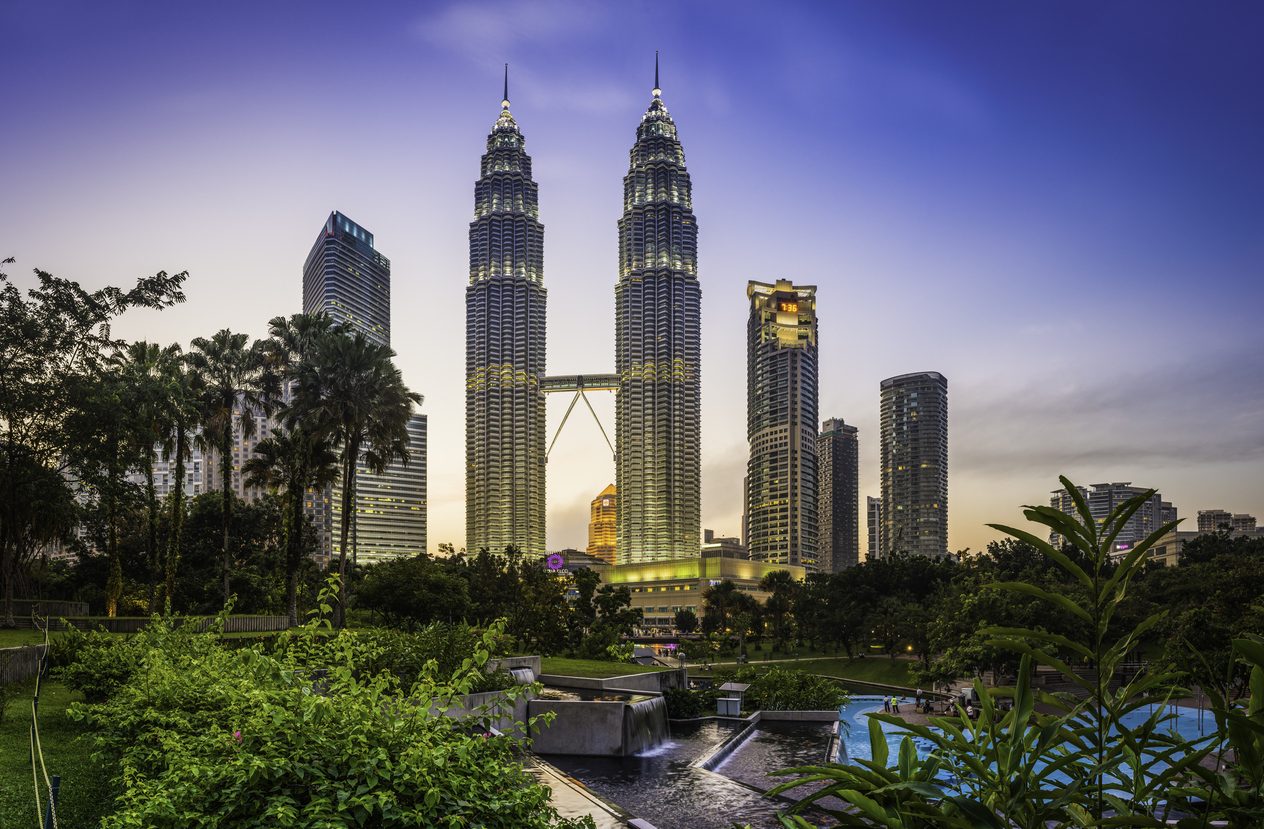
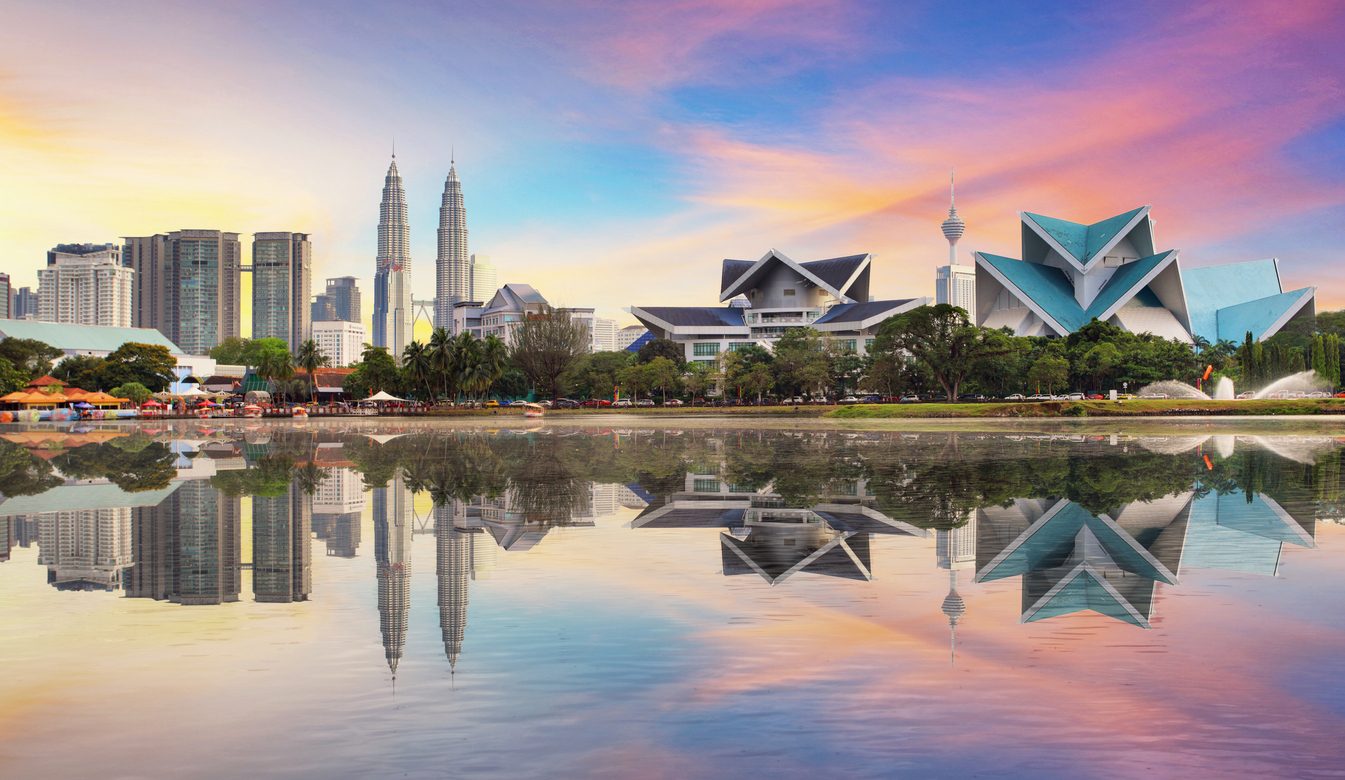
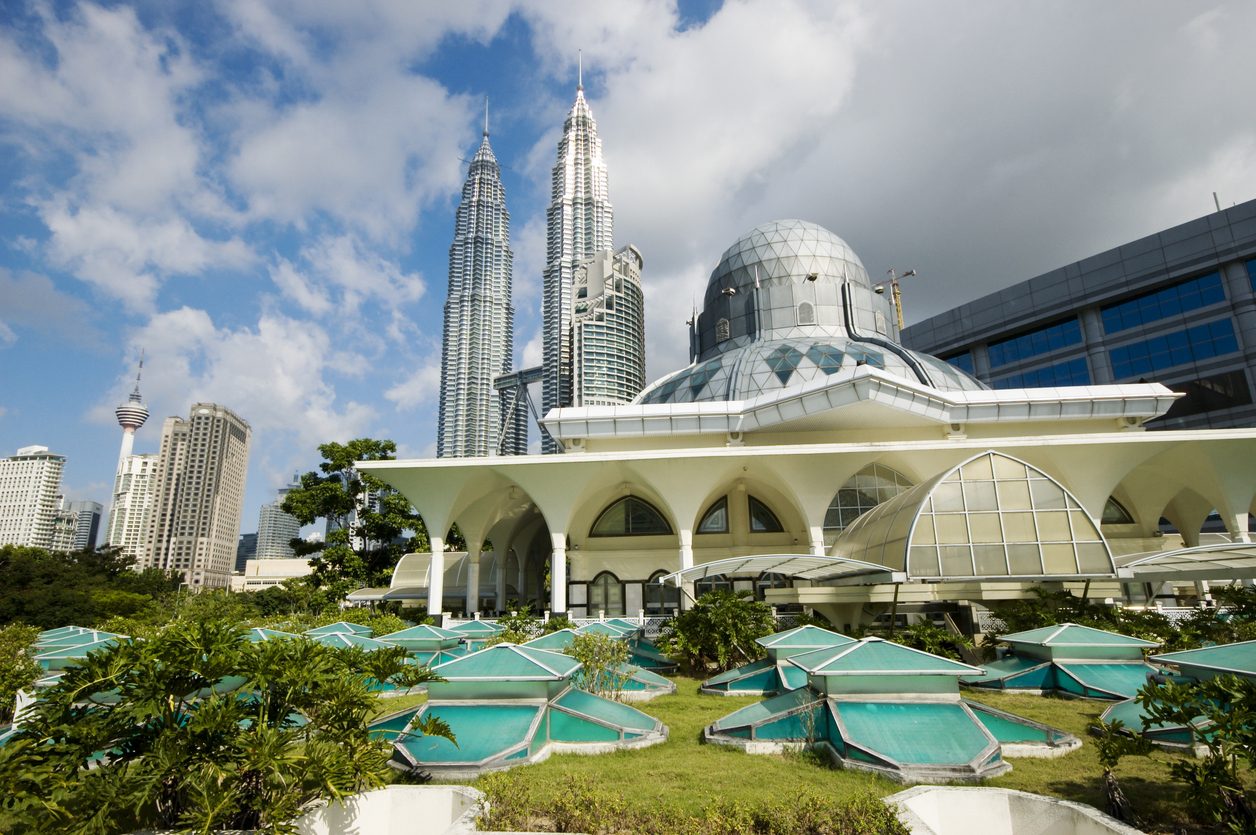
As evening falls, the city becomes more pleasant, and this is the best time to see its most famous sight. Make your way to the Petronas Twin Towers, lit up silver against the night sky. The towers were completed in 1998, designed by the architect César Pelli, and their floor plans are based on an eight-pointed star, a classic pattern in Islamic art. Stand in KLCC Park at their base, where a lake with musical fountains plays several times each evening. The show is free, and the reflections of the towers in the water are wonderful.
For dinner, try some of Malaysia's famous food. Nasi lemak, rice cooked in coconut milk and served with sambal, crispy anchovies, peanuts, cucumber and egg, is often called the national dish. Roti canai, a flaky flatbread served with dal or curry, came to Malaysia with Indian Muslim traders, and it is eaten at every hour of the day. Wash it down with teh tarik, sweet milky tea "pulled" between two jugs to give it a frothy top. Vegetarian food is easy to find, especially in Indian restaurants.
A few practical tips help on the first evening. Buy a SIM card or eSIM at the airport for maps and ride-hailing apps such as Grab, which is cheap and reliable. Use ATMs inside banks or malls, and carry some Malaysian ringgit for small stalls, although cards are widely accepted. Drink bottled water, and dress modestly when visiting religious sites.
Get a good night's sleep: tomorrow is a tour of the city's palaces, monuments and old colonial heart.
Included today: private arrival transfer from KLIA to your Kuala Lumpur hotel, hotel stay.
Good to know: complete the MDAC before you fly and check the current entry rules for Indian passport holders. The fountain show is free. Read our Malaysia visa guide for Indians and our guide to the Malaysia Digital Arrival Card.