Best Time to Visit Bali: Weather Month by Month
Want to customize this package?
Share your dates and travellers. This enquiry is free. Small changes to a standard itinerary—such as a date change or an extra day—can be discussed with our team.
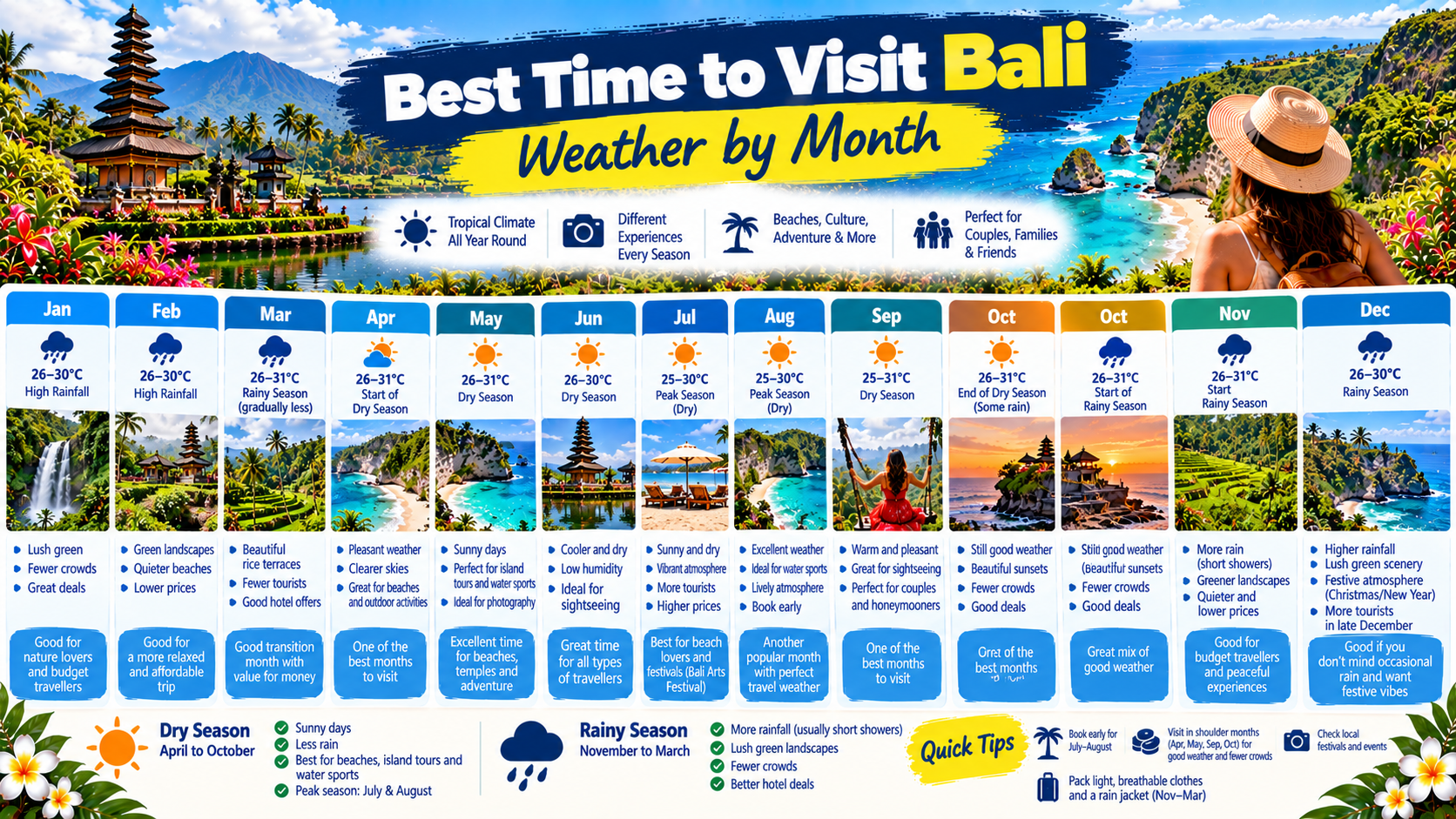
Bali is warm all year, with temperatures usually between 26 and 32°C on the coast, so there is no bad time to visit. What changes through the year is the rain. The dry season from April to October brings sunny days, low humidity and calm seas, and is the best time to visit Bali for beaches, island trips and sightseeing. The rainy season from November to March brings short, heavy tropical showers, lush scenery, fewer crowds and lower prices.
This guide explains Bali weather month by month, how the seasons affect each area, the festivals and holidays to plan around, and the best months for honeymoons, families and budget trips.
Bali's two seasons
Dry season (April to October): the most reliable weather, with sunshine most days, cooler evenings, especially in Ubud and the mountains, and the clearest water for snorkelling. July and August are the busiest and most expensive months, when Europeans and Australians are on holiday.
Rainy season (November to March): humidity rises and rain comes in heavy bursts, usually in the afternoon or overnight, often followed by sunshine. Whole days of rain are uncommon. Waterfalls and rice fields are at their most beautiful, prices are lower outside Christmas and New Year, and the island is quieter.
Bali weather month by month
Bali in January: Rainy season. Short heavy downpours, often in the afternoon or night, warm and humid, lush green landscapes. Busy in the first week with New Year holidays; quieter afterwards, with good villa deals.
Bali in February: Still the wet season, but rain usually comes in bursts with sunny spells. One of the quietest and cheapest months; good for Ubud, spas and indoor activities.
Bali in March: Rains begin to ease. Nyepi, Bali's Day of Silence, usually falls in March: the whole island, including the airport, shuts down for 24 hours, so check the date before booking.
Bali in April: The start of the dry season. Sunny days, fewer showers and green rice terraces, with prices still below peak. One of the best months to visit.
Bali in May: Dry, sunny and less crowded than July and August. Excellent for beaches, Nusa Penida and the Gili Islands. Popular with Indian families during summer holidays.
Bali in June: Dry and slightly cooler, with clear skies. Indian school holidays make it busy with families; book early. Good for Mount Batur treks.
Bali in July: Peak dry season and peak tourist season, with European and Australian holidaymakers. Perfect weather, but higher prices and busier attractions. Seas can be choppy on the Gili crossing.
Bali in August: Similar to July: dry, sunny and busy. Independence Day on 17 August brings parades and celebrations. Book flights and villas well in advance.
Bali in September: Still dry, with fewer crowds after the summer peak. Warm seas and great visibility for snorkelling and diving. A sweet spot for weather and value.
Bali in October: The end of the dry season, getting warmer and more humid, with the odd shower late in the month. Good prices before the Diwali rush.
Bali in November: The rainy season begins, usually with afternoon storms. Diwali holidays bring many Indian visitors; prices rise around the festival.
Bali in December: Wet season, warm and humid, with lively Christmas and New Year celebrations. The last two weeks are peak season with the highest prices; book early.
Weather in different parts of Bali
- South coast (Kuta, Seminyak, Nusa Dua, Uluwatu): hot and sunny in the dry season; showers are usually short even in the wet months. Nusa Dua and the Bukit peninsula tend to be the driest.
- Ubud and central Bali: a few degrees cooler, with more rain and occasional afternoon showers even in the dry season. Bring a light layer for evenings.
- Kintamani and the mountains: much cooler, especially at sunrise on Mount Batur, where it can be around 10 to 15°C. Mist can hide the view in the rainy season.
- Nusa Penida and the Gili Islands: boat crossings depend on the sea; seas can be rough in some dry-season months when winds are strong, and in storms during the wet season.
Bali rainy season: should you avoid it?
Not necessarily. The Bali rainy season rarely ruins a holiday: mornings are often sunny, and rain tends to arrive in a dramatic burst before clearing. Plan outdoor sightseeing for the morning, keep afternoons for spas, cafés and shopping, and stay flexible for boat trips, which may be rescheduled in rough weather. In return, you get greener scenery, fewer crowds and better hotel and villa prices. The main exception is the Christmas and New Year period, which is wet but very busy and expensive.
Festivals and holidays to plan around
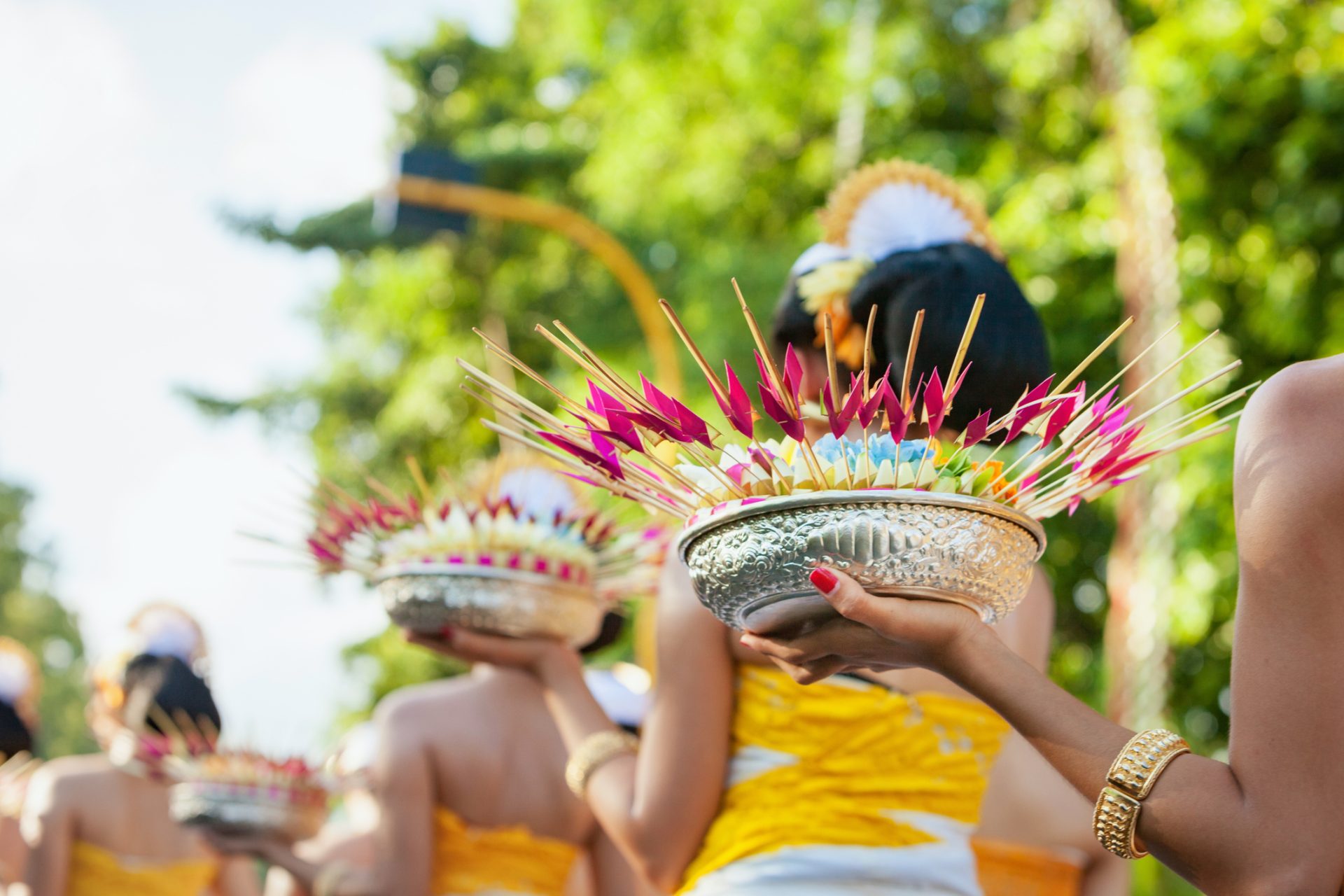
- Nyepi (Day of Silence): Balinese New Year, usually in March. For 24 hours, no one may leave their hotel, lights are kept low and the airport closes. The night before brings spectacular ogoh-ogoh parades.
- Galungan and Kuningan: a 10-day Balinese Hindu festival held twice a year by the Balinese calendar, when streets are lined with tall bamboo penjor decorations.
- Indonesian Independence Day: 17 August, with parades and flags.
- Indian holidays: Diwali, Christmas–New Year and May–June school holidays are the busiest times for Indian travellers; book early.
Best time for honeymoons, families and budget trips
Honeymoon: April to June and September to October offer dry weather and good villa prices. Winter weddings mean many couples travel from November to February, which is wetter but still lovely, and romantic in the rain. See our Bali honeymoon packages.
Families: May and June match Indian school holidays with dry weather; book early. October and Diwali also work well. See our Bali family packages.
Budget: late January to March and early November, avoiding Nyepi and festival dates, usually offer the lowest prices.
What to pack
Light cotton clothes, swimwear, sunscreen, a hat and sunglasses all year; a light jacket for Ubud evenings and Kintamani; a compact umbrella or rain jacket from November to March; and a sarong or clothes that cover shoulders and knees for temples. Read our Bali travel tips for more.
Plan your trip
Whatever month you choose, our Bali tour packages combine the right areas for the season, and we adjust boat trips and outdoor tours around the weather. For day-by-day ideas, see our Bali itinerary guide.
Bali tour packages



Frequently asked questions
What is the best month to visit Bali?
April, May, June and September offer the best balance of dry weather, smaller crowds and fair prices. July and August have perfect weather but are the busiest.
When is the rainy season in Bali?
Roughly November to March, with the heaviest rain usually from December to February.
Is it good to visit Bali in December?
Yes, if you do not mind tropical showers. It is festive and green, but the Christmas–New Year period is the busiest and most expensive time of year.
Is June a good time to visit Bali?
Yes. June is dry, sunny and slightly cooler, though busy with Indian school holidays.
What is Nyepi and when is it?
Nyepi is Bali's Day of Silence and Hindu New Year, usually in March. The island and airport close for 24 hours.
Can I visit Nusa Penida in the rainy season?
Yes, but boat trips may be rescheduled in rough weather, and some roads and paths can be slippery.
Plan your Bali trip
Not sure when to go? Tell us your preferred months and we will suggest the best plan for the weather.
Get a free quote