Switzerland Tour Package – Sound of Swiss, 7 Nights / 8 Days
Standard Package

Switzerland Tour Package – Sound of Swiss, 7 Nights / 8 Days

Our Switzerland-only tour: 7 nights / 8 days of lakes and mountains, with Jungfraujoch, Mt. Titlis, Lake Lucerne, the GoldenPass scenic train, Zermat…

⌖ Europe ✦ Family & senior friendly planning
Package snapshot
DestinationEurope
Travel styleStandard Package

Want to customize this package?

Share your dates and travellers. This enquiry is free. Small changes to a standard itinerary—such as a date change or an extra day—can be discussed with our team.

We’ll send verification codes to your WhatsApp number and email. Indian numbers can be entered without +91; for other countries, include the country code.
Verification required before submitting.
Your holiday

Switzerland Tour Package – Sound of Swiss, 7 Nights / 8 Days: overview

Eight days in the most beautiful country in Europe

Picture a summer morning in the Swiss Alps: green meadows full of wildflowers, cowbells ringing on the hillside, a lake so blue it looks painted, and above it all, snow-capped peaks shining against a clear sky. This Switzerland tour package is for travellers who want to see Switzerland properly, not rush through it in two days, and it's planned so you can simply look, breathe and enjoy.

In 7 nights / 8 days you travel from Zurich and the Rhine Falls to Lucerne and the Bernese Oberland, stand at the Top of Europe on Jungfraujoch and on the glacier of Mt. Titlis, ride the scenic GoldenPass line to Montreux on Lake Geneva, and visit car-free Zermatt below the Matterhorn, before returning through Lausanne, Gruyères and the old town of Bern. Along the way you taste chocolate at the Lindt Home of Chocolate, walk through Charlie Chaplin's home, and watch Gruyère cheese being made.

A professional tour manager travels with you, you stay in superior 4-star hotels, and Indian lunches and dinners with Jain and vegetarian options are included. With two-night stays and scenic train rides, the pace is relaxed, which makes this Switzerland tour package from India just as good for families as it is as a Switzerland honeymoon package. See all our Europe tour packages.

Good to know

Package typeStandard Package
Planning supportSmall changes by enquiry
Best forFamilies, couples & seniors
Get a free quote
Trip highlights
✦ Arrive in Zurich | Welcome to Switzerland
✦ Rhine Falls boat ride, Lindt Home of Chocolate, Zurich and the Polybahn | Waterfalls, chocolate and a city on a lake
✦ Lucerne, Lake Lucerne cruise and Mt. Titlis | A storybook town, a blue lake and a glacier summit
✦ Jungfraujoch – Top of Europe, Interlaken and Trümmelbach Falls | The highlight of your Swiss holiday
✦ GoldenPass scenic train to Montreux and Chaplin's World | From the Alps to the Swiss Riviera
✦ Zermatt and the Matterhorn, and Geneva | The world's most famous mountain
Day-wise plan

Europe itinerary: day by day

Day 1
Arrive in Zurich | Welcome to Switzerland

Arrive in Zurich | Welcome to Switzerland

⌖ Central Switzerland 🍽 Meals: Dinner

Your Swiss holiday begins before the plane even lands. As it descends towards Zurich, look out of the window: dark green forests, neat villages gathered around white church towers, farms dotted across rolling hills, and the long blue sweep of Lake Zurich. On a clear day you may even glimpse the snowy wall of the Alps on the horizon, a first promise of what's to come. After the long flight from India, it's a view that wakes you up instantly.

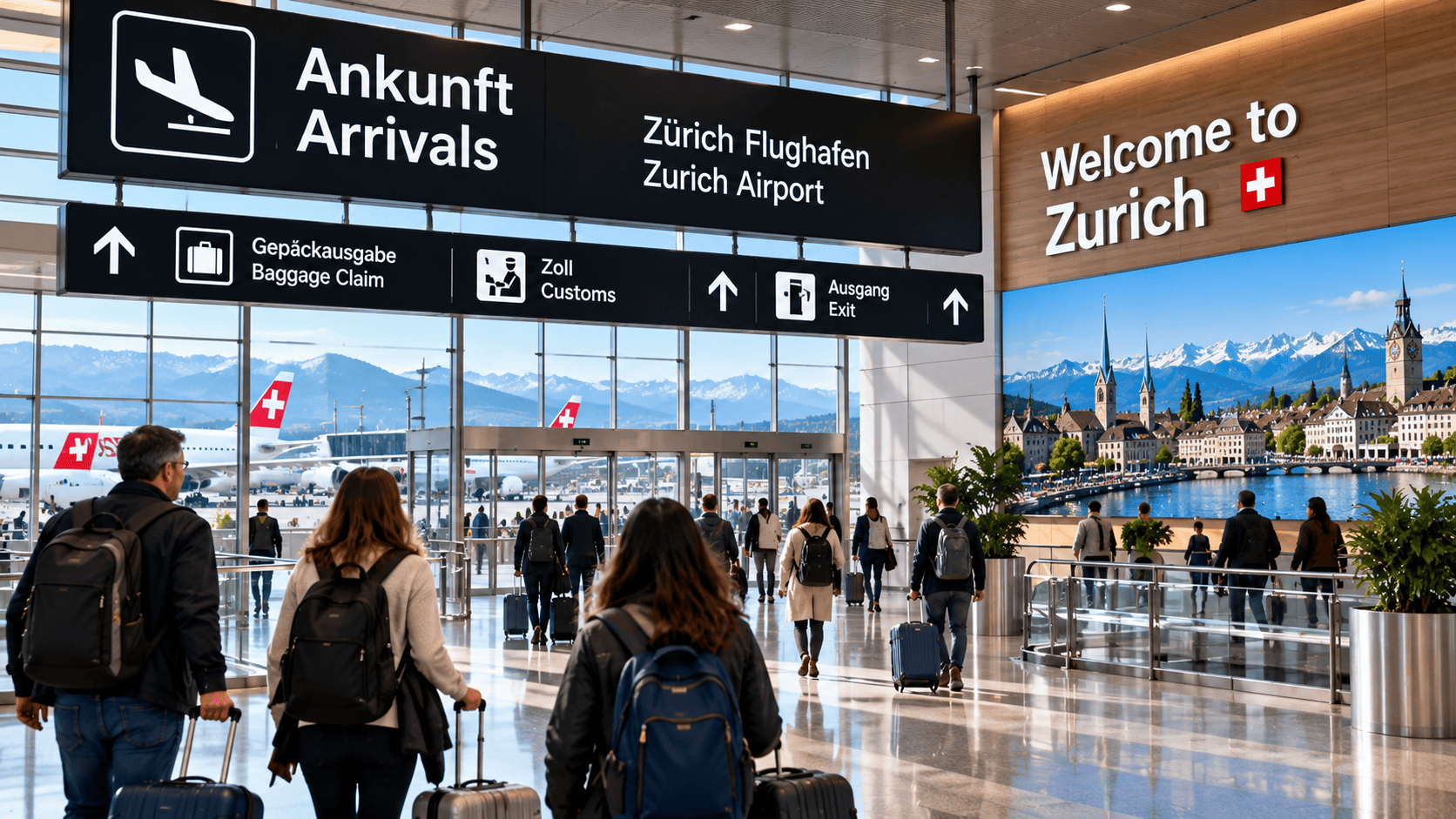
Zurich Airport is a good introduction to the country: spotless, calm and efficient. Once you've completed immigration and collected your bags, walk out into the arrivals hall, where our travel professional is waiting to welcome you. From this moment, you can relax. Your coach, hotels, excursions, train tickets and meals are all arranged, and your tour manager will be with you every step of the way.

The drive into Central Switzerland is a gentle first look at the country. Switzerland is small, about 41,000 square kilometres, a little smaller than Haryana, yet it packs in an astonishing variety of landscapes: high Alpine peaks and glaciers, lakes of every colour, deep green valleys, vineyards and medieval towns. In summer, everything is in full bloom. The meadows are thick and green, cows graze on the hillsides with large bells around their necks, window boxes on every chalet overflow with red geraniums, and the Swiss flag, a white cross on red, flutters from balconies and barns.

You'll quickly notice how orderly everything is. Roads are smooth, trains glide past exactly on time, and even the woodpiles outside farmhouses are stacked with perfect precision. Switzerland is a federation of 26 cantons, each with its own character, and it has four national languages: German, spoken in most of the country, including Zurich and Lucerne; French in the west, around Geneva and Lake Geneva; Italian in the south; and Romansh, an ancient language spoken in a few mountain valleys in the east. Over the coming week you'll travel through both the German- and French-speaking regions, and you'll hear the change in the shops, on the signs and in the greetings: "Grüezi" in the German-speaking parts, "Bonjour" in the French.

Switzerland is also famous for its neutrality: it has not fought in an international war since the early 19th century, and its tradition of peace is one reason why so many international organisations are based here. The Swiss vote on national issues several times a year in referendums, so ordinary citizens have a direct say in many of the country's decisions.

Once you reach your hotel in Central Switzerland and check in, the rest of the day is yours. After a long journey, the best thing to do is rest, freshen up and adjust to European time, which in summer is three and a half hours behind India. If you have the energy, step outside for a short walk. Breathe in the clean air, listen to the quiet, and look up at the hills around you. Summer evenings in Switzerland are long and golden: in June and July it stays light until well after nine o'clock, so there's plenty of time to enjoy the first evening of your holiday.

A few practical tips will make your stay easier. Swiss tap water is some of the purest in the world, so you can refill your water bottle from the tap or from the public fountains you'll see in towns and villages. The local currency is the Swiss franc, not the euro, although cards are accepted almost everywhere. Swiss power sockets have three round pins, so you'll need the right travel adapter. And most shops close early on Saturdays and stay closed on Sundays, so plan any shopping on weekdays.

In the evening the group meets for dinner, with Jain and vegetarian options on the menu. It's a chance to meet your fellow travellers, families, couples and friends from across India, and to hear your tour manager explain the plan for the week ahead: the coach, the daily timings, and the mountain days that are coming. Then it's time for a good night's sleep. Tomorrow you'll feel the spray of Europe's largest waterfall and taste your first Swiss chocolate.

If your tour falls around 1 August, you're in for a treat: it's Swiss National Day, celebrating the founding of the Swiss Confederation in 1291. Towns and villages hang flags and lanterns, families gather for picnics and barbecues, and as night falls, bonfires are lit on mountaintops across the country and fireworks burst over the lakes. In the mountains, you may see the fires glowing on peak after peak, a sight that feels as old as the Alps themselves.

Included today: arrival transfer from Zurich airport, dinner.

Good to know: hotel check-in is usually mid-afternoon. Summer days in Switzerland are usually warm, around 20–27°C, but mountain weather changes quickly, so keep a light jacket handy.
Day 2
Rhine Falls boat ride, Lindt Home of Chocolate, Zurich and the Polybahn | Waterfalls, chocolate and a city on a lake

Rhine Falls boat ride, Lindt Home of Chocolate, Zurich and the Polybahn | Waterfalls, chocolate and a city on a lake

⌖ Central Switzerland 🍽 Meals: Breakfast, Lunch, Dinner

Today is a perfect introduction to Switzerland's variety: the roar of a great waterfall in the morning, a palace of chocolate at midday, and the elegant streets of Zurich in the afternoon. After breakfast, relax in the coach as it drives north through farmland and forests to Schaffhausen, close to the German border.

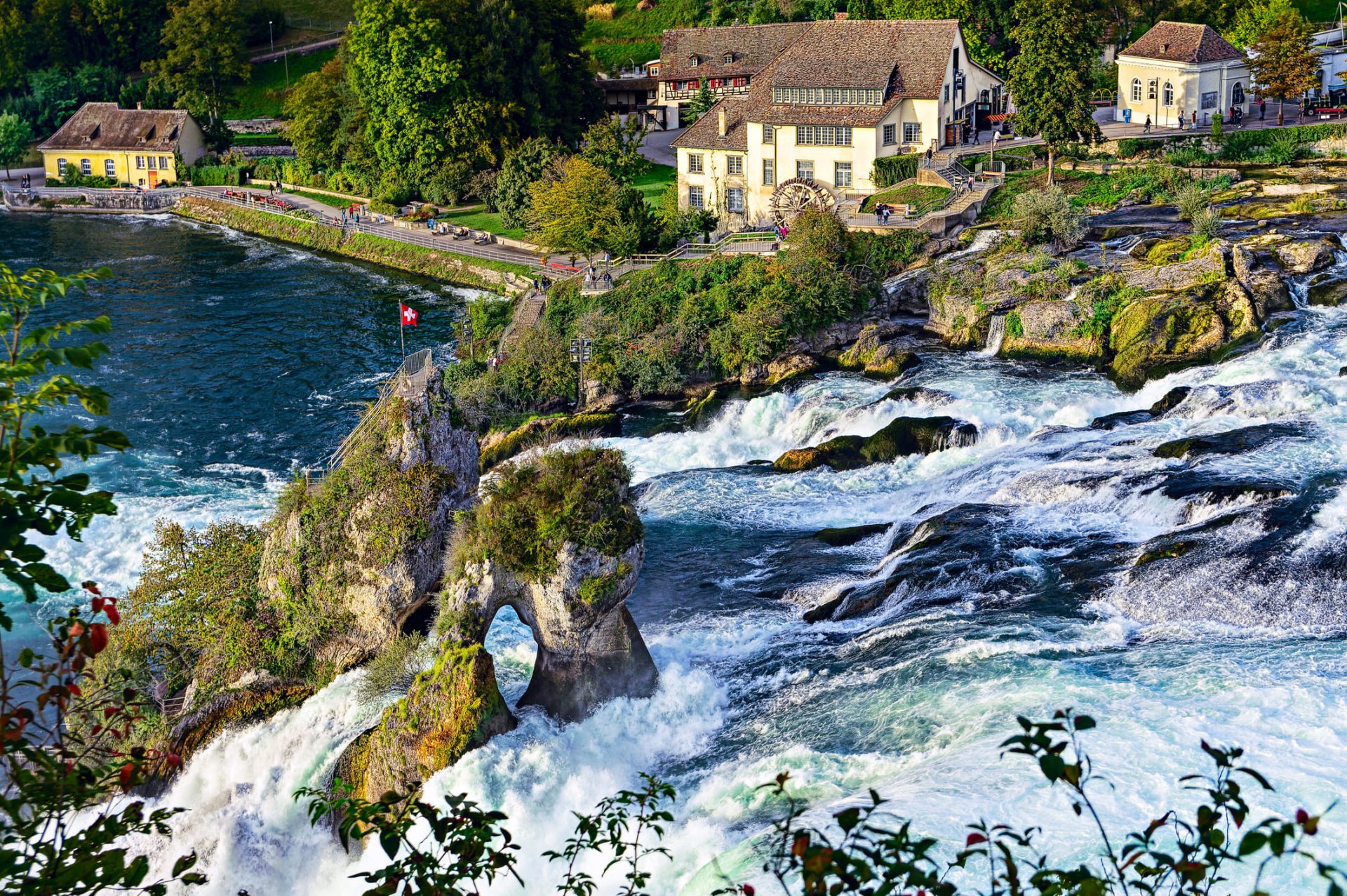
The Rhine Falls are the largest waterfall in Europe. The falls are only about 23 metres high, but they are 150 metres wide, and the whole River Rhine pours over them. In summer, when the snow is melting high in the Alps, the river is at its fullest and the falls are at their most dramatic: hundreds of thousands of litres of water every second thunder over the rocks in a wall of white foam, and a fine mist drifts over everything, often catching the sunlight in a rainbow.

The best way to feel their power is from the water, and today you take a boat ride on the basin below the falls. The little boat heads out across the churning water towards the falls, rocking gently as it goes, and the closer you get, the louder the roar becomes, until you can feel it in your chest. Spray settles on your face and your camera lens, and everyone on board is laughing and shouting over the noise. Depending on the boat and the water level, some boats land at the great rock in the middle of the falls, where you can climb steps to a small platform at the top and stand with the water crashing past on both sides. It's one of the most exciting moments of the trip.

From the falls, the coach drives south to Kilchberg on the shores of Lake Zurich and the Lindt Home of Chocolate. As you step into the lobby, you're greeted by the building's star: the world's largest chocolate fountain, 9.3 metres tall, with 1,500 litres of warm, liquid chocolate flowing down from a giant golden whisk. The smell alone is unforgettable. The interactive tour then takes you through the whole story of chocolate: how cocoa grows in tropical countries, how it reached Europe, and how Swiss chocolate makers in the 19th century turned it into the smooth, melting treat we know today. It's a feast for all the senses, and best of all, there's unlimited tasting along the way, so take your time and try everything. Finish in the Lindt shop, where you can pick up chocolates in every flavour for family and friends back home.

In the afternoon you discover Zurich, Switzerland's largest city and its financial centre, set at the northern end of Lake Zurich where the River Limmat flows out. Zurich regularly appears near the top of lists of the world's most liveable cities, and on a summer afternoon, you'll see why. Your orientation tour takes you along the Bahnhofstrasse, one of the most exclusive shopping streets in the world, lined with banks, jewellers and watchmakers, and into the old town, a maze of cobbled lanes and squares. Along the Limmatquai, the riverside promenade, old guild houses face the water, and above the rooftops rise the twin towers of the Grossmünster, where the Protestant Reformation in Switzerland began in 1519. Across the river, the slender spire of the Fraumünster hides a treasure: five stunning stained-glass windows by the artist Marc Chagall, glowing in blue, green and red. Nearby, St. Peter's church has the largest clock face in Europe.

In summer, Zurich lives outdoors. Locals swim in the clean, clear water of the lake and the river at traditional open-air bathing places, cycle along the waterfront, and fill the café terraces until late in the evening. Your tour also takes you past the university district and up to the green slopes of the Zurichberg, with its beautiful hillside villas and views over the city, the lake and, on a clear day, the distant Alps.

Then you ride the Polybahn, a little red funicular railway that has been carrying passengers up the hill from the city centre since 1889. It climbs to the Polyterrasse, a wide terrace in front of the ETH, one of the world's leading universities, where Albert Einstein studied. From the terrace, the whole of Zurich is spread out below you: the old town's church towers, the river and the long blue lake stretching away towards the mountains. It's the perfect spot for a photograph to end your first full day in Switzerland. In the evening you return to your hotel in Central Switzerland for dinner.

Included today: Rhine Falls boat ride, Lindt Home of Chocolate entry with tasting, Zurich orientation tour, Polybahn funicular, breakfast, lunch, dinner.

Good to know: you may get a little wet on the Rhine Falls boat, so keep a light jacket and protect your phone. Boat landings at the central rock depend on the water level.

Day 3
Lucerne, Lake Lucerne cruise and Mt. Titlis | A storybook town, a blue lake and a glacier summit

Lucerne, Lake Lucerne cruise and Mt. Titlis | A storybook town, a blue lake and a glacier summit

⌖ Meiringen 🍽 Meals: Breakfast, Lunch, Dinner

Today brings together three of the classic sights of Central Switzerland, and in summer they're at their most beautiful. After breakfast, the coach drives to Lucerne, a town that seems to have been designed for postcards. It sits where the River Reuss flows out of Lake Lucerne, with mountains rising on every side: the jagged, rocky peak of Pilatus to the south-west and the gentler, green slopes of Rigi to the east.

Your orientation tour starts at the Lion Monument, a great dying lion carved into the face of a sandstone cliff above a quiet pond, shaded by trees. It honours the Swiss Guards who died in Paris in 1792 defending the French king during the Revolution. The lion lies with a broken spear in his side, his paw resting protectively on a shield, and the expression on his face is so full of grief that visitors fall silent. It's a powerful reminder that for centuries, Swiss soldiers served as mercenaries in the armies of Europe's kings.

Then you walk to the river and the Kapellbrücke, or Chapel Bridge, Lucerne's famous covered wooden footbridge. In summer, its sides are lined with flower boxes overflowing with red and pink blooms, and swans glide on the clear green water below. Walk across slowly and look up at the triangular paintings hanging under the roof, which tell stories from Lucerne's history. Halfway across, the stone Water Tower stands in the river, as it has for centuries. The view from the bridge, with the old town's painted houses, church towers and the mountains behind, is one of the most photographed in Switzerland.

There's free time in the old town to shop for the things Switzerland is famous for: Swiss watches in every style and price range, Swiss Army knives, chocolates and souvenirs. Lucerne's squares are lively in summer, with café tables spilling out into the sunshine and street musicians playing by the river.

Then you board a boat for a cruise on Lake Lucerne. This is one of the most beautiful lakes in the Alps, with arms that stretch out in different directions between steep, wooded mountains, so that around every bend a new view opens up. In summer the water sparkles in shades of blue and green, sailing boats drift across it, and lakeside villages like Weggis and Vitznau, with their hotels, gardens and palm trees, enjoy such a mild climate that the area is sometimes called the Swiss Riviera. Stand on the open deck, feel the breeze, and watch the mountains slide past. It's a moment of pure peace.

In the afternoon, the coach heads into the mountains to Engelberg, a resort village in a green valley at the foot of Mt. Titlis. In summer the valley is lush and green, with waterfalls streaming down the cliffs and cows grazing in the meadows, yet high above, the summit of Titlis is still white with snow and ice all year round. The contrast is part of the thrill: in less than an hour, you'll go from summer to winter.

The journey up is made in stages. Gondolas carry you over forests and meadows to Trübsee, a mountain lake whose clear water reflects the peaks around it, and then a cable car takes you higher, into a landscape of rock and snow. For the final stretch, you board the Rotair, the world's first revolving cable car. As it climbs the last steep cliff, its floor slowly turns a full 360 degrees, so everyone on board enjoys the complete panorama: the snowy peak, the deep crevasses of the glacier, pristine snowfields dotted with great blocks of ice, and the green valley far below.

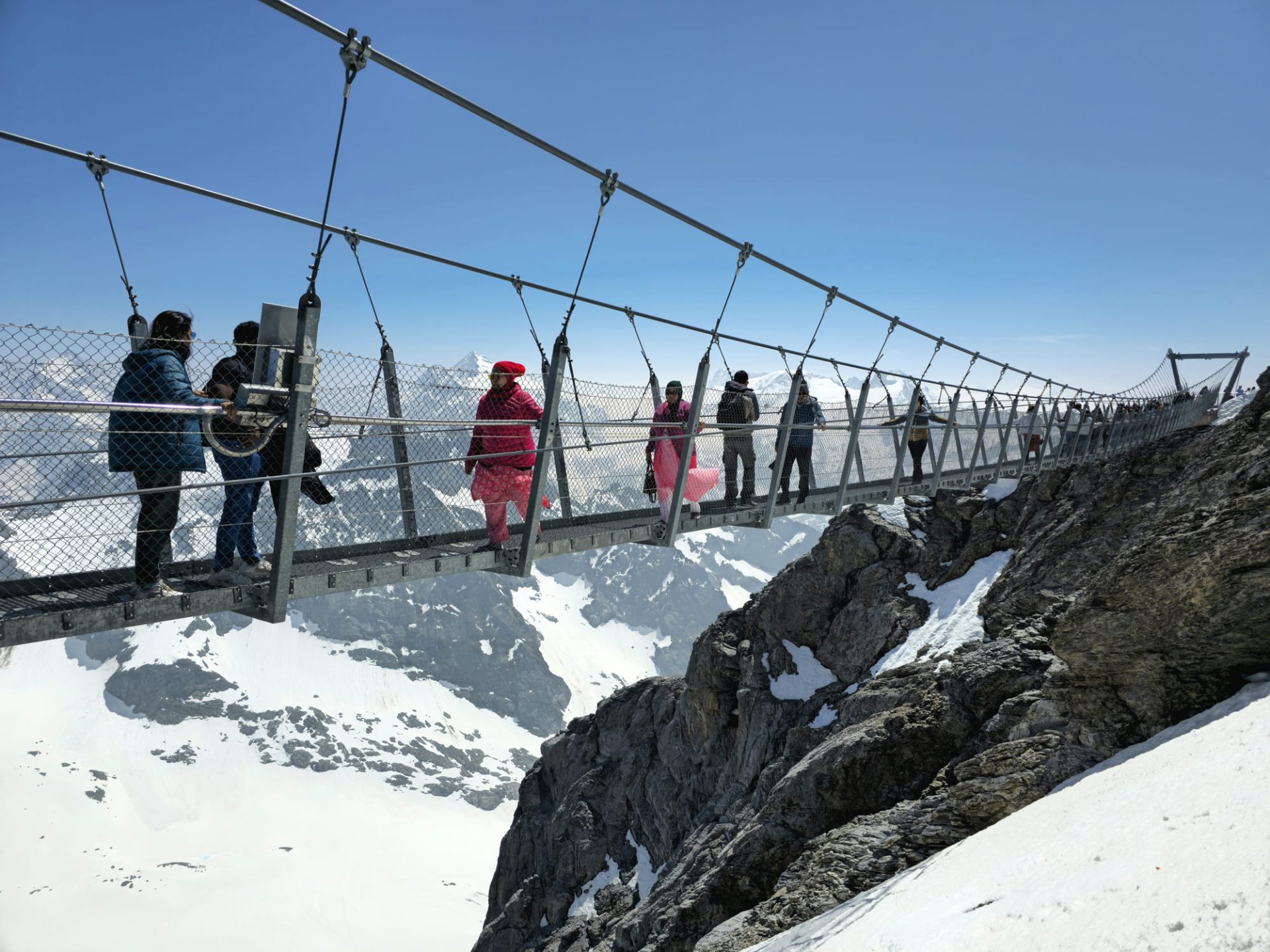
At the top station, at 3,020 metres, step out into the snow. Even on a warm summer day, you'll want a jacket up here, and the sunlight on the snow is so bright you'll need your sunglasses. Don't miss the Titlis Cliff Walk, the highest suspension bridge in Europe, which runs along the edge of the cliff with a dizzying drop beneath your feet. Walk across, stop in the middle, and look out over the Alps. Then go inside the mountain to the Glacier Cave, a tunnel carved into the ice, glowing in shades of blue. Outside, there's snow to play in, photos to take, and, for children and grown-ups alike, the chance to throw a snowball in the middle of summer.

In the late afternoon you descend and drive to Meiringen, a pretty mountain town in the Hasli valley, where you'll stay for the next two nights. Meiringen has two claims to fame. Local legend says the meringue, the light, crisp sweet made from whipped egg whites and sugar, was invented here by a Swiss baker in the 18th century, and the town is proud of the story. And just above the town are the Reichenbach Falls, where Sir Arthur Conan Doyle sent his great detective, Sherlock Holmes, plunging into the water during his final fight with his enemy, Professor Moriarty, in a story published in 1893. Readers were so upset that Conan Doyle eventually had to bring Holmes back to life. Meiringen even has a small Sherlock Holmes museum and a statue of the detective in the town centre. After dinner, enjoy the quiet of the valley and the long summer evening.

Included today: Lucerne orientation tour with the Lion Monument and Chapel Bridge, Lake Lucerne cruise, Mt. Titlis with the Rotair revolving cable car and Cliff Walk, breakfast, lunch, dinner.

Good to know: it can be cold and windy at the top of Titlis even in summer, so carry a warm layer, sunglasses and sunscreen. Some activities at the summit depend on the weather.

Day 4
Jungfraujoch – Top of Europe, Interlaken and Trümmelbach Falls | The highlight of your Swiss holiday

Jungfraujoch – Top of Europe, Interlaken and Trümmelbach Falls | The highlight of your Swiss holiday

⌖ Meiringen 🍽 Meals: Breakfast, Lunch, Dinner

This is the day you've been waiting for. Today you travel to Jungfraujoch, the Top of Europe, to stand among glaciers and snowy peaks at almost 3,500 metres, then return to the green valleys below to see one of nature's most extraordinary waterfalls. Have a good breakfast and keep your jacket and sunglasses close.

The coach drives from Meiringen into the Bernese Oberland, the region of high peaks, deep valleys and glacier lakes that has inspired travellers for two centuries. In summer, the scenery is breathtaking: emerald meadows sprinkled with wildflowers, wooden chalets with flower-filled balconies, waterfalls tumbling from the cliffs, and towering above it all, the three famous peaks of the region, the Eiger, the Mönch and the Jungfrau, still white with snow.

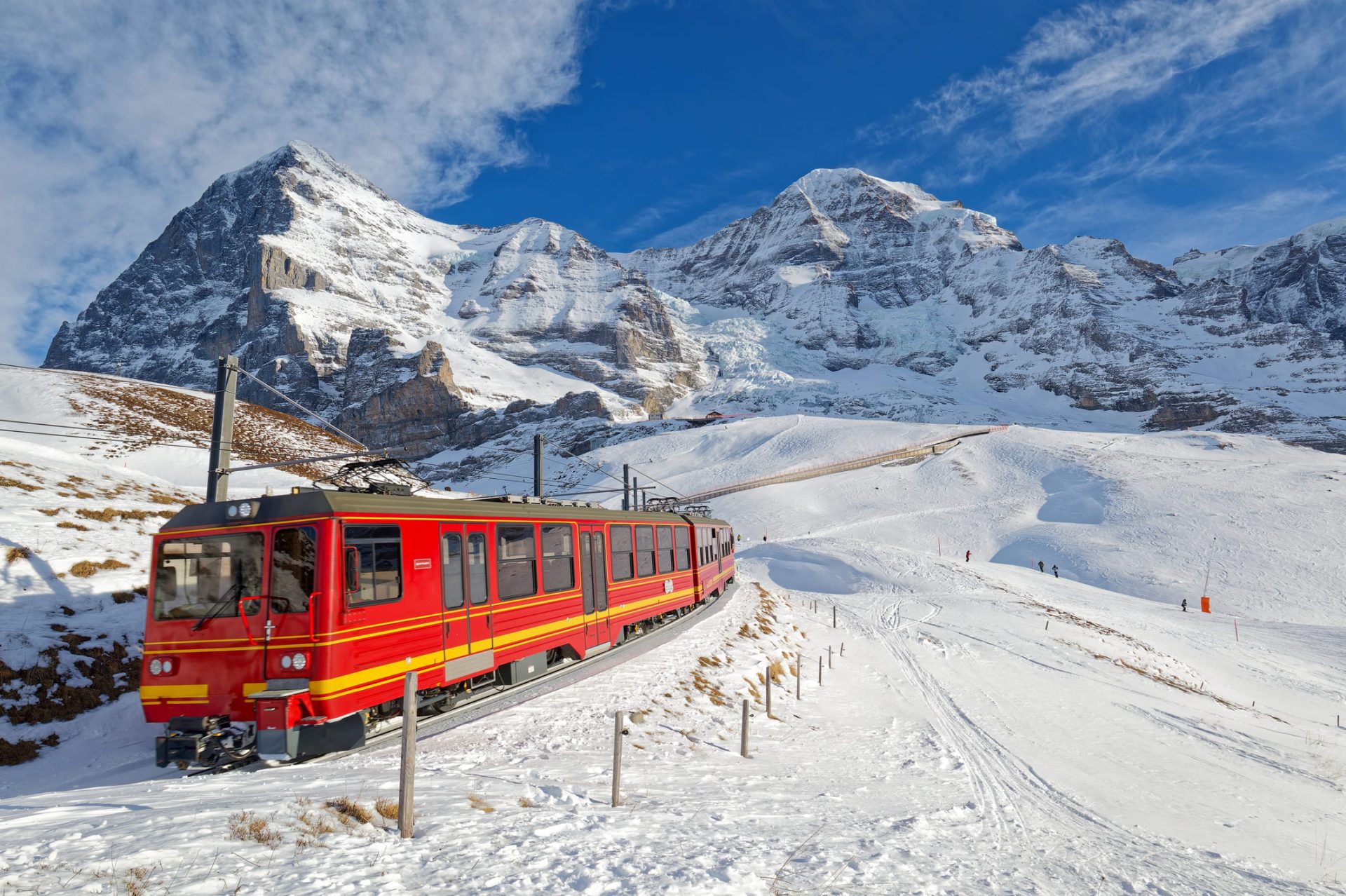
At the Grindelwald Terminal, you board the Eiger Express, a modern tri-cable gondola that carries you from the valley to the Eigergletscher station in just 15 minutes. As the cabin rises, the green meadows of Grindelwald fall away below, and the dark, sheer north face of the Eiger towers right beside you, one of the most famous mountain walls in the world. At Eigergletscher, you change to the cogwheel train of the Jungfrau Railway, which climbs through a tunnel cut inside the mountain to Jungfraujoch, at 3,454 metres, the highest railway station in Europe. Here you step into a world of eternal ice and snow, where it can snow even in July.

Take your time, walk slowly, and let your body adjust to the thinner air. Then explore. In the Ice Palace, a series of halls and tunnels carved deep inside the glacier, artists have created sculptures of ice that glow in the soft light. From the Sphinx observation deck, the view is unforgettable: the Aletsch Glacier, the longest in the Alps, flows away between the white peaks like a frozen river, and on a clear day, the mountains stretch away for miles in every direction. Out on the snow plateau, you can walk on the snow, take photos with the Swiss flag and feel the dazzling summer sun on the ice. It's a moment many travellers describe as the highlight of their whole trip to Europe.

After descending, you drive to Interlaken for an orientation tour. Interlaken lies on a strip of land between two lakes, the turquoise Lake Thun and Lake Brienz, and has been a mountain resort since the 19th century. In summer it buzzes with life. In the centre of town is the Höhematte, a large open meadow kept free of buildings so that everyone can enjoy the view of the Jungfrau. On sunny days, colourful paragliders drift down from the surrounding mountains and land on the meadow, one after another. Along the main street, grand old hotels stand beside shops selling Swiss watches, chocolates and souvenirs, and you can see traditional aspects of Swiss mountain culture, from woodcarving to cheese.

Then you continue into the Lauterbrunnen valley, a deep, narrow valley with sheer rock walls and dozens of waterfalls pouring down from the cliffs. Here you visit the Trümmelbach Falls, Europe's largest subterranean waterfalls. They are a series of ten glacier-fed waterfalls that thunder down inside the mountain itself, carving their way through the rock. A tunnel-lift, built in 1913, carries you up into the mountain, and from there, paths, stairs and illuminated galleries take you right up to the water. The falls carry all the meltwater from the glaciers of the Eiger, Mönch and Jungfrau down to the valley, up to 20,000 litres every second at the height of summer. The noise is deafening, the spray is cold, and the force of the water swirling through the narrow rock channels is awe-inspiring. Standing inside the mountain, watching the water you saw as snow and ice at Jungfraujoch this morning roar past you, is a perfect way to understand the Alps.

In the evening you return to Meiringen for dinner, tired, happy and full of memories of the Top of Europe.

Jungfraujoch has a few more surprises worth looking for. The Sphinx building also houses a scientific research station, where scientists have studied the air, the weather and the stars since the 1930s, making use of the clean, thin atmosphere at this height. And there's a post office here, one of the highest in Europe. Send a postcard home from the Top of Europe, stamped with its own special postmark, and your family in India will receive a little piece of the Alps a few days after you return.

Included today: Jungfraujoch – Top of Europe excursion with the Eiger Express and Jungfrau Railway, Ice Palace, Sphinx observation deck, Interlaken orientation tour, Trümmelbach Falls entry, breakfast, lunch, dinner.

Good to know: it's cold at the top even in summer, often around freezing, so carry a warm jacket, gloves, sunglasses and sunscreen. Walk slowly at altitude. The paths at Trümmelbach Falls are wet and involve some stairs, so wear shoes with a good grip.

Day 5
GoldenPass scenic train to Montreux and Chaplin's World | From the Alps to the Swiss Riviera

GoldenPass scenic train to Montreux and Chaplin's World | From the Alps to the Swiss Riviera

⌖ Geneva 🍽 Meals: Breakfast, Lunch, Dinner

Today you travel from the heart of the Alps to the shores of Lake Geneva on one of the most beautiful train journeys in Switzerland. After breakfast, you head to the station and board the GoldenPass Line, which runs from Interlaken to Montreux, crossing the country from the German-speaking mountains to the French-speaking lakeside in a single, unforgettable ride.

The GoldenPass is a small engineering marvel. For more than a century, travellers had to change trains along the way, because the railways on either side of the mountains were built with different track widths. Since the end of 2022, special trains with adjustable wheels can switch from one gauge to the other mid-journey, so you can stay in your seat all the way from the lakes of the Bernese Oberland to the shores of Lake Geneva. Settle in by the large panoramic windows and get your camera ready.

The journey begins along the shore of Lake Thun, its water a deep turquoise, with castles and villas on its banks and snowy peaks rising behind. Then the train climbs into the Simmental, a long green valley of dairy farms, where the large wooden farmhouses are decorated with carvings and painted inscriptions, and cows with bells around their necks graze in meadows thick with wildflowers. You pass through Gstaad, one of the most glamorous mountain resorts in the world, where celebrities and royalty have holiday chalets, and the pretty village of Château-d'Œx, famous for its colourful hot-air balloon festival. Then comes the most spectacular part: the train begins its long descent towards Lake Geneva, winding down the mountainside in great loops, and suddenly the whole lake opens up below you, shimmering blue, with the French Alps on the far shore and terraced vineyards running down to the water. It's the moment everyone on board reaches for their phone.

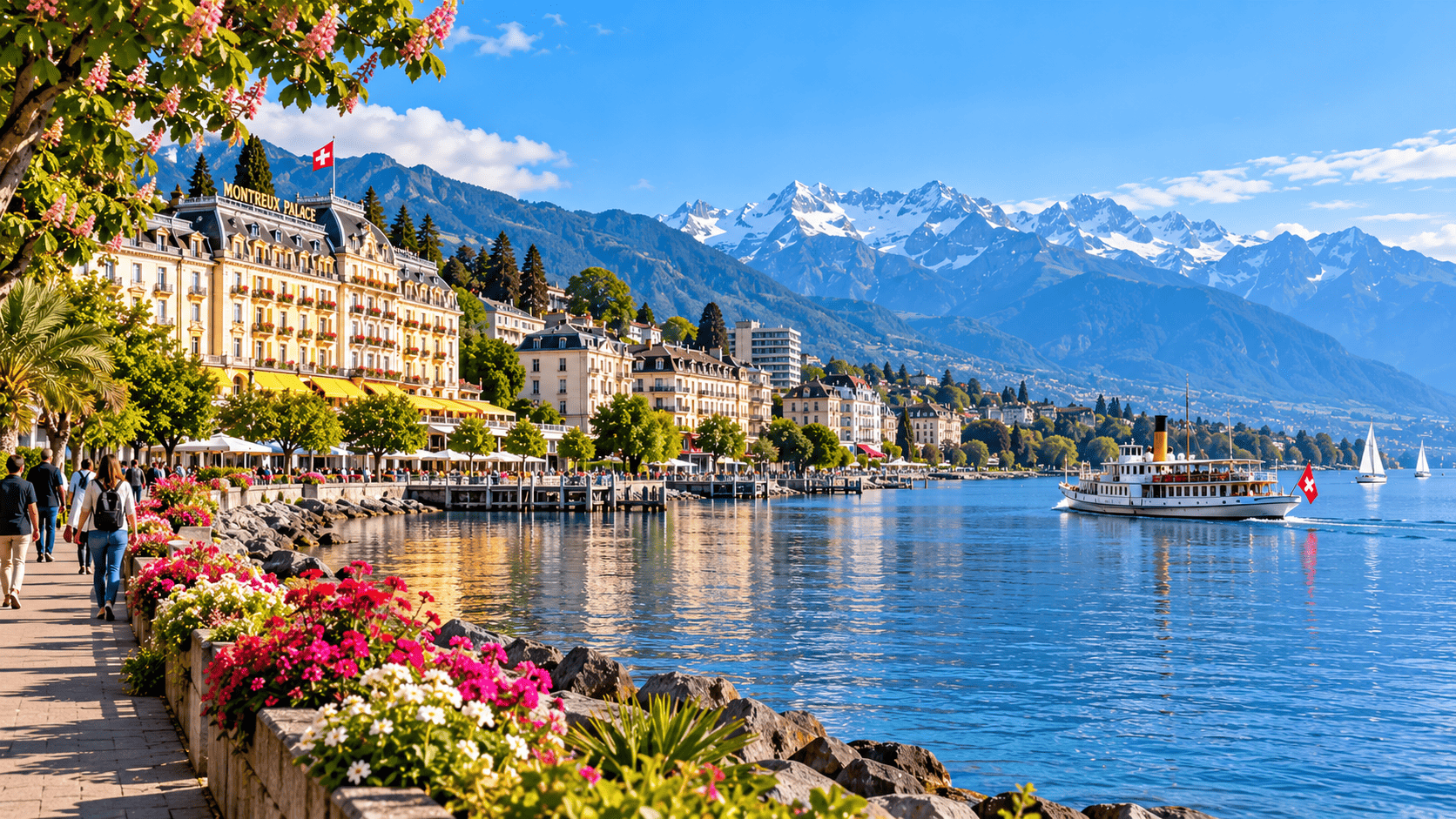
At Montreux, you're on the Swiss Riviera, a stretch of the Lake Geneva shore so sheltered and mild that palm trees grow along the promenade. Since the 19th century, writers, artists, musicians and royalty have come here to enjoy the views and the gentle climate, and the town is full of elegant Belle Époque hotels with wrought-iron balconies.

From Montreux, the coach drives a few kilometres along the shore to Chaplin's World at Corsier-sur-Vevey. Charlie Chaplin, the comic genius of silent films, the little tramp with the bowler hat, cane and moustache, spent the last 25 years of his life here, from 1952 until his death in 1977, in a lovely manor house called the Manoir de Ban, surrounded by parkland and with views of the lake and mountains. He lived here with his wife Oona and their eight children, and he said these were the happiest years of his life. Today his home is a museum. You walk through the rooms where the family lived, see his piano, his desk and family photographs, and learn about his life, from a poor childhood in London to worldwide fame in Hollywood. In the studio building next door, sets recreate scenes from his most famous films, with life-size wax figures of Chaplin and other stars, and clips from his films play on large screens. It's fun, moving and often very funny, and even children who have never seen a silent film fall in love with Chaplin here. Nearby, on the lakefront of Vevey, stands a bronze statue of Chaplin, and in the lake itself, a giant stainless-steel fork stands upright in the water, a surprising sight that has become one of the most photographed spots on the lake.

Then you return to Montreux for an orientation tour. Stroll along the flower-lined lakeside promenade, where gardens burst with colour in summer, and visit the bronze statue of Freddie Mercury, the lead singer of Queen, who loved Montreux and recorded music here. His statue stands by the lake with one arm raised in his famous pose, and fans leave flowers at its feet. Montreux is also world-famous for the Montreux Jazz Festival, held every July since 1967, when the greatest names in jazz, blues and rock have performed by the lake. From the promenade, you can see the Château de Chillon in the distance, a medieval castle that seems to float on the water on a rocky island just off the shore. In 1816 the English poet Lord Byron visited the castle and was so moved by the story of a prisoner chained in its dungeon that he wrote a famous poem, "The Prisoner of Chillon". The castle has been one of Switzerland's most visited sights ever since.

In the late afternoon, the coach follows the shore of Lake Geneva past the vineyards of Lavaux, where vines grow on steep stone terraces that monks began building almost a thousand years ago, now a UNESCO World Heritage Site. You continue to Geneva, at the western tip of the lake, where you check in to your hotel for two nights and enjoy dinner with the group.

Included today: GoldenPass scenic train from Interlaken to Montreux, Chaplin's World entry, Montreux orientation tour, breakfast, lunch, dinner.

Good to know: seats on the GoldenPass train are not always together, so keep your tour manager's instructions handy at the station. Montreux and the lakeshore can be hot in summer, so carry water, a hat and sunscreen.

Day 6
Zermatt and the Matterhorn, and Geneva | The world's most famous mountain

Zermatt and the Matterhorn, and Geneva | The world's most famous mountain

⌖ Geneva 🍽 Meals: Breakfast, Lunch, Dinner

Today you visit one of the most iconic places in the Alps: Zermatt, the car-free mountain village at the foot of the Matterhorn. After breakfast, the coach leaves Geneva and follows the shore of Lake Geneva, then turns into the Rhône valley, a wide, sunny valley of vineyards, orchards and old castles, and heads up into the mountains of the Valais. In summer the valley glows with green and gold, and as you climb, the peaks around you grow higher and the villages smaller.

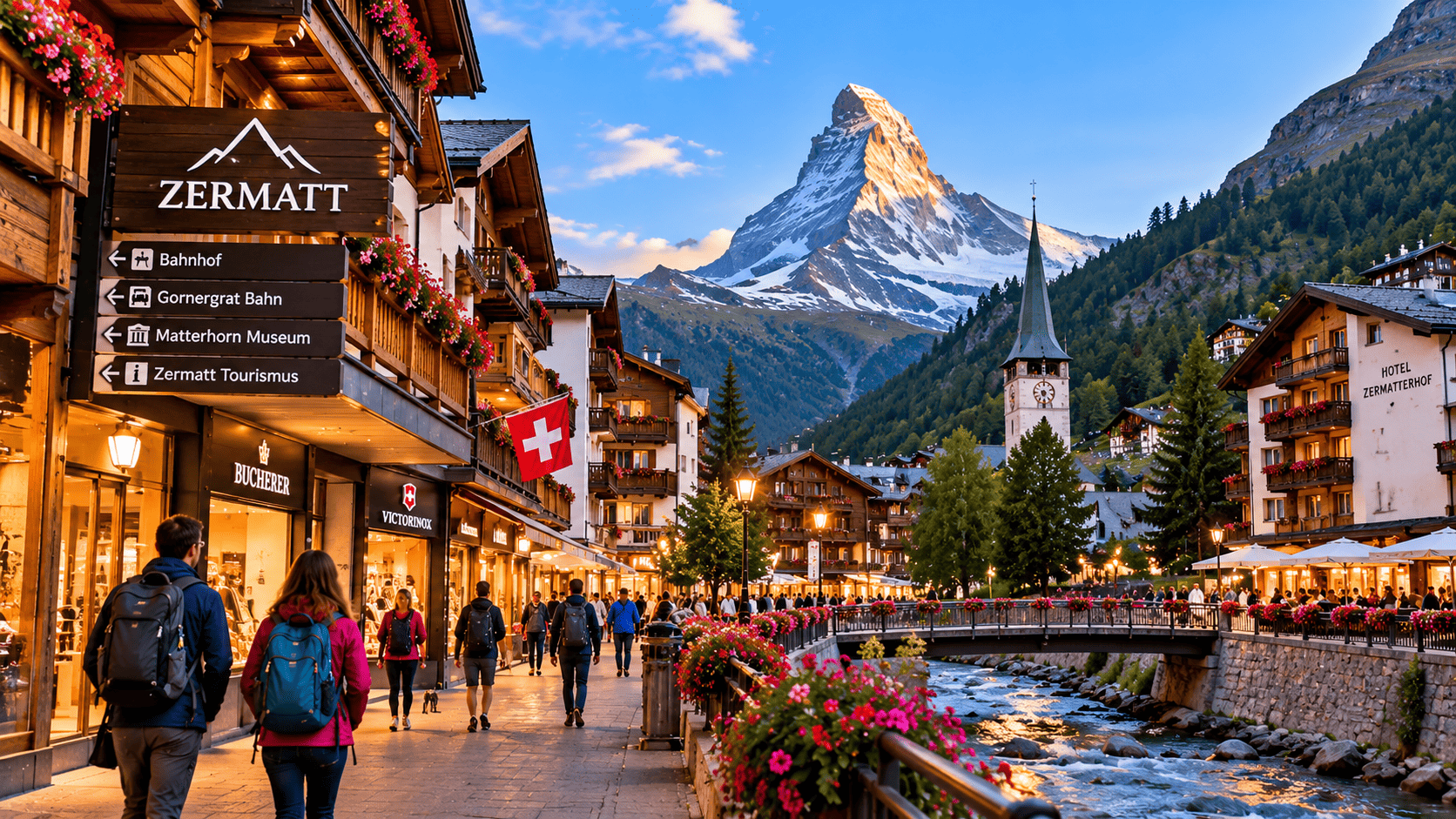
Zermatt is car-free, so the coach stops in the nearby village of Täsch, and you take a short shuttle train up the valley into Zermatt. As you step out of the station, the first thing you'll notice is the quiet: there are no cars, only small electric taxis and buses humming softly through the streets, and in the old days, horse-drawn carriages. The village has kept its traditional character, with dark wooden chalets, flower-filled balconies and narrow lanes.

And then you see it. At the end of the valley, rising alone above the rooftops, stands the Matterhorn, 4,478 metres high, with its almost perfect pyramid shape. It's probably the most famous mountain in the world, and it looks even more dramatic in real life than in pictures: a sharp, rocky peak, its faces streaked with snow, standing apart from all the other mountains around it. Its shape is so recognisable that it appears on the packaging of Toblerone chocolate. On a clear summer day, it seems close enough to touch.

The Matterhorn also has a dramatic history. It was one of the last great peaks of the Alps to be climbed. On 14 July 1865, a team led by the English climber Edward Whymper finally reached the summit, but on the way down, a rope broke and four of the seven climbers fell to their deaths. The tragedy shocked the world and made both the Matterhorn and Zermatt famous. You can learn the story at the small Matterhorn Museum in the village, and in the old cemetery, you'll find the graves of climbers who lost their lives on the mountain.

Take your time to stroll through Zermatt. Walk along the main street, lined with hotels, restaurants and shops selling watches, chocolates and mountain gear. Then wander into the Hinterdorf, the oldest part of the village, where centuries-old wooden barns and granaries stand on wooden posts topped with flat stone discs. The stones were placed there to stop mice from climbing up into the stored grain, a clever solution used in mountain villages for hundreds of years. Cross the bridge over the rushing glacier river, find a bench with a view of the Matterhorn, and simply sit for a while. In summer, the meadows around Zermatt are full of wildflowers, and if you look closely on the slopes, you may even spot a marmot sitting up on its hind legs.

In the afternoon you return to Geneva, at the tip of Lake Geneva, for an orientation tour. Geneva is a French-speaking city with a global role: it's home to the European headquarters of the United Nations, the International Red Cross and many international organisations, so you'll hear dozens of languages in its streets. At the Palais des Nations, the long row of flags of the UN member states flutters in the summer breeze, and across the square stands the Broken Chair, a giant wooden chair with one leg shattered, a powerful monument against landmines.

On the lakefront, the Jet d'Eau, Geneva's famous fountain, shoots a column of water 140 metres into the sky. In the summer sun, its spray often creates a rainbow, and on windy days, people walking on the jetty beside it get an unexpected shower. Nearby, the Flower Clock in the English Garden is a working clock made of thousands of colourful plants, replanted with the seasons, a tribute to Geneva's long tradition of watchmaking. Your tour also takes you up into the charming Old Town, with its cobbled lanes, antique shops and fountains around St. Pierre Cathedral. In summer, Genevans love their lake: they swim from public bathing places, sail on the water and sit at lakeside cafés until late in the evening, watching the sun set over the Jura mountains.

In the evening you return to your hotel in Geneva for dinner.

From Zermatt, the Gornergrat railway, opened in 1898, climbs to a viewpoint over 3,000 metres high, facing the Matterhorn and a ring of glaciers and 4,000-metre peaks. It's not part of today's programme, but if you're ever back in Zermatt with more time, it's one of the great train rides of the Alps.

Included today: Zermatt visit with the shuttle train from Täsch, Geneva orientation tour, breakfast, lunch, dinner.

Good to know: the drive to Zermatt and back takes several hours, so keep snacks and water on the coach. The Matterhorn's summit is sometimes hidden by clouds; mornings are usually clearest. Zermatt prices are high, so buy souvenirs with care.

Day 7
Olympic Museum in Lausanne, Gruyères cheese dairy and Bern | Champions, cheese and a medieval capital

Olympic Museum in Lausanne, Gruyères cheese dairy and Bern | Champions, cheese and a medieval capital

⌖ Central Switzerland 🍽 Meals: Breakfast, Lunch, Dinner

Your last full day in Switzerland takes you through three very different places: the Olympic capital of the world, a medieval hilltop town famous for its cheese, and the country's charming capital. After breakfast, you check out of your hotel in Geneva and drive along the shore of Lake Geneva to Lausanne.

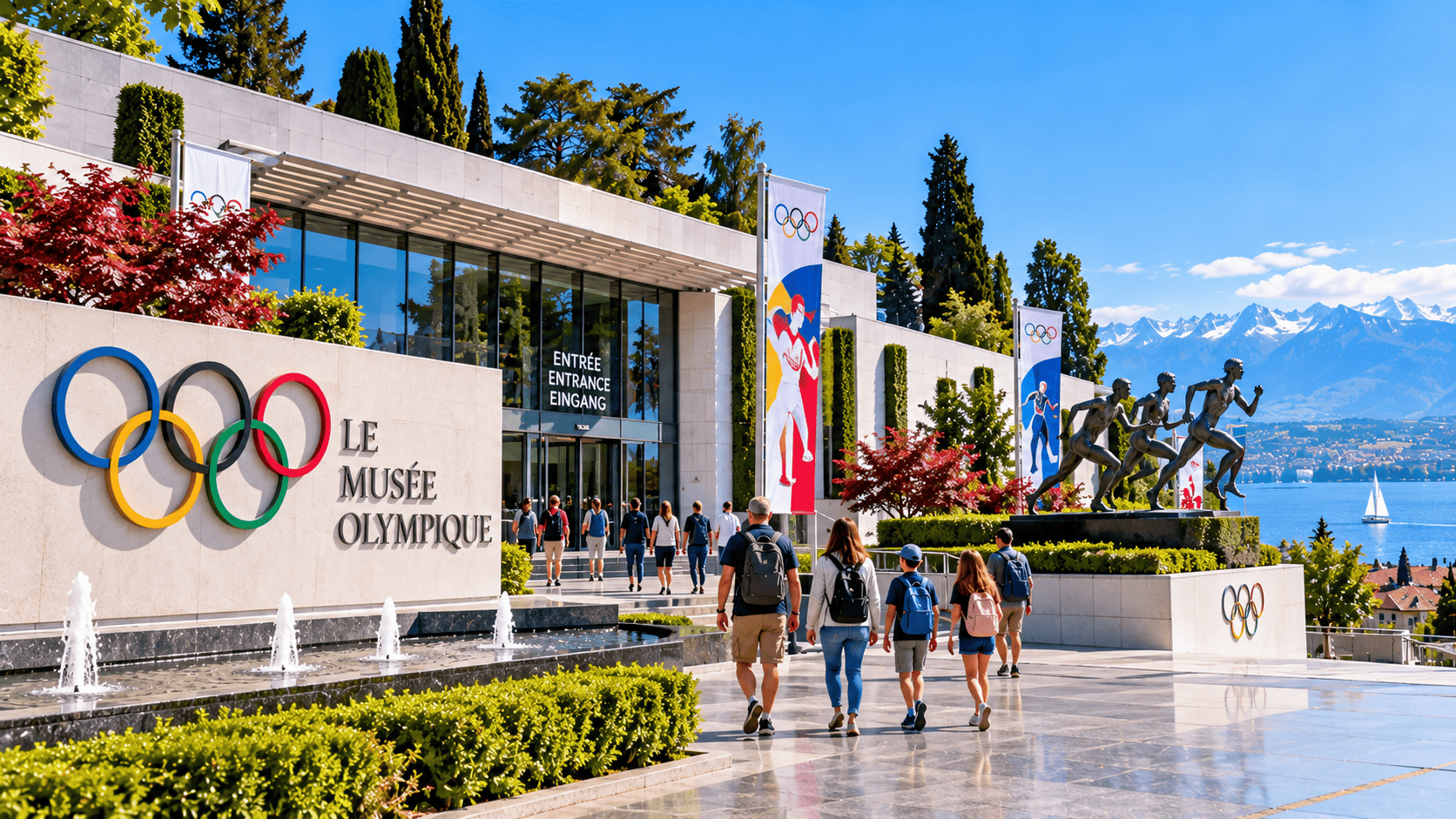
Lausanne climbs steeply up the hillside from the lake, so steeply that it has the smallest city with a metro in the world, and its streets often turn into staircases. It's also the Olympic capital of the world. In 1915, Pierre de Coubertin, the Frenchman who revived the modern Olympic Games, moved the headquarters of the International Olympic Committee here, and it has stayed ever since. On the lakefront at Ouchy, set in a beautiful terraced park full of sculptures of athletes, stands the Olympic Museum.

Inside, the museum tells the story of the Olympic Games, from ancient Greece, where athletes competed in honour of the gods, to the modern Games watched by billions of people around the world. You'll see Olympic torches from every Games, each one designed differently, medals from past Olympics, the shoes and equipment of legendary athletes, and the costumes of opening ceremonies. Interactive displays let you test your reactions and balance, and films bring great Olympic moments back to life. Many visitors from India enjoy looking for the moments and athletes from their own country. Outside, the park offers lovely views across the lake to the French Alps, and the Olympic flame burns at the entrance.

From Lausanne, the coach drives into the green, rolling hills of the canton of Fribourg to Gruyères, a small medieval town perched on a hill, crowned by a castle and surrounded by pastures, with mountains rising beyond. Gruyères has given its name to one of the world's most famous cheeses. Gruyère cheese has been made in this region for nearly 900 years, and it's still made the traditional way, from the raw milk of cows that graze on the mountain pastures. In summer, many of the cows are taken up to high Alpine meadows, where they feed on fresh grass and wildflowers, which gives the cheese its rich, nutty flavour. In autumn, they come back down to the valley in a festive procession, decorated with flowers and ringing their great bells.

At La Maison du Gruyère, the town's demonstration dairy, you see how the cheese is made. Through large windows, you watch the cheesemakers at work in the dairy: heating the milk in huge copper vats, cutting the curd, pressing it into round moulds and turning the wheels. It takes about 400 litres of milk to make a single 35-kilogram wheel of Gruyère, which is then aged in cellars for at least five months, and sometimes for more than a year. An audio guide explains each step, and at the end you can taste cheeses of different ages, from mild and creamy to strong and crumbly. If you have a sweet tooth, look out for a Gruyères speciality: crisp meringues served with thick, rich double cream from the local cows.

In the afternoon you continue to Bern, the capital of Switzerland. Bern is a surprise to many visitors: rather than a big, busy city, it's a small, relaxed capital with a medieval old town so well preserved that the whole of it is a UNESCO World Heritage Site. The old town sits on a narrow rocky peninsula, wrapped in a loop of the River Aare, whose water is a startling turquoise. In summer, one of Bern's favourite pastimes is to walk upstream along the river, jump in and let the current carry you back down through the city, and you'll see locals floating past in the clear water, waving to people on the banks.

Your orientation tour leads you along the old town's main streets, lined with long covered stone arcades, built so that people could shop in any weather. Colourful Renaissance fountains stand in the middle of the streets, each topped with a painted figure. At the heart of the old town rises the Zytglogge, the medieval clock tower, with its astronomical clock and little mechanical figures that move before each hour strikes. Then you visit the Federal Palace, the domed home of the Swiss parliament and government. In summer, the square in front of it, the Bundesplatz, has 26 fountain jets that spring up from the ground, one for each of Switzerland's cantons, and children run through them on hot days. Bern takes its name, according to legend, from the bears that were hunted here when the city was founded, and bears still appear on its flag, its fountains and its shop signs. Down by the river, real brown bears live in the Bear Park.

In the late afternoon you drive to your hotel in Central Switzerland for your last night in the country. Tonight's dinner is a time to celebrate everything you've seen together, from the Rhine Falls to the Matterhorn.

Included today: Olympic Museum entry in Lausanne, La Maison du Gruyère cheese dairy visit, Bern orientation tour, breakfast, lunch, dinner.

Good to know: the Olympic Museum is closed on Mondays; if your tour falls on a Monday, the order of visits may change. Bern's old town has some cobbled and sloping streets, so wear comfortable shoes.

Day 8
Departure from Zurich | Home with the Alps in your heart

Departure from Zurich | Home with the Alps in your heart

⌖ Zurich 🍽 Meals: Breakfast

Your Swiss holiday comes to an end today. Wake up early if you can, and take a few quiet minutes to enjoy your last Swiss morning. Open the window, breathe in the cool, clean air, and listen: perhaps cowbells on the hillside, a church bell in the village, or birds singing in the trees. In summer the sun rises early, before six o'clock, and the light on the hills is soft and golden.

Over breakfast, take a moment to look back on the past week. You arrived in Zurich just seven days ago, and since then you've felt the spray of the Rhine Falls from a little boat, tasted chocolate beneath the world's largest chocolate fountain and looked out over Zurich from the Polyterrasse. You crossed the Chapel Bridge in Lucerne, cruised across the blue waters of Lake Lucerne and stood in the snow at the top of Mt. Titlis. You travelled up to Jungfraujoch, the Top of Europe, and then watched glacier water thunder through the mountain at Trümmelbach Falls. You rode the GoldenPass train down to Lake Geneva, explored Charlie Chaplin's home, gazed at the Matterhorn in Zermatt, saw Geneva's great fountain, learned the history of the Olympic Games in Lausanne, watched cheese being made in Gruyères and walked through the old town of Bern. That's a remarkable journey through one of the most beautiful countries on earth.

Now it's time to pack. Over the past week, you've probably collected quite a few souvenirs: Swiss chocolate, a watch, a Swiss Army knife, a cowbell, perhaps cheese from Gruyères. A few tips will help them get home safely. Wrap anything fragile in clothes and place it in the middle of your suitcase. Keep chocolate away from warm places, and if you're carrying cheese, choose vacuum-packed pieces, which travel best. Remember that knives, including Swiss Army knives, must go in your checked baggage, not your hand luggage, and so must any liquids over 100 ml. Keep your passport, tickets, medicines and a light jacket in your hand luggage. If you made a large purchase and the shop gave you a tax-free form, keep it with your receipts and the goods, as it may need to be stamped by customs at the airport before you check in.

After breakfast, the coach takes you to Zurich airport. The drive passes through the green Swiss Plateau, the gentle, hilly heartland between the Alps and the Jura mountains, where most of Switzerland's people live. Look out of the window at the neat farms, orchards and woods, the church towers in every village, and perhaps a red Swiss train gliding past right on time. It's a last chance to enjoy the scenery that has surrounded you all week.

This is also the moment to say goodbye to your tour manager and coach driver, who have looked after you so well throughout the journey, and to the friends you've made along the way. Over a week of mountain trains, lake cruises and shared meals, many travellers discover that the people they met on tour have become a special part of the holiday. Exchange phone numbers, promise to share photographs, and perhaps start planning your next trip together.

At the airport, there's time for a last coffee or hot chocolate and some final shopping. Zurich Airport has plenty of shops selling Swiss chocolate, cheese, watches and souvenirs, so if you've forgotten anyone on your gift list, this is your chance.

As your plane climbs into the sky, look out of the window one last time. If the weather is clear, you may see the long chain of the Alps glittering white on the horizon, the same peaks you stood among only days ago. You'll carry the memories of Switzerland with you for a long time: the snow at the Top of Europe, the blue lakes, the Matterhorn, the chocolate and the cowbells. And like so many travellers before you, you'll probably find yourself dreaming of coming back.

If you bought a Swiss watch this week, here's a little of its story. Watchmaking took root in Geneva in the 16th century partly because of the reformer John Calvin, who banned the wearing of jewellery. The city's skilled goldsmiths and jewellers turned their talents to making watches instead, and over the following centuries, watchmaking spread through the Jura mountains, where farming families spent the long winters making watch parts at home. Today, the words "Swiss Made" on a watch face are protected by law and promise that most of the work was done in Switzerland. Whether your watch cost a little or a lot, it carries a tradition hundreds of years old.

And whatever you bought, the best souvenir of all will be the memory of that first moment you saw the Alps.

Included today: breakfast, departure transfer to Zurich airport.

Good to know: book a flight that leaves at least 3 hours after the transfer reaches the airport; we'll confirm the transfer time when you book.

Hotel confirmation

Hotel names will be provided after booking, subject to availability and confirmation. We do not hold hotel confirmations before booking.

Inclusions

Hotels: Guaranteed 04 Star

Meals: All Meals Included

Sightseeing: All Tours included

Exclusions

Flights

Visa

Insurance

GST

TCS

Important Terms

Booking and payment

  • At booking: 30% of the tour cost per person.
  • 30 days before departure: the full balance.
  • Booking within 30 days of departure: 30% to book, and the balance as soon as your booking is confirmed.

Cancellation charges

From booking until 36 days before departure₹30,000 per person35 to 29 days before departure₹60,000 per person28 to 15 days before departure50% of the tour cost14 to 8 days before departure75% of the tour cost7 days or less before departure, or no-show100% of the tour cost


Switzerland trip cost and best time

Switzerland is one of Europe's more expensive countries, so a group tour with hotels, mountain excursions and Indian meals included is the most economical way to go. Read our Switzerland trip cost from India guide for a full breakdown.

From May to September the lakes are blue, the meadows green and the mountain railways run their full timetables, while Jungfraujoch and Titlis keep their snow all year. See our guide to the best time to visit Switzerland.

Switzerland Tour Package – Sound of Swiss, 7 Nights / 8 Days FAQs

Is Zermatt included in this Switzerland tour?
Yes. You visit the car-free village of Zermatt and see the Matterhorn, followed by an orientation tour of Geneva.
Which mountain excursions are included?
Jungfraujoch – Top of Europe, Mt. Titlis with the Rotair cable car and Cliff Walk, plus Trummelbach Falls and the GoldenPass scenic train from Interlaken to Montreux.
Is this a good Switzerland honeymoon package?
Yes. The pace is relaxed, with two-night stays and scenic train rides. Ask us about a room upgrade or extra nights in Interlaken or Lucerne.
How much does a 7-day Switzerland trip cost from India?
It depends on the departure, room sharing and flights. Send us an enquiry for an exact quote.
Are flights included?
No. This is a land tour that starts in Zurich and ends in Zurich. We can add return flights from Delhi, Mumbai or your city, timed to match the group transfers.
Is Jain or vegetarian food available?
Yes. Most lunches and dinners are Indian meals with Jain, vegetarian and non-vegetarian options, and breakfast is a continental buffet at the hotel.
Gallery

Europe photos: Switzerland Tour Package – Sound of Swiss, 7 Nights / 8 Days

Plan your Europe holiday with Dreamland Vacations

Share your dates, travellers and comfort preference. Our team will guide you with the next best step.

Get a free quote
Itinerary Get a quote
WhatsApp