London & Scotland Tour – Glimpses of UK, 7 Nights / 8 Days
Standard Package

London & Scotland Tour – Glimpses of UK, 7 Nights / 8 Days

England and Scotland in 7 nights / 8 days: London with Madame Tussauds and the London Eye, Windsor Castle, Shakespeare's Stratford, the Lake District…

⌖ Europe ✦ Family & senior friendly planning
Package snapshot
DestinationEurope
Travel styleStandard Package

Want to customize this package?

Share your dates and travellers. This enquiry is free. Small changes to a standard itinerary—such as a date change or an extra day—can be discussed with our team.

We’ll send verification codes to your WhatsApp number and email. Indian numbers can be entered without +91; for other countries, include the country code.
Verification required before submitting.
Your holiday

London & Scotland Tour – Glimpses of UK, 7 Nights / 8 Days: overview

Royal London, the Lakes and the Highlands of Scotland

Imagine a long summer evening in London, the sun setting gold over the Thames as Big Ben strikes the hour. A few days later you're gliding across a still lake in the English countryside, and then standing on the ramparts of Edinburgh Castle with a whole city of stone spread out below you. This London and Scotland tour package shows you the best of Great Britain in a single week, and it's planned so all you have to do is enjoy it.

You start with a guided London city tour, the Changing of the Guard, Madame Tussauds, the London Eye and a behind-the-scenes tour of Lord's, the Home of Cricket. Then you drive north via Windsor Castle and Shakespeare's birthplace, Stratford-upon-Avon, cruise on Lake Windermere in the Lake District, see how Scotch whisky is made, and spend two nights in Glasgow for a guided tour of Edinburgh with its castle and the Royal Mile, and a cruise on Loch Lomond. On the way back to London you stop in Manchester and the university town of Oxford.

A professional tour manager travels with the group, you stay in 4-star hotels, and Indian lunches and dinners are included on most days. You need a UK visitor visa for this UK tour package, and our team helps you with the application. See all our Europe tour packages.

Good to know

Package typeStandard Package
Planning supportSmall changes by enquiry
Best forFamilies, couples & seniors
Get a free quote
Trip highlights
✦ Arrive in London | Welcome to one of the world's great cities
✦ London city tour, Changing of the Guard, Madame Tussauds, Lord's and the London Eye | Royal London, cricket and the city from above
✦ Windsor Castle and Stratford-upon-Avon | A royal fortress and Shakespeare's hometown
✦ Lake Windermere cruise, a Scotch whisky distillery and Glasgow | England's Lake District and into Scotland
✦ Edinburgh city tour, Edinburgh Castle and a Loch Lomond cruise | Scotland's capital and its bonnie banks
✦ Manchester orientation tour and on to Birmingham | The cities that powered the modern world
Day-wise plan

Europe itinerary: day by day

Day 1
Arrive in London | Welcome to one of the world's great cities

Arrive in London | Welcome to one of the world's great cities

⌖ London 🍽 Meals: Dinner

As your plane descends towards London, look out of the window. The River Thames winds through the city like a silver ribbon, and you may pick out landmarks you've seen in a hundred films: the giant wheel of the London Eye, the glass towers of the City and Canary Wharf, the green expanses of Hyde Park and Regent's Park. In summer, the countryside around the city is a patchwork of green fields and hedgerows, and the whole scene glows in the soft English light.

After you clear immigration and collect your bags, walk out into the arrivals hall, where your tour manager is waiting to welcome you. From this moment, the planning is done: your coach, hotels, guides, tickets and meals are all arranged, and your tour manager will be with you throughout the week.

The drive into the city is your first taste of London. You'll spot the famous red double-decker buses, black taxis, and red telephone boxes, as much a symbol of Britain as the guards outside Buckingham Palace. London is enormous and endlessly varied. Almost two thousand years ago, the Romans built a settlement here on the banks of the Thames and called it Londinium. Since then it has grown into one of the world's great capitals, home to around nine million people who between them speak around 300 languages. Few cities feel so international, and few have such strong links with India. Indian food, culture and families are everywhere: in neighbourhoods like Southall and Wembley, in the hundreds of Indian restaurants across the city, and in Parliament, business, sport and the arts.

London is a city of layers. Medieval churches stand beside glass skyscrapers, grand Victorian railway stations sit next to modern shopping centres, and quiet garden squares hide just behind busy streets. Underneath it all runs the London Underground, the "Tube", which opened in 1863 as the world's first underground railway, and today carries millions of passengers a day. Its red, white and blue roundel sign is one of the most recognised logos in the world.

Once you reach your hotel and check in, the rest of the day is yours to settle in. After a long flight, take time to rest and freshen up. Summer days in London are wonderfully long: in June and July, the sun doesn't set until after nine in the evening, so even if you arrive in the afternoon, there's plenty of daylight left. If you have energy, take a gentle walk around your neighbourhood. You'll notice the rows of neat brick houses with painted front doors, the corner shops, the cafes and the traditional pubs with their hanging flower baskets and wooden signs. Londoners love their parks, and on a sunny evening, you'll see people stretched out on the grass, picnicking, playing football and simply enjoying the sunshine.

A few practical tips will make your stay easier. Traffic in Britain drives on the left, just like in India, so look right first when crossing the road; many crossings even have "LOOK RIGHT" painted on the street to remind visitors. The currency is the pound sterling, and cards and contactless payments are accepted almost everywhere. British power sockets have three rectangular pins, so bring the right adapter. And the weather is famously changeable: even on a sunny summer day, it's wise to carry a light jacket or a small umbrella, just in case.

In the evening the group gathers for dinner. It's a chance to meet your fellow travellers and to hear your tour manager introduce the week ahead: the guided city tour of London tomorrow, then the drive north to the Lake District and Scotland. After dinner, head back to the hotel for a good night's sleep. Tomorrow, London's greatest sights await.

You'll hear India in London in surprising ways. The English language itself borrowed hundreds of words from India during the centuries of contact between the two countries: shampoo, bungalow, pyjamas, jungle, veranda, cot, thug and loot all came into English from Indian languages. Indian food is so loved in Britain that dishes like chicken tikka masala are often described as national favourites. Every autumn, Diwali is celebrated in Trafalgar Square with music, dance and food stalls, and in north-west London, the Shri Swaminarayan Mandir in Neasden, built from hand-carved Indian marble and Bulgarian limestone and opened in 1995, was the largest traditional Hindu temple in Europe when it was built. For many Indian travellers, London feels both foreign and strangely familiar at the same time, and that's part of its charm.

As you settle into your hotel room tonight, it's worth remembering that this is one of the few holidays where you'll hardly need a phrasebook. English is spoken everywhere, of course, though you'll hear many different accents over the week, from the crisp tones of London to the warm, lilting voices of Scotland.

Included today: arrival transfer, dinner.

Good to know: hotel check-in is usually mid-afternoon. London summer days are usually mild, around 18–25°C, but showers can come at any time, so keep a light rain jacket handy.
Day 2
London city tour, Changing of the Guard, Madame Tussauds, Lord's and the London Eye | Royal London, cricket and the city from above

London city tour, Changing of the Guard, Madame Tussauds, Lord's and the London Eye | Royal London, cricket and the city from above

⌖ London 🍽 Meals: Breakfast, Lunch, Dinner

Today you see London at its grandest. After breakfast, your expert local guide joins the coach for a tour of the city's most famous landmarks.

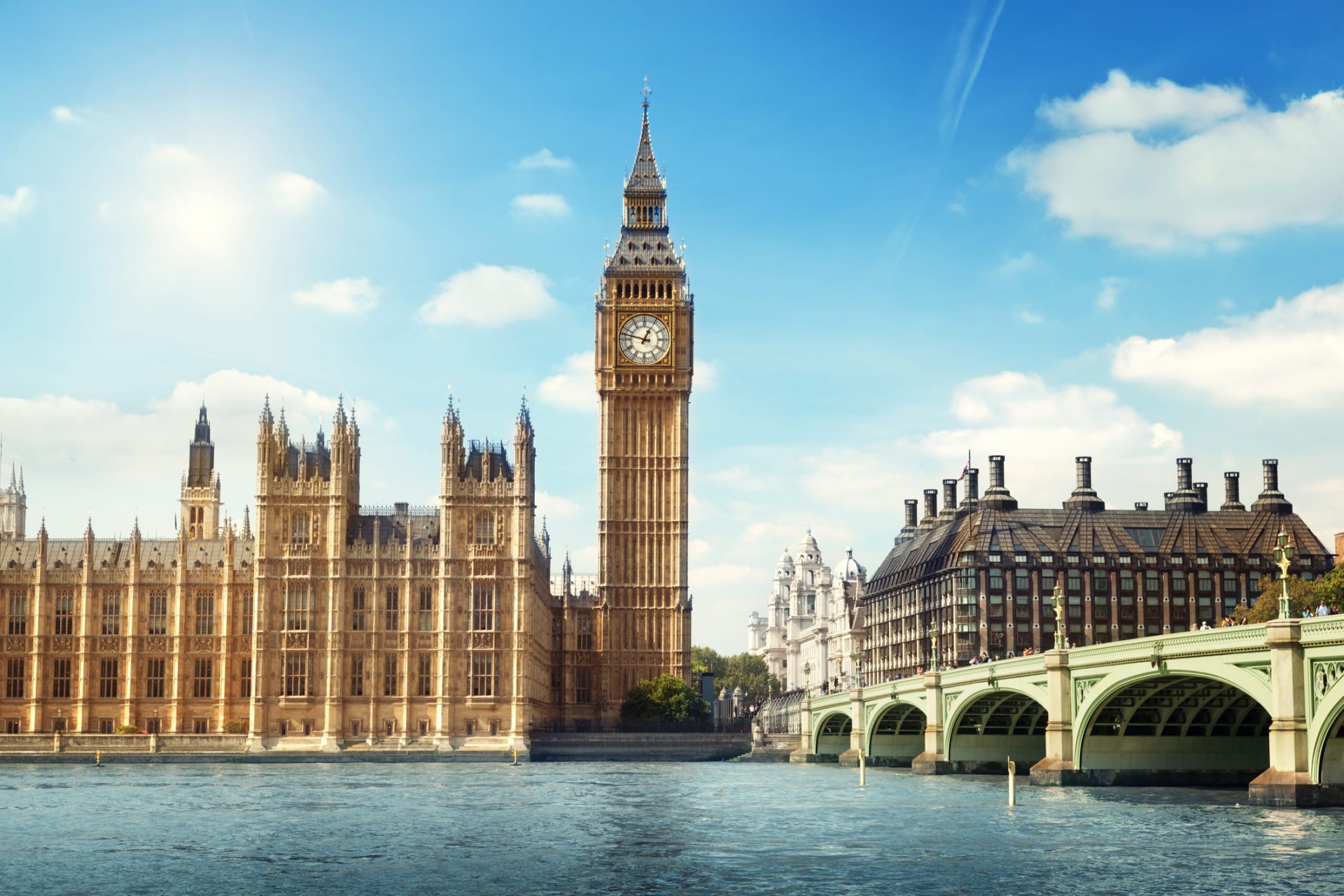
The tour takes you past the Houses of Parliament, the great Gothic Palace of Westminster on the banks of the Thames, where Britain's laws are made. At one end rises the clock tower everyone calls Big Ben, though strictly speaking, Big Ben is the name of the great bell inside it; the tower itself was renamed the Elizabeth Tower in 2012 to honour Queen Elizabeth II's Diamond Jubilee. Across the road stands Westminster Abbey, where almost every English and British monarch has been crowned since William the Conqueror in 1066, most recently King Charles III in 2023. The Abbey has also seen royal weddings and is the resting place of kings, queens, poets and scientists, including Isaac Newton and Charles Darwin.

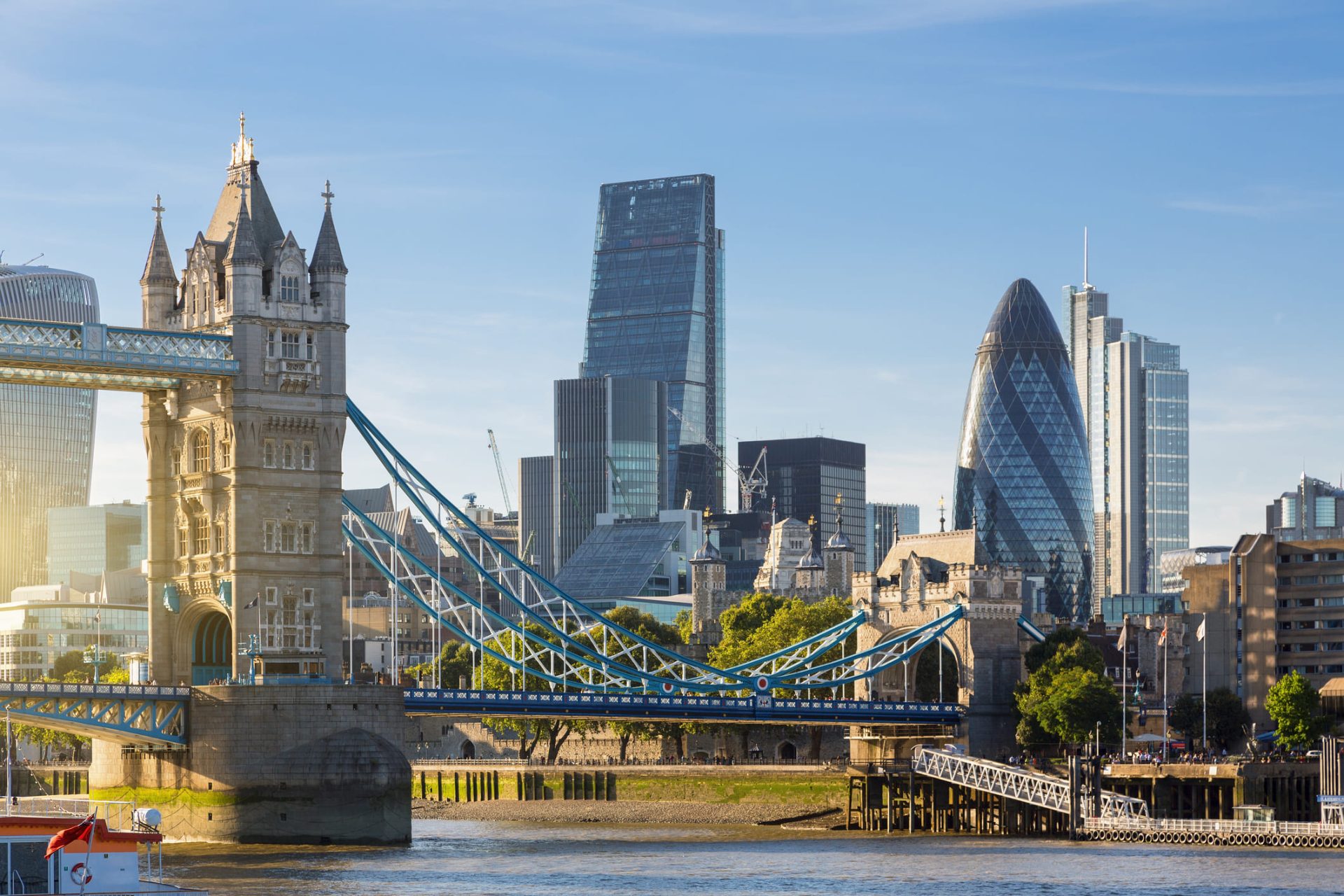
You'll see Trafalgar Square, with Nelson's Column guarded by four giant bronze lions, and Piccadilly Circus, with its huge electronic billboards and crowds of people at every hour. You'll drive past Hyde Park, one of London's great royal parks, and along the Thames to Tower Bridge, the magnificent Victorian bridge with two Gothic towers, opened in 1894. Its roadway still lifts to let tall ships pass underneath, several hundred times a year.

Then, at Buckingham Palace, you see the Changing of the Guard, one of the most famous ceremonies in the world. The King's Guard, in their scarlet tunics and tall black bearskin hats, march to the music of a military band as the old guard hands over to the new. The precision, the colour and the music make it unforgettable. Arrive early for a good view, as crowds gather in summer.

Next you visit Madame Tussauds, the world-famous wax museum. Its story begins with Marie Tussaud, a French artist who learned to model in wax and made death masks of famous victims during the French Revolution. She brought her collection to Britain and opened a permanent exhibition in London in 1835. Today you walk among incredibly lifelike figures of royals, world leaders, sports stars and film icons, including Bollywood's biggest names, and you can stand beside them for photographs. Many visitors find themselves leaning in close, half expecting the figures to blink.

In the afternoon you go behind the scenes at Lord's Cricket Ground, the Home of Cricket. For cricket lovers from India, this is a pilgrimage. Lord's was founded by Thomas Lord in the 18th century and has been at its current site since 1814. It's where India lifted the World Cup for the first time in 1983, when Kapil Dev's team beat the mighty West Indies in the final, and where Sourav Ganguly famously waved his shirt from the balcony after India's thrilling win in the 2002 NatWest final. On the tour you see the grand Victorian Pavilion, the famous Long Room, the players' dressing rooms with the honours boards that list every century-maker and five-wicket-taker in Test cricket at Lord's, and the MCC Museum, home of the tiny Ashes urn, cricket's best-known treasure.

The day ends with a ride on the London Eye, the giant observation wheel on the South Bank of the Thames. At 135 metres tall, it was the world's tallest observation wheel when it opened in 2000. Its glass capsules move so slowly that you barely feel them, and a full rotation takes about half an hour, giving you plenty of time to take in the view. As you rise, London unfolds in every direction: the Houses of Parliament right below you, the river curving away under its bridges, the dome of St. Paul's Cathedral, the towers of the City and, on a clear summer evening, the countryside far beyond. In the evening you return to your hotel for dinner.

As the coach crosses the river, look east along the Thames towards the Tower of London, the medieval fortress that has served as a royal palace, a prison and a treasury for nearly a thousand years. Its great White Tower was built by William the Conqueror. Today it guards the Crown Jewels, including the crown that holds the famous Koh-i-Noor diamond, a stone with a long and complicated history that began in India. The Tower is also home to a group of ravens, which are cared for by the Yeoman Warders. Legend says that if the ravens ever leave the Tower, the kingdom will fall, so at least six are always kept there. It's not part of today's programme, but it's a reason to come back to London one day.

Included today: guided London city tour, Changing of the Guard (subject to schedule), Madame Tussauds entry, Lord's Cricket Ground tour, London Eye ride, breakfast, lunch, dinner.

Good to know: the Changing of the Guard does not take place every day and can be cancelled in bad weather or for state events; if it doesn't take place, the group still sees Buckingham Palace. Lord's tours may change on match days.

Day 3
Windsor Castle and Stratford-upon-Avon | A royal fortress and Shakespeare's hometown

Windsor Castle and Stratford-upon-Avon | A royal fortress and Shakespeare's hometown

⌖ Manchester / Lancaster 🍽 Meals: Breakfast, Lunch, Dinner

Today you leave London and head into the English countryside, to a castle that has been home to kings and queens for nearly a thousand years, and to the town where the world's most famous playwright was born. After breakfast, you check out of your hotel and the coach drives west along the Thames valley to Windsor.

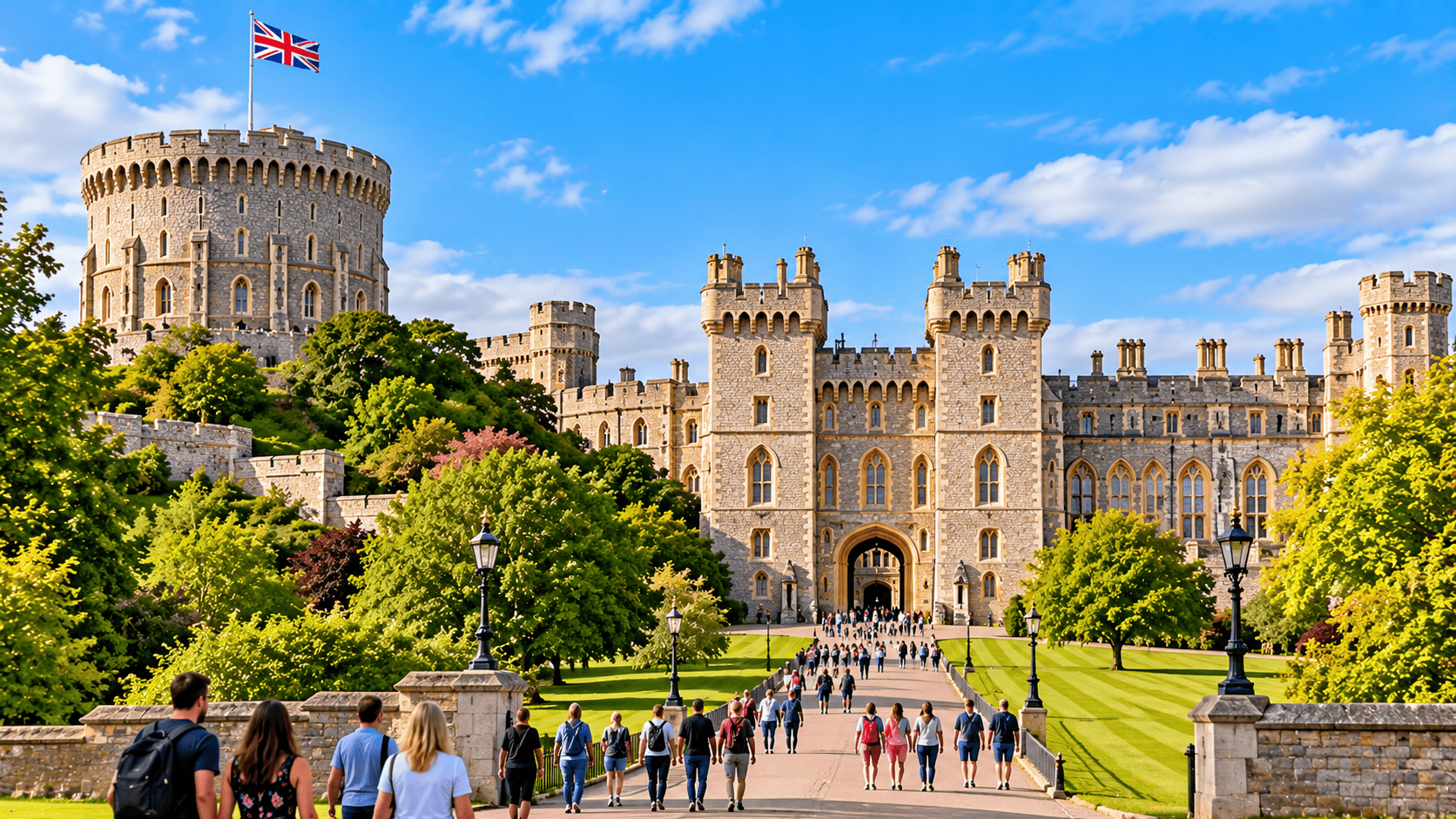
You see Windsor Castle long before you reach it: a great grey fortress of towers and battlements on a hill above the town, with the Royal Standard or the Union Flag flying from the Round Tower. William the Conqueror built the first castle here around 1070, soon after he conquered England, and every monarch since has lived in it, extended it or rebuilt it. Today it's the oldest and largest occupied castle in the world, and one of the official residences of the King. When the King is in residence, the Royal Standard flies from the Round Tower; when he's away, it's the Union Flag.

Inside, you walk through the magnificent State Apartments, still used by the royal family for state banquets and official ceremonies. The rooms are filled with treasures from the Royal Collection: paintings by Rembrandt, Rubens and Van Dyck, gilded ceilings, crystal chandeliers, and suits of armour. Don't miss Queen Mary's Dolls' House, the most famous dolls' house in the world, built in the 1920s with working lights, running water and even tiny books written by real authors of the time. Then step into St. George's Chapel, a masterpiece of Gothic architecture with soaring stone fan-vaulting and colourful banners of the Knights of the Garter. Many royal events have taken place here, including the wedding of Prince Harry and Meghan Markle in 2018, and it's the resting place of many monarchs, including Henry VIII and Queen Elizabeth II, who was buried here in 2022. On a sunny summer day, the castle's lawns and terraces look out over the green Berkshire countryside and the Long Walk, a tree-lined avenue stretching nearly five kilometres into Windsor Great Park.

On days when Windsor Castle is closed for royal events, the group visits Stonehenge instead, the mysterious prehistoric stone circle on Salisbury Plain. Its giant stones were raised around 5,000 years ago, without wheels or metal tools, and on the longest day of the year the sun rises in line with the stones. Nobody knows for certain why it was built, which makes it all the more fascinating.

From Windsor, the coach drives north through rolling green farmland to Stratford-upon-Avon, a historic market town in Warwickshire on the banks of the River Avon. Stratford is known around the world for one man: William Shakespeare, born here in 1564. He went on to become the greatest writer in the English language, the author of Romeo and Juliet, Hamlet, Macbeth and dozens of other plays still performed in every corner of the world, including India.

Walk along Henley Street to see Shakespeare's Birthplace, a timber-framed house with a crooked roof and leaded windows, where he grew up as the son of a glove-maker. The town centre is full of black-and-white half-timbered buildings from Tudor times, leaning over the streets at gentle angles. Stroll down to the river, where swans glide past colourful narrowboats moored along the banks and the Royal Shakespeare Theatre stands by the water. Shakespeare is buried in the town's Holy Trinity Church, by the river.

You may be surprised by how much of Shakespeare you already know. Many everyday English phrases come from his plays: "break the ice", "wild-goose chase", "heart of gold", "the be-all and end-all" and "vanished into thin air" were all used or invented by him. In Stratford, it feels as if he's still around every corner.

In the afternoon you continue north through the Midlands, the industrial heart of England, where the Industrial Revolution transformed the world in the 18th and 19th centuries, and on towards the north-west. Relax in the coach and watch the scenery change from gentle farmland to hills and moors. By evening you reach your hotel in the Manchester or Lancaster area, where dinner is waiting.

Just across the river from Windsor lies Eton College, one of the most famous schools in the world, founded in 1440 by King Henry VI. It has educated many British prime ministers, princes and writers, including Prince William and Prince Harry. Its pupils still wear a distinctive uniform of black tailcoats and waistcoats, and if you see a group of boys in tailcoats walking through Windsor's streets, you'll know where they're from. Windsor itself is a lovely little town, with cobbled lanes, tea rooms and shops winding down the hill below the castle walls to the river.

Included today: Windsor Castle entry (or Stonehenge on days the castle is closed), Stratford-upon-Avon visit, breakfast, lunch, dinner.

Good to know: bags are security-checked at Windsor Castle, and photography is not allowed inside the State Apartments or St. George's Chapel. Today has a long drive north, so keep water and snacks handy.

Day 4
Lake Windermere cruise, a Scotch whisky distillery and Glasgow | England's Lake District and into Scotland

Lake Windermere cruise, a Scotch whisky distillery and Glasgow | England's Lake District and into Scotland

⌖ Glasgow 🍽 Meals: Breakfast, Local Lunch, Dinner

Today you travel from the gentle beauty of England's Lake District to the wild hills of Scotland. After breakfast, you check out and the coach heads north into Cumbria and the Lake District National Park, the largest national park in England and a UNESCO World Heritage Site.

The Lake District is one of the most loved landscapes in Britain: a land of green fells and rocky peaks, dry-stone walls running across hillsides dotted with sheep, slate-roofed villages and long, glittering lakes. It's home to Scafell Pike, the highest mountain in England, and to more than a dozen large lakes. For two centuries it has inspired writers and artists. The poet William Wordsworth lived here and wrote his famous poem about a host of golden daffodils after seeing them by one of the lakes. Beatrix Potter, the author of the Peter Rabbit stories, fell in love with the area, bought farms here with the money from her books, and left thousands of acres of land to be protected forever. If you or your children grew up with Peter Rabbit, you're now in his world.

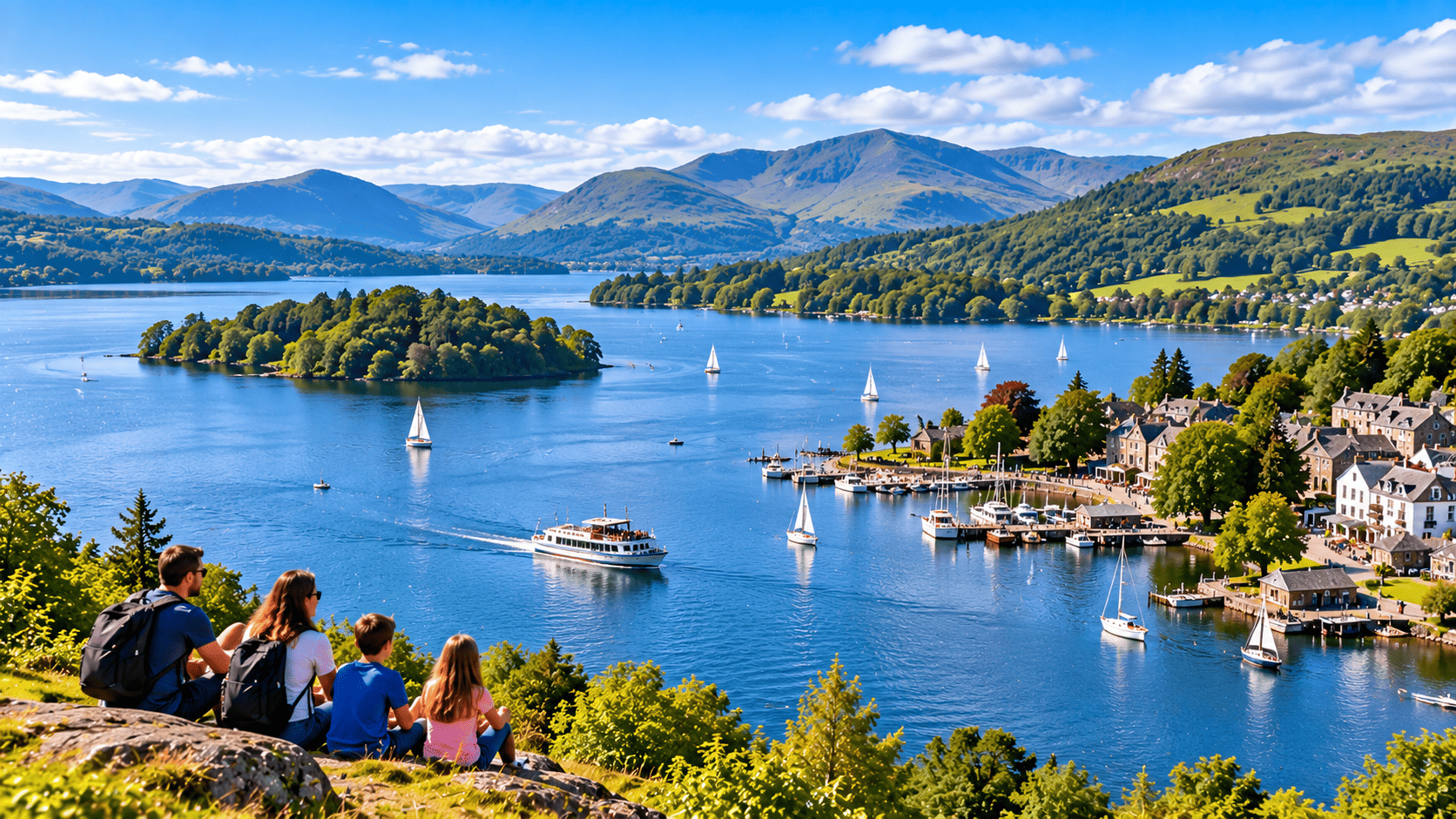
You board a boat for a cruise on Lake Windermere, England's largest natural lake, about 18 kilometres long, set among wooded hills with mountains rising beyond. In summer the lake is alive with sailing boats, rowing boats and steamers, and the shores are dotted with Victorian villas and boathouses, built when the railway first brought holidaymakers here in the 19th century. Sit back on deck and watch the scenery drift by: green islands, wooded bays, and on a clear day, the peaks of the high fells on the horizon. The air is fresh, the water sparkles, and the whole scene feels like a painting.

From the Lake District you drive north and cross the border into Scotland. Close to the border lies Gretna Green, a small village that became famous for runaway weddings: for centuries, Scottish law allowed young couples to marry without their parents' permission, unlike English law, so eloping English couples rushed across the border to marry at the village blacksmith's shop. Many couples still choose to marry there today.

Scotland has its own character, its own laws, its own parliament, its own banknotes and its own flag, the white diagonal cross of St. Andrew on a blue background. And it has its own national drink: Scotch whisky. This afternoon you visit a whisky distillery to see how it's made. The guide explains the whole process: barley is soaked and dried to make malt, which is mixed with hot water from the local springs, fermented with yeast, and distilled twice in great, gleaming copper stills. The spirit is then aged in oak casks for at least three years by law, and often far longer, which is where it gets its colour and flavour. The smell of the warehouses, where hundreds of casks lie in rows, is unforgettable. Tasting is optional, so you can enjoy the visit whether or not you drink.

In the evening you arrive in Glasgow, Scotland's largest city. Glasgow grew rich in the 18th and 19th centuries on trade, shipbuilding and engineering, and its grand Victorian buildings still show that wealth. It's also famous for its architecture, especially the work of the designer Charles Rennie Mackintosh, whose elegant, original style influenced design around the world; his most famous building is the Glasgow School of Art. Today Glasgow is a lively, friendly city of music, art, shopping and football. You check in to your hotel for two nights and enjoy dinner with the group.

Over the next two days, you'll see many symbols of Scottish identity. Tartan, the colourful checked cloth, has been woven in Scotland for centuries, and different patterns are linked to different families, or clans, so a Scot may wear a kilt in the tartan of their own clan. The sound of the bagpipes, haunting and stirring, is part of every Scottish celebration. In summer, towns and villages across the Highlands hold Highland Games, where strong men and women compete in traditional events such as tossing the caber, a tree trunk that must be flipped end over end, alongside piping, dancing and running races. You'll also start to hear Scottish words: a "loch" is a lake, a "glen" is a valley, "wee" means small and "bonnie" means beautiful. Scotland's national dish is haggis, a savoury pudding traditionally made with sheep's offal, oats and spices; vegetarian versions made with oats, beans and vegetables are now popular too, so even vegetarians can try a taste of Scotland.

Included today: Lake Windermere cruise, Scotch whisky distillery tour, breakfast, local lunch, dinner.

Good to know: today's lunch is at a local restaurant rather than an Indian one. Weather in the Lake District and Scotland changes quickly, even in summer, so carry a light rain jacket. The distillery visit is open to all ages, but tastings are only for adults.

Day 5
Edinburgh city tour, Edinburgh Castle and a Loch Lomond cruise | Scotland's capital and its bonnie banks

Edinburgh city tour, Edinburgh Castle and a Loch Lomond cruise | Scotland's capital and its bonnie banks

⌖ Glasgow 🍽 Meals: Breakfast, Lunch, Dinner

Today you discover two of Scotland's great treasures: its romantic capital city and its most famous loch. After breakfast, the coach drives east from Glasgow for about an hour to Edinburgh.

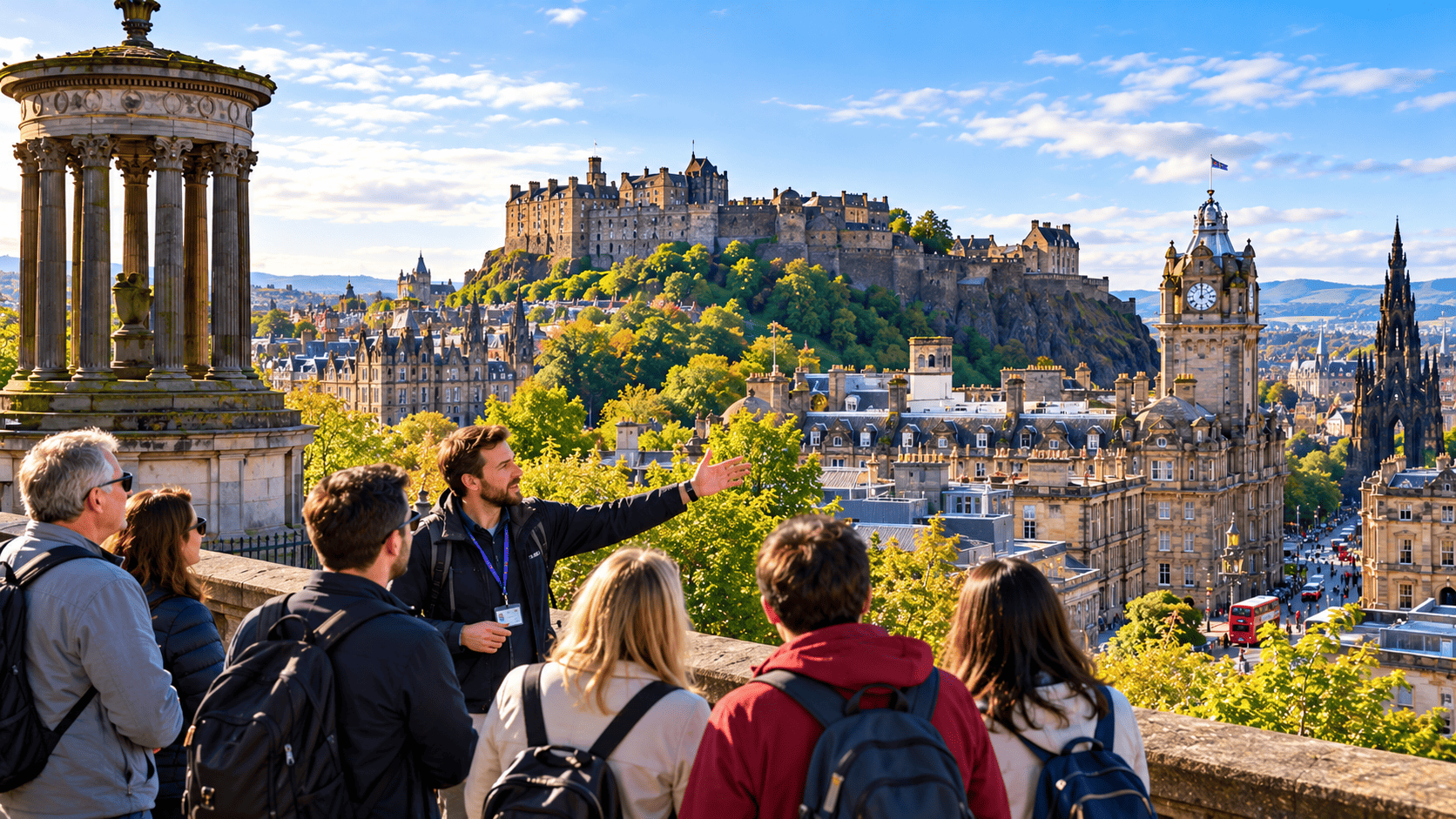
Edinburgh is one of the most beautiful cities in Europe, and one of the most dramatic. It's built on hills and ancient volcanic rock, so wherever you look there's a castle on a crag, a church spire against the sky, or a long view down to the sea. The city has two halves, and both together are a UNESCO World Heritage Site: the medieval Old Town, a maze of narrow lanes, steep staircases and tall stone tenements, and the elegant Georgian New Town, laid out in the 18th century with wide streets, gardens and graceful terraces.

Your local English-speaking guide shows you the highlights. In Princes Street Gardens rises the Scott Monument, a soaring Gothic spire more than 60 metres high, built in memory of the novelist Sir Walter Scott; it's one of the largest monuments to a writer anywhere in the world. Then you follow the Royal Mile, the historic street that runs downhill for about a Scots mile from the castle to the Palace of Holyroodhouse. Lined with old stone buildings, churches, shops selling tartan, cashmere and shortbread, and narrow alleys called "closes" that lead off into hidden courtyards, it's the heart of the Old Town. At the bottom stands Holyroodhouse, the King's official residence in Scotland, where Mary, Queen of Scots once lived. Nearby, in the grounds, you'll see a curious little building called Queen Mary's Bath House. Behind the palace rises Arthur's Seat, an ancient volcano in the middle of the city, its grassy slopes covered in yellow gorse in early summer.

Edinburgh is full of stories. J.K. Rowling wrote parts of the early Harry Potter books in the city's cafés, and many fans believe some of the names and places in the books were inspired by Edinburgh's old graveyards and winding streets. Every August, the city hosts the Edinburgh Festival Fringe, the largest arts festival in the world, when thousands of performers fill every theatre, pub and street corner with music, comedy and drama.

Then you visit Edinburgh Castle, the fortress that dominates the city's skyline from the top of Castle Rock, an extinct volcano. People have lived on this rock for nearly 3,000 years, and the castle has been besieged more times than almost any other in Britain. As you pass through its gates and climb its cobbled paths, you'll see St. Margaret's Chapel, built in the 12th century and the oldest building in Edinburgh, and the Great Hall with its magnificent wooden roof. In the Royal Palace, you can see the Honours of Scotland, the Scottish crown jewels, among the oldest in Britain, alongside the Stone of Destiny, the ancient stone on which Scottish kings were crowned. Every day except Sunday, at exactly one o'clock, a gun is fired from the castle walls, a tradition that began so that ships in the harbour could set their clocks. From the battlements, the views over the city to the sea and the hills beyond are spectacular.

In the afternoon you drive west to Loch Lomond, the largest lake in Great Britain by surface area, at the edge of the Highlands. It lies in Scotland's first national park, Loch Lomond and The Trossachs, and is famous in song: "The Bonnie Banks o' Loch Lomond", with its chorus about taking "the high road" and "the low road", is sung at gatherings across Scotland and around the world.

You board a boat for a cruise on the loch, and the scenery is pure Scotland. The water stretches away towards the north, where it narrows between steep, rugged mountains, including Ben Lomond, its slopes purple with heather in late summer. More than twenty small islands are scattered across the loch, some covered in ancient oak woods, some with the ruins of old castles and monasteries. Along the shores, little villages with stone cottages and flower gardens sit by the water. In summer the long evenings bathe everything in soft golden light, and the air is fresh and clean. Sit back on deck, breathe it in, and enjoy one of the most beautiful lakes in Europe.

In the evening you return to your hotel in Glasgow for dinner.

If your tour is in August, you may see the stands being built on the esplanade in front of Edinburgh Castle for the Royal Edinburgh Military Tattoo, a spectacular night-time show of massed pipes and drums, military bands and dancers from around the world, performed with the castle lit up behind them. It's one of the most famous events in Scotland.

Included today: guided city tour of Edinburgh, Edinburgh Castle entry, Loch Lomond cruise, breakfast, lunch, dinner.

Good to know: Edinburgh's Old Town is hilly and cobbled, so wear comfortable shoes. In August, during the festivals, the city is very busy. Scottish weather can change several times a day, so carry a light rain jacket.

Day 6
Manchester orientation tour and on to Birmingham | The cities that powered the modern world

Manchester orientation tour and on to Birmingham | The cities that powered the modern world

⌖ Birmingham 🍽 Meals: Breakfast, Lunch, Dinner

Today you head back south into England and visit two great cities that helped shape the modern world. After breakfast, you check out of your hotel in Glasgow and the coach drives south through the Southern Uplands of Scotland, a landscape of rolling hills, sheep farms and forests, and back across the border into England.

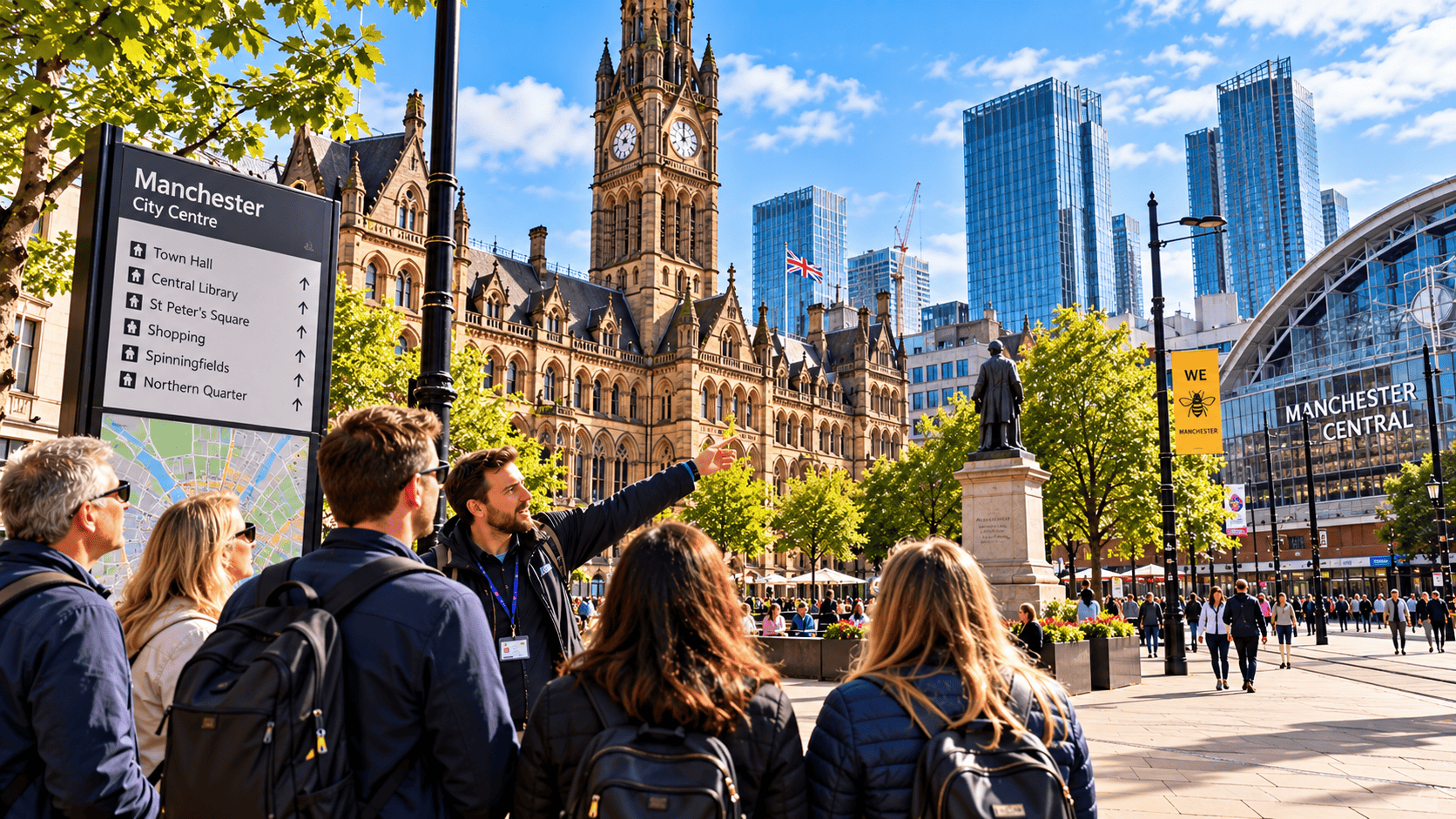
By late morning you reach Manchester, the city where the Industrial Revolution truly began. In the late 18th and 19th centuries, Manchester's cotton mills, powered by steam, spun cotton on a scale the world had never seen, earning it the nickname "Cottonopolis". Its factories, canals and railways changed how people lived and worked across the globe. The world's first passenger railway station opened here in 1830, on the line to Liverpool. Manchester has a long list of firsts: it was here that scientists split the atom for the first time and built the world's first stored-program computer in 1948. It was also the home of Emmeline Pankhurst, who led the campaign to win women the right to vote in Britain.

Your orientation tour shows you the city's mix of old and new. You'll see the great Victorian Gothic Town Hall, grand old warehouses converted into apartments and hotels, the colourful streets of the Northern Quarter, full of independent shops, cafes and street art, and the modern glass towers rising above the city centre. For millions of sports fans around the world, including many in India, Manchester means football: it's home to two of the most famous clubs on the planet, Manchester United at Old Trafford and Manchester City at the Etihad Stadium. Even if you don't follow football, you'll feel the passion. Manchester also has a strong South Asian connection: in the Rusholme area, a long stretch of road known as the Curry Mile is lined with Indian, Pakistani and Bangladeshi restaurants.

In the afternoon you continue south to Birmingham, Britain's second-largest city, in the heart of the English Midlands. Birmingham was once called "the workshop of the world", famous for making everything from buttons and buckles to steam engines and guns. It's criss-crossed by canals built during the Industrial Revolution to carry coal and goods, and locals like to say the city has more miles of canal than Venice. Today the old canal towpaths are lined with restaurants, bars and narrowboats, and they make for a lovely evening stroll. Birmingham's Jewellery Quarter has been making jewellery for over 250 years and still produces a large share of Britain's jewellery.

Birmingham is also one of the most diverse cities in Britain, with a large Indian, Pakistani and Bangladeshi community, and it's famous in Britain for the balti, a style of curry cooked quickly and served in a thin steel bowl, which became popular here in the 1970s. You'll find Indian groceries, sweet shops and clothing stores, and a warm sense of home.

In the evening you check in to your hotel in Birmingham for the night, and dinner is waiting. After two days in Scotland, you're back in the heart of England, with Oxford and London still to come.

Manchester has more stories to discover. The world's first professional football league, the Football League, was founded at a meeting in the city in 1888, which is why so many fans see Manchester as one of the true homes of the game. The John Rylands Library, a Victorian Gothic building that looks more like a cathedral than a library, holds some of the world's rarest books and manuscripts. And on the site of the old 1830 railway station stands the Science and Industry Museum, where steam engines and textile machines tell the story of the city's industrial past. Manchester also has its own Chinatown, a colourful music scene that gave the world bands like Oasis and The Smiths, and a reputation for warm, friendly people with a famously dry sense of humour.

Birmingham, too, has a sweet surprise. Just outside the city is Bournville, the village built by the Cadbury family in the late 19th century for the workers of their chocolate factory. The Cadburys were Quakers who believed in treating workers well, so they built houses with gardens, parks and sports fields, a model village far ahead of its time. Cadbury chocolate, so familiar in India, still comes from here, and Cadbury World tells the story. In the city centre, the Bullring has been a market since the 12th century, when the town was granted the right to hold a market, and today it's one of Britain's biggest shopping centres, with the striking modern Selfridges building covered in thousands of shiny aluminium discs. Birmingham's people are known as "Brummies", and their accent is one of the most distinctive in Britain.

Included today: Manchester orientation tour, breakfast, lunch, dinner.

Good to know: today has long coach journeys, from Glasgow to Manchester and on to Birmingham, so keep water, snacks and a neck pillow on the coach.

Day 7
Oxford orientation tour and back to London | The city of dreaming spires

Oxford orientation tour and back to London | The city of dreaming spires

⌖ London 🍽 Meals: Breakfast, Lunch, Dinner

Today you visit one of the most famous university towns in the world before returning to London for your final night. After breakfast, you check out of your hotel in Birmingham and the coach drives south through the green countryside of the Midlands and the Cotswold edge, past villages of honey-coloured stone, thatched cottages and fields of grazing sheep.

By late morning you reach Oxford. The poet Matthew Arnold called it "the city of dreaming spires", and as you approach, you'll see why: towers, domes and pinnacles of golden stone rise above the trees, as if from a fairy tale. Oxford is the oldest university in the English-speaking world, with teaching here going back to at least 1096, almost a thousand years. Rather than a single campus, the university is made up of more than thirty colleges, each with its own buildings, chapel, dining hall, library and quiet green quadrangles, scattered across the city centre. Students still live, eat and study in buildings that have hardly changed in centuries.

Oxford has educated an extraordinary list of people: more British prime ministers than any other university, as well as scientists, writers and world leaders, including India's first woman prime minister, Indira Gandhi, who studied at Somerville College, and former Prime Minister Manmohan Singh, who earned his doctorate here. Walking through its streets, you're following in the footsteps of some of the most influential people in history.

Your orientation tour takes you past the highlights. The Radcliffe Camera, a magnificent round building with a great dome, is one of the most photographed buildings in Oxford; it's a reading room of the Bodleian Library, one of the oldest libraries in Europe, which by law receives a copy of every book published in Britain and Ireland. Nearby, a little covered bridge arches over a lane between two parts of Hertford College; everyone calls it the Bridge of Sighs, after the famous bridge in Venice. You'll pass the Sheldonian Theatre, designed by Sir Christopher Wren, where graduation ceremonies are still held in Latin, and the busy shops and cafes of the High Street and Broad Street.

Then comes Christ Church, the grandest of Oxford's colleges, with its great Tom Tower and vast quadrangle. Harry Potter fans will recognise it: its dining hall inspired the Great Hall of Hogwarts, and its grand staircase appears in the first two films. Christ Church also gave the world another famous story: Lewis Carroll, a mathematics teacher at the college, wrote Alice's Adventures in Wonderland for Alice Liddell, the young daughter of the college's dean. Look out for Alice-themed shops in the city.

In summer, Oxford is at its most charming. Students and visitors glide along the rivers in flat-bottomed punts, pushing themselves along with long poles, often with more laughter than skill. The college gardens are in full bloom, and people sit on the grass in the parks reading and picnicking in the sunshine.

In the afternoon you drive back to London, about an hour and a half away, and check in to your hotel for your last night. If there's time, enjoy a final evening in the city: take a walk along the South Bank of the Thames, where street performers entertain the crowds in summer, or wander through the lively streets of Covent Garden and the West End, home to dozens of theatres. London summer evenings are long and light, perfect for one last stroll. Then gather with the group for your farewell dinner, full of stories from London, the Lake District and Scotland.

Oxford has inspired some of the most loved stories in the world. J.R.R. Tolkien, the author of The Hobbit and The Lord of the Rings, was a professor here, and so was his friend C.S. Lewis, who wrote The Chronicles of Narnia. The two writers met regularly with a group of friends called the Inklings in an Oxford pub, the Eagle and Child, to read and discuss their work. Oxford is also home to the Oxford English Dictionary, the most complete record of the English language, which took more than 70 years to complete in its first edition.

If you have a few minutes of free time, step into the Covered Market, opened in 1774, where small shops sell cakes, cheese, flowers and gifts under one roof, or browse the famous Blackwell's bookshop on Broad Street, whose underground room is one of the largest book showrooms in the world. Not far from Oxford, near the village of Woodstock, stands Blenheim Palace, a grand country house and UNESCO World Heritage Site where Winston Churchill was born in 1874. It's not on today's route, but you may spot signs to it on the way.

Included today: Oxford orientation tour, breakfast, lunch, dinner.

Good to know: some Oxford colleges limit or close visitor access during exams and graduation ceremonies, especially in May and June, so the tour may show you colleges from outside. Wear comfortable shoes for walking.

Day 8
Departure from London | Home with Britain in your heart

Departure from London | Home with Britain in your heart

⌖ London 🍽 Meals: Breakfast

Your British holiday comes to an end today. Before the bustle of checking out begins, take a quiet moment over breakfast and perhaps try a very British habit: a proper cup of tea. The British drink an estimated hundred million cups of tea a day, and their love of tea, strong and usually with milk, has its roots in the long history between Britain and India. Much of the tea that made the British tea habit came from the gardens of Assam and Darjeeling. So as you sip your last cup in London, you're drinking a little piece of a story the two countries share.

Look back on the past week. You arrived in London and saw the city's great landmarks: the Houses of Parliament and Big Ben, Westminster Abbey, Trafalgar Square, Tower Bridge and the Changing of the Guard at Buckingham Palace. You met the stars at Madame Tussauds, stood in the Long Room at Lord's where India won the World Cup in 1983, and watched the city spread out below you from the London Eye. You walked through the State Apartments of Windsor Castle and saw Shakespeare's birthplace in Stratford-upon-Avon. You cruised across Lake Windermere in the Lake District, learned how Scotch whisky is made, and discovered Glasgow. You climbed the Royal Mile to Edinburgh Castle and sailed on the bonnie banks of Loch Lomond. You saw the industrial power of Manchester and Birmingham, and the dreaming spires of Oxford. That's an extraordinary amount of Britain in a single week.

Now it's time to pack. If you've been shopping, you may have collected British tea, shortbread from Scotland, a tartan scarf or cashmere from Edinburgh, a Shakespeare souvenir, cricket memorabilia from Lord's, or chocolate. Wrap anything fragile carefully in clothes and place it in the middle of your suitcase. Any liquids over 100 ml, including bottles of whisky or perfume, must go in your checked baggage. Keep your passport, tickets, medicines and a light jacket in your hand luggage.

After breakfast, you check out and the coach takes you to the airport. As you drive through London's streets one last time, look out for the red buses, the black cabs and the familiar landmarks slipping past the window. You may find yourself already making a list of things you want to see next time: perhaps the Tower of London, the British Museum, a West End musical or the Scottish Highlands.

This is also the moment to say goodbye to your tour manager, who has guided you from London to the Highlands and back, and to the new friends you've made. Over a week of coach journeys, castles, lakes and shared meals, many travellers discover that the people they met on tour have become part of the holiday's best memories. Exchange numbers, promise to share photos, and perhaps start planning your next adventure together.

At the airport, there's time for some last-minute shopping and a final cup of tea or coffee. London's airports have plenty of shops selling British biscuits, chocolates, tea and souvenirs, so if you've forgotten anyone on your list, this is your chance.

As your plane climbs over the green fields of England and turns east towards home, you'll carry with you the memories of a remarkable week: royal palaces and ancient castles, peaceful lakes and wild Scottish hills, Shakespeare and cricket, and the friendly welcome of a country with deep ties to India.

If this was your first visit to Britain, you've seen the essentials, but London alone could keep you busy for weeks. Many of its greatest museums are free to enter: the British Museum, with treasures from every corner of the world, including a remarkable collection from India; the Natural History Museum, with its giant dinosaur skeletons; and the Victoria and Albert Museum, home to one of the finest collections of Indian art outside India. Beyond the museums, there's the Tower of London and its Crown Jewels, the botanical wonders of Kew Gardens, a West End musical, a tour of the studios where the Harry Potter films were made, and the Scottish Highlands, with Loch Ness, the Isle of Skye and endless mountain roads. Keep a list: it will make planning your next trip all the more exciting.

One last British habit before you go: the queue. The British are famous for queuing patiently and politely for everything, from buses to coffee, and anyone who pushes in is met with a disapproving look. After a week here, you may find you've picked up the habit yourself. And you've probably noticed how often the British say "sorry" and "thank you", even when there's nothing to apologise for. It's one of the small courtesies that make travelling here so pleasant.

Included today: breakfast, departure transfer to the airport.

Good to know: book a flight that leaves at least 3 hours after the transfer reaches the airport; we'll confirm the transfer time when you book.

Hotel confirmation

Hotel names will be provided after booking, subject to availability and confirmation. We do not hold hotel confirmations before booking.

Inclusions

Hotels: Guaranteed 04 Star

Meals: All Meals Included

Sightseeing: All Tours included

Exclusions

Flights

Visa

Insurance

GST

TCS

Important Terms

Booking and payment

  • At booking: 30% of the tour cost per person.
  • 30 days before departure: the full balance.
  • Booking within 30 days of departure: 30% to book, and the balance as soon as your booking is confirmed.

Cancellation charges

From booking until 36 days before departure₹30,000 per person35 to 29 days before departure₹60,000 per person28 to 15 days before departure50% of the tour cost14 to 8 days before departure75% of the tour cost7 days or less before departure, or no-show100% of the tour cost


UK visa and trip cost

The UK is not part of the Schengen area, so Indian travellers need a separate UK Standard Visitor visa. Read our UK visa for Indians guide.

London is one of the world's more expensive cities, which is why a group tour with hotels, coach, entrances and Indian meals included usually works out cheaper than planning a London trip yourself. Send us your dates for the exact cost.

London & Scotland Tour – Glimpses of UK, 7 Nights / 8 Days FAQs

Do I need a Schengen visa for this UK tour?
No. You need a UK Standard Visitor visa only. If you add Paris or Switzerland, you will also need a Schengen visa.
Does the tour include Scotland?
Yes. You spend two nights in Glasgow, with a guided tour of Edinburgh and Edinburgh Castle and a cruise on Loch Lomond.
How much does a London trip cost from India?
It depends on the departure, room sharing and flights. Group tours keep the cost down by including hotels, meals and entrances. Send us an enquiry for a quote.
Are flights included?
No. This is a land tour that starts in London and ends in London. We can add return flights from Delhi, Mumbai or your city, timed to match the group transfers.
Is Jain or vegetarian food available?
Yes. Most lunches and dinners are Indian meals with Jain, vegetarian and non-vegetarian options, and breakfast is a continental buffet at the hotel.
Gallery

Europe photos: London & Scotland Tour – Glimpses of UK, 7 Nights / 8 Days

Plan your Europe holiday with Dreamland Vacations

Share your dates, travellers and comfort preference. Our team will guide you with the next best step.

Get a free quote
Itinerary Get a quote
WhatsApp