Amsterdam, Brussels, Paris & Switzerland Tour – 9 Nights / 10 Days
Standard Package

Amsterdam, Brussels, Paris & Switzerland Tour – 9 Nights / 10 Days

Four countries in 9 nights / 10 days: the Netherlands with Madurodam and Keukenhof or Zaanse Schans, Brussels, three nights in Paris with Disneyland®…

⌖ Europe ✦ Family & senior friendly planning
Package snapshot
DestinationEurope
Travel styleStandard Package

Want to customize this package?

Share your dates and travellers. This enquiry is free. Small changes to a standard itinerary—such as a date change or an extra day—can be discussed with our team.

We’ll send verification codes to your WhatsApp number and email. Indian numbers can be entered without +91; for other countries, include the country code.
Verification required before submitting.
Your holiday

Amsterdam, Brussels, Paris & Switzerland Tour – 9 Nights / 10 Days: overview

Tulips, the City of Light and the Swiss Alps

Imagine gliding along a canal in Amsterdam under a long summer sky, tall gabled houses leaning over the water, then watching the Eiffel Tower sparkle at night, and a few days later standing in the snow at the Top of Europe with glaciers stretching away beneath you. This tour starts in the Netherlands and ends in the Swiss Alps, and it's planned so you see the very best of Western Europe without having to think about a thing.

You spend two nights near Amsterdam, with Madurodam's miniature Holland, the Keukenhof tulip gardens on departures until 10 May, the windmills of Zaanse Schans later in the season, and a canal cruise. Then you drive through Belgium, with the Grand Place, Manneken Pis and the Atomium in Brussels. You spend three nights in Paris for a guided city tour, the Eiffel Tower top level, Versailles, a Seine cruise and a full day at Disneyland® Paris, then travel via Geneva into the Swiss Alps for Jungfraujoch, Mt. Titlis, Lucerne, Bern, the Lindt Home of Chocolate and the Rhine Falls.

A professional tour manager travels with the group, you stay in superior 4-star hotels, and Indian lunches and dinners are included on most days. See all our Europe tour packages.

Good to know

Package typeStandard Package
Planning supportSmall changes by enquiry
Best forFamilies, couples & seniors
Get a free quote
Trip highlights
✦ Arrive in Amsterdam | Welcome to the city of canals
✦ Madurodam, Keukenhof (until 10 May) or Zaanse Schans (from 11 May), and an Amsterdam canal cruise | Holland in miniature, in bloom and on the water
✦ Brussels – Atomium, Grand Place and Manneken Pis, then on to Paris | The capital of Europe and the road to the City of Light
✦ Paris city tour, Eiffel Tower top level, Versailles and a Seine cruise | The City of Light from the top
✦ Full day at Disneyland® Paris | A day of magic for all ages
✦ Paris to Geneva | Into Switzerland and the shores of Lake Geneva
Day-wise plan

Europe itinerary: day by day

Day 1
Arrive in Amsterdam | Welcome to the city of canals

Arrive in Amsterdam | Welcome to the city of canals

⌖ Netherlands 🍽 Meals: Dinner

Your European journey begins in the Netherlands, a country that has quite literally made itself out of the sea. As your plane descends towards Amsterdam's Schiphol Airport, look out of the window: the land below is perfectly flat, criss-crossed by long, straight canals and ditches that divide the fields into neat green rectangles, with farmhouses, greenhouses, windmills and modern wind turbines dotted across the landscape. In spring, you may even see the bulb fields in brilliant stripes of red, yellow and pink. You may be surprised to learn that Schiphol itself lies a few metres below sea level, on the bed of a large lake that the Dutch drained in the 19th century; its name is said to come from the ships that once sank in the lake's storms.

After you clear immigration and collect your bags, walk out into the arrivals hall, where our travel professional is waiting to welcome you and help you to your hotel. From this moment, everything is arranged: coaches, hotels, guides, tickets and meals. Your tour manager will be with you throughout the next ten days, across four countries.

The Netherlands has an extraordinary history for such a small country. In the 17th century, the Dutch Golden Age, Amsterdam was the richest city in the world, and Dutch ships sailed to every corner of the globe. The Dutch East India Company, founded in 1602, traded in spices, silk and porcelain across Asia, and for a time the Dutch had trading posts along the coasts of India, in places like Pulicat on the Coromandel Coast and Kochi in Kerala, where Dutch-era buildings still stand. The wealth of that age built Amsterdam's famous ring of canals, lined with the tall, narrow merchants' houses you'll see tomorrow, and paid for the paintings of artists like Rembrandt and Vermeer.

Amsterdam today is one of the most relaxed, open and lively cities in Europe. It's a city of water, with around 165 canals and well over a thousand bridges, and a city of bicycles, where locals of every age cycle everywhere, chatting, carrying shopping and even children on the front of their bikes. It's also a city of museums: the Rijksmuseum, with Rembrandt's The Night Watch; the Van Gogh Museum, with the world's largest collection of his work; and the Anne Frank House, where a young Jewish girl and her family hid from the Nazis for more than two years during the Second World War, and where she wrote the diary that has moved millions of readers around the world.

Once you reach your hotel and check in, take time to rest after the journey. In summer, the days in the Netherlands are wonderfully long, with the sun setting after ten o'clock in June, so there's plenty of light for a gentle walk if you have the energy. Look out for the Dutch way of life: the houses with large windows and no curtains, so you can see right into cosy living rooms; the bicycles parked everywhere; and the flowers, which the Dutch buy and give constantly, in every home and on every windowsill.

A few practical tips will help you settle in. The Netherlands uses the euro, and cards are accepted almost everywhere; in fact, some places don't accept cash at all. Be careful when crossing the road: bicycle lanes are everywhere, often painted red, and cyclists move fast and expect pedestrians to keep out of their way. Most Dutch people speak excellent English, so you'll find it very easy to get by, though a friendly "dank je wel" (thank you) is always appreciated.

In the evening the group comes together for dinner, a chance to meet your fellow travellers and to hear your tour manager introduce the journey ahead: two days in Holland, then Belgium, Paris and Switzerland. Then it's back to the hotel for a good night's sleep. Tomorrow you'll see Holland in miniature, Holland in bloom, and Amsterdam from the water.

The Dutch have a favourite word that sums up their way of life: gezellig. It's hard to translate, but it means a warm, cosy, friendly atmosphere, the feeling of being with good company in a comfortable place, perhaps over coffee and cake, or a long dinner with friends. You'll hear it everywhere. Look out, too, for Dutch treats: poffertjes, tiny, fluffy pancakes dusted with icing sugar and served with butter; stroopwafels, thin waffles sandwiched with caramel syrup; and fresh, warm apple pie. The long Dutch connection with Indonesia, once a Dutch colony, has also given the Netherlands a love of spicy food, and many Dutch towns have Indonesian restaurants serving rijsttafel, a feast of many small dishes. If you happen to travel in late April, you'll see the whole country dressed in orange for King's Day, the King's birthday, when the streets and canals of Amsterdam turn into one enormous street party.

Included today: arrival transfer, dinner.

Good to know: hotel check-in is usually mid-afternoon. Dutch weather is changeable even in summer, around 18–24°C with occasional showers and wind, so keep a light rain jacket handy.
Day 2
Madurodam, Keukenhof (until 10 May) or Zaanse Schans (from 11 May), and an Amsterdam canal cruise | Holland in miniature, in bloom and on the water

Madurodam, Keukenhof (until 10 May) or Zaanse Schans (from 11 May), and an Amsterdam canal cruise | Holland in miniature, in bloom and on the water

⌖ Netherlands 🍽 Meals: Breakfast, Packed Lunch, Dinner

Today you discover three faces of the Netherlands. After breakfast, the coach takes you to The Hague, the seat of the Dutch government and the home of the International Court of Justice, and to Madurodam, the Netherlands in miniature.

Madurodam opened in 1952 and was named after George Maduro, a young law student from the Caribbean island of Curaçao who fought bravely in the Dutch resistance during the Second World War and died in a concentration camp in 1945. His parents funded the park in his memory. Walking in, you suddenly become a giant. At a scale of 1 to 25, the country's most famous sights are spread out at your feet in perfect detail: royal palaces and the medieval parliament buildings of The Hague, Amsterdam's canals and narrow houses, windmills, tulip fields, the cheese market of Alkmaar, the giant port of Rotterdam with container ships sailing in and out, dykes holding back the sea, and Schiphol airport with planes moving along the runway. Many models come to life at the press of a button, and both children and adults love it.

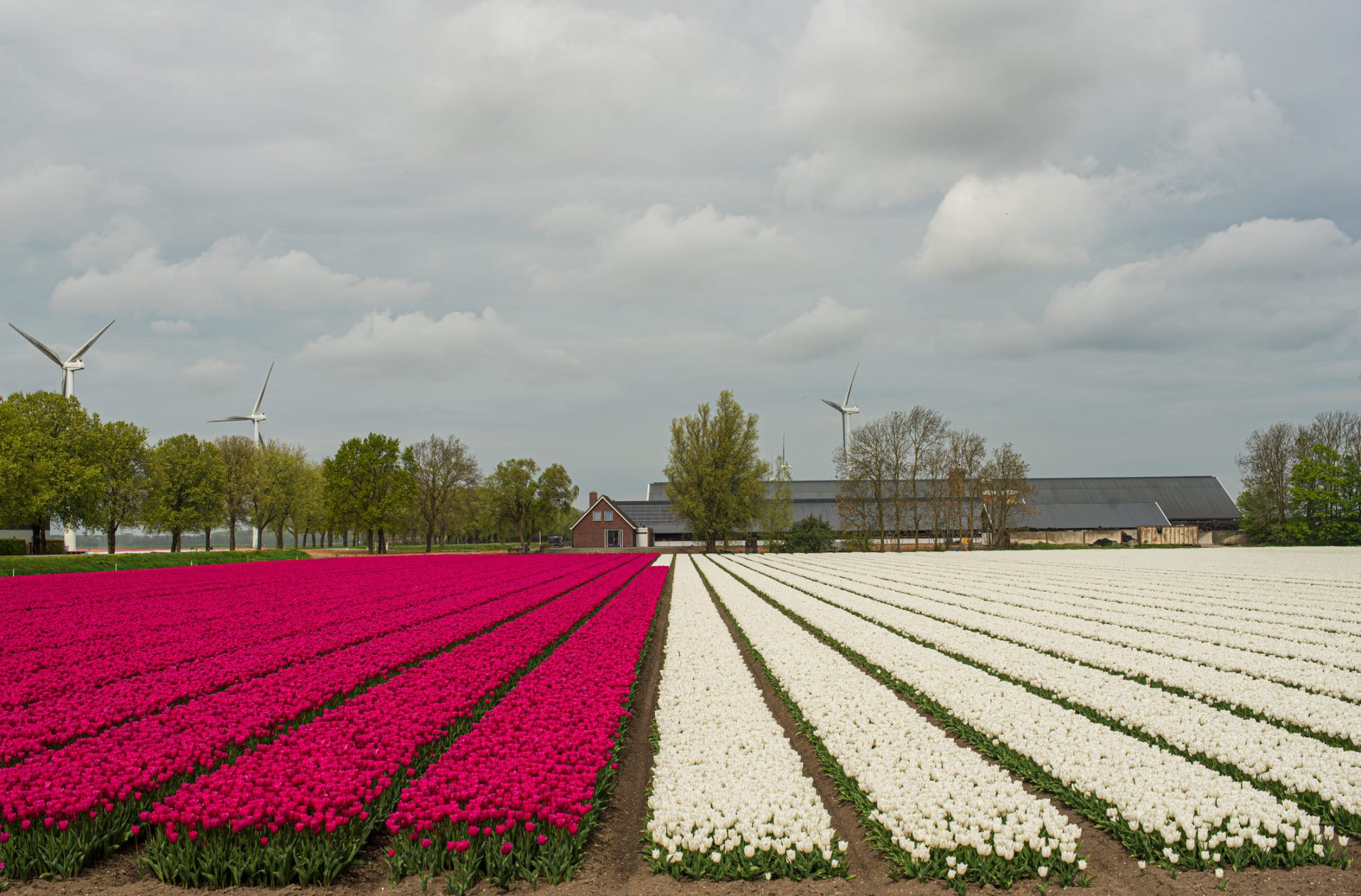
Then, if your tour runs until 10 May, you visit the Keukenhof Gardens near Lisse, often called the most beautiful spring garden in the world. Every autumn, gardeners plant around seven million bulbs by hand across 32 hectares of parkland, and from late March to early May, they burst into a breathtaking display of tulips, daffodils and hyacinths in every colour imaginable, arranged along lakes, streams, fountains and winding paths. The scent of hyacinths fills the air, and pavilions display rare varieties and extraordinary flower arrangements. Around the garden, the bulb fields stretch to the horizon in vivid stripes, like a giant painted carpet.

If your tour runs from 11 May, you visit the Zaanse Schans instead, a village of historic windmills and green wooden houses on the banks of the River Zaan. In the 17th and 18th centuries, the Zaan region was one of the world's first industrial areas, with hundreds of windmills grinding spices, pressing oil, making paint and sawing timber for the great Dutch sailing ships. A row of these windmills still stands along the riverbank, their sails turning slowly in the breeze, and some still work. In the workshops, you'll see how wooden clogs are carved and how traditional Dutch cheeses like Gouda and Edam are made, and you can taste the results.

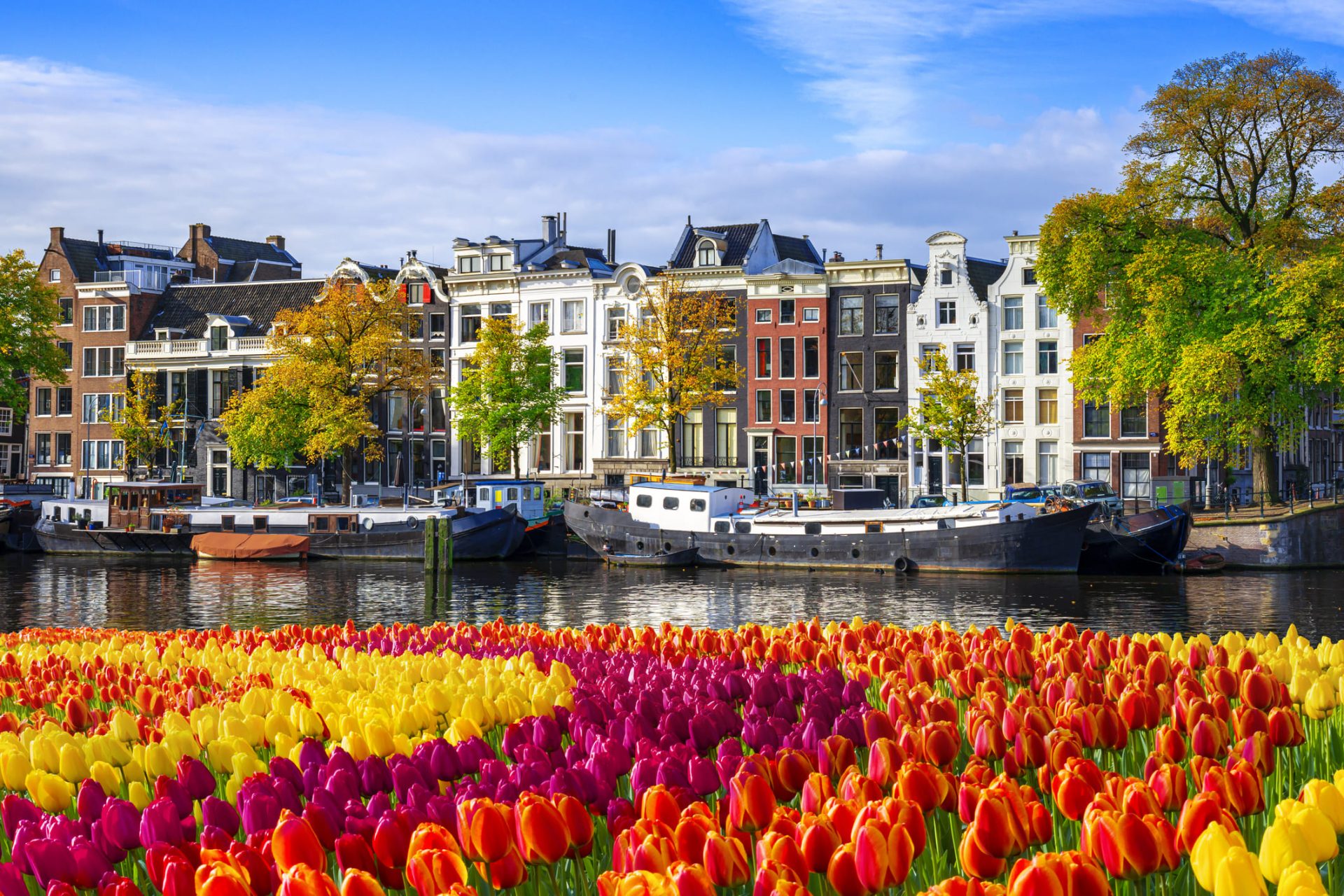
A packed lunch keeps you going, and in the afternoon, you drive to Amsterdam for a cruise on its famous canals. You board a glass-topped boat and glide through the canal ring, a UNESCO World Heritage Site, dug in the 17th century when the city was the richest port in the world. Through the glass roof, you look up at rows of tall, narrow canal houses with decorated gables shaped like steps, bells and necks, many leaning slightly against each other. Look for the wooden beams with hooks at the top of the gables: because the staircases inside are so steep and narrow, furniture is still hoisted up on ropes and taken in through the windows. You pass under arched bridges, past houseboats with flowers on their decks, and alongside the grand merchant houses of the Herengracht, the Gentlemen's Canal. The commentary on board tells you the stories of the city as you go. In summer, the canals are alive with small boats, and people sit at café terraces along the water in the sunshine.

In the evening you return to your hotel for dinner, after a day of three Hollands: the miniature, the colourful and the real.

The Hague, where Madurodam stands, is a city of peace and justice. Its Peace Palace, a grand building opened in 1913 with funds from the American industrialist Andrew Carnegie, houses the International Court of Justice, the main court of the United Nations, where countries settle their disputes. Nearby, the Mauritshuis museum holds Vermeer's famous painting Girl with a Pearl Earring. In Amsterdam, look for some of the city's curiosities from the canal boat: the Magere Brug, or Skinny Bridge, a white wooden drawbridge over the Amstel River, lit up beautifully at night; houses so narrow that they're only one window wide, because houses were once taxed on the width of their fronts; and the Royal Palace on Dam Square, which, like almost every old building in Amsterdam, stands on wooden poles driven deep into the soft, wet ground; it rests on 13,659 of them. Amsterdam also has more than 2,000 houseboats moored along its canals, some of them beautiful floating homes with gardens on their roofs. If you're lucky, you'll pass one with a cat sunning itself on the deck.

Included today: Madurodam entry, Keukenhof Gardens entry (until 10 May) or Zaanse Schans visit (from 11 May), Amsterdam glass-top canal cruise, breakfast, packed lunch, dinner.

Good to know: Keukenhof opens only in spring, and peak bloom depends on the weather that year. Cheese and clog demonstrations at Zaanse Schans depend on the workshops' schedules on the day.

Day 3
Brussels – Atomium, Grand Place and Manneken Pis, then on to Paris | The capital of Europe and the road to the City of Light

Brussels – Atomium, Grand Place and Manneken Pis, then on to Paris | The capital of Europe and the road to the City of Light

⌖ Paris 🍽 Meals: Breakfast, Lunch, Dinner

Today you travel through Belgium to France. After breakfast, you check out of your hotel and the coach heads south through the flat Dutch countryside, crossing the great rivers of the Rhine delta, and over the border into Belgium, the second country of your tour.

Your first stop in Brussels is the Atomium, one of the most extraordinary buildings in Europe. Built for the World's Fair of 1958, it's a 102-metre-high model of an iron crystal, magnified 165 billion times: nine gleaming steel spheres, each about 18 metres across, connected by tubes containing escalators and lifts. It was meant to stand for only six months, but it became so loved that it was kept, and today it's one of Belgium's most famous symbols. In the summer sun, its spheres shine like mirrors. It's a great spot for photographs.

Then you drive into the heart of the city. Brussels is the capital of Belgium and home to the main institutions of the European Union, including the European Commission, whose headquarters, the Berlaymont, is a vast star-shaped glass building, and the European Parliament. It's also a city of two official languages, French and Dutch, so street signs are written in both, and a city with an enormous international population: about a third of its residents were born abroad. In its quieter neighbourhoods, Brussels is also famous for its beautiful Art Nouveau houses, built around 1900 by architects like Victor Horta, whose flowing iron and glass designs are now protected by UNESCO.

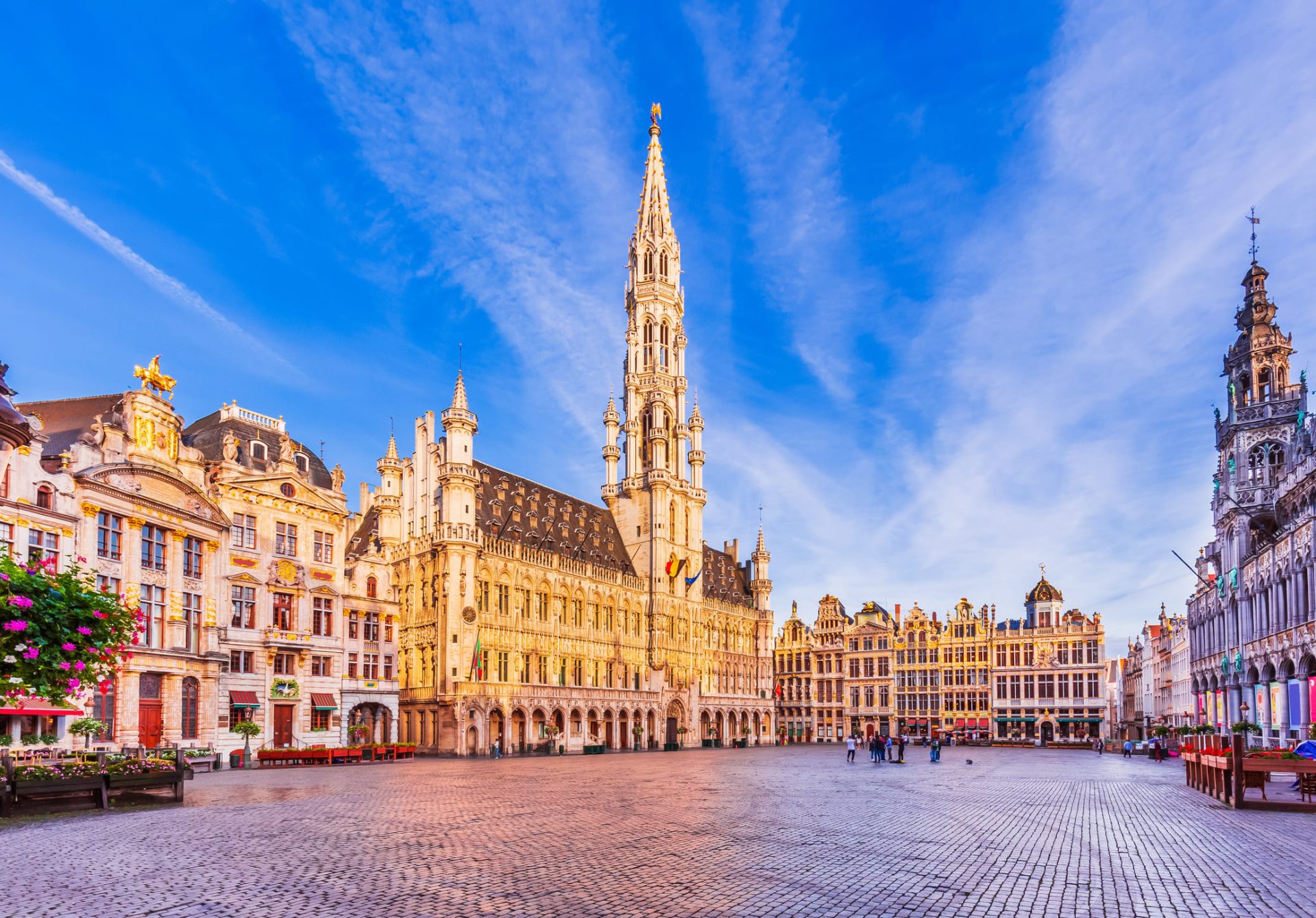
You walk to the Grand Place, the magnificent central square, a UNESCO World Heritage Site and one of the most beautiful squares in the world. Stand in the middle and turn slowly in a circle: on every side rise tall guild houses, each one covered in carvings, statues and gold leaf, built by the city's medieval guilds of bakers, brewers, boatmen, tailors and carpenters, who competed to show off their wealth. On one side towers the Gothic Town Hall, with a spire almost a hundred metres tall, crowned by a golden statue of St. Michael defeating a dragon. Most of the square was destroyed by French cannon fire in 1695, but the guilds rebuilt it within a few years, even more splendidly than before. In summer, the square is filled with café terraces, flower sellers and the hum of visitors from every corner of the world.

A few minutes' walk away, on a street corner, you'll find Brussels's best-loved citizen: the Manneken Pis, the little bronze boy who has been relieving himself into a fountain for nearly four centuries. Only about 55 centimetres tall, he's much smaller than most people expect, but he's full of personality. He has a wardrobe of more than a thousand costumes from around the world, and on special days, he's dressed up as anything from a firefighter to a samba dancer. The original statue is kept safe in the City Museum on the Grand Place; the one on the corner is a copy.

Before you leave, try a Belgian waffle, warm from the iron and dusted with sugar or topped with strawberries and cream, or pick up a box of Belgian chocolates from one of the elegant shops around the square. Belgium is one of the world's great chocolate nations, and Brussels is where the praline, a chocolate shell with a soft filling, was invented in 1912.

After lunch, you continue south into France, the third country of your tour, through the gentle, rolling farmland of northern France, golden with wheat in summer and dotted with villages and church spires. By evening you reach Paris, the city of fashion, art, great monuments and romance. You check in to your hotel for three nights and enjoy dinner with the group.

Belgium has played a big part in European history. Just south of Brussels lies the field of Waterloo, where in 1815 Napoleon suffered his final defeat, a battle so famous that "meeting your Waterloo" has become a phrase in English meaning a final, decisive defeat. Belgium also gave the world the saxophone, invented by the Belgian instrument maker Adolphe Sax in the 1840s, and Tintin, the young reporter who travelled the world in the comics of Hergé, who was born in Brussels. Belgian beer culture, with hundreds of different beers, many brewed for centuries by monks, is recognised by UNESCO as part of the world's intangible heritage. And of course there are the fries: Belgians insist that the "French" fry was invented here, and they serve them in a paper cone with mayonnaise. Whether or not you believe them, a cone of hot Belgian fries is one of the simple pleasures of a visit to Brussels.

Included today: photo stop at the Atomium, visit to the Grand Place and Manneken Pis, coach to Paris, breakfast, lunch, dinner.

Good to know: today has long coach journeys, so keep water, snacks and a neck pillow handy. The Grand Place and the area around the Manneken Pis are often crowded, so keep a close eye on bags and phones.

Day 4
Paris city tour, Eiffel Tower top level, Versailles and a Seine cruise | The City of Light from the top

Paris city tour, Eiffel Tower top level, Versailles and a Seine cruise | The City of Light from the top

⌖ Paris 🍽 Meals: Breakfast, Lunch, Dinner

Today is your great Paris day. After breakfast, your local guide joins the coach for a tour of the city's finest sights.

You begin with the elegant Place Vendôme, an eight-sided square surrounded by matching 17th-century facades, home to the world's most famous jewellers and the Ritz hotel. Then the Opéra Garnier, the grand 19th-century opera house, its facade gleaming with gold statues; inside, its ceiling was repainted in 1964 by the artist Marc Chagall in bright, swirling colours. You'll pass the Musée d'Orsay, a beautiful former railway station that holds the world's greatest collection of Impressionist paintings, and the vast Place de la Concorde, where an ancient Egyptian obelisk from the temple of Luxor rises between two fountains. It was a gift from Egypt in the 1830s, and in return France sent a large clock, which still stands in a mosque in Cairo, though it's said it never kept time properly.

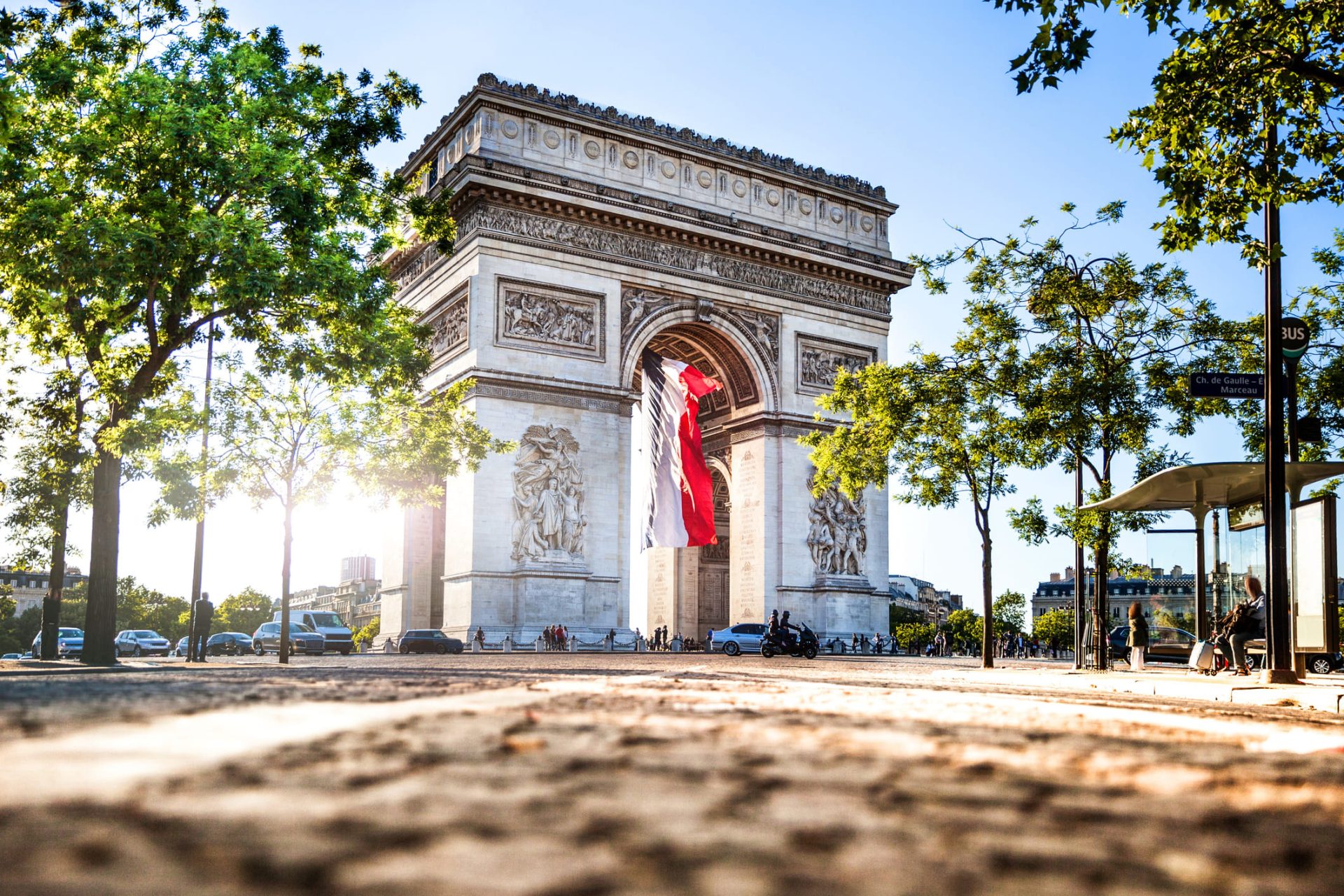
From the square, the Champs-Élysées, one of the most famous avenues in the world, sweeps up towards the Arc de Triomphe, commissioned by Napoleon to celebrate his victories. Beneath its great arch lies the Tomb of the Unknown Soldier, honouring the French soldiers who died in the First World War, and every evening at half past six, the flame on the tomb is solemnly rekindled in a short ceremony. You'll cross the Pont Alexandre III, the most ornate bridge in Paris, with gilded winged horses and Art Nouveau lamps, and pass Les Invalides, built by Louis XIV as a home for wounded soldiers, where Napoleon lies beneath a golden dome.

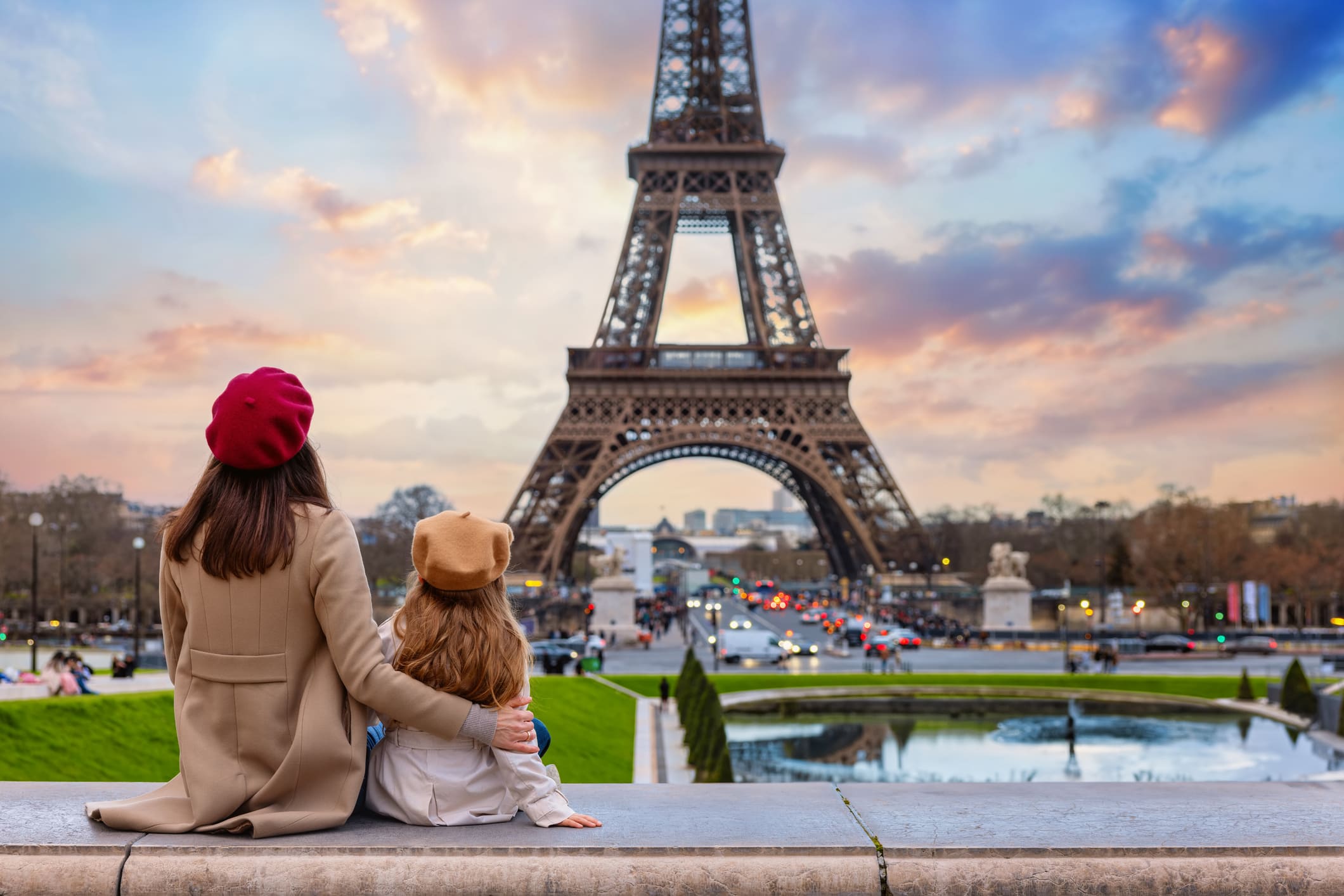
Then comes the Eiffel Tower, and today you go all the way to the top. Lifts carry you up to the second level, and then a glass lift rises up the narrowing tip of the tower to the top level, 276 metres above the city. Up here the wind is fresh, and all of Paris lies at your feet: the river, the bridges, the grey rooftops, the parks, the domes and the towers. Look down and you'll see the shadow of the tower stretching across the Champ de Mars. Here's a curious fact: the Eiffel Tower is painted in three slightly different shades of brown, darker at the bottom and lighter at the top, so that it looks the same colour all over against the sky. At the top, you can also see the little office Gustave Eiffel kept for himself.

In the afternoon you drive about 20 kilometres west to the Palace of Versailles, the most magnificent royal palace in Europe. Louis XIV, the Sun King, made it the centre of French power, and life at Versailles was organised around him like a theatre. Even his meals were public: courtiers watched him eat, and the public could enter the palace to see the king dine. As you walk through the royal apartments, rich with gold leaf, marble, silk and painted ceilings, and into the glittering Hall of Mirrors, you'll understand how this palace dazzled the whole of Europe. In summer, the vast gardens are at their best, with flowerbeds in full bloom, clipped hedges, and fountains dancing to music on many days.

In the evening you return to Paris for a cruise on the Seine, one of the most romantic experiences in the world. As the boat glides from one bridge to the next, you pass Notre-Dame Cathedral, beautifully restored after the fire of 2019; the long facade of the Louvre; the Musée d'Orsay with its great station clocks; and the riverbanks, where Parisians gather on summer evenings to picnic, chat and watch the sun go down. Then, as the boat turns, the Eiffel Tower appears ahead, golden against the evening sky. After the cruise, you return to your hotel for dinner.

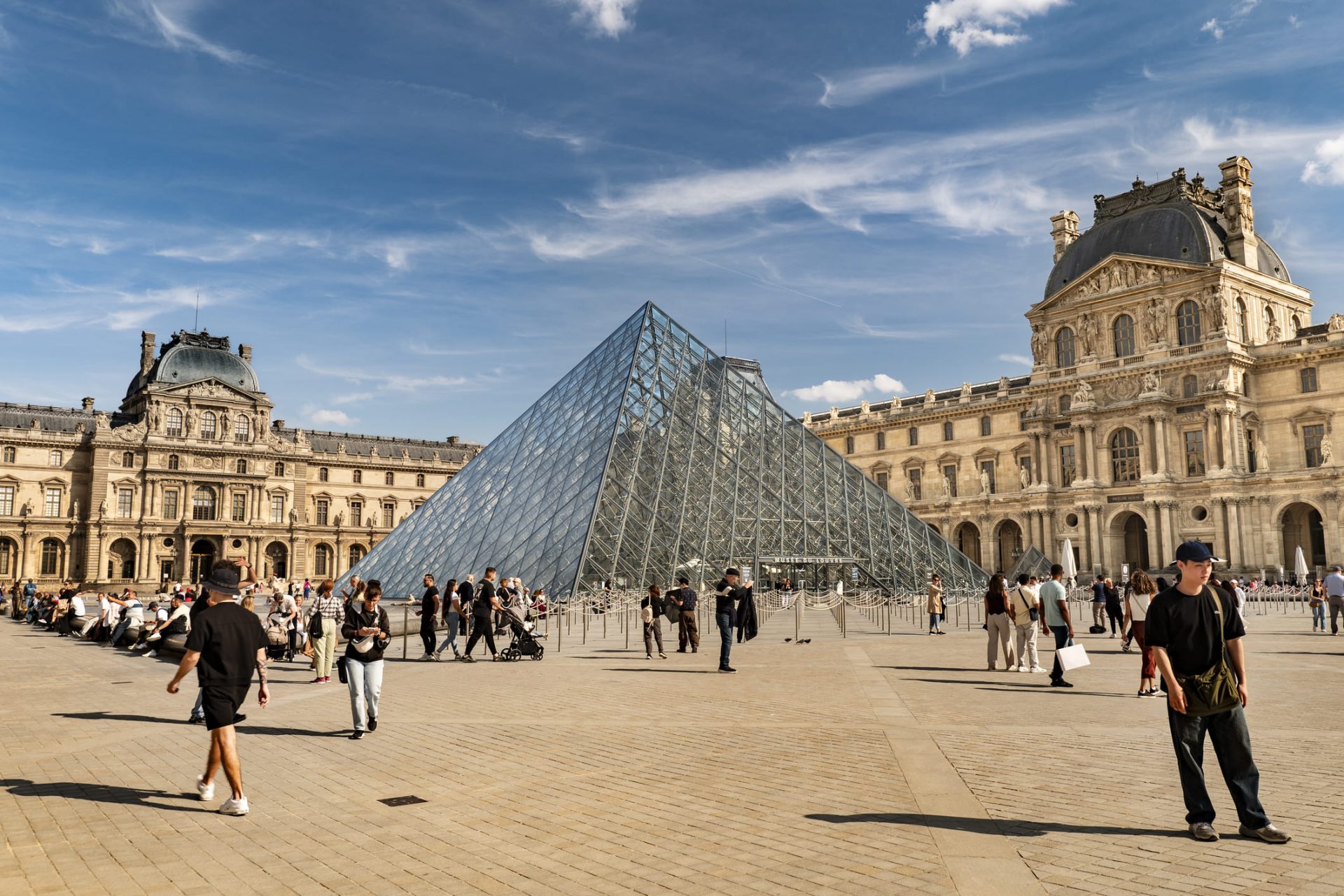
Paris has so many treasures that one day is only a beginning. Inside the Louvre hangs the Mona Lisa, Leonardo da Vinci's famous portrait, so popular that it's protected behind bulletproof glass and always surrounded by a crowd of visitors. In front of Notre-Dame Cathedral, a small bronze star set into the pavement marks Point Zéro, the point from which all distances in France are measured; tradition says that if you step on it, you'll return to Paris one day. Nearby, the Sainte-Chapelle, a small royal chapel built in the 13th century, has some of the most beautiful stained-glass windows in the world, so tall and so many that the walls seem to be made of coloured light. And along the riverbanks, the bouquinistes, booksellers who sell old books, prints and postcards from green wooden boxes fixed to the river walls, have been part of Paris life for more than 400 years. Browsing their stalls on a summer afternoon is one of the most Parisian things you can do.

Included today: guided city tour of Paris, Eiffel Tower top (3rd) level, Palace of Versailles visit, Seine cruise, breakfast, lunch, dinner.

Good to know: access to the Eiffel Tower's top level depends on its operating status, and queues average one to two hours in summer; if the top is closed, the group visits the 2nd level instead. Wear comfortable shoes, as today involves a lot of walking.

Day 5
Full day at Disneyland® Paris | A day of magic for all ages

Full day at Disneyland® Paris | A day of magic for all ages

⌖ Paris 🍽 Meals: Breakfast, Lunch, Dinner

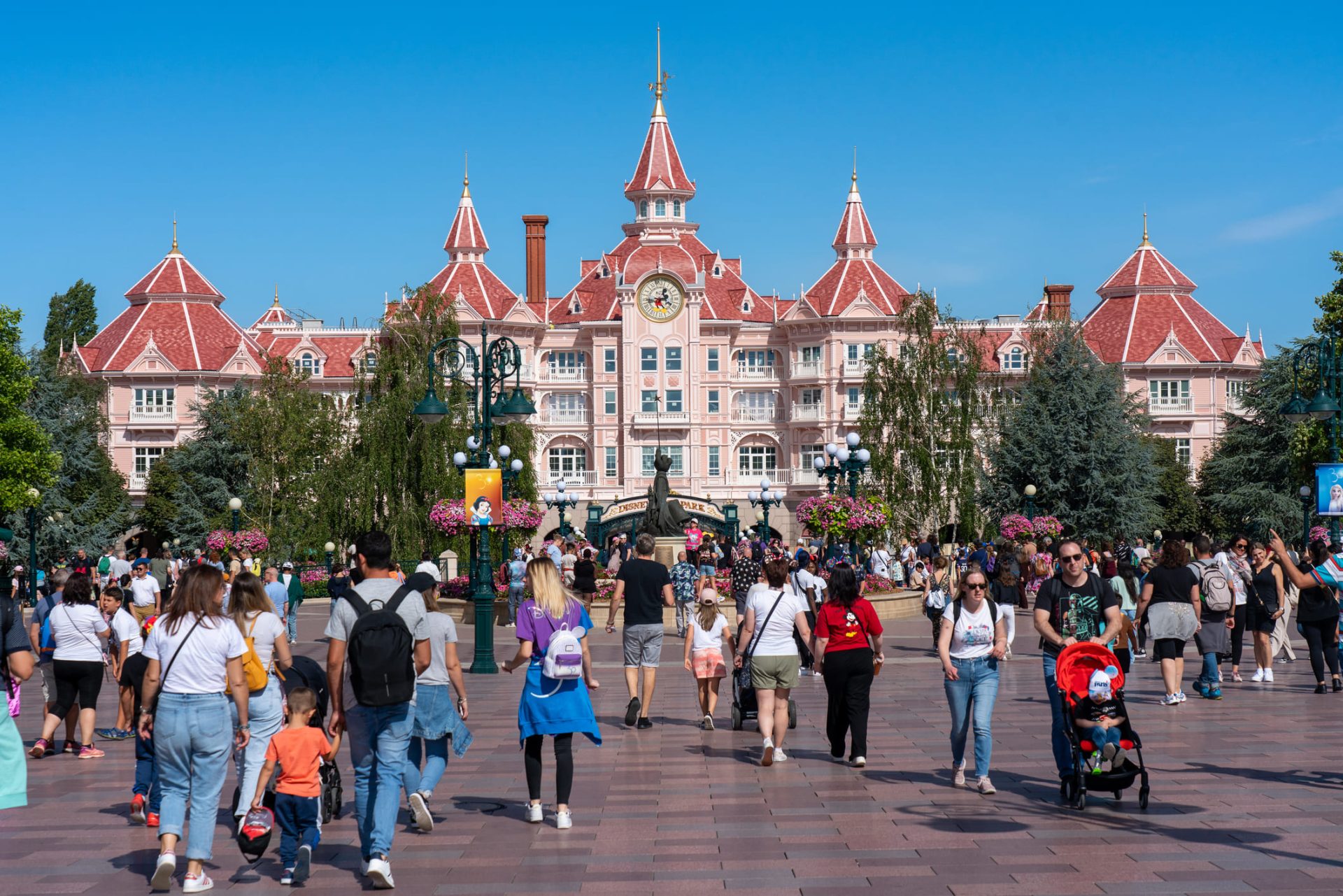
Today is pure fun. After breakfast, the coach drives about forty minutes east of Paris to Disneyland® Paris, the most visited theme park in Europe, and you have the whole day to enjoy it.

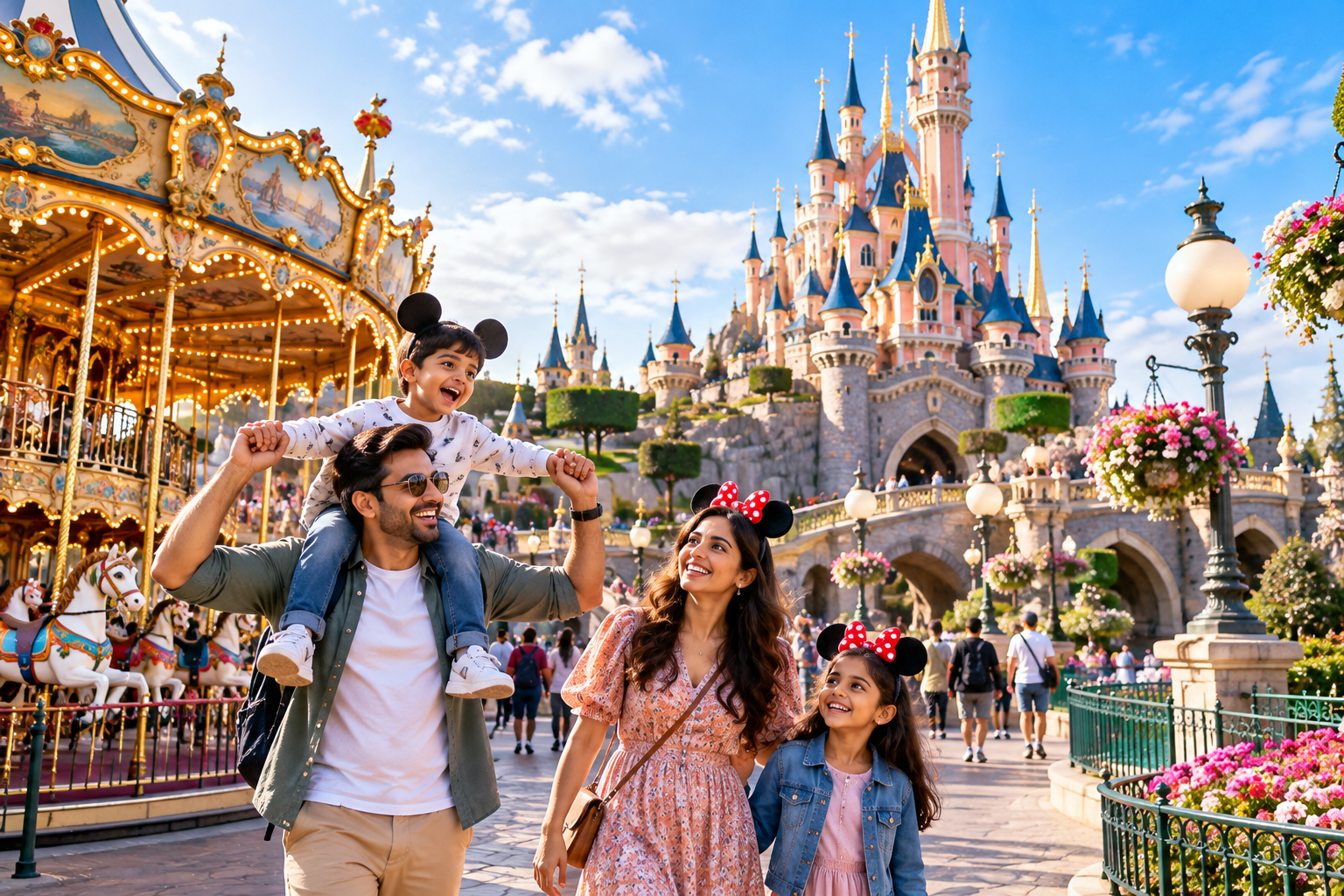
Your ticket lets you choose one of the two parks. Disneyland® Park is the classic: a fairy-tale world of five lands, with classic rides, live shows and parades with the Disney characters. The second park, next door, is built around the magic of the movies, with stunt shows, film sets and rides based on Disney, Pixar and Marvel films; there you can join the Avengers at Avengers Campus or shrink to the size of a rat and race through a Paris restaurant kitchen on the Ratatouille ride. Your tour manager will help you decide which park suits your family best.

In Disneyland® Park, you enter along Main Street, U.S.A., an old-fashioned American small town, with candy-coloured shopfronts, ice-cream parlours and a horse-drawn tram, leading to Sleeping Beauty Castle, its pink and blue turrets rising against the summer sky. Climb up inside the castle to see the stained-glass windows telling the story of Sleeping Beauty, and descend into the dungeon below, where a giant animated dragon lies sleeping, ready to roar at anyone who comes too close.

From the castle, the park spreads out into different worlds. In Fantasyland, younger children can fly over London with Peter Pan, spin in a giant teacup at the Mad Hatter's tea party, sail through "it's a small world" among dolls singing in different languages, and get lost in Alice's Curious Labyrinth, a hedge maze ruled by the Queen of Hearts. In Adventureland, you'll find pirates, a jungle treehouse and the thrills of Indiana Jones. Frontierland brings the Wild West to life, with a runaway mine train racing around Big Thunder Mountain and the spooky Phantom Manor. And in Discoveryland, the brave can blast into space on Star Wars Hyperspace Mountain.

In summer, the park stays open late, and the days are long and warm. Watch the parade wind down Main Street with dancers, music and floats carrying Mickey, Minnie, the princesses and other favourite characters, and keep an eye out for character meet-and-greets, where children can meet their heroes and take photos. Many families love the evening finale: as darkness falls, the castle becomes a giant screen for a spectacular show of projections, music, lasers and fireworks, often the most magical moment of the whole trip.

A few tips will help you make the most of the day. Download the official Disneyland® Paris app, which shows waiting times for every ride and the timings of shows and parades. Arrive early to enjoy the most popular rides before the queues grow. Carry water and sunscreen, and take breaks in the shade during the hottest part of the afternoon; there are plenty of benches and cafes. Lunch is included, so you won't need to spend time looking for food.

In the evening the coach takes you back to Paris for dinner. On the way, the coach will be quiet: children asleep on their parents' shoulders, clutching new souvenirs, and adults scrolling happily through the day's photos.

Disneyland® Paris has a special connection to France. Many of the stories that Walt Disney turned into his most famous films came from French fairy tales. Sleeping Beauty and Cinderella were written down by Charles Perrault, a French writer, in 1697, and Beauty and the Beast is also a French tale, first published in the 18th century. Walt Disney himself had French roots: his family name is said to come from the town of Isigny in Normandy. When the designers built Sleeping Beauty Castle in Paris, they knew that Europeans grew up surrounded by real castles, so they made theirs more fairy-tale than realistic, taking inspiration from the illustrations in a famous 15th-century French manuscript, the Très Riches Heures du Duc de Berry, with its towers and blue roofs. Even Ratatouille, the Pixar film about a rat who dreams of becoming a chef, is set in Paris, so its ride feels right at home here.

The resort opened in 1992, and it's grown into a small town of its own, with themed hotels set around a lake, golf courses, and Disney Village, a lively street of restaurants, shops and entertainment next to the parks. On a summer evening, as the lights come on around the lake and the castle glows in the distance, the whole resort feels like a film set. If your family loves Disney, you'll want to come back.

Included today: full-day Disneyland® Paris ticket (one park), coach transfers, breakfast, lunch, dinner.

Good to know: summer is a busy season at the park, so expect queues at popular rides. Parades, shows and opening hours are set by the park and may change on the day.

Day 6
Paris to Geneva | Into Switzerland and the shores of Lake Geneva

Paris to Geneva | Into Switzerland and the shores of Lake Geneva

⌖ Geneva 🍽 Meals: Breakfast, Packed Lunch, Dinner

Today you say goodbye to Paris and travel south-east to Switzerland. After breakfast, you check out of your hotel and the coach heads south through the heart of France. The motorway takes you through the green and gold countryside of central France and into Burgundy, one of the world's most famous wine regions, where vineyards cover the gentle hillsides in neat rows and old stone villages cluster around their churches. In summer, the vines are lush and green, and the fields are bright with sunflowers. Burgundy was once an independent duchy whose dukes were as rich as kings, and it's also the home of Dijon mustard. A packed lunch is provided, so you can enjoy the scenery without long stops.

In the afternoon, the road climbs into the Jura mountains, a range of forested ridges and green pastures along the border between France and Switzerland, famous for cheese-making and watchmaking. Then you cross into Switzerland, the fourth country of your tour, and arrive in Geneva, at the tip of Lake Geneva.

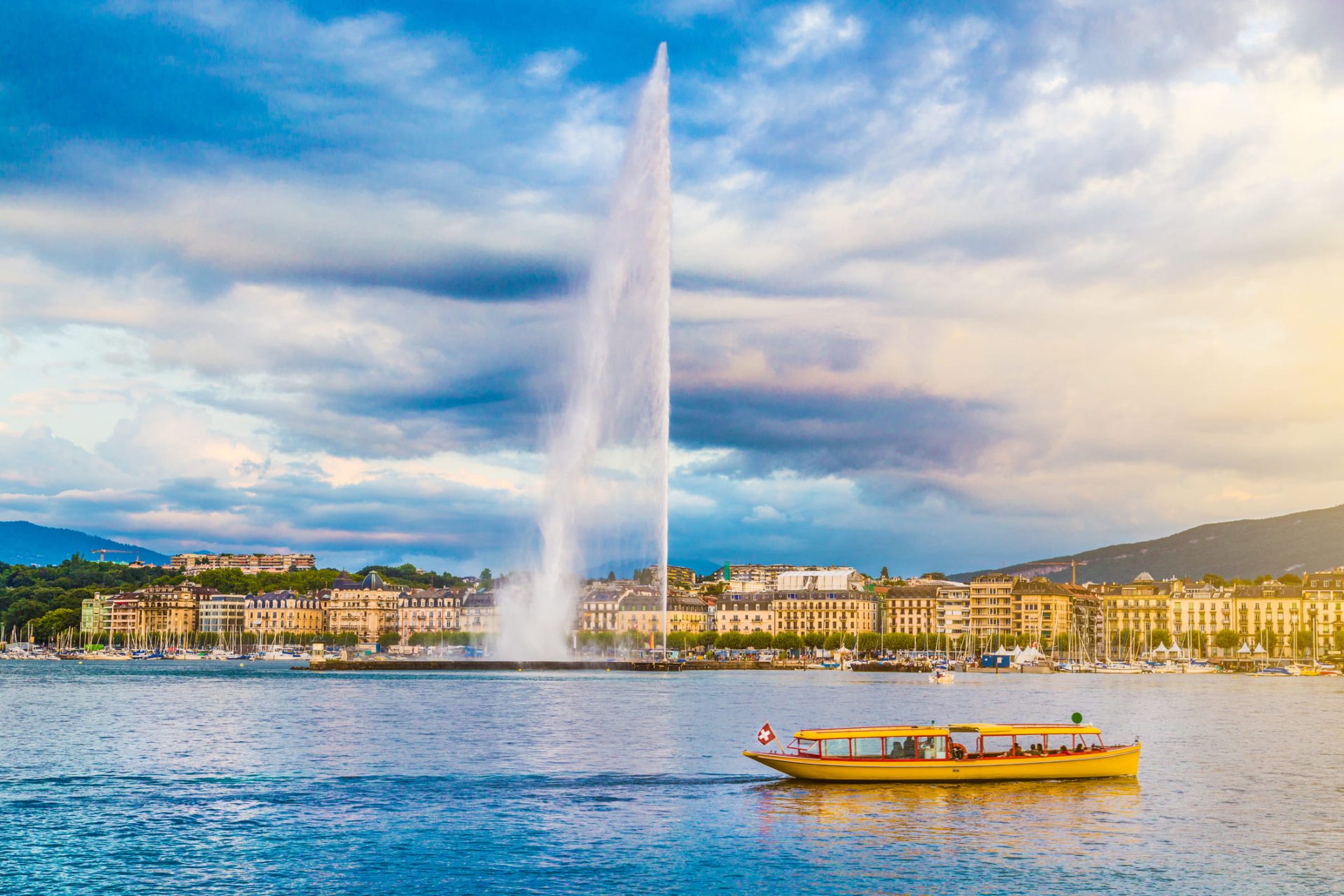
Geneva is a small city with a global role. It's the European home of the United Nations and dozens of international organisations, as well as the birthplace of the International Red Cross, founded here in 1863 by Henri Dunant. Your orientation tour shows you the highlights. You'll see the Palais des Nations, the United Nations office, with the flags of its member states lining the avenue, and across the square, the Broken Chair, a giant wooden chair with one broken leg, standing as a powerful symbol against landmines. On the lakefront, the Jet d'Eau, Geneva's famous fountain, shoots a white column of water 140 metres into the sky, as high as a 45-storey building, often creating rainbows in the summer sunshine. And in the English Garden by the lake, the famous Flower Clock, made of thousands of plants and flowers, keeps perfect time, a tribute to Geneva's centuries-old watchmaking tradition.

In summer, Geneva is at its most beautiful. The lake sparkles a deep blue, sailing boats drift across it, and on a clear day, the snowy summit of Mont Blanc, the highest mountain in Western Europe, can be seen in the distance. Locals swim in the lake from the public bathing places, cycle along the promenades and gather at lakeside cafés in the long, warm evenings. Every summer, the Geneva Festival fills the lakeside with music, food and spectacular fireworks over the water. Not far from the city is CERN, the world's largest particle physics laboratory, where the World Wide Web was invented in 1989.

After the tour, you check in to your hotel in Geneva and enjoy dinner with the group. If you have energy, take an evening walk along the lake as the lights come on across the water.

As you cross Burgundy, look out for signs to Beaune, a little wine town famous for the Hospices de Beaune, a hospital founded in 1443 to care for the poor, whose steep roofs are covered in dazzling patterns of glazed tiles in red, yellow, green and black. Every November, a famous charity wine auction is still held there. And Dijon, Burgundy's capital, has been famous for its sharp, creamy mustard since the Middle Ages.

Geneva has inspired great writers. In the summer of 1816, a group of English writers stayed at the Villa Diodati on the shore of Lake Geneva. Kept indoors by days of stormy weather, they challenged each other to write ghost stories, and the young Mary Shelley began writing Frankenstein, one of the most famous novels ever written. A century earlier, the French writer and philosopher Voltaire lived for many years just outside Geneva, at Ferney, near the border.

Geneva's old town, on a hill above the lake, is worth exploring if you have time. At its heart stands St. Pierre Cathedral, where the Protestant reformer John Calvin preached in the 16th century, turning Geneva into a centre of the Reformation, known as the "Protestant Rome". Below the old city walls, in the Parc des Bastions, stands the Reformation Wall, a long stone monument with giant statues of Calvin and his fellow reformers. The Place du Bourg-de-Four, the oldest square in the city, is lined with cafés and antique shops, perfect for a summer evening drink. Geneva is also the world capital of fine watchmaking: some of the most famous and expensive watch brands in the world were founded here, and their boutiques along the lakefront display watches worth more than a house.

Tonight is your first night in Switzerland, and the next three days will take you into the heart of the Alps. Rest well: tomorrow is the Top of Europe.

Included today: coach Paris to Geneva, Geneva orientation tour, breakfast, packed lunch, dinner.

Good to know: the drive from Paris to Geneva takes most of the day, with comfort stops. Switzerland uses the Swiss franc, but cards are widely accepted.

Day 7
Jungfraujoch – Top of Europe and Interlaken | The highlight of your tour

Jungfraujoch – Top of Europe and Interlaken | The highlight of your tour

⌖ Central Switzerland 🍽 Meals: Breakfast, Lunch, Dinner

Today is the day many travellers dream about from the moment they book: the journey to Jungfraujoch, the Top of Europe. After an early breakfast, you check out of your hotel in Geneva and the coach drives along the shore of Lake Geneva, past the terraced vineyards of Lavaux, and across the green hills of western Switzerland into the Bernese Oberland, a region of towering peaks, deep valleys, waterfalls and glacier lakes.

In summer, the Bernese Oberland is breathtaking. The valleys are emerald green, the meadows are full of wildflowers, and cows with large bells around their necks graze on the slopes, their bells clanging softly as they move. Wooden chalets with flower-filled balconies dot the hillsides, waterfalls tumble from the cliffs, and above it all rise the three famous peaks of the region, the Eiger, the Mönch and the Jungfrau, their summits white with snow even in July.

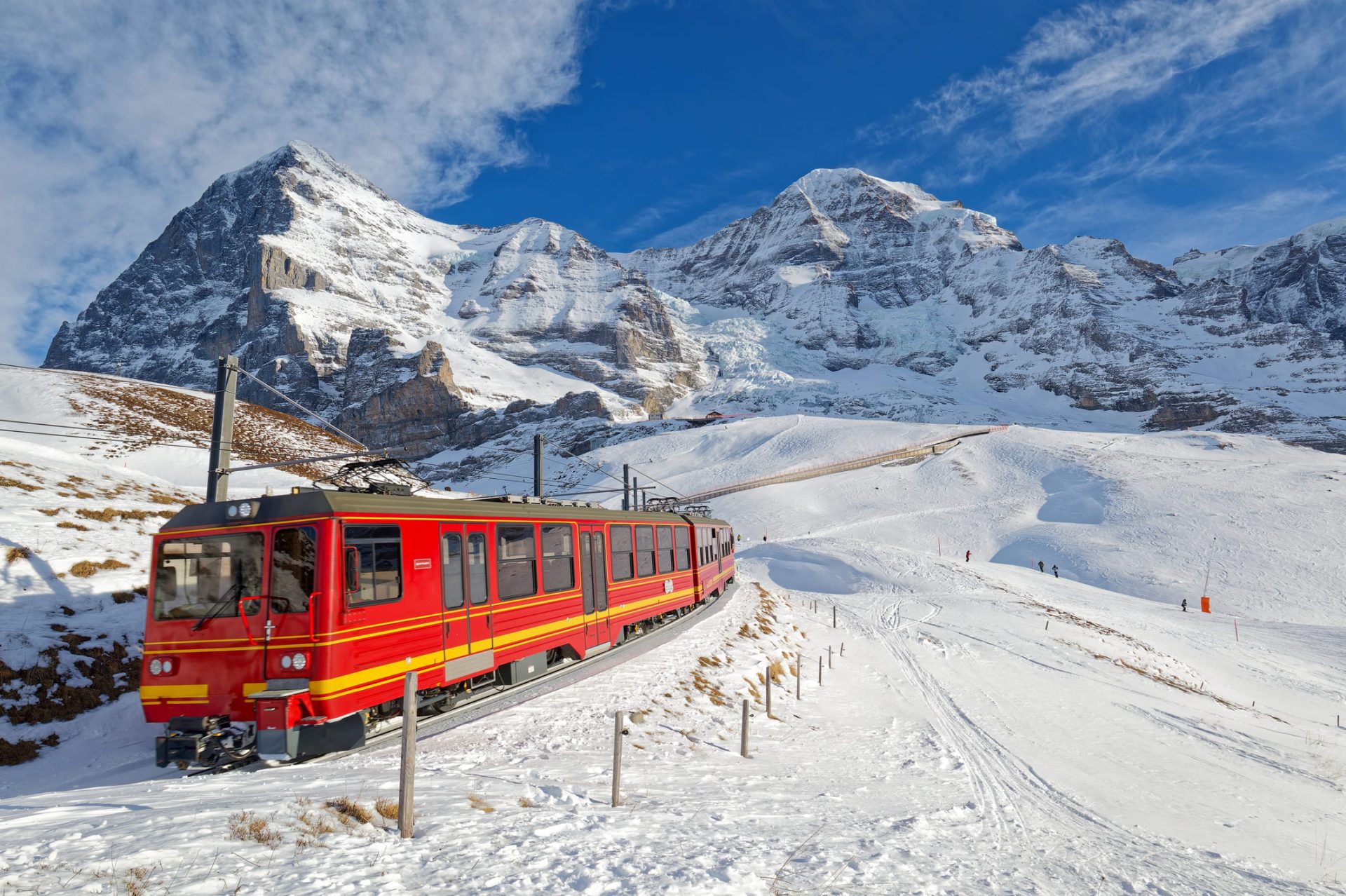
At the Grindelwald Terminal, you board the Eiger Express, a modern tri-cable gondola that opened in 2020. In just 15 minutes, it carries you from the green valley to the Eigergletscher station, high on the mountainside, passing beneath the dark, sheer north face of the Eiger, one of the most famous mountain walls in the world, where daring climbers have attempted some of the most dangerous ascents in mountaineering history. Then you board a cogwheel train of the Jungfrau Railway, which climbs through a long tunnel carved inside the Eiger and the Mönch. The railway was the dream of a Swiss industrialist, Adolf Guyer-Zeller, who had the idea in 1893, and it took sixteen years of hard work by hundreds of labourers to build, finally opening in 1912. Riding through the darkness inside the mountain, you can only marvel at their achievement.

Then the train arrives at Jungfraujoch, at 3,454 metres the highest railway station in Europe, a world of eternal ice and snow. Step out slowly, as the air is thinner up here. Then explore. In the Ice Palace, a maze of tunnels and halls carved by hand deep inside the glacier, you walk between walls of blue-white ice and admire sculptures of eagles, penguins and bears carved by artists from the ice itself. Then a fast lift whisks you up to the Sphinx observation deck, perched on a rocky peak, and the view takes your breath away: the Aletsch Glacier, the longest glacier in the Alps, about 20 kilometres long, sweeps away between the white peaks like a frozen river, and on a clear day, you can see peaks in France, Germany and Italy. The whole area is a UNESCO World Heritage Site. Out on the snow plateau, you can walk on the glacier, throw snowballs, build a snowman and pose for the perfect photograph with the Swiss flag, all in the middle of summer.

Jungfraujoch has a few more surprises: one of the highest post offices in Europe, where you can send a postcard home with a special Top of Europe postmark, a Lindt chocolate shop, and even an Indian restaurant, a welcome sight for many travellers.

After descending, you drive to Interlaken, a lovely resort town on a strip of land between two lakes, the turquoise Lake Thun and Lake Brienz. Interlaken has welcomed visitors since the 19th century, and its main street is lined with grand old hotels and shops selling Swiss watches, chocolates and souvenirs. In the town centre is a large open meadow, the Höhematte, kept free of buildings so everyone can enjoy the view of the Jungfrau, and in summer, colourful paragliders float down from the surrounding mountains to land on it. For Indian visitors, Interlaken has a special place: generations of Bollywood films were shot in these mountains, and a statue of the film director Yash Chopra, who did so much to make Switzerland famous in India, stands in the town's Kursaal gardens.

In the evening, you continue to your hotel in Central Switzerland for dinner, tired, happy and full of memories of the Top of Europe.

Next to the Jungfrau region lies the Lauterbrunnen valley, one of the most spectacular valleys in the Alps, with sheer rock walls and dozens of waterfalls pouring down from the cliffs; the Staubbach Falls drop nearly 300 metres and turn to mist before they reach the ground. The young J.R.R. Tolkien hiked through this valley in 1911, and many believe it inspired Rivendell, the hidden valley of the elves in The Lord of the Rings.

Included today: Jungfraujoch – Top of Europe excursion with the Eiger Express and Jungfrau Railway, Ice Palace, Sphinx observation deck, Interlaken visit, breakfast, lunch, dinner.

Good to know: it's cold at the top even in summer, often around freezing, so bring a warm jacket, gloves, sunglasses and sunscreen. Walk slowly at altitude. Travellers with heart or breathing conditions should check with their doctor before going to high altitude.

Day 8
Mt. Titlis, Lucerne and a Lake Lucerne cruise | A glacier, a storybook town and a blue lake

Mt. Titlis, Lucerne and a Lake Lucerne cruise | A glacier, a storybook town and a blue lake

⌖ Central Switzerland 🍽 Meals: Breakfast, Lunch, Dinner

Today brings together three of Switzerland's greatest pleasures. After breakfast, the coach drives into the green valley of Engelberg, a mountain village that grew up around a Benedictine monastery founded in 1120, whose monks still live there today and run a small cheese dairy. At the end of the valley rises Mt. Titlis, its glacier gleaming white even in the height of summer.

The ride to the top is a series of adventures. First, small gondolas carry you over pine forests and green meadows to Trübsee, a mountain lake whose still water reflects the peaks around it. Then a cable car takes you higher, into a world of rock and snow. For the final climb, you board the Rotair, the world's first revolving cable car. As it rises up the last steep cliff, its floor slowly turns a full 360 degrees, so everyone on board gets the complete panorama: the dazzling snow-capped peak, deep crevasses in the glacier, pristine white snowfields dotted with massive blocks of ice, and the green valley far below.

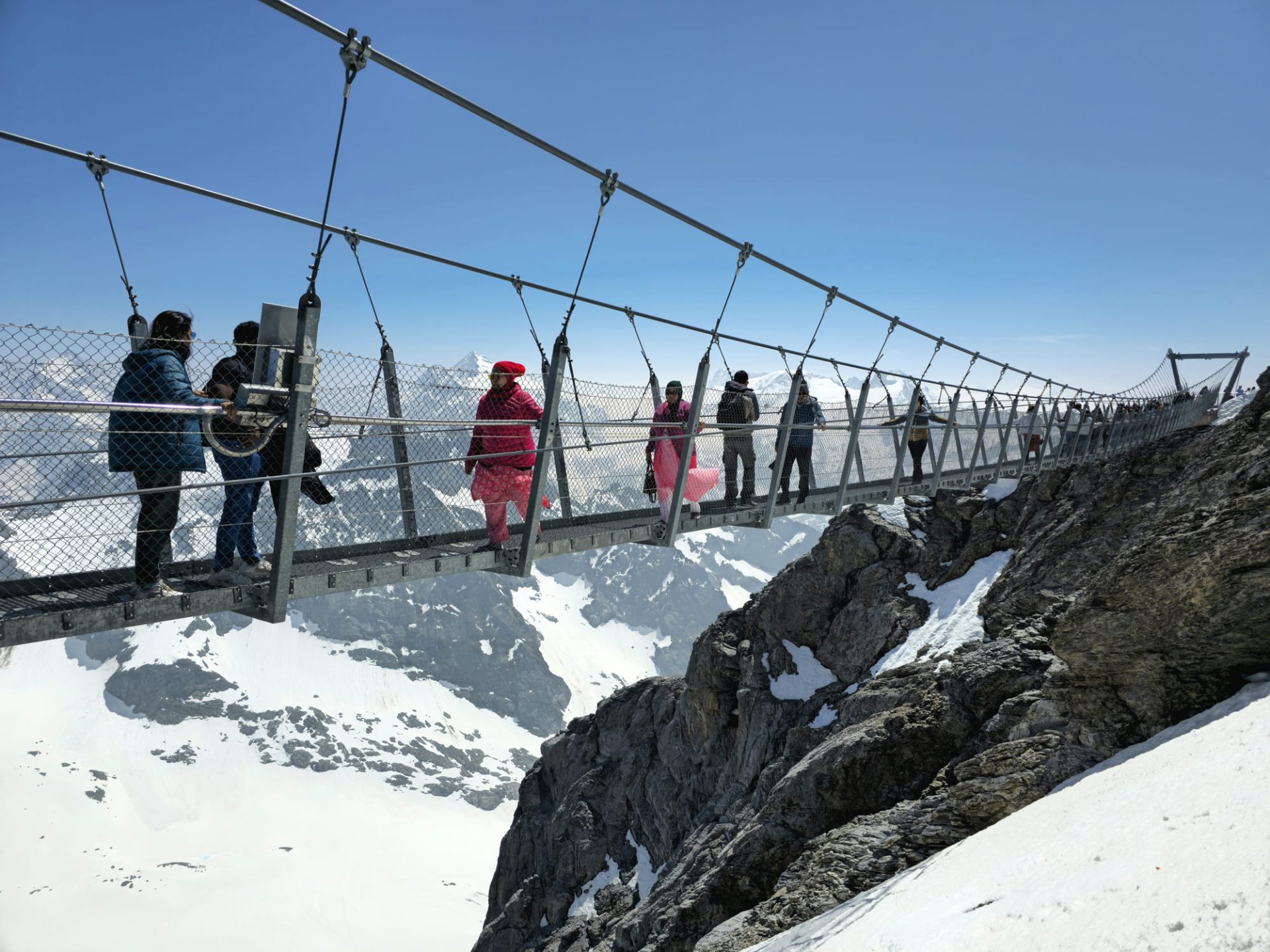
At the top station, at 3,020 metres, you step out into the snow. Even on a warm summer day, you'll want a jacket up here. Don't miss the Titlis Cliff Walk, the highest suspension bridge in Europe, which hangs along the cliff face with a sheer drop of around 500 metres beneath your feet. It sways gently as you walk, and crossing it is a real thrill. Then go inside the mountain to the Glacier Cave, a tunnel carved into the ice that glows in shades of blue. If the weather allows, ride the Ice Flyer, an open chairlift that glides low over the glacier and its crevasses, or simply play in the snow.

After coming down from the mountain, you drive to Lucerne for an orientation tour of one of the most beautiful cities in Switzerland. You'll visit the Lion Monument, a great dying lion carved into a sandstone cliff in the 1820s to honour the Swiss Guards who fell defending the French king in Paris in 1792. Its sorrowful expression moves almost every visitor. Then you walk across the Kapellbrücke, the Chapel Bridge, the covered wooden bridge that has crossed the River Reuss since the 14th century, its sides lined with flower boxes in summer and its roof hung with painted panels telling stories from Lucerne's history. Beside it, the stone Water Tower rises from the river. Above the old town, look for the Musegg Wall, a stretch of the old city walls with nine towers; one of them, the Zyt Tower, holds the oldest clock in Lucerne, which, by ancient privilege, is allowed to strike the hour one minute before all the others. There's free time to shop in the old town's charming streets for famous Swiss watches, Swiss Army knives and chocolates.

Later, you board a boat for a scenic cruise on Lake Lucerne, one of the most beautiful lakes in the Alps. Its arms stretch between steep, forested mountains, and around every bend, a new view opens up: lakeside villages with grand old hotels and gardens, church towers, waterfalls and meadows, with snowy peaks behind. Look for Mt. Rigi, known as the Queen of the Mountains, where Europe's first mountain railway opened in 1871, and the jagged peak of Mt. Pilatus, which, according to legend, was once home to dragons. The shores of this lake are also where Switzerland was born: in 1291, according to tradition, representatives of three mountain communities swore an oath of alliance in a meadow on its shores. In the long summer evening light, the lake glows in shades of blue and gold, a perfect, peaceful end to the day. In the evening you return to your hotel for dinner.

Lake Lucerne is also the heartland of Swiss legend. It was here, according to tradition, that William Tell, the great Swiss folk hero, was forced by a cruel governor to shoot an apple from his own son's head with a crossbow. He hit the apple, and later led his people to freedom. The story inspired the composer Rossini to write his William Tell opera, whose overture you've probably heard many times. The region is also the home of the Swiss Army knife: in 1884, a cutler named Karl Elsener opened a workshop in the village of Ibach, near the lake, and in 1891 he began supplying knives to the Swiss army. His company, Victorinox, still makes the famous red knives there today, so a Swiss Army knife bought in Lucerne is a true local souvenir. On the lakefront in Lucerne, you'll also see the modern Culture and Convention Centre, with its huge, thin roof that seems to float above the water, designed by the French architect Jean Nouvel, a striking contrast with the medieval town across the river.

Included today: Mt. Titlis with the Rotair revolving cable car and Cliff Walk, Lucerne orientation tour, Lake Lucerne cruise, breakfast, lunch, dinner.

Good to know: it can be cold and windy at the top of Titlis, so carry a warm layer, sunglasses and sunscreen. The Ice Flyer and other summit activities depend on the weather.

Day 9
Bern, the Rhine Falls by boat and the Lindt Home of Chocolate | A capital, a waterfall and a palace of chocolate

Bern, the Rhine Falls by boat and the Lindt Home of Chocolate | A capital, a waterfall and a palace of chocolate

⌖ Central Switzerland 🍽 Meals: Breakfast, Lunch, Dinner

Your last full day in Switzerland is a perfect mix: a medieval capital, Europe's largest waterfall and a world of chocolate. After breakfast, the coach drives west across the green Swiss Plateau to Bern, the capital of Switzerland.

Bern's entire medieval old town is a UNESCO World Heritage Site. It's built on a narrow, rocky peninsula, wrapped in a loop of the River Aare, whose water is an astonishing shade of turquoise. Your orientation tour leads you along the old town's long, covered stone arcades, built so that people could shop and walk in any weather, past colourful Renaissance fountains, each topped with a painted figure, from a knight in armour to a bear. The Zytglogge, Bern's famous clock tower, is the city's most recognisable symbol and one of its oldest monuments, with an astronomical clock from the 15th century that shows the time, the date, the zodiac and the phases of the moon; a few minutes before every hour, a parade of mechanical bears, a jester and a rooster puts on a little show. You'll also see the Federal Palace, the grand domed home of the Swiss parliament and government.

Bern was home to one of the most famous scientists in history: in 1905, while working as a young clerk at the patent office here, Albert Einstein published his theory of special relativity and other papers that changed physics forever. The flat where he lived with his family is now a museum. And Bern is the city of bears: legend says the city's founder named it after the first animal he caught on a hunt, and real brown bears still live in the Bear Park by the river. In summer, locals walk upstream along the Aare, jump in and let the current carry them back through the city, a favourite Bernese pastime.

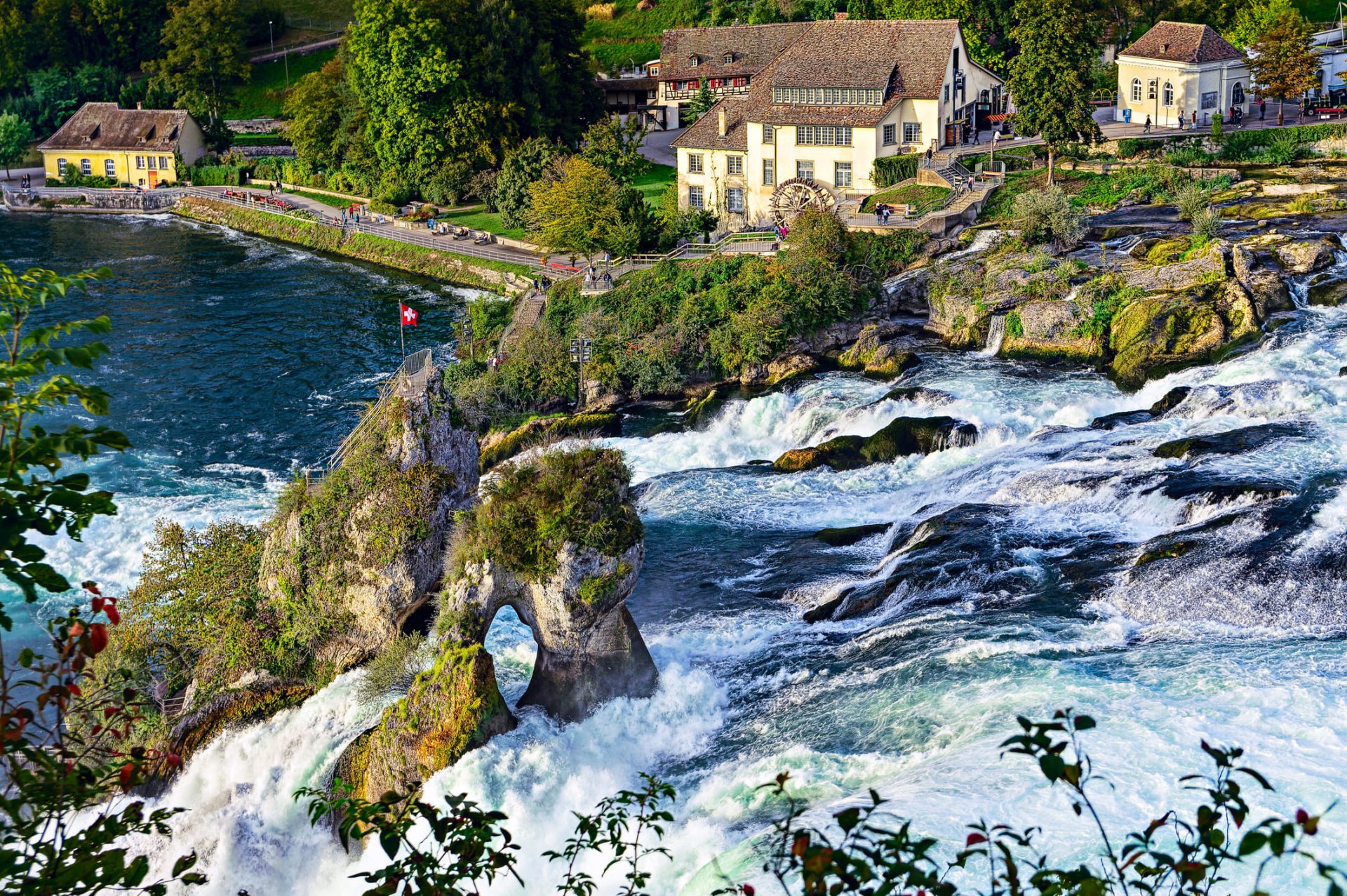
Then you drive north to Schaffhausen and the Rhine Falls, the largest waterfall in Europe. The falls are about 150 metres wide, and in summer, swollen by meltwater from the Alps, the whole river crashes over the rocks in a thundering wall of white foam and spray. The best way to experience them is from the water, and today you take a boat ride on the basin below the falls. The little boat heads right into the spray, rocking on the churning water, with the roar of the falls filling the air, and depending on the water level, some boats land at the great rock in the middle of the falls, where you can climb a staircase to the top and stand with the water thundering past on both sides. It's a thrilling, unforgettable experience.

The day ends at the Lindt Home of Chocolate in Kilchberg, near Zurich, on the shores of Lake Zurich. As you step inside, you're greeted by the world's largest chocolate fountain, more than nine metres tall, with around 1,500 litres of liquid chocolate flowing down from a giant golden whisk. The interactive exhibition takes you through the whole story of chocolate: from cocoa farms in the tropics to the Swiss chocolate pioneers of the 19th century, including Rodolphe Lindt, who invented the process that makes chocolate smooth and melting. Along the way, there are tastings, so you can try different kinds of chocolate as you learn, and at the end, the large Lindt shop is the perfect place to buy chocolates for family and friends at home.

In the evening you return to your hotel in Central Switzerland for your farewell dinner with the group, full of stories from four countries.

Bern has a sweet secret too. Toblerone, the famous triangular chocolate bar with honey and almond nougat, was invented in Bern in 1908, and it's still made in the city today. Its triangular shape is often said to echo the Matterhorn, and for years, sharp-eyed fans have spotted the outline of a bear hidden in the mountain on its packaging, a tribute to Bern, the city of bears. Switzerland is also governed in a very Swiss way: instead of a single prime minister or president, the country is led by a council of seven ministers, who take turns, one year each, to serve as president. Many big decisions are put to the people in referendums several times a year, so Swiss citizens vote on everything from taxes to motorways to the number of holidays.

At Schaffhausen, near the Rhine Falls, look for the Munot, a round 16th-century fortress on a vineyard-covered hill above the old town. Every evening, a watchman who lives in its tower rings a small bell at nine o'clock, a tradition that has continued for centuries.

Included today: Bern orientation tour, Rhine Falls boat ride, Lindt Home of Chocolate entry with tasting, breakfast, lunch, dinner.

Good to know: you may get a little wet on the Rhine Falls boat, so protect your phone and camera. Landing at the central rock depends on the water level. Keep chocolates in a cool place.

Day 10
Departure from Zurich | Home with four countries in your heart

Departure from Zurich | Home with four countries in your heart

⌖ Zurich 🍽 Meals: Breakfast

Your journey through the Netherlands, Belgium, France and Switzerland comes to an end today. Before the bustle of checking out begins, take a quiet moment over breakfast and look out at the Swiss morning: green hills, neat farms, perhaps a lake shimmering in the early sunlight, and the snowy line of the Alps on the horizon. Summer mornings in Switzerland are fresh and bright, and the air smells of cut grass and pine.

It's been an extraordinary ten days. You began in Amsterdam, among the canals and gabled houses of the Golden Age, saw the Netherlands in miniature at Madurodam, and wandered among the tulips of Keukenhof or the windmills of Zaanse Schans. You photographed the shining spheres of the Atomium, stood in the golden Grand Place and met the Manneken Pis. In Paris, you rode to the very top of the Eiffel Tower, walked through the Hall of Mirrors at Versailles, cruised the Seine at sunset, and spent a magical day at Disneyland® Paris. Then you crossed into Switzerland, saw Geneva's great fountain, stood in the snow at the Top of Europe on Jungfraujoch, rode the revolving cable car on Mt. Titlis, cruised Lake Lucerne, walked through Bern, felt the spray of the Rhine Falls from a little boat and tasted chocolate at Lindt. That's four countries and a lifetime of memories.

Now it's time to pack. You may have collected Dutch tulip bulbs, cheese or Delft blue pottery, Belgian chocolates, French perfume or macarons, Disney souvenirs, and Swiss watches, knives or chocolate. Wrap anything fragile carefully in clothes and place it in the middle of your suitcase, and keep chocolates away from heat. Swiss Army knives and liquids over 100 ml must go in your checked baggage. Keep your passport, tickets, medicines and a light jacket in your hand luggage. If you're carrying tulip bulbs or cheese, check the import rules before you fly, and if you made a large purchase with a tax-free form, keep the form, receipt and goods together, as they may need to be checked at the airport.

After breakfast, you check out and the coach takes you to Zurich Airport. The drive crosses the gentle Swiss Plateau, the green heartland between the Alps and the Jura mountains, with its orchards, woods and villages, and the famous red Swiss trains gliding past exactly on time. Switzerland is known around the world for its precision and punctuality, and after four days here, you'll understand why.

This is the moment to say goodbye to your tour manager, who has guided you through four countries, from the canals of Amsterdam to the glaciers of the Alps, and to the friends you've made along the way. Over ten days of shared meals, coach journeys and unforgettable sights, many travellers find that their fellow passengers have become friends. Exchange phone numbers and promise to share your photographs; you'll have tulips, towers and mountain views to compare.

At the airport, there's time for a last coffee or hot chocolate and some final shopping, with plenty of Swiss chocolate, watches and souvenirs to choose from. Then it's time to board your flight. As the plane climbs, look out of the window for a last glimpse of the Alps shining on the horizon, and carry the memories of this journey home with you.

Switzerland leaves a lasting impression on almost every visitor. It's a small country with four national languages, German, French, Italian and Romansh, and on this trip you've heard two of them, French in Geneva and German in Lucerne, Bern and Zurich. It has stayed neutral in international wars for more than two hundred years, which is one reason why Geneva became home to the United Nations and the Red Cross. And it's a land of quiet precision, where trains, buses and boats run like clockwork. Look out at the station for the famous Swiss railway clock, with its plain white face and a red second hand shaped like a railway signal paddle; its second hand sweeps round in about 58 seconds, then pauses at the top until the master clock gives the signal, so every station clock in the country stays perfectly in time.

Switzerland is also where milk chocolate was invented, in 1875, by Daniel Peter, who had the idea of mixing chocolate with the condensed milk made by his neighbour, Henri Nestlé. Today the Swiss eat more chocolate per person than almost anyone in the world, so the bars in your suitcase are in good company.

If this journey has given you a taste for Europe, there's so much more waiting: the canals of Venice and the ruins of Rome, the lakes and castles of Austria, the fjords of Norway or the palaces of Vienna. Perhaps this is only the beginning.

Included today: breakfast, departure transfer to Zurich Airport.

Good to know: book a flight that leaves at least 3 hours after the transfer reaches the airport; we'll confirm the transfer time when you book.

Hotel confirmation

Hotel names will be provided after booking, subject to availability and confirmation. We do not hold hotel confirmations before booking.

Inclusions

Hotels: Guaranteed 04 Star

Meals: All Meals Included

Sightseeing: All Tours included

Exclusions

Flights

Visa

Insurance

GST

TCS

Important Terms

Booking and payment

  • At booking: 30% of the tour cost per person.
  • 30 days before departure: the full balance.
  • Booking within 30 days of departure: 30% to book, and the balance as soon as your booking is confirmed.

Cancellation charges

From booking until 36 days before departure₹30,000 per person35 to 29 days before departure₹60,000 per person28 to 15 days before departure50% of the tour cost14 to 8 days before departure75% of the tour cost7 days or less before departure, or no-show100% of the tour cost


Keukenhof or windmills?

On departures until 10 May you visit the Keukenhof gardens, when millions of tulips are in bloom. From 11 May, after Keukenhof closes, you visit the windmill village of Zaanse Schans instead. Read our Keukenhof guide.

Amsterdam, Brussels, Paris & Switzerland Tour – 9 Nights / 10 Days FAQs

Does this tour include Belgium and the Netherlands?
Yes. You spend two nights in the Netherlands and visit Brussels on the way to Paris.
Will we see the Keukenhof tulips?
On departures until 10 May. Later departures visit the Zaanse Schans windmill village instead.
Is Disneyland Paris included?
Yes, a full day with your choice of Disneyland® Park or Walt Disney Studios® Park.
Are flights included?
No. This is a land tour that starts in Amsterdam and ends in Zurich. We can add return flights from Delhi, Mumbai or your city, timed to match the group transfers.
Is Jain or vegetarian food available?
Yes. Most lunches and dinners are Indian meals with Jain, vegetarian and non-vegetarian options, and breakfast is a continental buffet at the hotel.
Gallery

Europe photos: Amsterdam, Brussels, Paris & Switzerland Tour – 9 Nights / 10 Days

Plan your Europe holiday with Dreamland Vacations

Share your dates, travellers and comfort preference. Our team will guide you with the next best step.

Get a free quote
Itinerary Get a quote
WhatsApp