Grand Exclusive Europe – London, Paris, Switzerland & Italy, 12 Nights / 13 Days
Standard Package

Grand Exclusive Europe – London, Paris, Switzerland & Italy, 12 Nights / 13 Days

London, Paris, Switzerland and Italy in 12 nights / 13 days: the London Eye and Lord's, the Eurostar to Paris, Versailles and Disneyland® Paris, Jung…

⌖ Europe ✦ Family & senior friendly planning
Package snapshot
DestinationEurope
Travel styleStandard Package

Want to customize this package?

Share your dates and travellers. This enquiry is free. Small changes to a standard itinerary—such as a date change or an extra day—can be discussed with our team.

We’ll send verification codes to your WhatsApp number and email. Indian numbers can be entered without +91; for other countries, include the country code.
Verification required before submitting.
Your holiday

Grand Exclusive Europe – London, Paris, Switzerland & Italy, 12 Nights / 13 Days: overview

London, Paris, the Swiss Alps and the treasures of Italy in one grand journey

Picture yourself watching the guards march at Buckingham Palace, standing at the very top of the Eiffel Tower, stepping onto the glacier at the Top of Europe, gliding through Venice in a gondola and gazing up at Michelangelo's dome in Rome, all in one holiday. This tour joins London to our popular Paris, Switzerland and Italy route, and it's designed for travellers who want the full experience, with time to enjoy each place properly.

Two nights in London bring a guided city tour, the Changing of the Guard, Lord's, the London Eye and Madame Tussauds; then the Eurostar takes you to three nights in Paris with Versailles, the Eiffel Tower top level, a Seine cruise and a full day at Disneyland® Paris. After Geneva, two nights in central Switzerland include both Jungfraujoch and Mt. Titlis, with Lucerne and a lake cruise, followed by the Rhine Falls and the Swarovski Crystal Worlds in Austria. In Italy, you ride a gondola in Venice, take a guided walk in Florence, see the Leaning Tower of Pisa and end in Rome with the Vatican.

A professional tour manager travels with the group, you stay in superior 4-star hotels and Indian lunches and dinners are included on most days. You need a UK visa and a Schengen visa, and our team helps with both. See all our Europe tour packages.

Good to know

Package typeStandard Package
Planning supportSmall changes by enquiry
Best forFamilies, couples & seniors
Get a free quote
Trip highlights
✦ Arrive in London | Welcome to one of the world's great cities
✦ London city tour, Changing of the Guard, Lord's and the London Eye | Palaces, cricket and the city from the sky
✦ Madame Tussauds and the Eurostar to Paris | Celebrities in wax, then under the sea to France
✦ Paris city tour, the top of the Eiffel Tower, Versailles and a Seine cruise | The best of Paris in one unforgettable day
✦ Disneyland® Paris | A day of magic for every age
✦ Paris to Geneva | Lakes, fountains and the city of peace
Day-wise plan

Europe itinerary: day by day

Day 1
Arrive in London | Welcome to one of the world's great cities

Arrive in London | Welcome to one of the world's great cities

⌖ London 🍽 Meals: Dinner

Your grand European journey begins in London, the capital of England and the United Kingdom, a city of royal palaces and red buses, ancient churches and glass skyscrapers, and a history that stretches back almost two thousand years. As your plane makes its approach, look out for the River Thames winding through the city, and perhaps the white wheel of the London Eye, the dome of St. Paul's Cathedral and the pointed glass tip of the Shard, the tallest building in Britain.

Once you have collected your bags and walked into the arrivals hall, your tour manager is there to welcome you. From this moment on, your journey across five countries is taken care of, and you can simply relax and enjoy it.

London began as a Roman town called Londinium, founded around AD 47 at a spot where the Thames could be bridged. Parts of the old Roman city wall still stand today, hidden between modern office buildings. Over the following centuries, London grew into the capital of England and later the centre of an empire that stretched around the globe. It has always been a city of trade and of newcomers: merchants, sailors, refugees and immigrants from every corner of the world have made it their home, and today more than 300 languages are spoken on its streets. Walk down any high street and you'll hear accents from India, Nigeria, Poland, Jamaica, Australia and everywhere in between.

As your coach drives towards the hotel, watch the city go by: rows of terraced houses with colourful front doors, corner shops and pubs with hanging flower baskets, red telephone boxes and post boxes, and the famous black cabs, whose drivers must pass a demanding test called The Knowledge, memorising some 25,000 streets and thousands of landmarks within six miles of Charing Cross. It can take three or four years of study to pass.

Summer is a lovely season to arrive in London. The days are long and bright, and the city's parks fill with people enjoying picnics, playing cricket and football, and lying in the sun on the grass. Kensington Gardens and Hyde Park together cover more than 250 hectares, right in the heart of the city, and in the evenings, the riverside walks along the South Bank buzz with street performers, food stalls and families out for a stroll.

London also has a warm place for Indian visitors. Indian food has become one of Britain's favourite cuisines, and chicken tikka masala is often jokingly called a British national dish. The city is home to magnificent Hindu temples, including the BAPS Shri Swaminarayan Mandir in Neasden, built from Bulgarian limestone and Italian marble carved in India, and to Southall's busy Indian markets, where you can buy saris, sweets and spices just as you would at home.

After checking in at your hotel, take some time to rest and freshen up after the flight. A few things are useful to know from the start. In Britain, traffic drives on the left, as in India. The currency is the pound sterling, and contactless cards are accepted almost everywhere, even on buses. Tap water is safe to drink. British plugs have three square pins, while the rest of your tour uses the round two-pin European plug, so bring adapters for both. And the weather in London is famously changeable, so keep a light jacket or umbrella with you at all times.

In the evening, you meet your fellow travellers at dinner. Your tour manager will introduce the journey ahead, from London and Paris to the Alps of Switzerland and Austria and on to the art cities of Italy. It's a wonderful moment, the beginning of a holiday you'll remember for a lifetime. After dinner, get a good night's sleep: tomorrow you'll see the best of London.

If you arrive early enough and feel like a short walk, London rewards the curious. Even a quiet residential street can surprise you with a Georgian terrace, a hidden garden square or an old pub that has been serving customers for centuries. Many of London's pubs have wonderfully odd names, such as The Lamb and Flag or The Hung, Drawn and Quartered, and their painted signs once helped people who couldn't read find their way. You'll also notice how London blends old and new: a medieval church may stand in the shadow of a glass tower, and a Victorian market hall may now be filled with food stalls selling dishes from around the world. It's a city where every corner has a story, and over the next two days you'll discover many of them.

This tour is designed to be enjoyed at a comfortable pace, with time to really experience each place rather than just seeing it from the coach window. Your tour manager will be with you throughout, so whenever you have a question, whether about the history of a monument or where to find the best ice cream, just ask.

Included today: arrival transfer, dinner.

Good to know: hotel check-in is usually mid-afternoon. London's summer temperatures are usually 18–26°C, with occasional showers. Bring both a UK and a European plug adapter.
Day 2
London city tour, Changing of the Guard, Lord's and the London Eye | Palaces, cricket and the city from the sky

London city tour, Changing of the Guard, Lord's and the London Eye | Palaces, cricket and the city from the sky

⌖ London 🍽 Meals: Breakfast, Lunch, Dinner

Today is a full day exploring London with an expert local guide. After breakfast, your coach takes you into the heart of the city, where centuries of history are packed into a few square kilometres.

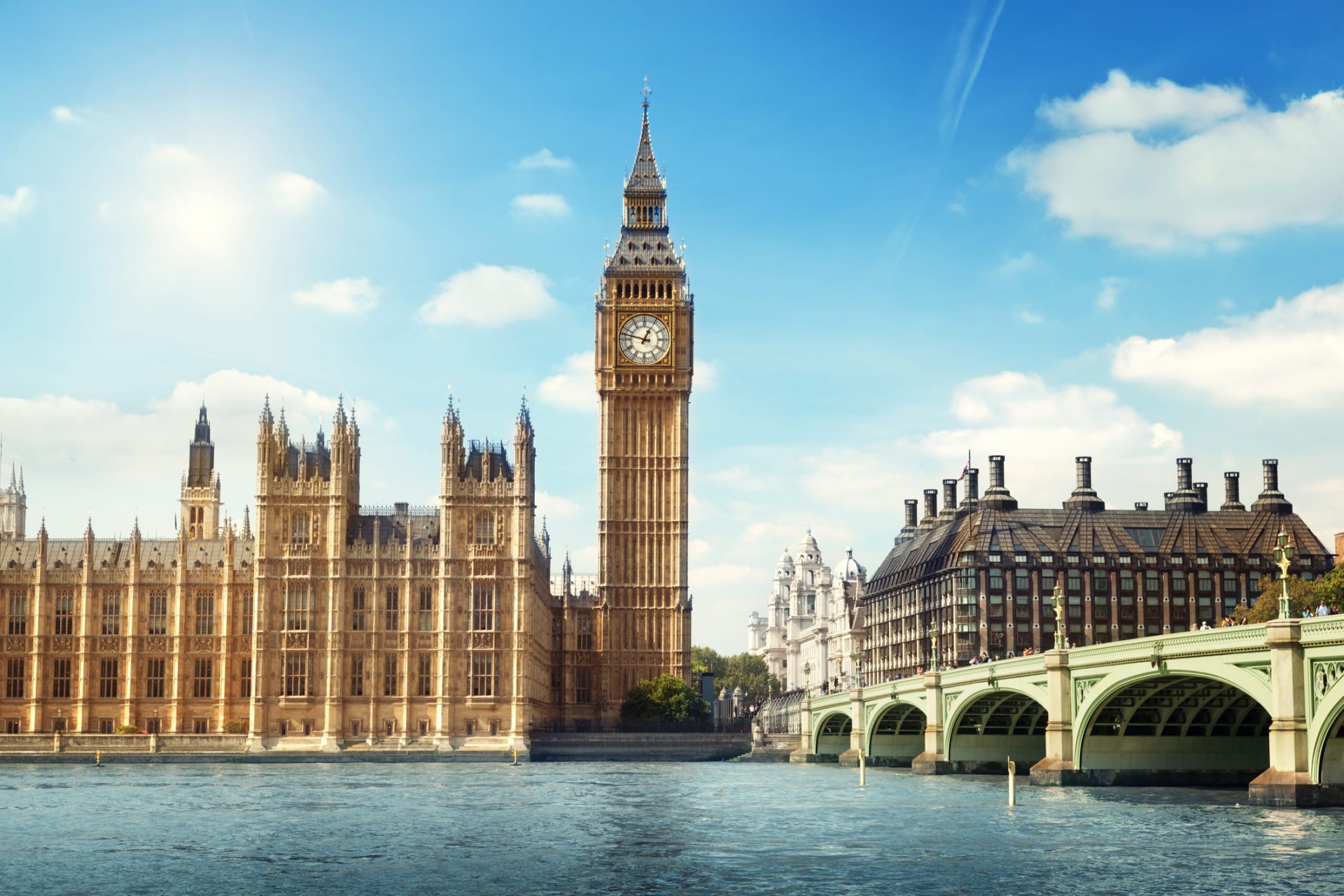
You begin at Westminster, where the Houses of Parliament stretch along the river, their honey-coloured stone carved with countless pinnacles, statues and coats of arms. The palace you see today was mostly built in the 19th century, after a great fire in 1834 destroyed the old palace; only the medieval Westminster Hall survived, with its magnificent oak hammerbeam roof from the 1390s, one of the largest of its kind in Europe. At the north end of the palace rises the clock tower known around the world as Big Ben. Strictly speaking, Big Ben is the name of the great bell inside, which weighs more than 13 tonnes; the tower itself was renamed the Elizabeth Tower in 2012 to mark Queen Elizabeth II's Diamond Jubilee. Across the road stands Westminster Abbey, where coronations have been held since 1066, and where King Charles III was crowned in May 2023.

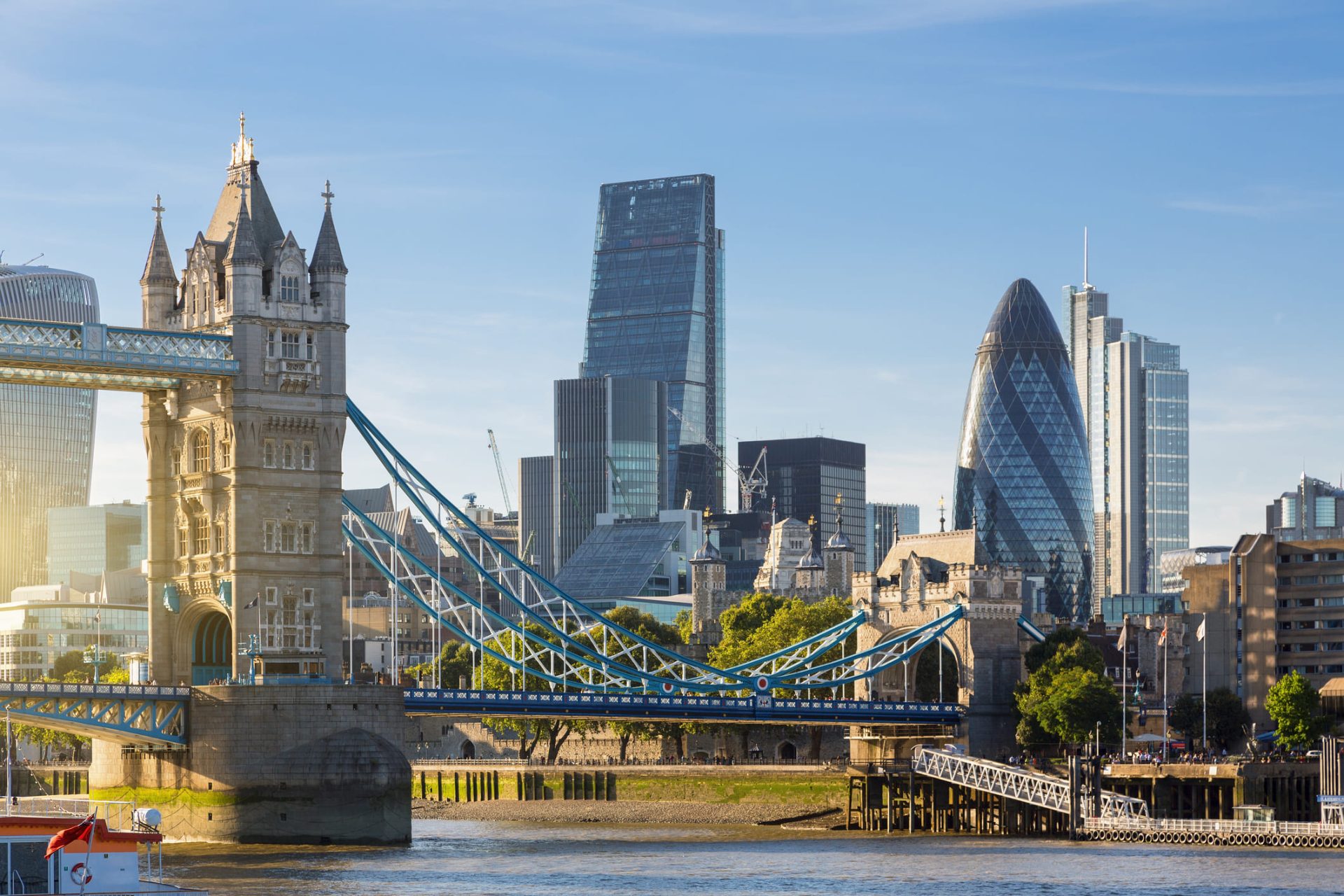
Your guide then leads you past the great sights of the West End: Trafalgar Square, built to commemorate Admiral Nelson's victory over the French and Spanish fleets in 1805, with the National Gallery on its northern side; Piccadilly Circus, with its huge curved screens and the statue popularly known as Eros; and the elegant streets of Mayfair. You'll see the green spaces of Hyde Park and cross the river to see Tower Bridge, with its twin Gothic towers and blue suspension chains, and the ancient Tower of London, home of the Crown Jewels.

At Buckingham Palace, the King's official London residence, you watch the Changing of the Guard. The palace has 775 rooms, and when the King is in residence, the Royal Standard flag flies from the roof. Outside, the old guard hands over responsibility for protecting the palace to the new guard in a ceremony full of precision and pageantry: soldiers in scarlet tunics and black bearskin hats march to the music of a military band, while crowds gather at the gates and around the Victoria Memorial to watch.

In the afternoon, you visit Lord's Cricket Ground in St John's Wood, the Home of Cricket. For any cricket lover, this is a pilgrimage. Lord's is owned by the Marylebone Cricket Club, the MCC, which wrote and still guards the Laws of Cricket. On your guided tour, you walk through the Victorian Pavilion and into the Long Room, where members watch the game through tall windows beneath portraits of the game's greatest players. You see the dressing rooms, where the honours boards record the names of every batsman who has scored a Test century at Lord's and every bowler who has taken five wickets in an innings; Indian names such as Dilip Vengsarkar, who scored three Test hundreds here, Rahul Dravid and Ajinkya Rahane feature on them. From the dressing room balcony, you look out over the famous pitch, which slopes about two and a half metres from one side to the other, a quirk that has puzzled bowlers for generations. It was from this balcony that Kapil Dev lifted the World Cup in 1983, and where, in 2002, Sourav Ganguly famously waved his shirt in celebration after India won the NatWest Series final. In the MCC Museum, you see the little Ashes urn, along with bats, caps and memorabilia from the history of the game.

Later, you ride the London Eye, 135 metres tall, on the South Bank of the Thames. When it opened in 2000, it was the tallest observation wheel in the world, and it has become one of the most popular attractions in Britain. Its 32 glass capsules, one for each of London's boroughs, move so slowly that the wheel doesn't need to stop for passengers to step on. As you rise, the whole city comes into view: Parliament and Big Ben just across the river, Buckingham Palace among the trees of St. James's Park, the dome of St. Paul's and the towers of the City and Canary Wharf in the distance. The ride takes about thirty minutes, and it's one of the best ways to understand how London fits together. In the evening, you return to your hotel for dinner.

As you head back, notice the London traffic: the red double-decker buses have been a symbol of the city for decades, and riding on the top deck at the front is one of the best ways to see the streets.

Included today: guided London city tour, Changing of the Guard (subject to schedule), Lord's Cricket Ground tour, London Eye ride, breakfast, lunch, dinner.

Good to know: the Changing of the Guard does not take place every day and may be cancelled in bad weather or for state events. The Lord's tour route can change on match days.

Day 3
Madame Tussauds and the Eurostar to Paris | Celebrities in wax, then under the sea to France

Madame Tussauds and the Eurostar to Paris | Celebrities in wax, then under the sea to France

⌖ Paris 🍽 Meals: Breakfast, Lunch, Dinner

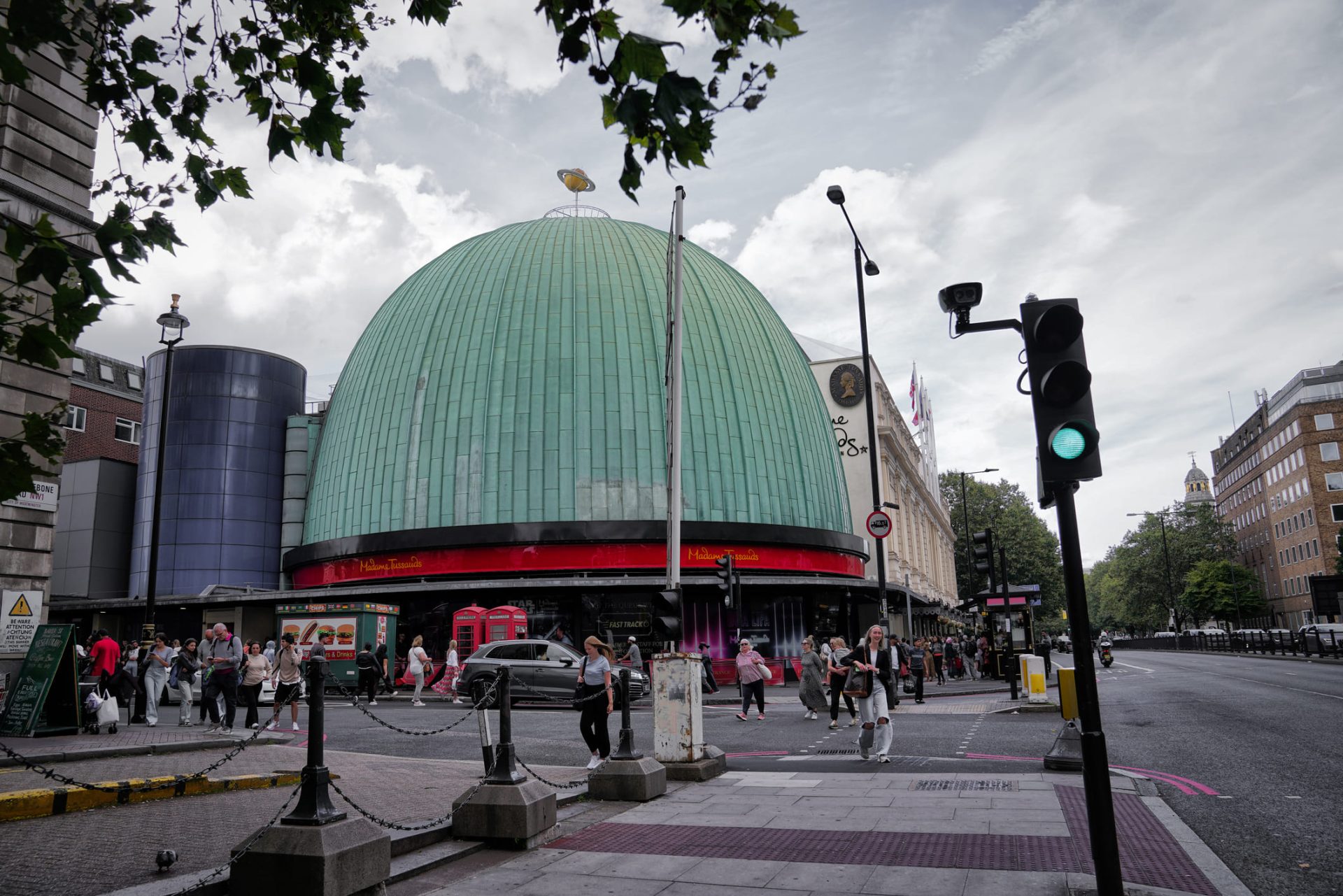
This morning you say goodbye to London, but not before meeting some very famous faces. After breakfast and check-out, your coach takes you to Madame Tussauds on Marylebone Road, home to the world's most famous collection of wax figures.

The story of Madame Tussauds begins in 18th-century Paris, where a young Marie Grosholtz learned the art of wax modelling from her mentor, a doctor named Philippe Curtius. She modelled famous figures of her day, including the writer Voltaire and Benjamin Franklin, and during the French Revolution, she was made to prove her loyalty by making death masks of executed nobles. In 1802, now married and named Marie Tussaud, she travelled to Britain with her collection and spent more than thirty years touring the country before settling in London. She was still working into her eighties, and her self-portrait in wax, made when she was 81, can still be seen today.

Inside the museum, you walk through themed zones filled with lifelike figures. Each figure takes a team of sculptors and artists around four months to create, and every detail is matched to the real person, from eye colour to skin tone and the exact shape of their teeth. You can stand beside the British royal family, meet world leaders and sporting heroes, step onto a red carpet with Hollywood stars, and pose with Bollywood legends. Shah Rukh Khan, Amitabh Bachchan and many other Indian stars have been honoured here, and Indian visitors often spend a long time in this section taking photographs. There are interactive experiences, too, and you can test your sporting skills or step into film scenes. Bring your camera and have fun: this is a place where no one minds if you strike a pose.

In the afternoon, you make your way to St Pancras International, one of the most beautiful railway stations in the world, with its soaring arched roof of iron and glass and its Gothic red-brick hotel. Here you board the Eurostar, the high-speed train that links London to Paris through the Channel Tunnel.

As the train pulls out of London, it gathers speed through the green fields and orchards of Kent, known as the Garden of England. Look out for the oast houses, round brick towers with white cone-shaped tops, once used to dry hops for brewing beer. Then the train dips into the Channel Tunnel. The tunnel is 50 kilometres long, about 38 of them beneath the sea, and it lies on average about 40 metres below the seabed. In around twenty minutes you emerge in France, among the wide open fields of the north, dotted with farmhouses, church spires and wind turbines. On high-speed track, the train travels at up to 300 kilometres an hour, and the whole journey from London to Paris takes just over two hours, city centre to city centre.

A few generations ago, the same trip meant a train to the coast, a ferry across the often rough waters of the Channel, and another train to Paris, a full day's travel. Today, you can have breakfast in London and dinner in Paris, and many people do. When the tunnel opened in 1994, it changed the relationship between Britain and the rest of Europe, bringing the two closer together than ever before.

Your train arrives at the Gare du Nord, and you step out into Paris, the City of Light, a name it earned both as a centre of ideas and learning during the Age of Enlightenment and as one of the first cities in Europe to light its streets with gas lamps. As your coach drives to the hotel, you'll see the grand boulevards laid out in the 19th century by Baron Haussmann, lined with elegant cream-stone buildings of six or seven storeys, all with wrought-iron balconies and grey zinc roofs, creating the harmonious look that makes Paris so instantly recognisable. Pavement cafés spill onto the streets, and Parisians sit at tiny round tables, sipping coffee and watching the world go by.

Paris is famous for its fashion, its perfume, its art, its food and its cabarets. The Moulin Rouge, with its red windmill, opened in 1889, the same year as the Eiffel Tower, and gave the world the can-can dance. The city has around 130 museums, from the Louvre to small museums dedicated to a single artist, and hundreds of bakeries, where Parisians buy fresh baguettes every day. In the evening, after checking in at your hotel, you enjoy dinner with the group. Over the next three days, Paris is yours to discover.

Included today: Madame Tussauds entry, Eurostar from London to Paris, breakfast, lunch, dinner.

Good to know: border checks for France take place at St Pancras before you board, so keep your passport handy. Luggage on the Eurostar must be carried on by you, so pack sensibly. From Paris onwards you need a European plug adapter.

Day 4
Paris city tour, the top of the Eiffel Tower, Versailles and a Seine cruise | The best of Paris in one unforgettable day

Paris city tour, the top of the Eiffel Tower, Versailles and a Seine cruise | The best of Paris in one unforgettable day

⌖ Paris 🍽 Meals: Breakfast, Lunch, Dinner

Today you discover Paris from every angle: from the streets with an expert guide, from the very top of the Eiffel Tower, from the gilded halls of Versailles and from the river.

Your guided city tour takes you past many of the most famous places in Paris. You drive past the Place Vendôme, an elegant octagonal square surrounded by jewellers and the famous Ritz hotel, with a tall bronze column in the centre made from the melted-down cannons captured by Napoleon at the Battle of Austerlitz. You see the Palais Garnier, the magnificent opera house completed in 1875, decorated with gold, marble and statues; the Place de la Concorde, where King Louis XVI and Marie Antoinette were executed during the Revolution, and where today an ancient Egyptian obelisk from the temple of Luxor stands at the centre; and the Champs-Élysées, the grand avenue lined with chestnut trees, luxury shops and cafés, which leads up to the Arc de Triomphe. The arch was commissioned by Napoleon in 1806 to honour his armies, and beneath it lies the Tomb of the Unknown Soldier from the First World War, where an eternal flame is rekindled every evening. You'll also see the Pont Alexandre III, the most ornate bridge in Paris, the Musée d'Orsay, and the golden dome of Les Invalides, where Napoleon is buried.

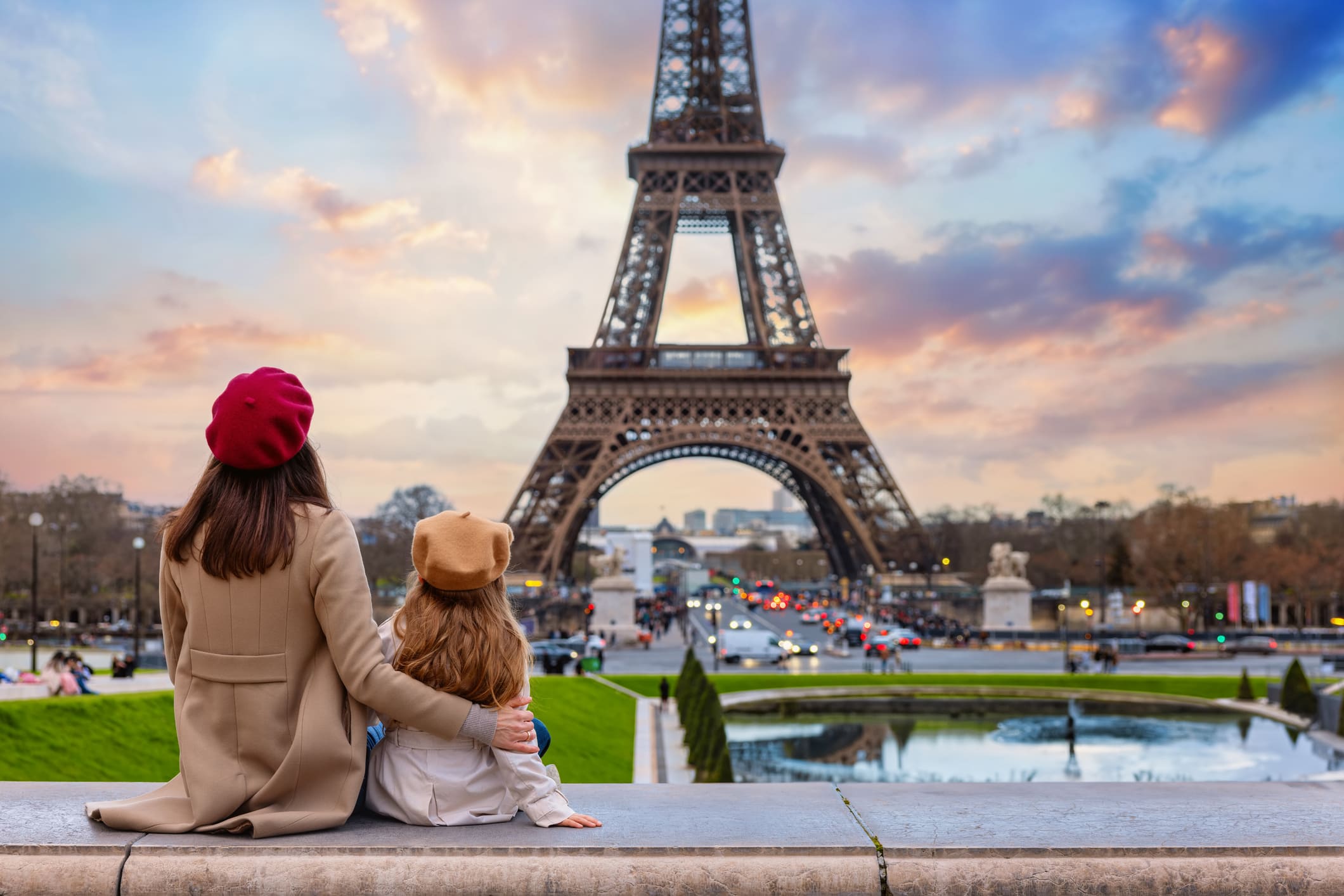
Then comes one of the highlights of the whole tour: a visit to the top level of the Eiffel Tower. The lifts first carry you to the second level, and from there, a second lift glides up through the iron lattice to the summit, 276 metres above the ground. As you step out onto the viewing platform, Paris lies spread out beneath you like a giant map. You can see right across the city and, on a clear day, as far as 60 kilometres or more. At the top, you can also peek into the restored office of Gustave Eiffel, where wax figures show him welcoming the American inventor Thomas Edison, who visited the tower in 1889 and gave Eiffel one of his early phonographs. For many travellers, standing at the top of the Eiffel Tower is a dream come true.

In the afternoon, you visit the Palace of Versailles, about 20 kilometres west of Paris. What began as a modest hunting lodge built by King Louis XIII was transformed by his son, Louis XIV, into the most dazzling palace in Europe, a symbol of absolute royal power. Louis XIV was known as the Sun King, and images of the sun and of Apollo, the Greek god of the sun, appear everywhere in the palace. You walk through the State Apartments, with their painted ceilings, marble walls, silk hangings and crystal chandeliers, to the Hall of Mirrors, the most famous room in the palace, where 357 mirrors reflect the light from tall windows overlooking the gardens. In the 17th century, mirrors were extremely expensive, and filling a hall with them was a statement of the king's wealth. The gardens, designed by the landscape architect André Le Nôtre, cover around 800 hectares, with perfectly symmetrical lawns, flower beds, avenues of trees, statues and some fifty fountains. Kings and queens of other countries copied Versailles for their own palaces, from Vienna to St Petersburg.

In the evening, you take a cruise on the River Seine. As the boat glides along, the great monuments of Paris slide past: the Louvre, with its glass pyramid; the twin towers of Notre-Dame Cathedral on the Île de la Cité; the Musée d'Orsay; and finally the Eiffel Tower itself, rising above the trees. You pass beneath some of the 37 bridges of Paris, each one different, and see the riverbanks where Parisians gather in summer to picnic, read and watch the boats. The banks of the Seine in Paris are a UNESCO World Heritage Site, and seeing them from the water is one of the most romantic experiences the city has to offer. You then return to your hotel for dinner.

Look out, too, for the little details of Parisian life as you drive through the city: the green Wallace fountains on street corners, given to the city by an English philanthropist in the 1870s; the elegant Art Nouveau entrances of the Métro stations, with their curling green ironwork; the bouquinistes, booksellers who sell old books, posters and prints from green wooden boxes along the river walls, a tradition dating back more than four centuries; and the flower stalls and bakeries on almost every street.

Included today: guided Paris city tour, Eiffel Tower top (3rd) level, Palace of Versailles visit, Seine cruise, breakfast, lunch, dinner.

Good to know: access to the top level depends on its being open; if it's closed, we visit the second level instead. Versailles involves a lot of walking, so wear comfortable shoes.

Day 5
Disneyland® Paris | A day of magic for every age

Disneyland® Paris | A day of magic for every age

⌖ Paris 🍽 Meals: Breakfast, Packed Lunch, Dinner

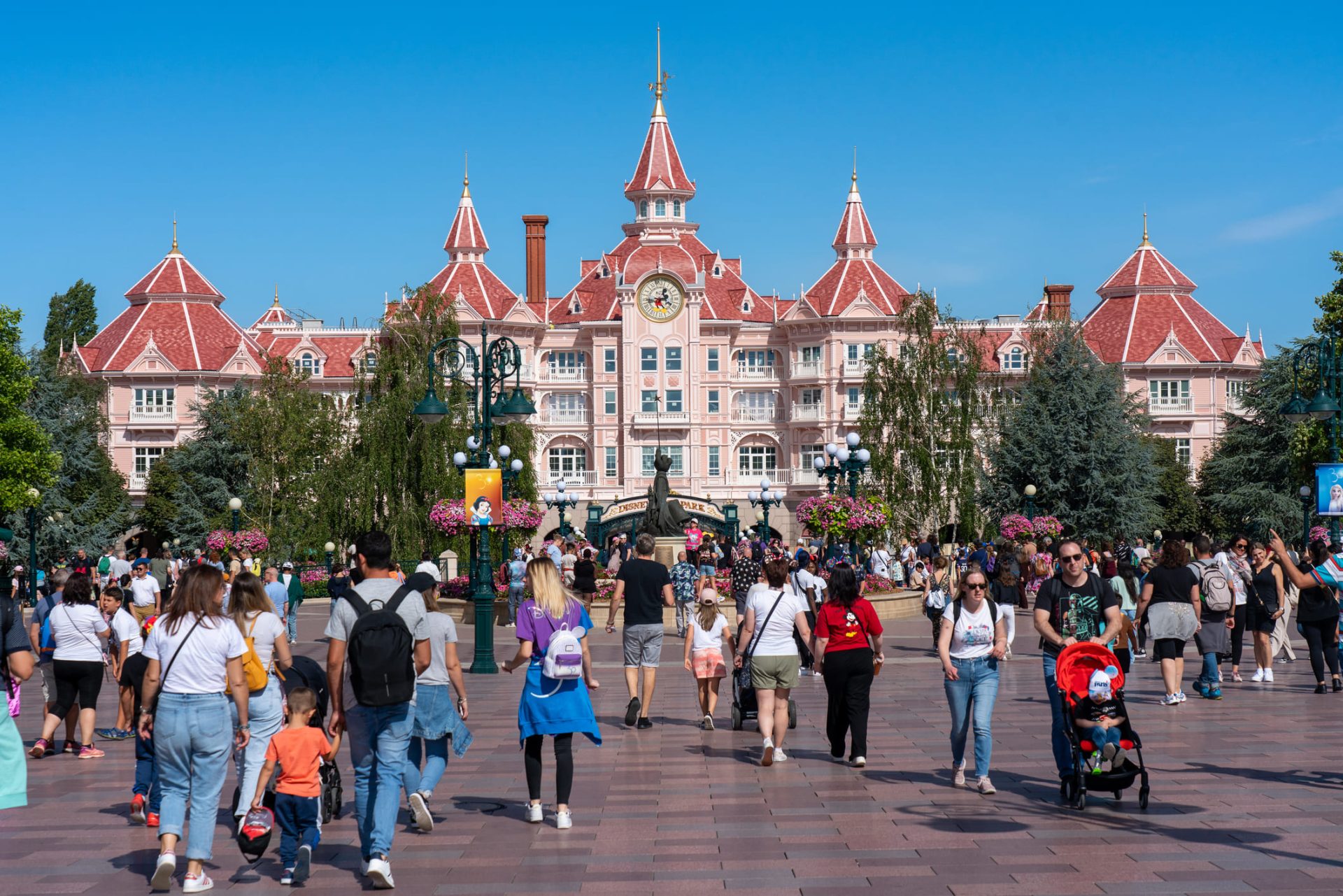
Today is pure fun. After breakfast, you head to Disneyland® Paris, about 32 kilometres east of the city, for a full day at the most visited theme park in Europe. Whether you're travelling with children, with your partner or with friends, this is a day to let go and enjoy the magic.

Disneyland® Paris opened in 1992 and has two parks, and you choose one of them for the day. Disneyland® Park is the classic Disney experience, divided into five lands. You enter through Main Street, U.S.A., a charming recreation of an American town of the early 1900s, with shops, bakeries and horse-drawn trams, leading to Sleeping Beauty Castle, the pink-and-blue fairy-tale castle at the heart of the park. Unlike Disney's castles in America, it was designed to look like a castle from a French storybook, inspired by medieval illustrations and the Loire Valley. Beneath it, in a hidden cave, lies a huge animatronic dragon.

In Frontierland, you journey to the American Wild West, where the Big Thunder Mountain runaway mine train rattles around a rocky island in a lake, and the Phantom Manor is filled with ghosts. In Adventureland, you'll find the Pirates of the Caribbean ride and an adventure island with caves, rope bridges and a treehouse. Fantasyland is the land of fairy tales, with gentle rides such as "it's a small world", Peter Pan's Flight and Dumbo the Flying Elephant, perfect for younger children and for anyone who loves the classic Disney films. And in Discoveryland, inspired by the visions of the future of writers such as Jules Verne, you'll find the thrilling Star Wars Hyperspace Mountain and Buzz Lightyear Laser Blast.

Throughout the day, Disney characters appear around the park to greet visitors and pose for photographs: Mickey and Minnie Mouse, Disney princesses, and characters from Pixar and Marvel films. In the afternoon, the daily parade brings huge, colourful floats, dancers and music down Main Street, and children wave from their parents' shoulders as their favourite characters go past.

Alternatively, you can choose to spend the day at the second park, Walt Disney Studios® Park (renamed Disney Adventure World in 2026), which takes you behind the scenes of the movies. Here you'll find rides and shows themed on Disney, Pixar and Marvel films: the Avengers Campus, where you can team up with Spider-Man and the Avengers; Ratatouille: The Adventure, a ride that shrinks you to the size of a rat in a Parisian kitchen; and spectacular stunt shows and live entertainment.

The parks are huge, so it pays to plan. Head to the most popular rides early in the day, when queues are shorter, and use the official Disneyland Paris app to check waiting times. Wear comfortable shoes, carry water and sunscreen in summer, and take breaks in the shade. Your packed lunch means you can eat when it suits you without losing time in queues.

In the evening, after a day full of rides, laughter and photographs, you return to Paris for dinner. Children usually fall asleep on the coach with a smile on their faces, and many adults are tempted to do the same.

Disneyland® Paris is more than just rides. Walking down Main Street, U.S.A., you'll smell freshly made popcorn and hear old-fashioned music drifting from the shops. The detail everywhere is remarkable: the buildings, the lamps, the signs and even the litter bins are designed to fit the theme of each land, and the gardens and lakes are beautifully kept. The park was built on former farmland, and its designers planted thousands of trees to create shade and separate the lands from one another, so that each one feels like a world of its own.

For younger children, meeting the characters is often the most exciting part of the day. Special meeting points around the park let them hug Mickey, chat with a princess or get an autograph, and the joy on their faces is something parents never forget. For teenagers and adults who love thrills, the big roller coasters, such as Big Thunder Mountain and Star Wars Hyperspace Mountain, are the highlights, with fast turns, sudden drops and plenty of screaming.

If you're visiting with grandparents or anyone who prefers a gentler pace, there's plenty to enjoy, too: a ride on the Disneyland Railroad, a steam train that circles the park, a boat ride through "it's a small world", where hundreds of dolls in costumes from around the world sing the famous song, or simply a coffee on Main Street while watching the crowds go by. Many grandparents say that watching their grandchildren's excitement is the best part of the day.

The park also has plenty of places to shop for souvenirs, from Mickey ears and soft toys to Disney princess dresses, and the large store on Main Street is a favourite last stop before leaving. Whatever your age, Disneyland® Paris has a way of bringing out the child in everyone.

Included today: Disneyland® Paris one-day ticket for one park of your choice, return transfers, breakfast, packed lunch, dinner.

Good to know: some rides have height restrictions for small children. Parades, shows and opening hours change with the season, and individual rides may close for maintenance.

Day 6
Paris to Geneva | Lakes, fountains and the city of peace

Paris to Geneva | Lakes, fountains and the city of peace

⌖ Geneva 🍽 Meals: Breakfast, Packed Lunch, Dinner

Today you leave France for Switzerland, a small, mountainous country of lakes, villages and the high peaks of the Alps. After breakfast and check-out, your coach heads south-east out of Paris through the French countryside.

The drive takes you through some of the most beautiful regions of France. You pass through Burgundy, a land of rolling hills, vineyards, stone villages and old abbeys, famous throughout the world for its wines and its cuisine, and then into the Jura, a range of wooded mountains and green pastures along the border with Switzerland, where the famous Comté cheese is made. Along the way, the coach stops for rest breaks, and you enjoy your packed lunch.

In the afternoon you arrive in Geneva, a city at the south-western tip of Lake Geneva, surrounded by mountains, with the snowy peak of Mont Blanc, the highest mountain in Western Europe, visible in the distance on clear days. Geneva is a French-speaking city, and although it's one of Switzerland's smaller cities, it's one of the most international places in the world. It's home to the European headquarters of the United Nations, the International Committee of the Red Cross, the World Health Organization and many other international organisations, and nearly half of its residents are foreign nationals.

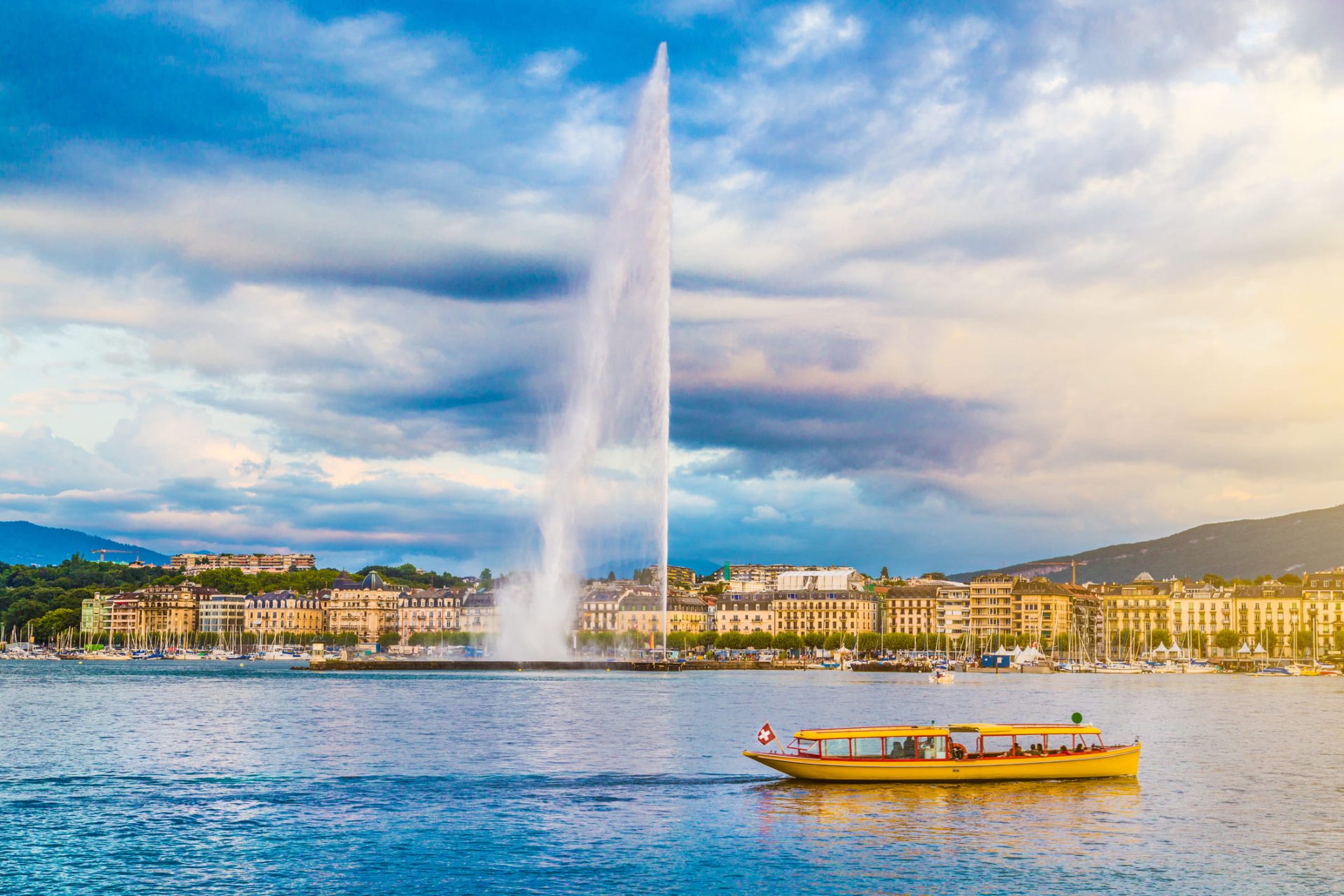
On your orientation tour, you see the Jet d'Eau, Geneva's most famous landmark, a huge fountain that shoots water 140 metres into the air from the lake, at a speed of around 200 kilometres an hour. At any moment, about seven tonnes of water are in the air. The fountain began as a simple safety valve for a hydraulic power network in the 19th century, but the people of Geneva liked it so much that it was turned into a permanent attraction. On sunny days, you can often see a rainbow in its spray.

You also see the Palais des Nations, the United Nations Office at Geneva, built in the 1930s for the League of Nations, the organisation founded after the First World War to keep the peace. In front of it stands the Broken Chair, a giant wooden chair 12 metres high with one leg broken off, a powerful memorial to the victims of landmines and cluster bombs. In the Jardin Anglais, on the lakeshore, you see the Flower Clock, made of thousands of flowers and plants, which celebrates Geneva's long tradition of watchmaking. The flowers are changed with the seasons, and the clock's second hand, at 2.5 metres long, is said to be the longest in the world.

Geneva has been a city of watchmakers since the 16th century, when religious reformers banned the wearing of jewellery and the city's goldsmiths turned their skills to making watches instead. Today, some of the most prestigious watch brands in the world, such as Patek Philippe, Rolex and Vacheron Constantin, have their homes here. Walking along the lakefront, past the luxury hotels and boutiques, you'll see why Geneva is often described as one of the most elegant cities in Europe.

After your orientation tour, you check in to your hotel and relax. Tonight, after dinner, take a stroll along the lake, where the lights of the city reflect in the calm water and the Jet d'Eau is lit up against the evening sky.

Geneva has a long history as a city of refuge and ideas. In the 16th century, it became the centre of the Protestant Reformation led by John Calvin, and refugees fleeing religious persecution in France, Italy and elsewhere came here to live. You can see the Reformation Wall in the Parc des Bastions, a huge stone monument about 100 metres long, with statues of Calvin and other reformers. The philosopher Jean-Jacques Rousseau, whose ideas inspired the French Revolution, was born in Geneva in 1712, and a small island in the river, named after him, has a statue in his honour.

Geneva is also where Henri Dunant, a Geneva businessman, founded the Red Cross in 1863, after witnessing the suffering of wounded soldiers on a battlefield in Italy. The first Geneva Convention, which set out rules for the care of wounded soldiers in wartime, was signed here in 1864, and the Geneva Conventions remain the foundation of international humanitarian law today. Dunant was awarded the very first Nobel Peace Prize in 1901.

Science has a home here too. Just outside the city is CERN, the European Organization for Nuclear Research, where scientists from around the world study the smallest particles in the universe using the Large Hadron Collider, a ring-shaped tunnel 27 kilometres long, buried deep underground beneath the border between France and Switzerland. The World Wide Web was invented at CERN in 1989 by the British scientist Tim Berners-Lee, so in a way, every website you visit has its roots in Geneva.

Included today: orientation tour of Geneva with the Jet d'Eau, the UN buildings and the Flower Clock (outside views), breakfast, packed lunch, dinner.

Good to know: today is a long drive of around six to seven hours with breaks. Switzerland uses Swiss francs; euros and cards are widely accepted. The Jet d'Eau may be switched off in strong wind or freezing weather.

Day 7
Jungfraujoch, the Top of Europe, and Interlaken | Ice, snow and the great peaks of the Alps

Jungfraujoch, the Top of Europe, and Interlaken | Ice, snow and the great peaks of the Alps

⌖ Central Switzerland 🍽 Meals: Breakfast, Lunch, Dinner

Today is one of the high points of your tour, in every sense. After breakfast, you leave Geneva and drive into the heart of the Swiss Alps for an excursion to Jungfraujoch, the Top of Europe, included in your tour.

The drive itself is beautiful. You travel along the shores of Lake Geneva, past terraced vineyards, then up into the Bernese Oberland, a region of green valleys, glittering lakes and mountains that rise like walls on every side. You pass through Interlaken, a lively resort town set between two lakes, Lake Thun and Lake Brienz, whose waters are a deep turquoise colour from the fine rock dust carried down by the glaciers. Interlaken has welcomed travellers since the 19th century, when wealthy Europeans came to admire the mountains and take the fresh Alpine air, and today it's famous for paragliding, with colourful parachutes drifting down over the town.

You continue to the Grindelwald Terminal, where your journey up the mountain begins. The Eiger Express, a modern tri-cable gondola opened in 2020, carries you up to the Eigergletscher station in just 15 minutes, gliding close to the dramatic North Face of the Eiger, a sheer wall of rock and ice nearly 1,800 metres high, one of the most famous and dangerous climbs in the world. Below you, the valley shrinks away, and the chalets of Grindelwald become tiny dots in the green.

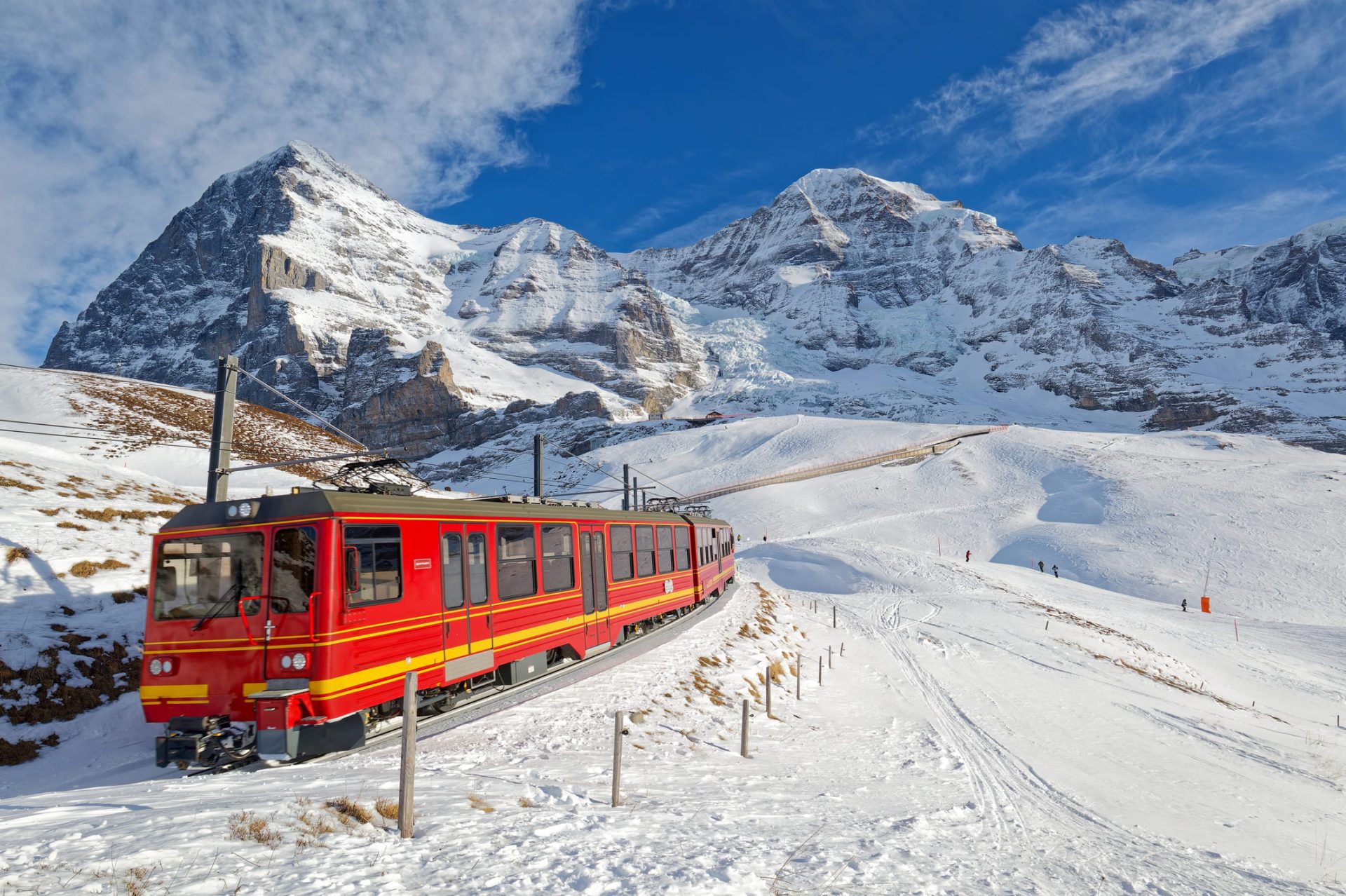
At Eigergletscher, you board the cogwheel train of the Jungfrau Railway, which climbs through a tunnel blasted inside the Eiger and the Mönch. The railway was the dream of a Swiss industrialist, Adolf Guyer-Zeller, and took 16 years to build. Hundreds of workers, many of them from Italy, drilled and blasted through the hard rock by hand and with dynamite. On the way up, the train used to stop at windows cut into the face of the mountain, giving passengers breathtaking views of the glaciers outside. Finally, you arrive at Jungfraujoch, at 3,454 metres (11,333 feet), the highest railway station in Europe.

When you step outside, the world is white. Even in midsummer, there's snow underfoot, and the air is crisp, cold and very thin. A fast lift takes you up to the Sphinx Observatory, a gleaming building perched on a rocky peak, home to a scientific research station that studies the atmosphere and the climate. From its terraces, you look down on the Great Aletsch Glacier, the longest glacier in the Alps, a vast river of ice about 20 kilometres long that flows south between the peaks, with dark stripes of rock running down its length. Around you rise the Jungfrau, at 4,158 metres, the Mönch and the Eiger, and on a clear day, you can see the Black Forest in Germany and the Vosges in France.

Back inside, you visit the Ice Palace, a maze of tunnels and halls carved deep into the glacier, where the temperature stays below zero all year round. The walls, floor and ceiling are made of ice, glowing a soft blue, and ice sculptures of eagles, bears, penguins and other animals stand in alcoves along the way. Walk carefully, because the floor is slippery! You can also step out onto the snow plateau to feel the glacier beneath your feet, throw snowballs and take photographs with the Swiss flag fluttering against the blue sky. At the Lindt Swiss Chocolate Heaven, the highest chocolate shop in Europe, you can watch chocolate being made and buy some to take home.

Indian travellers have a special love for this area. The Bernese Oberland was the setting for many of Yash Chopra's films, and Interlaken has even honoured him with a statue, unveiled in 2016, and named him an honorary ambassador of the region. Many visitors find that the views here look exactly like the scenes they remember from Bollywood songs, and there's an Indian restaurant at the top, serving hot food that's very welcome in the cold mountain air.

In the afternoon, you return down the mountain to Interlaken, where you have time to stroll along the Höheweg, the town's main promenade, with a view across the green meadow of the Höhematte towards the snowy summit of the Jungfrau. From here, you continue to your hotel in Central Switzerland for dinner.

As the sun begins to set, the snowy peaks around you turn pink and gold in the evening light, a phenomenon the Swiss call the Alpenglow. It's a perfect end to an unforgettable day in the mountains.

Included today: Jungfraujoch excursion with the Eiger Express and the Jungfrau Railway, Ice Palace, Sphinx Observatory, Interlaken visit, breakfast, lunch, dinner.

Good to know: it's cold at the top even in summer, so take warm layers, gloves, sunglasses and sunscreen. At high altitude, walk slowly and drink water. Guests with heart or breathing conditions should check with their doctor before travelling.

Day 8
Mt. Titlis, Lucerne and a cruise on Lake Lucerne | Snow peaks, a revolving cable car and Switzerland's prettiest lake

Mt. Titlis, Lucerne and a cruise on Lake Lucerne | Snow peaks, a revolving cable car and Switzerland's prettiest lake

⌖ Central Switzerland 🍽 Meals: Breakfast, Lunch, Dinner

After yesterday's Jungfraujoch, today brings another Alpine adventure, followed by a relaxed afternoon in the city of Lucerne and a cruise on its lake. After breakfast, you drive to Engelberg, a mountain resort tucked into a valley at the foot of Mt. Titlis, with a great white monastery at its centre.

The journey to the summit is an adventure in itself. You travel up the mountain in stages, first in small gondolas that float over green pastures and pine forests, past the little lake of Trübsee, and then in a large cable car. The final stage is the Titlis Rotair, the world's first revolving cable car. As it rises up the mountainside, the cabin turns slowly through a full circle, so whether you're standing by the window or in the middle, you'll see everything: the sheer cliffs, the deep blue crevasses in the glacier below, the snowfields and the jagged peaks all around. It's a moment when everyone in the cabin seems to say "wow" at the same time.

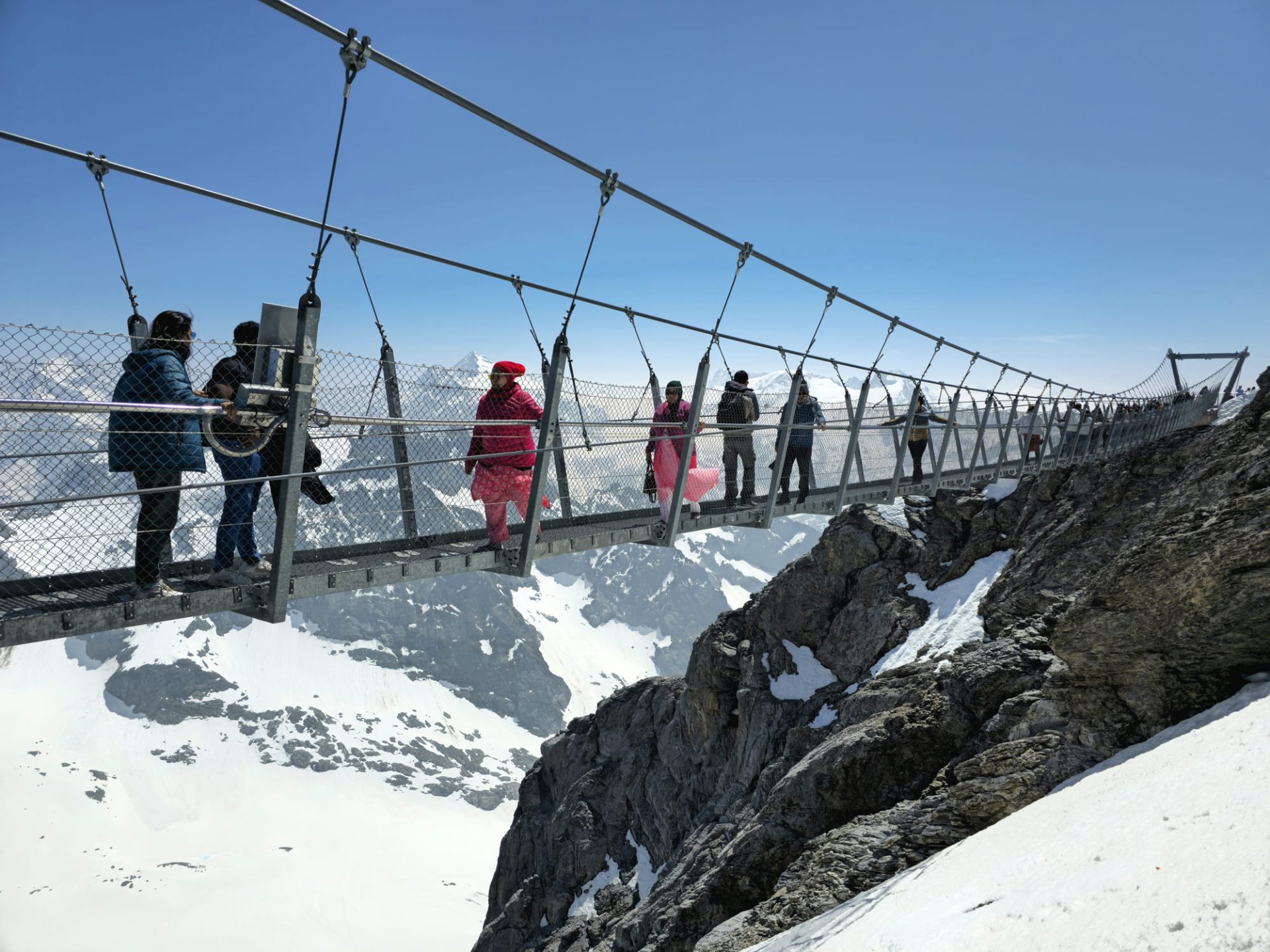
At the top, at around 3,020 metres, you step out into a winter wonderland. Even in July and August, snow covers the summit, and the air is fresh and cool. You can walk through the Glacier Cave, a 150-metre tunnel through the ice of the Titlis Glacier, where the frozen walls glow with blue light. Then, if you're feeling brave, walk out onto the Titlis Cliff Walk, the highest suspension bridge in Europe, which hangs over a drop of 500 metres. The bridge is only a metre wide, and it sways gently as you walk across, with nothing but air beneath you and incredible views of the Alps all around. Many visitors cross it slowly, gripping the cables and laughing nervously, and feel a great sense of achievement when they reach the other side.

At the Ice Flyer, a chairlift that takes you over the glacier, and at the Glacier Park, with snow tubes, sledges and snowballs, children and adults alike enjoy playing in the snow. And at the summit station, you'll find shops, restaurants and a photo studio where you can be photographed in traditional Swiss costume.

In the afternoon, you return to the valley and drive to Lucerne, one of the most beautiful cities in Switzerland, on the shores of Lake Lucerne with Mt. Pilatus and Mt. Rigi rising behind it. Your orientation tour takes you to the Lion Monument, a dying lion carved into a natural sandstone cliff to honour the Swiss Guards who lost their lives in Paris in 1792, defending the French royal family at the Tuileries Palace during the Revolution. Then you walk across the Chapel Bridge, the oldest covered wooden bridge in Europe, which crosses the River Reuss diagonally, decorated with flower boxes on the outside and painted panels under the roof. Next to it stands the octagonal Water Tower, which is even older than the bridge. In the old town, you have some free time to explore the squares with painted houses and to shop for Swiss watches, Swiss Army knives and chocolates.

Then comes a relaxing cruise on Lake Lucerne, one of the most beautiful lakes in Switzerland. The lake has a complicated shape, with several long arms stretching between steep, forested mountains, and its shores are dotted with villages, grand old hotels, chapels and meadows running down to the water. As the boat glides across the calm blue water, you see Lucerne's skyline of church spires and towers behind you, and the mountains rising all around. Lake Lucerne is surrounded by the four original cantons of Switzerland, and it was near its shores that, according to tradition, the founding alliance of the Swiss Confederation was sworn in 1291. After the cruise, you return to your hotel for dinner.

Engelberg itself is worth a look. The Benedictine monastery at its centre was founded in 1120 and is still home to a community of monks, who run a school and a cheese dairy, where you can watch cheese being made through glass windows. The village has hotels, chalets and shops selling local crafts, and in summer, its meadows are full of wildflowers, cows grazing with their big bells, and hikers setting off into the mountains.

Lucerne, too, has a long and interesting history. It grew up around a Benedictine monastery in the 8th century, and became an important stop on the trade route over the St. Gotthard Pass between northern Europe and Italy. Queen Victoria visited in 1868, and grand hotels sprang up along the lakeside to welcome wealthy visitors. Today, Lucerne is one of the most visited cities in Switzerland, and it hosts a famous classical music festival every summer at its modern concert hall, the KKL, whose enormous flat roof seems to float over the lake.

Included today: Mt. Titlis with the Rotair cable car, Cliff Walk and Glacier Cave, Lucerne orientation tour with the Lion Monument and the Chapel Bridge, Lake Lucerne cruise, breakfast, lunch, dinner.

Good to know: some attractions at the summit, such as the Ice Flyer, may carry an extra charge or close in bad weather. Bring warm clothes for the summit and lighter clothes for Lucerne, where it can be warm in summer.

Day 9
Rhine Falls, Swarovski Crystal Worlds and Innsbruck | Thundering water, glittering crystal and an Alpine capital

Rhine Falls, Swarovski Crystal Worlds and Innsbruck | Thundering water, glittering crystal and an Alpine capital

⌖ Innsbruck / Seefeld 🍽 Meals: Breakfast, Lunch, Dinner

Today you leave Switzerland for Austria, with three very different experiences along the way. After breakfast, you drive north towards Schaffhausen, near the German border, to see the Rhine Falls, the largest waterfall in Europe by volume.

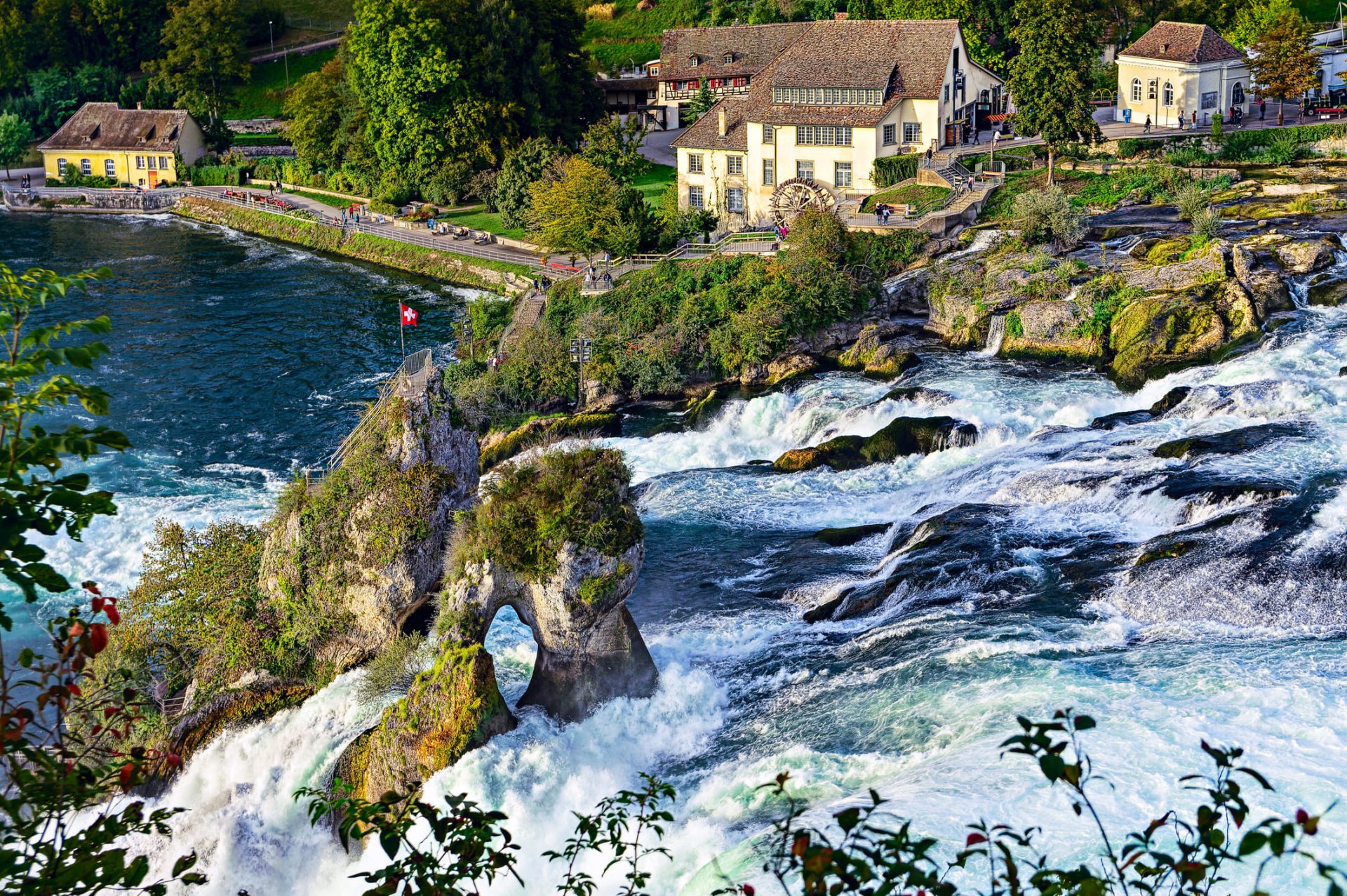
You hear the falls before you see them: a deep, constant roar that grows louder as you approach. Then they come into view, a wide curtain of white water tumbling over a rocky ledge 150 metres wide and 23 metres high, with a great rock standing defiantly in the middle of the torrent. In summer, when melting snow from the Alps swells the Rhine, the flow can reach 600,000 litres a second, and the spray rises in clouds that glitter with rainbows in the sunshine. The falls are about 15,000 years old, formed at the end of the last Ice Age, when the river was pushed into a new bed. Above them stands Laufen Castle, and from its terraces and viewing platforms you can stand right beside the falling water, feeling its power and its cool spray on your face. The German writer Goethe visited the falls several times and was deeply moved by their force.

You then continue east, past Lake Constance and through the Arlberg region of western Austria, with its deep valleys and high mountain passes, to Wattens, in the Tyrol, to visit the Swarovski Crystal Worlds. Swarovski Kristallwelten, as it's called in German, opened in 1995 to celebrate the company's 100th anniversary, and it's one of the most visited attractions in Austria. The entrance itself is unforgettable: a giant head covered in grass, with sparkling crystal eyes, from whose mouth a waterfall pours into a pool. Inside, you enter the Chambers of Wonder, a series of underground rooms created by artists and designers from around the world. Among them is the Crystal Dome, a dome made of 595 mirrors, where you feel as if you're standing inside a giant crystal. There's also a crystal cloud of hundreds of thousands of hand-mounted crystals floating over a black mirror pool in the gardens, and a huge store where you can browse and buy Swarovski jewellery and gifts.

In the late afternoon, you arrive in Innsbruck, the capital of the Tyrol, surrounded on all sides by the mountains of the Alps. Its name means "bridge over the Inn", after the river that flows through the city. During your orientation tour, you see the Golden Roof, a late-Gothic balcony covered with 2,657 fire-gilded copper tiles, built for Emperor Maximilian I around 1500 to celebrate his marriage, and from which the emperor and his court watched tournaments and festivals in the square below. You stroll along the Maria-Theresien-Strasse, Innsbruck's grand main street, lined with colourful baroque buildings and cafés, where the view of the Nordkette mountains rising at the end of the street is one of the most famous in Austria. Stop at a café to taste a slice of apple strudel, the classic Austrian pastry, served warm with vanilla sauce or cream.

In the evening, you check in to your hotel in Innsbruck or the mountain village of Seefeld for dinner and a peaceful night in the Alps.

The drive between the Rhine Falls and Wattens is one of the most scenic of the tour. After skirting Lake Constance, a great inland sea shared by Germany, Switzerland and Austria, you climb through the mountains of the Vorarlberg and pass under the Arlberg through a long road tunnel. On the other side, the Tyrol opens out before you: a land of high peaks, deep green valleys, rushing rivers and villages with onion-domed church towers, painted house fronts and balconies overflowing with red and pink geraniums. Cattle graze on steep meadows, and in summer, farmers can often be seen cutting hay by hand on slopes too steep for machines.

The Tyrol has a proud identity of its own. Its people are known for their traditional costumes, the lederhosen, leather shorts for men, and the dirndl, a colourful dress with an apron, for women, which are still worn at festivals and celebrations. Tyrolean folk music, with its yodelling, accordions and brass bands, can often be heard in the village squares on summer evenings.

Swarovski's story is closely tied to this valley. Daniel Swarovski, a glass cutter from Bohemia, chose Wattens in 1895 because the fast-flowing river could power his new crystal-cutting machine. Today, the company's crystals sparkle on the costumes of film stars and the gowns of fashion designers around the world. Swarovski crystals have even appeared in the costumes of Hollywood films and on stage at the world's great opera houses, and the company's famous swan logo is recognised around the world.

Innsbruck's old town has kept much of its medieval charm, with narrow lanes, arcaded houses painted in pastel colours and the tall City Tower, built in the 15th century, from whose viewing gallery watchmen once kept a lookout for fires. From almost everywhere in the city, you can see the mountains, and a funicular and cable cars run from the city centre all the way up to the Nordkette, so that people can leave their offices at lunchtime and be standing on a mountain ridge at over 2,000 metres half an hour later.

Included today: Rhine Falls visit, Swarovski Crystal Worlds entry, Innsbruck orientation tour with the Golden Roof and Maria-Theresien-Strasse, breakfast, lunch, dinner.

Good to know: today is a long day of travel with three stops. The spray at the Rhine Falls can be heavy, so protect your camera. Austria uses the euro.

Day 10
Venice and a gondola ride | The city where the streets are made of water

Venice and a gondola ride | The city where the streets are made of water

⌖ Padova/Ferrara 🍽 Meals: Breakfast, Lunch, Dinner

Today you cross the Alps into Italy and arrive in Venice, one of the most beautiful and romantic cities in the world. After breakfast and check-out, your coach climbs to the Brenner Pass, at 1,370 metres one of the lowest passes across the main chain of the Alps, used by travellers since Roman times. As you cross into Italy, the landscape changes: the valleys become warmer and sunnier, vineyards and apple orchards cover the slopes, and the signs appear in both German and Italian, as you pass through the South Tyrol. Further south, the mountains open onto the wide plain of the Veneto.

You arrive at the pier near Venice and board a private boat for the journey across the lagoon. As the boat skims across the water, Venice slowly rises from the sea in front of you, its domes, bell towers and palaces shimmering in the light. It's an arrival that has thrilled travellers for centuries.

Venice was founded on islands in the lagoon by people fleeing invasions on the mainland, and it grew into one of the richest and most powerful cities in Europe, a republic that lasted for more than a thousand years, until Napoleon conquered it in 1797. Its wealth came from trade with the East: Venetian ships carried spices, silk, glass and gold across the Mediterranean, and its merchants built magnificent palaces along the canals. The whole city rests on millions of wooden piles, driven deep into the mud of the lagoon centuries ago, which have been preserved by the lack of oxygen underwater.

Your boat lands near St. Mark's Square, the great piazza at the heart of Venice. You see St. Mark's Basilica, one of the finest examples of Byzantine architecture in the world, with its five great domes, its arches and its glittering mosaics, which cover more than 8,000 square metres inside, many of them on backgrounds of gold leaf, giving it the nickname "the Church of Gold". You see the Campanile, the tall brick bell tower of St. Mark's, and the Clock Tower, whose beautiful blue and gold clock face shows not only the hour but also the signs of the zodiac and the phases of the moon. Nearby is the Doge's Palace, and the Bridge of Sighs, made of white limestone, crossing the Rio di Palazzo to connect the old prisons with the interrogation rooms of the palace. The famous adventurer Giacomo Casanova was imprisoned here and, in 1756, made a daring escape through the roof.

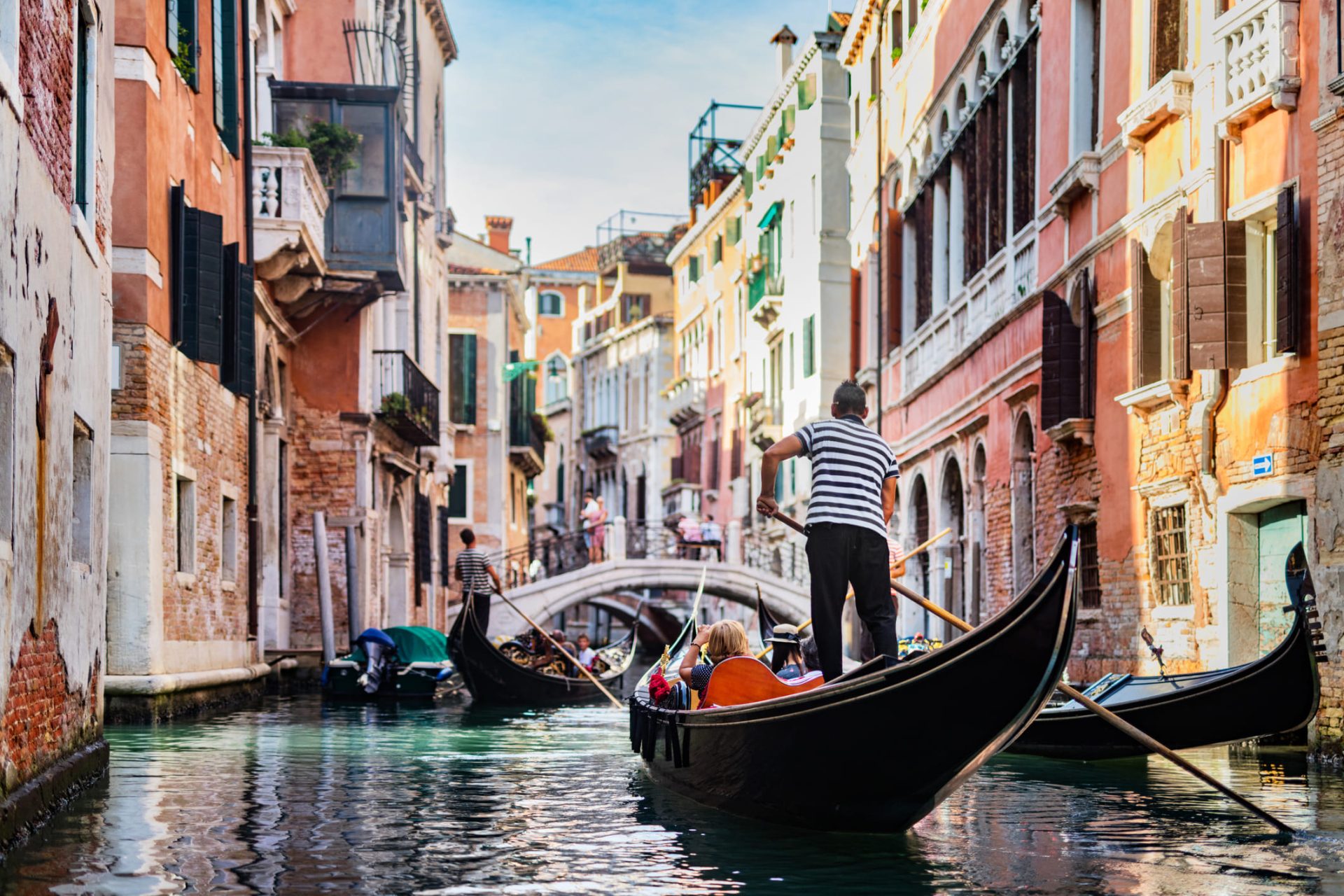
Then comes a moment you'll never forget: a gondola ride through the canals. The gondola, a long, narrow, flat-bottomed black boat, has been the symbol of Venice for centuries. Each one is made by hand from eight different types of wood, and is slightly asymmetrical, so that it travels straight even though the gondolier rows on only one side. There are only a few hundred licensed gondoliers in Venice, and the job has traditionally been passed down from father to son. As your gondolier steers you skilfully through the narrow waterways, under little bridges and past the crumbling walls of old palaces, with water lapping at their doorsteps, you'll see a side of Venice that can't be seen from the streets. It truly is the best way to enjoy this enchanting city.

Afterwards, you have some free time to wander the lanes, admire the shops of Murano glass and carnival masks, and enjoy an Italian gelato. In the evening, you return to the pier and drive to your hotel in the Padova or Ferrara area for dinner.

Venice has inspired writers, artists and musicians for centuries. Shakespeare set two of his plays here, The Merchant of Venice and Othello; the painters Titian, Tintoretto and Canaletto captured its light and its canals; and the composer Antonio Vivaldi, author of The Four Seasons, was born here. Every year, the city hosts the Venice Film Festival, the oldest film festival in the world, and the Venice Biennale, one of the most important art exhibitions in the world. And every February, the Carnival of Venice fills the streets with people in elaborate masks and costumes, a tradition dating back to the Middle Ages.

If you'd like a souvenir, Venice is famous for two crafts in particular. On the island of Murano, glassmakers have been producing beautiful glass since 1291, when the city's glass furnaces were moved there to protect Venice from fire. Murano glass vases, beads, jewellery and chandeliers are sold all over the city. And the Venetian carnival masks, made of papier-mâché and decorated with gold, feathers and jewels, make colourful and memorable gifts. Look for shops where you can see the artisans at work, to be sure you're buying the genuine article.

Included today: private boat transfer to St. Mark's Square, Venice orientation tour with St. Mark's Basilica, the Bell Tower, the Clock Tower and the Bridge of Sighs (outside views), gondola ride, breakfast, lunch, dinner.

Good to know: gondolas are shared, usually by up to five or six guests. Venice may charge a day-visitor access fee on some peak days; we'll let you know if it applies. Venice gets crowded in summer, so keep your belongings close.

Day 11
Florence and the Leaning Tower of Pisa | The cradle of the Renaissance and a tower that refuses to fall

Florence and the Leaning Tower of Pisa | The cradle of the Renaissance and a tower that refuses to fall

⌖ Tuscany region 🍽 Meals: Breakfast, Lunch, Dinner

Today you travel into Tuscany, a region of rolling hills, cypress trees, vineyards and medieval towns, and visit two of the most famous cities in Italy. After breakfast and check-out, you drive south across the Apennine mountains to Florence, the city where the Renaissance was born.

In the 15th century, Florence was one of the richest cities in Europe, a centre of banking, trade and the wool and silk industries. Its most powerful family, the Medici, were bankers who used their enormous wealth to support artists, architects, scientists and thinkers. Under their patronage, Florence became home to some of the greatest geniuses in history: Leonardo da Vinci, Michelangelo, Botticelli, Brunelleschi, Donatello and many more. They rediscovered the art and learning of ancient Greece and Rome and created a new way of seeing the world, which spread across Europe and changed art, science and architecture forever. Walking through Florence today, you feel as if you've stepped into that golden age.

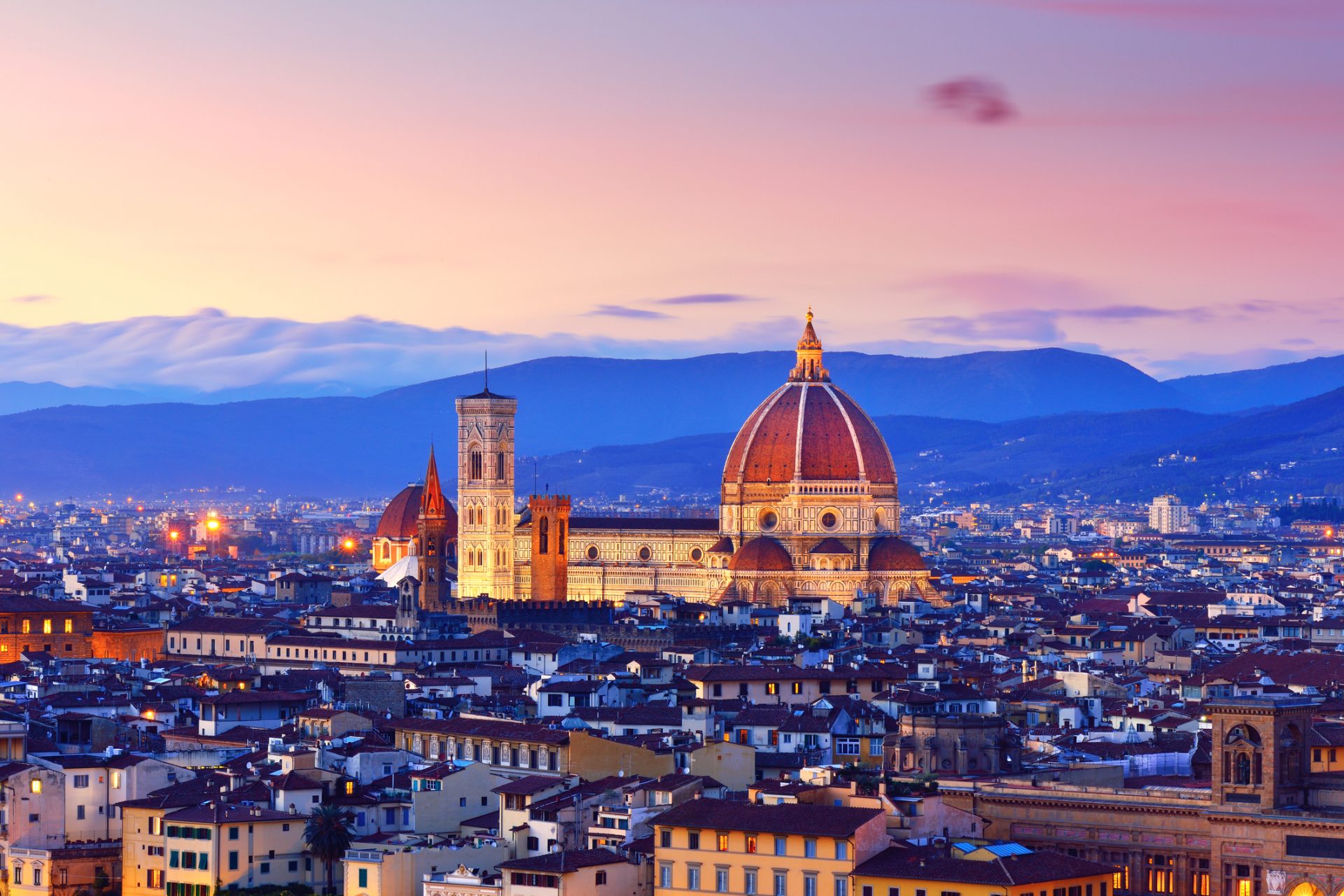
With your English-speaking local guide, you walk through the historic centre, a UNESCO World Heritage Site. Your first sight is the Duomo, the Cathedral of Santa Maria del Fiore, the symbol of Florence. Its walls are covered with patterns of white, green and pink marble, and above it rises the enormous red-tiled dome designed by Filippo Brunelleschi. When the cathedral was built, no one knew how to cover the huge opening, more than 40 metres wide, and the problem remained unsolved for decades. Brunelleschi's solution, a double-shelled dome built without wooden supports, completed in 1436, was one of the greatest engineering achievements of the Renaissance, and it remains the largest brick dome ever built. Beside the cathedral stands Giotto's Campanile, the elegant bell tower, also decorated with coloured marble.

Opposite the cathedral is the octagonal Baptistery of St. John, one of the oldest buildings in the city, where many famous Florentines, including the poet Dante, were baptised. Its east doors, made of gilded bronze by the sculptor Lorenzo Ghiberti, took him 27 years to complete and show scenes from the Old Testament in astonishing detail. When Michelangelo saw them, he is said to have declared them worthy to be the Gates of Paradise, and the name has stuck ever since. The panels on the doors today are copies; the originals are kept safely in the cathedral museum.

You continue to the Piazza della Signoria, the political heart of Florence for centuries, which is like an open-air museum. Here stands the Palazzo Vecchio, the fortress-like town hall with its tall tower, and in front of it, a copy of Michelangelo's David, the most famous statue in the world; the original, carved from a single block of marble when Michelangelo was in his twenties, now stands in the Accademia Gallery nearby. Beside the palace, the Loggia dei Lanzi, an open arcade, displays more Renaissance sculptures, including Cellini's bronze Perseus holding the head of Medusa. Then you walk down to the River Arno to see the Ponte Vecchio, the "old bridge", lined with little goldsmiths' and jewellers' shops built right out over the water. It was the only bridge in Florence not destroyed by the retreating German army in 1944, reportedly spared on Hitler's personal order. Above the shops runs the Vasari Corridor, a secret passageway built so that the Medici could walk between their palaces without mixing with the people below.

Florence is also a city of craftsmanship and good food. It's famous for its leather goods, sold in markets and workshops around the Basilica of Santa Croce and San Lorenzo, for its paper and gold jewellery, and for its gelato, which, according to local legend, was invented here for the Medici court.

In the afternoon, you drive west to Pisa, about an hour away, to the Piazza dei Miracoli, the Square of Miracles, where a group of gleaming white marble buildings stands on a wide green lawn: the cathedral, the round baptistery, the monumental cemetery, and the famous Leaning Tower. The tower began to lean during its construction, which started in 1173, because it was built on soft ground of clay, sand and shells that couldn't support its weight. Construction was halted for almost a century because of wars, which gave the soil time to settle; otherwise, the tower would probably have fallen. When building resumed, the engineers tried to correct the tilt by making the upper floors slightly taller on one side, so the tower is actually slightly curved. By 1990, it was leaning so much that it was closed to the public, and engineers spent more than a decade carefully removing soil from beneath the higher side, reducing the tilt by around 45 centimetres. It's now considered stable for at least 200 years. Legend says that the scientist Galileo Galilei, who was born in Pisa, dropped balls of different weights from the top to prove that they would fall at the same speed.

Of course, you'll want the classic photograph, "holding up" the tower with your hands, and you'll find dozens of other visitors doing exactly the same thing, a cheerful sight in itself. In the evening, you check in to your hotel in the Tuscany region for dinner.

Included today: guided walking tour of Florence, visit to the Square of Miracles in Pisa with the Leaning Tower (outside view), breakfast, lunch, dinner.

Good to know: the Florence walking tour covers the sights from outside; museum and cathedral entries are not included. Florence can be very hot in summer, so carry water, a hat and sunscreen. Dress modestly if you'd like to enter any church.

Day 12
Rome: the Vatican, St. Peter's Basilica, the Colosseum and the Trevi Fountain | All roads lead to Rome

Rome: the Vatican, St. Peter's Basilica, the Colosseum and the Trevi Fountain | All roads lead to Rome

⌖ Rome 🍽 Meals: Breakfast, Lunch, Dinner

Today you travel to Rome, the Eternal City, for the grand finale of your journey. After breakfast, you drive south along the Autostrada del Sole, the "Motorway of the Sun", through the green hills of Tuscany and Umbria, where medieval towns such as Orvieto sit on top of rocky cliffs, and into the region of Lazio. As the coach approaches Rome, you may glimpse the great dome of St. Peter's rising above the city.

There's a famous saying that all roads lead to Rome. In ancient times it was almost literally true: the Romans built a network of more than 80,000 kilometres of paved roads across their empire, all connected to the capital, and at the centre of the Roman Forum stood a golden milestone from which distances were measured. For more than two thousand years, Rome has been the centre of an empire, the capital of the Catholic Church and a magnet for pilgrims, artists and travellers.

Your first visit is to the Vatican City, the smallest independent country in the world, an enclave of just 44 hectares within the city of Rome, with its own stamps, its own flag and its own army, the colourful Swiss Guard, who have protected the Pope since 1506. Look out for their famous striped uniforms of blue, red and yellow. You walk into St. Peter's Square, the vast oval piazza designed by Gian Lorenzo Bernini, enclosed by colonnades of 284 columns and topped by 140 statues of saints. In the centre stands an Egyptian obelisk brought to Rome by the Emperor Caligula almost two thousand years ago.

Inside St. Peter's Basilica, one of the largest churches in the world, you'll be overwhelmed by its size and beauty. The basilica was built over the tomb of St. Peter, one of the apostles of Jesus and the first Pope. Construction of the present church took more than a century, from 1506 to 1626, and many of the greatest artists of the Renaissance and baroque periods worked on it, including Bramante, Raphael, Michelangelo and Bernini. Look up at the great dome, designed by Michelangelo, with its inside covered in mosaics, and at the bronze baldachin by Bernini, nearly 30 metres high, standing over the main altar. To the right of the entrance is Michelangelo's Pietà, carved when he was just 24 years old. It's the only work he ever signed: the story goes that he overheard visitors crediting the statue to another sculptor, so he carved his name on the sash across the Virgin's chest. Everything here is on a gigantic scale: the letters of the inscription around the base of the dome are almost two metres tall, though from the floor they look small.

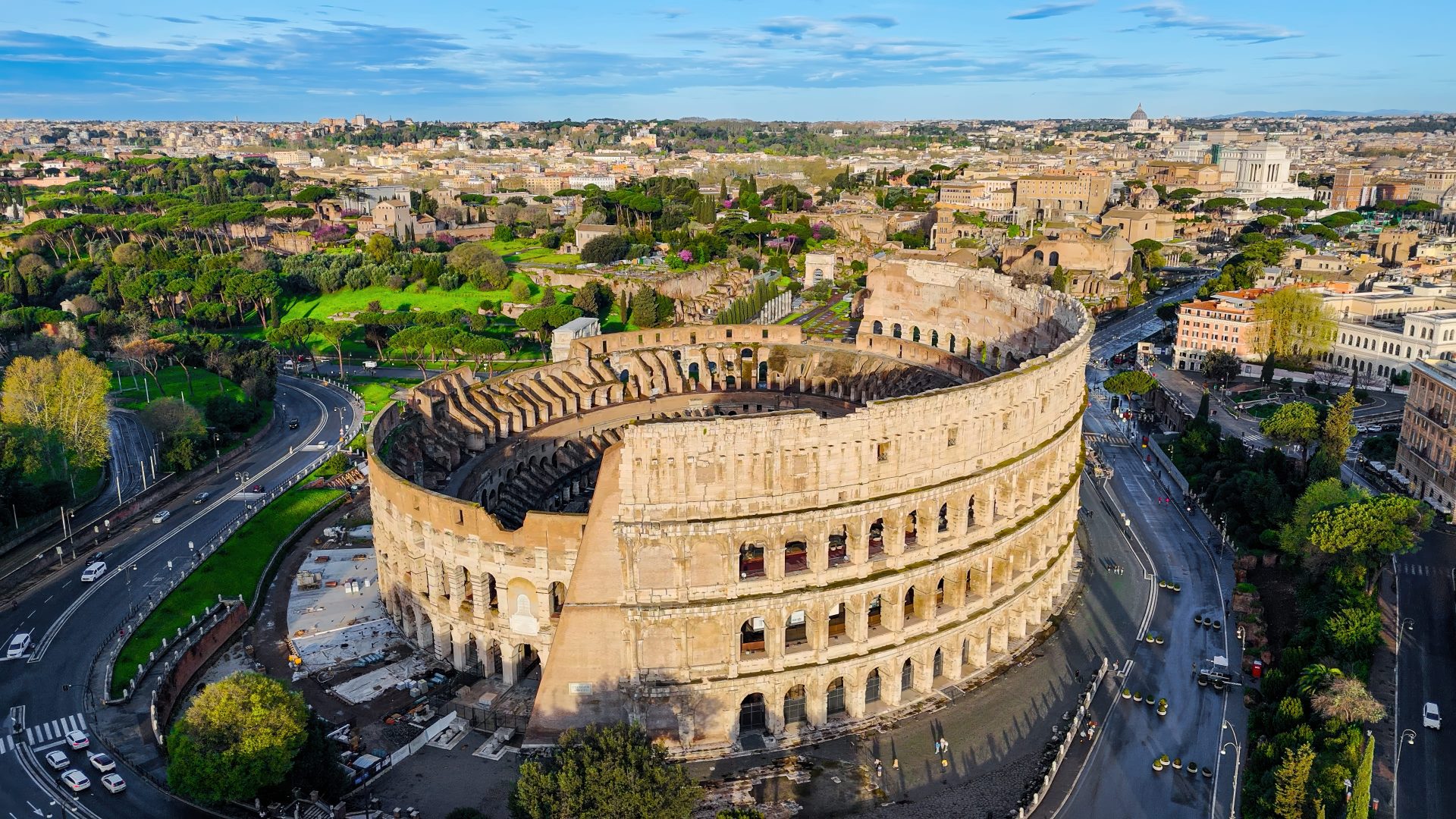
Your exploration of Rome continues with the Colosseum, the greatest amphitheatre of the Roman world, begun by the Emperor Vespasian around AD 70 and opened by his son Titus in AD 80 with games that lasted 100 days. The Colosseum is around 50 metres tall, and it once had a huge awning, operated by sailors, that could be stretched over the seats to shade the spectators from the sun. Even in ruins, it's a breathtaking sight, and it has become the symbol of Rome and of the strength of the Roman Empire.

Your last stop is the Trevi Fountain, a baroque masterpiece built against the side of a palace and completed in 1762. It's the largest fountain in Rome, about 26 metres high and 49 metres wide, and its water still comes from an ancient Roman aqueduct, the Aqua Virgo, built in 19 BC. According to legend, if you toss a coin over your shoulder into the fountain, you'll return to Rome one day. Toss two and you'll fall in love with an Italian; three, and you'll marry them, or so the story goes! Around 1.5 million euros are thrown into the fountain each year, and the money is collected and given to charity to help the people of Rome.

In the evening, you check in to your hotel and enjoy your final dinner together with your fellow travellers and tour manager, a time to share your favourite memories of this grand journey.

If there's a little free time, wander through the nearby streets, where Romans live surrounded by history. You may come across the Pantheon, an ancient Roman temple that has stood for nearly 1,900 years, with the largest unreinforced concrete dome in the world and a round opening at the top through which the sky is visible, or the Spanish Steps, where people sit and chat in the evening sun.

Included today: visit to the Vatican City and St. Peter's Basilica, the Colosseum, the Trevi Fountain, breakfast, lunch, dinner.

Good to know: dress modestly for St. Peter's Basilica, with shoulders and knees covered, or you may be refused entry. Security queues at the Vatican can be long in summer. The Vatican Museums and Sistine Chapel are not included.

Day 13
Departure from Rome | Arrivederci, and until next time

Departure from Rome | Arrivederci, and until next time

⌖ Rome 🍽 Meals: Breakfast

Your memorable holiday ends today, and it's time to fly back home. After breakfast, you have time to pack, check out of your hotel and say goodbye to the wonderful new friends you've made on the tour, before being transferred to the airport.

Take a moment to think back over the past thirteen days. You've crossed five countries, and the Vatican City too, travelled by coach, high-speed train, cable car, cogwheel railway, boat and gondola, and seen some of the most famous sights on earth. In London, you watched the Changing of the Guard and walked through the Long Room at Lord's. In Paris, you stood at the very top of the Eiffel Tower, wandered through the Hall of Mirrors at Versailles and spent a magical day at Disneyland. In Switzerland, you stood on the glacier at the Top of Europe, crossed the Cliff Walk on Mt. Titlis and cruised on Lake Lucerne. In Austria, you saw the dazzling world of Swarovski and the Golden Roof of Innsbruck. And in Italy, you floated through Venice in a gondola, gazed at Brunelleschi's dome in Florence, held up the Leaning Tower of Pisa and threw a coin into the Trevi Fountain.

You've also tasted your way across Europe: English tea, French croissants and macarons, Swiss chocolate and cheese, Austrian apple strudel and, of course, Italian pizza, pasta and gelato. And with Indian lunches and dinners on most days, you never had to go long without the comfort of familiar flavours.

If you have some time before your transfer, enjoy one last Italian breakfast: a cappuccino and a cornetto, the Italian cousin of the croissant, often filled with jam, custard or chocolate. Italians often have their breakfast standing at the bar of a café, chatting with the barista, before heading off to work. It's a small but delightful taste of everyday Italian life.

On the way to the airport, you may catch a glimpse of the ancient walls of Rome, the Aurelian Walls, built in the 270s AD, much of which still stands after almost 1,750 years, or the pines of Rome, the umbrella-shaped stone pines that line the city's roads and parks. Rome's main airport, Fiumicino, near the coast where the River Tiber meets the sea, is officially named Leonardo da Vinci Airport, and a large statue of Leonardo welcomes travellers outside.

Many travellers leave Europe already planning their next visit. Perhaps you'll come back to explore Spain and Portugal, the fjords of Scandinavia, the castles of Scotland or the grand cities of Vienna, Budapest and Prague. Wherever you decide to go next, our team will be happy to help you plan it.

Thank you for travelling with Dreamland Vacations. We hope this journey has given you memories, photographs and stories that you'll treasure for a lifetime. Arrivederci, and have a safe flight home!

Above all, this journey has shown you how much variety Europe holds in a small space. In thirteen days, you've heard English, French, German and Italian; seen the grand royal ceremonies of London, the elegance of Paris, the snowy peaks of the Alps, the colourful baroque streets of Innsbruck and the ancient monuments of Rome. Each country has its own character, its own food, its own way of life, and yet they're all connected by a shared history going back to the days of the Roman Empire.

As you look through your photographs on the flight home, you'll probably find some favourites already: perhaps the view from the top of the Eiffel Tower, the moment you stepped onto the snow at Jungfraujoch, the gondola gliding under a little bridge in Venice, or the family photo in front of the Leaning Tower of Pisa. Share them with your family and friends, and if you'd like to, share them with us too. We love seeing our travellers' memories, and your stories help other travellers decide where to go.

Once you're home, take a little time to rest and readjust. Europe is three and a half to four and a half hours behind India, depending on the time of year, so you may feel a little jet-lagged for a day or two after the flight. Drink plenty of water on the plane, try to sleep at your normal time once you're back, and spend some time outdoors in daylight to help your body clock adjust.

And if you've enjoyed this grand tour, remember that Europe has many more journeys to offer. We'd be delighted to welcome you back on another Dreamland Vacations holiday, whether it's in Europe or anywhere else in the world.

Included today: departure transfer, breakfast.

Good to know: hotel check-out is usually around 11 am. We'll confirm your transfer time when you book; please book a flight that leaves at least 3 hours after the transfer reaches the airport. If you've shopped in Italy, allow time to claim your VAT refund at the airport before check-in.

Hotel confirmation

Hotel names will be provided after booking, subject to availability and confirmation. We do not hold hotel confirmations before booking.

Inclusions

Hotels: Guaranteed 04 Star

Meals: All Meals Included

Sightseeing: All Tours included


Exclusions

Flights

Visa

Insurance

GST

TCS

Important Terms

Booking and payment

  • At booking: 30% of the tour cost per person.
  • 30 days before departure: the full balance.
  • Booking within 30 days of departure: 30% to book, and the balance as soon as your booking is confirmed.

Cancellation charges

From booking until 36 days before departure₹42,000 per person35 to 29 days before departure₹60,000 per person28 to 15 days before departure50% of the tour cost14 to 8 days before departure75% of the tour cost7 days or less before departure, or no-show100% of the tour cost


London plus Italy

Choose this tour if you want both London and Italy, with the full mountain days in Switzerland. For a version without London, see our Paris, Switzerland and Italy tour.

Grand Exclusive Europe – London, Paris, Switzerland & Italy, 12 Nights / 13 Days FAQs

Which Italian cities are included?
Venice with a gondola ride, Florence with a guided walking tour, Pisa and Rome with the Vatican and St Peter's Basilica.
Is Disneyland Paris included?
Yes, a full day with your choice of Disneyland® Park or Walt Disney Studios® Park.
Are flights included?
No. This is a land tour that starts in London and ends in Rome. We can add return flights from Delhi, Mumbai or your city, timed to match the group transfers.
Is Jain or vegetarian food available?
Yes. Most lunches and dinners are Indian meals with Jain, vegetarian and non-vegetarian options, and breakfast is a continental buffet at the hotel.
Gallery

Europe photos: Grand Exclusive Europe – London, Paris, Switzerland & Italy, 12 Nights / 13 Days

Plan your Europe holiday with Dreamland Vacations

Share your dates, travellers and comfort preference. Our team will guide you with the next best step.

Get a free quote
Itinerary Get a quote
WhatsApp