Europe Christmas Tour – 5 Countries, 8 Nights / 9 Days
Standard Package

Europe Christmas Tour – 5 Countries, 8 Nights / 9 Days

Celebrate Christmas across five countries on this 8 nights / 9 days group tour departing 22 December 2026: Paris, Brussels, Amsterdam, Germany's Blac…

⌖ Europe ✦ Family & senior friendly planning
Package snapshot
DestinationEurope
Travel styleStandard Package
From ₹242,857 per person (twin sharing), land only, GST extra

Price updated 10 Nov 2026, 6:00 AM IST at today's exchange rate. Vendor payments are in foreign currency, so the final amount is fixed at our selling exchange rate on the date of full payment. GST 5% and TCS 2% extra at checkout.

Your holiday

Europe Christmas Tour – 5 Countries, 8 Nights / 9 Days: overview

Five countries, one magical Christmas

This is Christmas in Europe the way it should be: Christmas Eve at Disneyland® Paris, Christmas Day under the glittering facades of the Grand Place in Brussels, windmills and canals in the Netherlands, a fairy-tale old town in Germany, and the snowy peaks of Switzerland to finish. In nine days you see five countries, and every day feels different from the last.

You begin with three nights in Paris: a guided city tour, the top of the Eiffel Tower, Versailles, a Seine cruise, Paris by Night and a full day at Disneyland® Paris. Then Brussels and Mini-Europe, a traditional Dutch windmill village and an Amsterdam canal cruise, Heidelberg and the Black Forest, and three nights in Switzerland with Jungfraujoch, Mt. Titlis, Lucerne and the Lindt Home of Chocolate.

A professional tour manager travels with the group throughout, you stay in superior 4-star hotels, and lunches and dinners with Jain, vegetarian and non-vegetarian options are included, along with a Christmas gala dinner and little treats in each country: champagne in France, a waffle in Brussels, Black Forest cake in Germany. If you want Amsterdam on your first Europe trip, this Amsterdam, Paris and Switzerland tour is the one. Compare it with our other Europe tour packages.

Good to know

Package typeStandard Package
Planning supportSmall changes by enquiry
Best forFamilies, couples & seniors
Book now – pay 30%
Trip highlights
✦ 22 Dec · Arrive in Paris | The holidays begin
✦ 23 Dec · Paris city tour, Eiffel Tower top level, Versailles, Seine cruise and Paris by Night | Paris from morning to midnight
✦ 24 Dec · Full day at Disneyland® Paris | Christmas Eve with Mickey
✦ 25 Dec · Brussels – Grand Place, Manneken Pis and Mini-Europe | Christmas Day in Belgium
✦ 26 Dec · Dutch windmill village and Amsterdam canal cruise | Old Holland and its canals
✦ 27 Dec · Heidelberg, Black Forest and Rhine Falls | Castles, cuckoo clocks and a mighty waterfall
Day-wise plan

Europe itinerary: day by day

Day 1
22 Dec · Arrive in Paris | The holidays begin

22 Dec · Arrive in Paris | The holidays begin

⌖ Paris 🍽 Meals: Dinner

The wheels touch down at Paris Charles de Gaulle, and nine days of Europe at Christmas begin. Step out of the aircraft and the first thing you notice is the air: cold, clean and sharp, a world away from the warmth you left behind in India. Pull on your jacket, collect your bags, and walk out into the arrivals hall, where your Dreamland Vacations representative is waiting with a smile and a sign with your name. From this moment on, you don't need to plan anything. The coaches, hotels, tickets, guides and meals are all arranged, and your tour manager will be with the group every day until you fly home.

The drive from the airport into the city takes about an hour, and it's the perfect introduction to Paris. At first the motorway runs past ordinary suburbs and office blocks, and you may wonder where the famous Paris is hiding. Then the city closes in around you, and suddenly it's there: long, straight boulevards lined with bare plane trees, and on both sides, row after row of elegant cream-coloured buildings, six or seven storeys high, with black wrought-iron balconies and grey slate roofs.

These buildings are the reason Paris looks the way it does. In the 1850s and 1860s, Emperor Napoleon III asked Baron Haussmann to rebuild the crowded medieval city. Haussmann swept away narrow, dark alleys and replaced them with wide, tree-lined avenues and matching stone apartment blocks, all built to the same height and style. The result is the harmonious, graceful Paris you see today, and the reason almost every street looks good enough for a postcard. As you'll notice over the next few days, Paris is also a city designed to be seen from a distance: avenues are laid out so that at the end of each one there's a monument, a dome or an arch to draw your eye.

You arrive just two days before Christmas Eve, and Paris is at its most festive. The city doesn't decorate in a hurry; it takes Christmas seriously and does it with style. Strings of white lights hang across the streets and wrap around the trunks of trees. Shop windows glow with displays of silver, gold and red. The famous department stores on Boulevard Haussmann, Galeries Lafayette and Printemps, are known for their Christmas windows, with moving figures and fairy-tale scenes that draw crowds of families pressing their faces to the glass. Inside Galeries Lafayette, a giant Christmas tree rises beneath the store's spectacular stained-glass dome, a sight many Parisians make a special trip to see each year.

Across the city, Christmas markets fill squares and parks with rows of little wooden chalets. Stalls sell hot chocolate, roasted chestnuts, gingerbread, candles, wooden toys and handmade decorations, and the smell of warm spices drifts on the cold air. You'll also notice the boulangeries, Paris's neighbourhood bakeries, where queues form for fresh baguettes. The French baguette is so important here that in 2022 UNESCO added the craft of making it to its list of the world's intangible cultural heritage. At Christmas, many bakeries also fill their windows with bûche de Noël, a cake shaped and decorated like a snowy log, the traditional French Christmas dessert.

Once you reach your hotel and check in, the rest of the afternoon is yours. After a long flight, many travellers simply rest, take a hot shower and recharge for the busy days ahead. That's a good idea, because tomorrow is a long, full day of sightseeing. If you'd like to stretch your legs, take a gentle walk near the hotel, find a café, and do as Parisians do: order a coffee or a hot chocolate, sit by the window and watch the world go by. Sitting in a café isn't just a habit in Paris, it's part of the culture, and nobody will hurry you.

In late December, darkness comes early, a little before five in the afternoon, and that's when Paris starts to sparkle. The streetlamps come on, the Christmas lights glow brighter, and the stone buildings take on a warm golden tone. If you're near a window, you might catch your first glimpse of the city lights in the distance.

In the evening the group comes together for dinner at an Indian restaurant. It's a relaxed, comforting first meal after the journey, with Jain, vegetarian and non-vegetarian options, and a chance to meet the families and friends you'll share the next nine days with. Your tour manager will introduce themselves, run through tomorrow's plan, and share a few useful tips: what time breakfast starts, how to recognise your coach, how to stay safe from pickpockets in crowded places, and that a cheerful "Bonjour" when you walk into a shop or café makes all the difference in Paris.

Then it's back to the hotel for a good night's sleep. Tomorrow you'll see Paris from morning to midnight: the great monuments, the top of the Eiffel Tower, the Palace of Versailles, the Seine and the city at night.

Included today: group arrival transfer from Paris CDG (for flights landing 8 am–2 pm), dinner at an Indian restaurant.

Good to know: hotel check-in is usually mid-afternoon. Expect temperatures of around 2–7°C in Paris in late December, so keep a warm jacket, scarf and gloves in your hand luggage. Some attractions close or change their hours over Christmas, so the order of sightseeing may be switched between days; you still see everything included.
Day 2
23 Dec · Paris city tour, Eiffel Tower top level, Versailles, Seine cruise and Paris by Night | Paris from morning to midnight

23 Dec · Paris city tour, Eiffel Tower top level, Versailles, Seine cruise and Paris by Night | Paris from morning to midnight

⌖ Paris 🍽 Meals: Breakfast, Lunch, Dinner

Today is the day you fall in love with Paris. From breakfast to bedtime, you see the city's greatest monuments, look down on it from the top of the Eiffel Tower, walk through a royal palace, glide along the Seine and watch Paris light up at night. It's a long day, so wear your most comfortable shoes, keep a warm layer handy, and make sure your phone is charged.

Your local guide joins the coach in the morning, and the city tour begins. The first stop is Place Vendôme, an elegant eight-sided square lined with the windows of the world's great jewellers. In the centre stands a tall bronze column, put up by Napoleon to celebrate his victory at Austerlitz. Its bronze was cast from enemy cannons captured in the battle, and a statue of Napoleon himself stands on the top.

A short drive brings you to the Opéra Garnier, the grand opera house that opened in 1875. Its facade is a riot of gold statues, marble columns and green bronze domes, and inside is a sweeping marble staircase and a ceiling painted by Marc Chagall. The opera house is so full of mystery that it inspired The Phantom of the Opera: there really is an underground water tank beneath the building.

Then you pass the Musée d'Orsay, a former railway station built for the 1900 World's Fair and now home to the world's greatest collection of Impressionist paintings, with works by Monet, Renoir and Van Gogh. You'll recognise the huge station clocks on its facade. Next comes Place de la Concorde, the largest square in Paris, with its fountains and a 3,000-year-old Egyptian obelisk covered in hieroglyphs, which came from the temple of Luxor. It's hard to imagine today, but during the French Revolution this was where the guillotine stood and where King Louis XVI and Queen Marie Antoinette were executed.

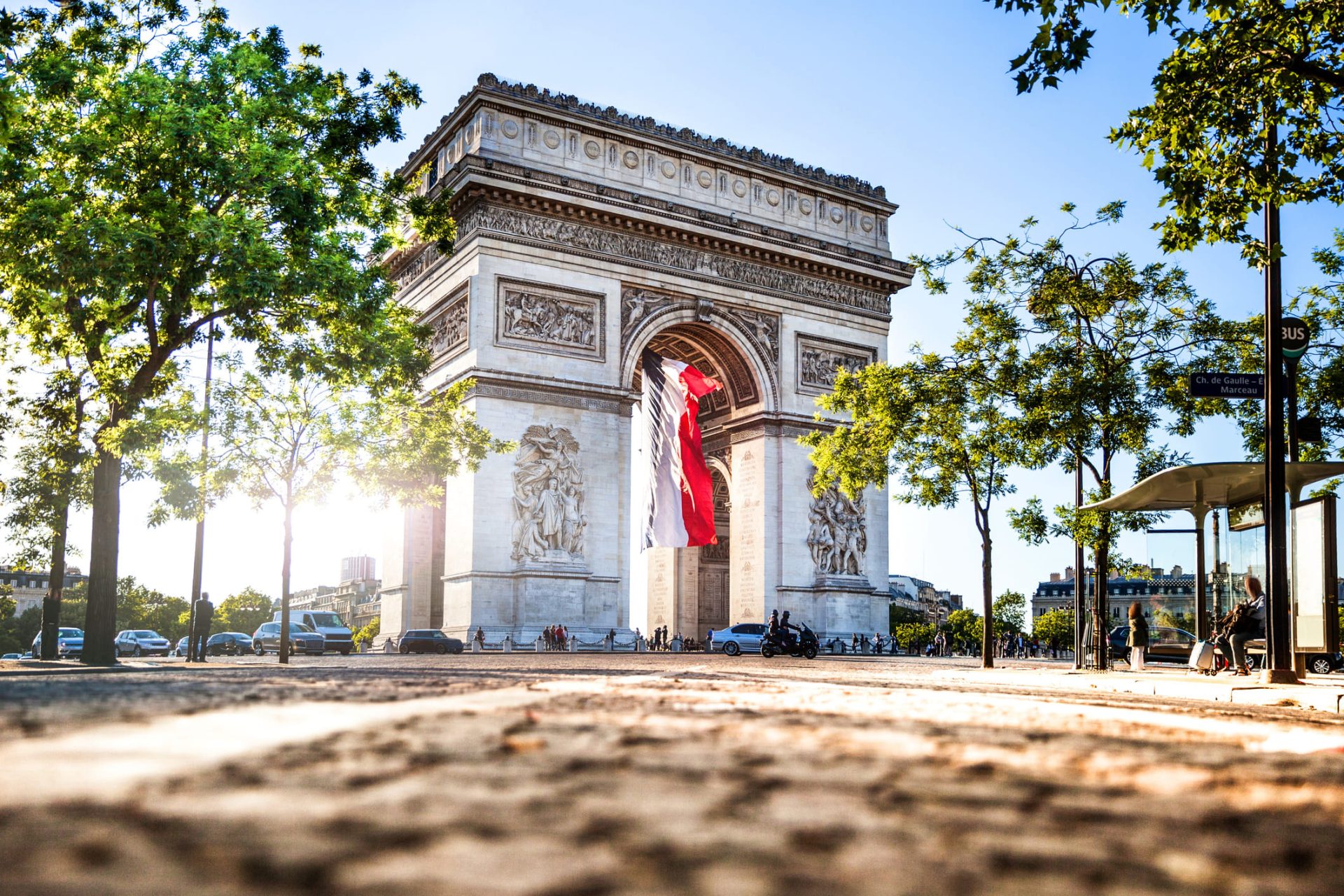
From the square, the Champs-Élysées stretches away towards the Arc de Triomphe. At Christmas the trees along the avenue are wrapped in lights, and the whole avenue glows. The Arc de Triomphe was commissioned by Napoleon in 1806 to honour his armies. Beneath it lies France's Tomb of the Unknown Soldier, where a flame is rekindled every evening. Your guide also takes you past Pont Alexandre III, the most ornate bridge in Paris, with gilded winged horses on its pillars and lamps along its sides. It was named after the Russian Tsar Alexander III, a symbol of friendship between France and Russia. Beyond it rises the golden dome of Les Invalides, where Napoleon is buried.

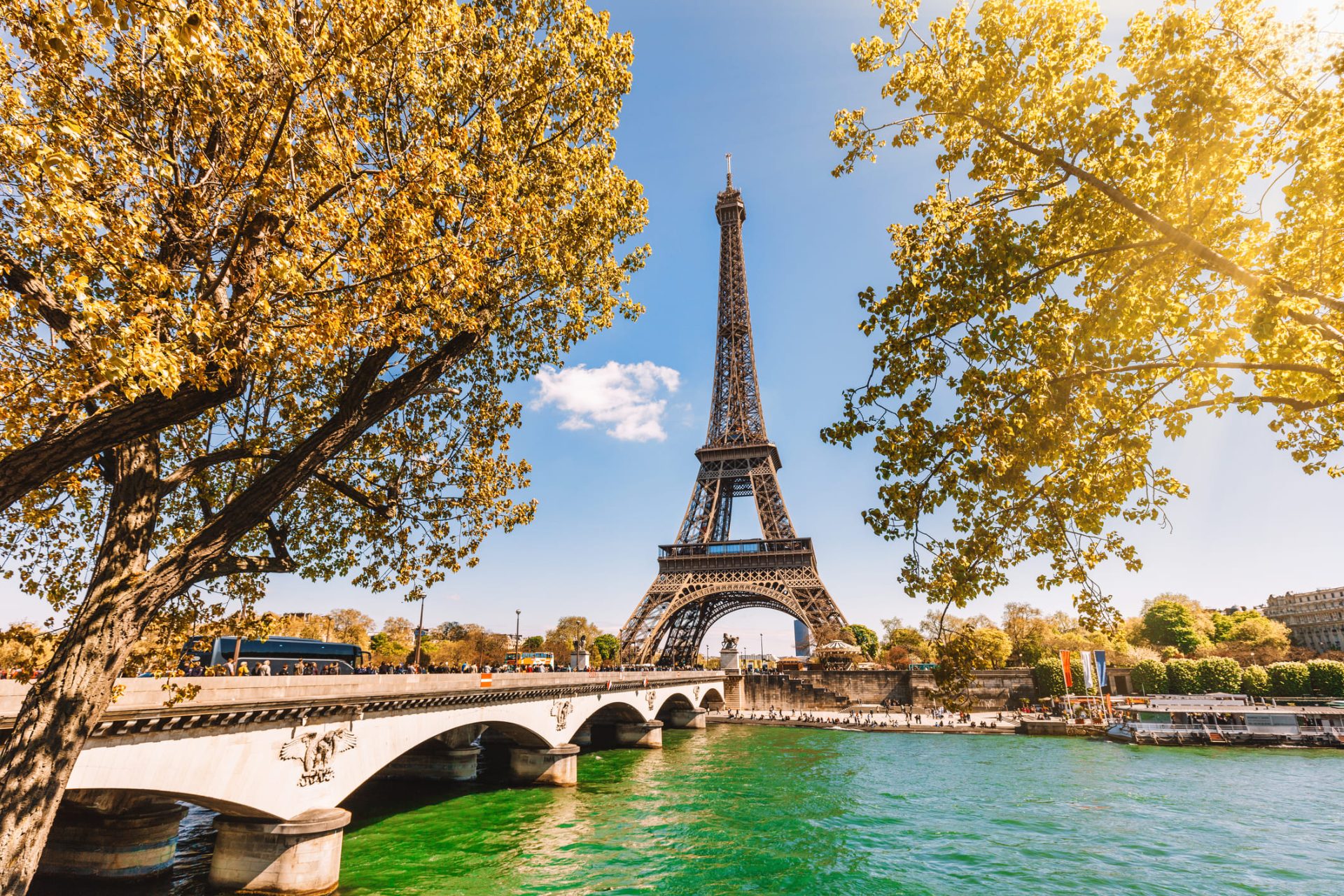
Then comes the moment you've been waiting for: the Eiffel Tower. Built by Gustave Eiffel for the 1889 World's Fair, it was meant to stand for only twenty years, and many Parisian artists at the time called it ugly. Today it's the most recognised monument in the world. Up close it is enormous: 330 metres of iron latticework held together by around 2.5 million rivets, painted by hand every few years. The lift carries you first to the second floor, and then a second lift climbs up the narrow tip of the tower to the top level, 276 metres above the ground. Step out, and all of Paris lies at your feet: the Seine winding through the city, the white domes of Sacré-Cœur on its hill, the Arc de Triomphe with twelve avenues spreading out from it like a star, and the rooftops stretching away in every direction. Give yourself time to walk all the way around, find each monument you've just seen from the ground, and take that photo for your family album.

In the afternoon the coach drives out to Versailles, the palace that Louis XIV, the Sun King, built to show the world the power and wealth of France. It's not just a palace but a whole royal town: more than 2,000 rooms, gardens with fountains and statues stretching to the horizon, and a Grand Canal where kings once held boating parties. Your guided visit takes you through the State Apartments, room after room of painted ceilings, marble and gold, to the Hall of Mirrors, where candlelight once reflected off hundreds of mirrors during royal balls. In winter the gardens are quiet and misty, with neatly trimmed hedges and statues standing in the still air, and you can feel how lonely it must have been for Marie Antoinette, the last queen to live here.

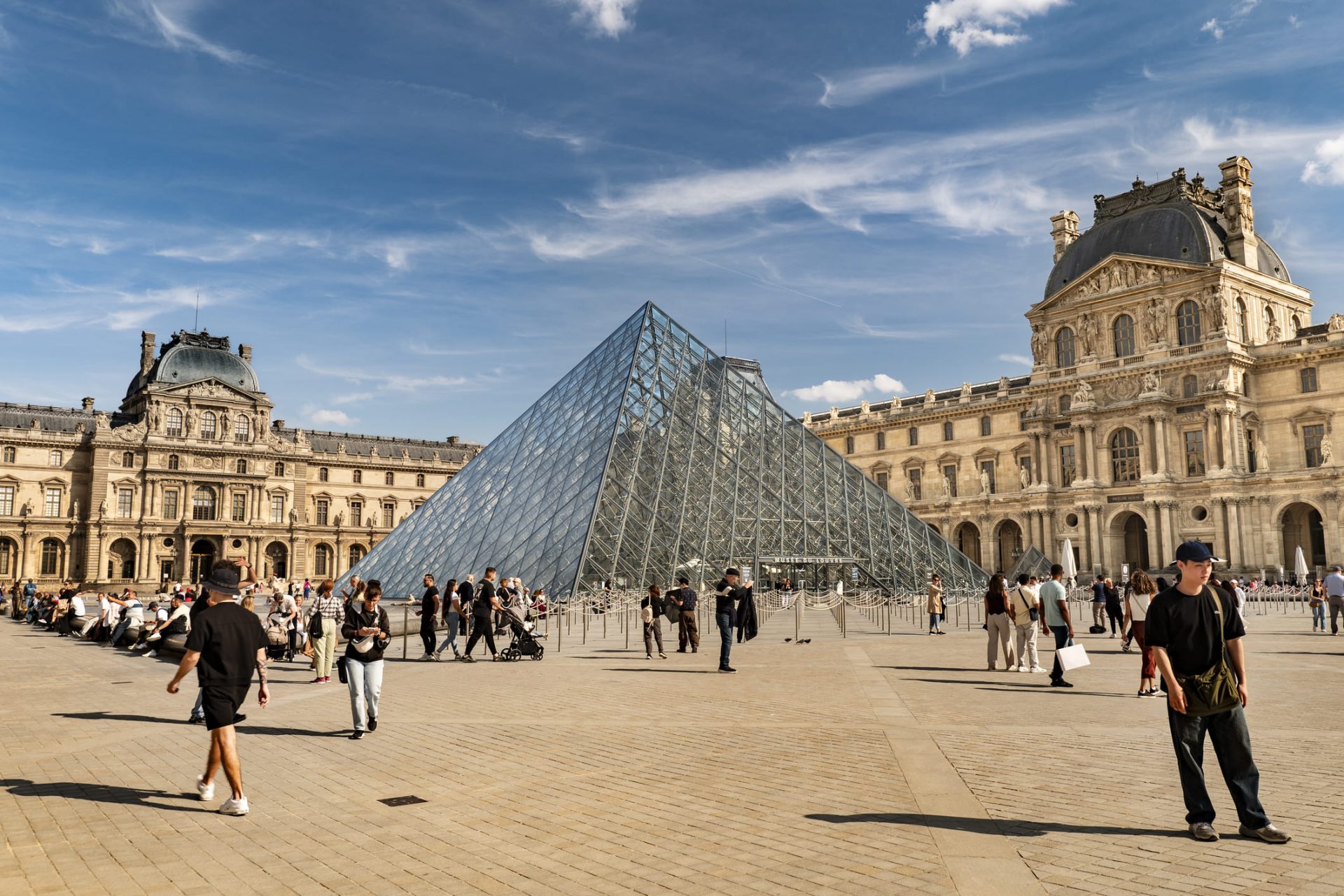
As darkness falls, you return to the city for a cruise on the Seine. From the deck of the boat, Paris looks completely different. The river passes beneath bridge after bridge, each lit up in its own way. You glide past the long facade of the Louvre, once a royal palace and now the world's most visited museum, and the twin towers of Notre-Dame Cathedral, beautifully restored after the fire of 2019 and reopened in December 2024. Couples on the riverbanks, glowing restaurant windows and Christmas lights on the bridges make the cruise feel like a moving postcard.

The day ends with the Paris by Night tour. The coach takes you along the illuminated avenues and squares, and everything you saw this morning now shines against the dark sky. Then, on the hour, the Eiffel Tower begins to sparkle, with thousands of flashing lights covering it from top to bottom for five minutes. Everyone on the coach goes quiet, and phones come out. It's the moment Paris becomes the City of Light. After a day like this, you'll sleep well tonight.

Included today: guided Paris city tour, Eiffel Tower top level, guided Versailles Palace tour, Seine river cruise, Paris by Night tour, breakfast, lunch, dinner.

Good to know: because of Christmas, some places may be closed on certain days, so activities may be switched between days; Days 2 and 3 may also be swapped depending on ticket slots. You still see everything included. Access to the Eiffel Tower top level depends on its operating status; if it's closed, the group visits the 2nd level instead.

Day 3
24 Dec · Full day at Disneyland® Paris | Christmas Eve with Mickey

24 Dec · Full day at Disneyland® Paris | Christmas Eve with Mickey

⌖ Paris 🍽 Meals: Breakfast, Packed Lunch, Dinner

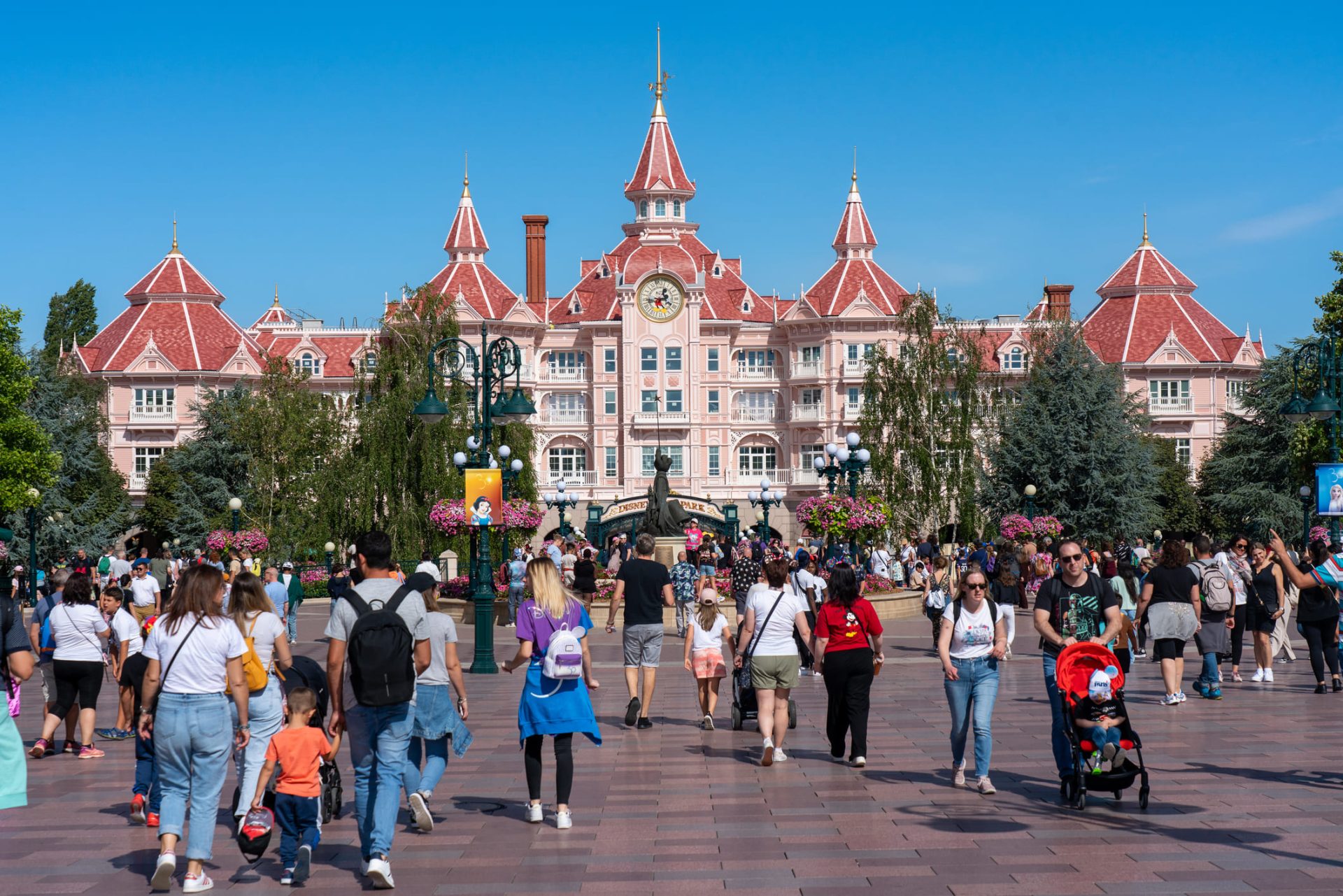
It's Christmas Eve, and you're spending it in the most magical place in Europe. After an early breakfast, the coach drives east out of Paris for about forty minutes, and the excitement on board grows with every kilometre. Children press their noses to the windows looking for the first sign of the castle. Then the park gates appear, music drifts across the plaza, and you walk in to Disneyland® Paris dressed for the holidays.

Disneyland® Paris opened in 1992 and is Europe's most visited theme park. It has two parks side by side, and your ticket lets you choose one of them for the day. Most families choose Disneyland® Park, the classic fairy-tale park with the castle at its heart. Those who love movies and thrill rides may prefer the second park next door, built around the worlds of Disney, Pixar and Marvel films, where you can fly with superheroes at Avengers Campus or shrink to the size of a rat and race through a Parisian kitchen on the Ratatouille ride. Your tour manager will help you decide the evening before.

Your first steps into Disneyland® Park take you onto Main Street, U.S.A., a picture-perfect American small town from the early 1900s, with candy-coloured shopfronts, old-fashioned street lamps and a horse-drawn tram. At Christmas it's transformed. Garlands and wreaths hang from every balcony, shop windows sparkle with ornaments, Christmas music plays from hidden speakers, and in Town Square stands a huge Christmas tree covered in lights and baubles. At the far end of the street, Sleeping Beauty Castle rises in pink and blue, its turrets dusted with decorations for the season. It's the moment almost every visitor stops, takes a breath and reaches for the camera.

This castle is different from the ones in America and Japan. Because Europe is full of real castles, Disney's designers made this one more of a fairy tale, inspired by medieval French illustrations, with curling trees clipped into shapes and a stained-glass gallery telling the story of Sleeping Beauty. And here's a secret many visitors miss: underneath the castle is a dark dungeon where a huge animated dragon sleeps, breathing smoke and growling at anyone who dares to come close. Children love being brave enough to go in.

From the castle, the park spreads out into five lands, each a different world. In Fantasyland, the youngest children fly over London with Peter Pan, ride the spinning teacups from Alice in Wonderland and sail through "it's a small world" with its singing dolls from around the globe. Adventureland has jungle paths, a treehouse, the rollicking Pirates of the Caribbean boat ride and the Indiana Jones roller coaster. In Frontierland, a runaway mine train races around a rocky mountain, and a spooky mansion sits on a hill. Discoveryland has space-age rides, including Star Wars Hyperspace Mountain for those who want a real thrill. Whether you're six or sixty, there's something to make you laugh, scream or simply smile.

During the Christmas season, the park comes alive with special entertainment. Mickey, Minnie and their friends appear in festive costumes, and the Christmas parade winds down Main Street with floats, dancers, music and, at the end, Santa Claus himself waving from his sleigh. Keep an eye out for character meet-and-greets, where children can meet their favourite characters and take photos. A little tip: check the park app or the printed programme in the morning for parade and show times, and find your spot on Main Street a little early, as it gets busy on Christmas Eve.

A packed lunch keeps you going between rides, so you don't waste precious park time in restaurant queues. In winter the park's cafés also sell hot chocolate and warm snacks, perfect for warming up your hands between rides. As the afternoon draws on and the light fades, the castle glows in changing colours and the Christmas lights on Main Street shine even brighter. If there is a nighttime show at the castle today, with music, projections and fireworks, it's one of the most emotional moments of the whole trip: grown men have been known to wipe away a tear.

Then the group gathers for the most special evening of the tour: the Christmas Eve gala dinner. After a day of rides and excitement, everyone dresses up a little, children are still buzzing with stories of what they saw, and the table is set for a festive celebration with Jain, vegetarian and non-vegetarian options. Around Europe, families are sitting down to their own Christmas Eve dinners at this very hour, and you're doing exactly the same, with new friends from across India. There may be toasts, there will certainly be laughter, and when you finally return to your hotel, you'll go to sleep knowing you spent Christmas Eve at Disneyland® Paris.

Included today: full-day Disneyland® Paris tickets (one park), coach transfers, breakfast, packed lunch, Christmas Eve gala dinner.

Good to know: wear comfortable shoes and warm layers, as you'll be on your feet and outdoors for much of the day. Download the Disneyland® Paris app to check ride waiting times, and keep your phone charged. Parades, shows and opening hours are set by the park and may change on the day.

Day 4
25 Dec · Brussels – Grand Place, Manneken Pis and Mini-Europe | Christmas Day in Belgium

25 Dec · Brussels – Grand Place, Manneken Pis and Mini-Europe | Christmas Day in Belgium

⌖ Netherlands 🍽 Meals: Breakfast, Lunch, Dinner

Merry Christmas! Today you wake up in Paris and go to sleep in the Netherlands, with a Christmas Day in Belgium in between. After breakfast, you say goodbye to France and the coach heads north across the wide, flat farmland of northern France. Look out for church spires rising above small villages, and on a frosty morning, fields dusted white. In about three and a half hours, you cross into Belgium, and soon you're in Brussels, the capital of Belgium and the unofficial capital of Europe.

Brussels is a small country's capital with a very big role. It's home to the European Union's main institutions and to the headquarters of NATO, so diplomats and politicians from all over the world live and work here. But you're not here for politics. You're here for one of the most beautiful squares on earth, a little bronze boy, and some of the best waffles and chocolates in the world.

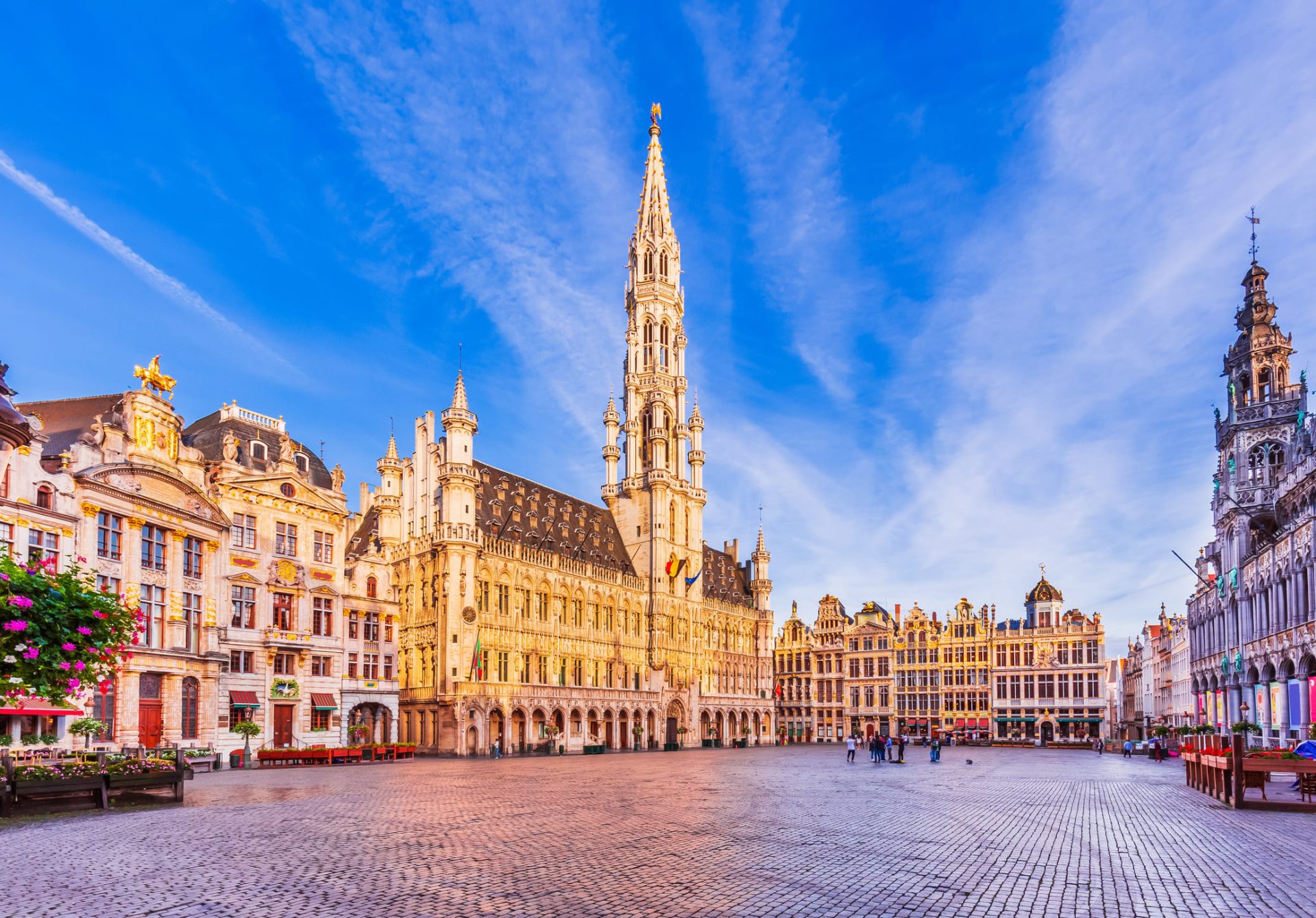
You walk into the Grand Place through one of the narrow streets that lead to it, and it opens up suddenly in front of you. Almost everyone stops in amazement. On every side stand tall, richly decorated guild houses, covered in gold leaf, carved stone and statues, each built by one of the city's medieval trade guilds: the bakers, the brewers, the boatmen, the butchers. Each house tried to outshine its neighbours, and the result is dazzling. On one side rises the Town Hall, a masterpiece of Gothic architecture from the 1400s, with a tall, lacy stone spire topped by a gilded statue of Saint Michael slaying a dragon, the patron saint of Brussels. The square is a UNESCO World Heritage Site, and the French writer Victor Hugo, who lived here for a time, called it one of the most beautiful squares in the world.

The story of the Grand Place has a dramatic twist. In 1695, during a war, the army of the French King Louis XIV bombarded Brussels, and most of the square was destroyed. Within just a few years, the guilds rebuilt their houses even more grandly than before, as a proud answer to the attack. What you see today is that rebuilding.

At Christmas, the Grand Place is even more magical. A tall Christmas tree stands in the middle of the square, and during the Winter Wonders season, a light-and-music show plays on the facade of the Town Hall in the evenings, painting the old stone with colour. Even during the day, there's a festive atmosphere, with families wrapped up in scarves and visitors from around the world taking photos of the golden facades.

Just a few minutes' walk from the square, on a street corner, you'll find Brussels's most famous resident: the Manneken Pis. Many visitors are surprised by how small he is, only about 55 centimetres tall. This little bronze boy, cheerfully relieving himself into a fountain, has been a symbol of the city's cheeky sense of humour since the 1600s. Legends about him abound: one says he saved the city by putting out a fire, another that he was a lost boy found by his father. The statue on the corner today is a copy; the original is kept safe in the city museum. Most amazing of all, he has a wardrobe of more than a thousand costumes, donated from around the world, and he is often dressed up for special occasions. Who knows what he'll be wearing on Christmas Day?

No visit to Brussels is complete without tasting a Belgian waffle, and you get to try one. There are two kinds. The Brussels waffle is light, crisp and rectangular, usually dusted with icing sugar or topped with cream and fruit. The Liège waffle is smaller, denser and sweeter, with chunks of caramelised sugar baked into it. Eat it warm, standing in the cold, and you'll understand why Belgians are so proud of it. Brussels is also the home of Belgian chocolate: the praline, a chocolate shell with a soft filling, was invented here in 1912, and the elegant chocolate shops around the Grand Place are the perfect place to pick up a box.

After lunch, you drive to the Heysel area, where the Atomium stands, a giant shining structure of nine steel spheres built for the 1958 World's Fair. It represents an iron crystal magnified 165 billion times, and it's become one of Belgium's best-loved landmarks. At its foot is Mini-Europe, where about 350 of Europe's most famous buildings are recreated in miniature. You walk among them like a giant: Big Ben, the Leaning Tower of Pisa, the Brandenburg Gate and Venice's canals. It's fun for children and adults alike, and a lovely way to see how much of Europe you've already visited and how much is still ahead.

In the late afternoon you continue north into the Netherlands, the fourth country of your tour, crossing the border with hardly a sign that you've left Belgium. As darkness falls, you reach your hotel for the night, where dinner is waiting. It's been a Christmas Day like no other: breakfast in France, a waffle in Belgium and dinner in Holland.

Included today: coach Paris to Brussels and on to the Netherlands, Brussels Grand Place and Manneken Pis, Belgian waffle, Mini-Europe entry, breakfast, lunch, dinner.

Good to know: because of Christmas, some places may be closed or have shorter hours on 25 December, so activities may be switched between days; you still see everything included. Today has the longest coach journey of the tour so far, so keep snacks and a neck pillow handy.
Day 5
26 Dec · Dutch windmill village and Amsterdam canal cruise | Old Holland and its canals

26 Dec · Dutch windmill village and Amsterdam canal cruise | Old Holland and its canals

⌖ Germany 🍽 Meals: Breakfast, Lunch, Dinner

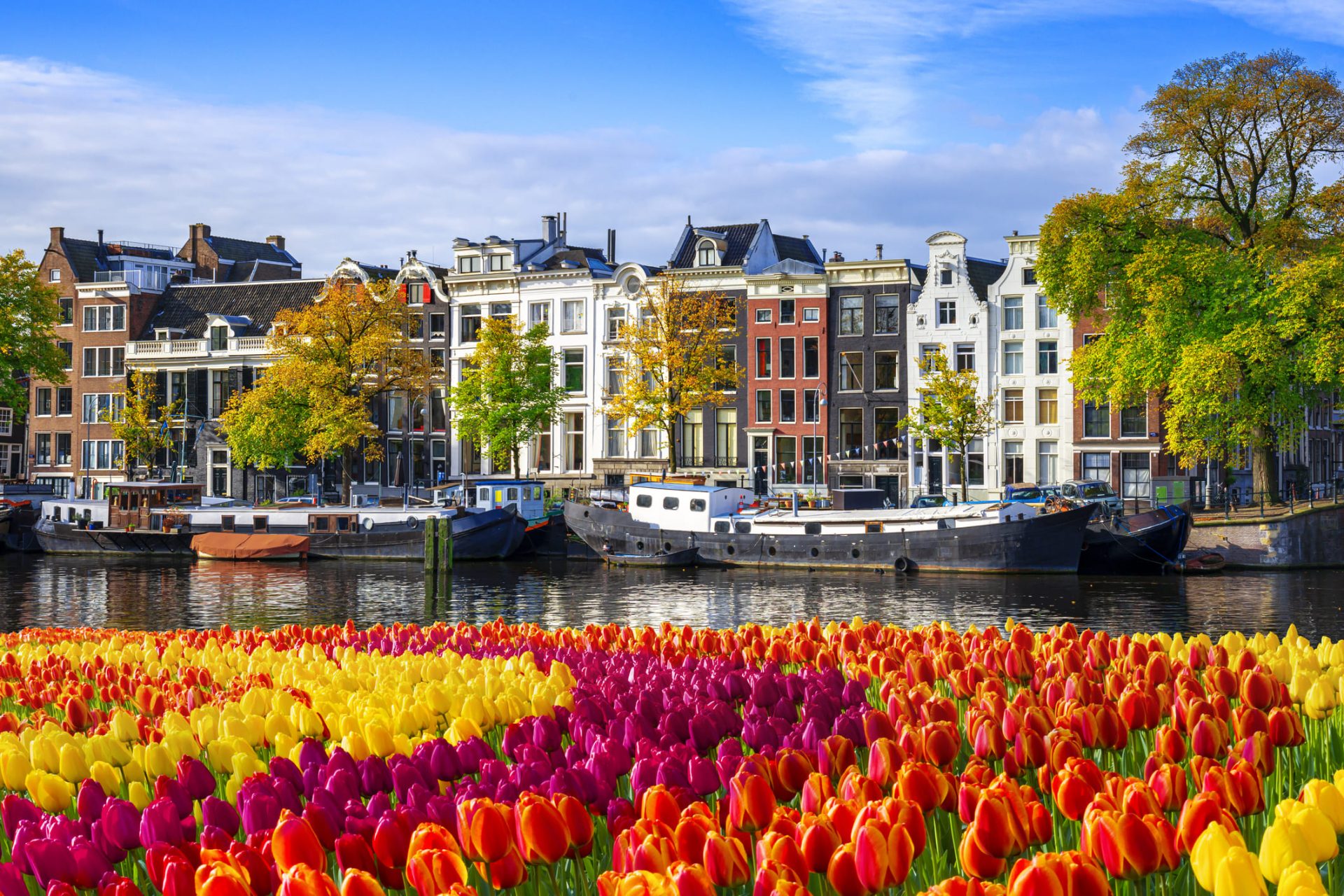
This morning feels like stepping into a Dutch painting. After breakfast your coach leaves the hotel and heads into the flat green countryside north of Amsterdam, where the land is lower than the sea and the sky seems twice as big as anywhere else. Canals run in perfectly straight lines between the fields, cows graze on land that was once under water, and then, on the horizon, the first windmills appear, their great sails turning slowly against the winter sky.

To understand why windmills matter so much to the Netherlands, you need to know one thing: about a quarter of this country lies below sea level. For centuries the Dutch have been winning land back from the sea, building dykes to hold the water out and then pumping the enclosed land dry. Windmills did that pumping. By the 18th century there were thousands of them across the country, and they did far more than drain fields. Some ground grain into flour, some pressed oil from seeds, some ground mustard and spices brought home by Dutch traders, and some sawed the timber that built the ships of the Dutch Golden Age, when this small nation's merchants sailed to Asia, Africa and the Americas. The windmills you see today are the survivors of that age, and many of them still work.

The traditional village you visit brings that world back to life. Green-painted wooden houses with white trim line the water's edge, little hump-backed bridges cross the canals, and the windmills stand in a row along the dyke, sails creaking as they turn. Craft workshops show you how people lived and worked here in the 18th century. You'll see the wooden clogs, or klompen, that Dutch farmers wore for generations because they kept feet dry in wet fields, and you'll find Holland's famous cheeses, such as Gouda and Edam, in their wax-coated wheels. Take your time: walk along the dyke, photograph the windmills from the bridge, and step inside a workshop to watch a craft that has barely changed in three hundred years. Your souvenir from Holland is a small reminder of the morning.

In December the village has a special winter calm. The light is soft and low, the water is still, and on a crisp day your breath hangs in the air as you walk. It's a peaceful contrast to the busy cities of the past few days, and many travellers say it's the morning they found most surprising on the whole tour.

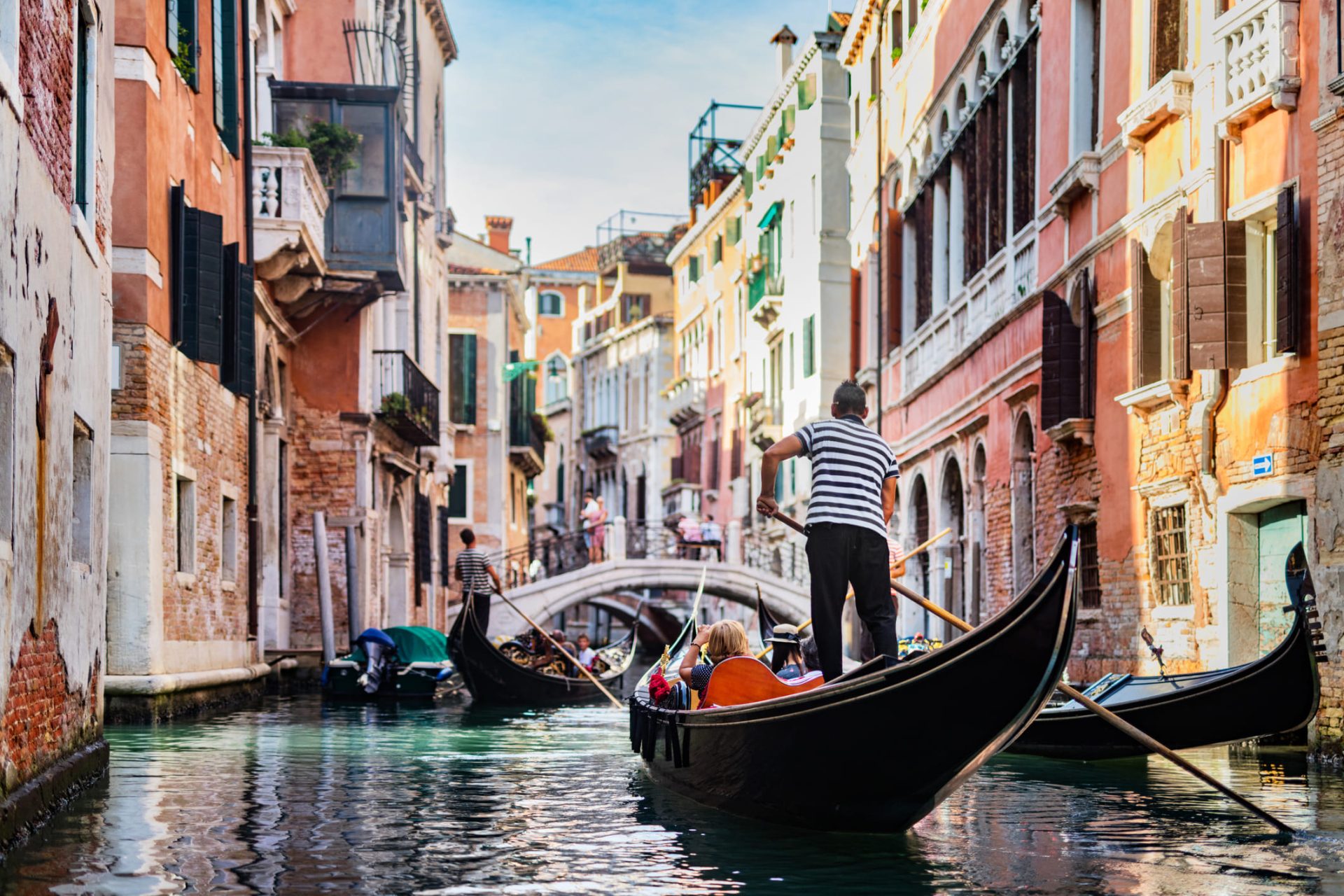
From the countryside you drive into Amsterdam, one of the most beautiful and unusual cities in Europe. Amsterdam was built on water. In the 17th century, when it was the richest port in the world, the city dug a great ring of canals around its old centre, and wealthy merchants built their tall, narrow houses along them. That canal ring is now a UNESCO World Heritage Site, and the best way to see it is exactly the way you will: from the water.

Your glass-topped canal cruise glides out under the first of the city's many bridges, and Amsterdam opens up around you. Through the glass roof you look up at rows of narrow canal houses leaning gently against each other, their gables shaped like steps, bells and necks. Notice how thin they are: in the Golden Age, houses were taxed on the width of their frontage, so merchants built narrow and tall, sometimes only one window wide. Look up near the top of each gable and you'll see a wooden beam with a hook. Because the staircases inside were too steep and narrow for furniture, everything from sofas to pianos was, and often still is, hoisted up on a rope and swung in through the windows.

The boat passes arched bridges lit with small lamps, houseboats moored along the banks, some of them floating homes with gardens on the roof, and bicycles everywhere, parked in their thousands along the railings. Amsterdam has more bicycles than people, and watching locals ride past in the cold, wrapped in scarves, chatting and balancing shopping bags, is part of the charm. Your guide's commentary points out the grand merchant houses of the Herengracht, the Prinsengracht where Anne Frank's family hid during the Second World War, and the old warehouses where spices, silk and coffee from around the world were once stored.

If you have a few minutes of free time in the city, treat yourself to a warm stroopwafel, two thin waffles joined with caramel syrup, best eaten when it's fresh and soft. In the winter months you may also spot oliebollen, the sugar-dusted doughnuts the Dutch traditionally eat around New Year.

In the afternoon you leave the Netherlands behind and drive east into Germany. The landscape slowly changes from flat polders to gentle hills and forests as the coach joins Germany's famous autobahn network. By evening you reach your hotel in the Frankfurt area, ready for tomorrow's journey into the castles and forests of southern Germany. Dinner is waiting, and with it the chance to swap photographs of windmills and canals with the rest of the group.

Included today: Dutch windmill village, Amsterdam glass-top canal cruise, souvenir in Holland, breakfast, lunch, dinner.

Good to know: it can be cold and windy by the windmills and on the water in December, so wear a warm jacket, gloves and comfortable shoes.

Day 6
27 Dec · Heidelberg, Black Forest and Rhine Falls | Castles, cuckoo clocks and a mighty waterfall

27 Dec · Heidelberg, Black Forest and Rhine Falls | Castles, cuckoo clocks and a mighty waterfall

⌖ Central Switzerland 🍽 Meals: Breakfast, Lunch, Dinner

Today you travel through the Germany of storybooks: a romantic university town beneath a ruined castle, then deep, dark forests where cuckoo clocks were born, and finally across the border into Switzerland to stand beside a thundering waterfall. It's a day of three countries' worth of scenery, and one of the most varied days of the tour.

The morning starts in Heidelberg, on the banks of the River Neckar. Heidelberg is Germany's oldest university town: its university was founded in 1386, and students still fill its cafes and bookshops today. Many poets, painters and writers fell in love with the town. The American writer Mark Twain stayed here and wrote about it, and German Romantic poets called it the most beautiful town in their country. When you see it, you'll understand why: red sandstone buildings and church spires crowd along the river, wooded hills rise on either side, and above it all, on the hillside, stand the great red ruins of Heidelberg Castle.

The castle was once the grand palace of the rulers of this region. It was wrecked by French troops in the late 1600s and then struck by lightning in 1764, and it was never fully rebuilt. Instead of making it less beautiful, its ruined towers and empty windows give it a haunting, romantic quality, especially on a misty winter morning. Inside the castle is one of Heidelberg's oddest treasures: the Heidelberg Tun, a giant wine barrel built in the 18th century that can hold more than 200,000 litres.

You walk through the cobbled Old Town along the Hauptstrasse, one of the longest pedestrian streets in Europe, lined with shops, bakeries and old inns. In the market square stands the Church of the Holy Spirit, its tall tower rising above the rooftops. Close by is the Old Bridge, an elegant stone bridge from 1788 with a twin-towered gate at one end. Near the gate sits a small bronze monkey holding up a mirror. Local tradition says that if you touch the monkey, you will return to Heidelberg one day, so expect a small queue of visitors stroking it for luck. From the bridge, look back at the town and up at the castle: it's the classic Heidelberg view, and one of the loveliest photographs in Germany.

From Heidelberg, the coach heads south into the Black Forest, or Schwarzwald. It gets its name from its thick forests of fir and spruce trees, so dense that very little light reaches the ground, making the woods look almost black from a distance. This is the landscape that inspired many of the fairy tales collected by the Brothers Grimm, and it's easy to see why. The road winds through steep valleys and dark woods, past wooden farmhouses with huge sloping roofs that come down almost to the ground to protect them from the heavy snow. In winter the forest is especially beautiful: snow on the branches, smoke rising from chimneys and frost glittering in the clearings.

The Black Forest is the home of the cuckoo clock. In the 18th century, farming families here spent the long, snowbound winters indoors carving wooden clocks, which pedlars then carried across Europe on their backs to sell. Over time, the clocks became more and more elaborate, with carved leaves, birds, deer and little dancing figures. At a traditional clock workshop, you watch a demonstration of how the clocks are made and how the little wooden bird pops out to call "cuckoo" on the hour, using small bellows to create the sound. The shop is filled with clocks of every size, all ticking and cuckooing at different times, a cheerful, slightly crazy chorus. If you want to take one home, this is the place.

Then comes a sweet treat: a slice of real Black Forest cake, or Schwarzwälder Kirschtorte, eaten in the region that gave it its name. Layers of chocolate sponge, whipped cream and dark cherries, topped with chocolate shavings, it tastes richer and lighter than the versions you've had at home. Traditionally, the cake is made with a little kirsch, a cherry brandy from this region.

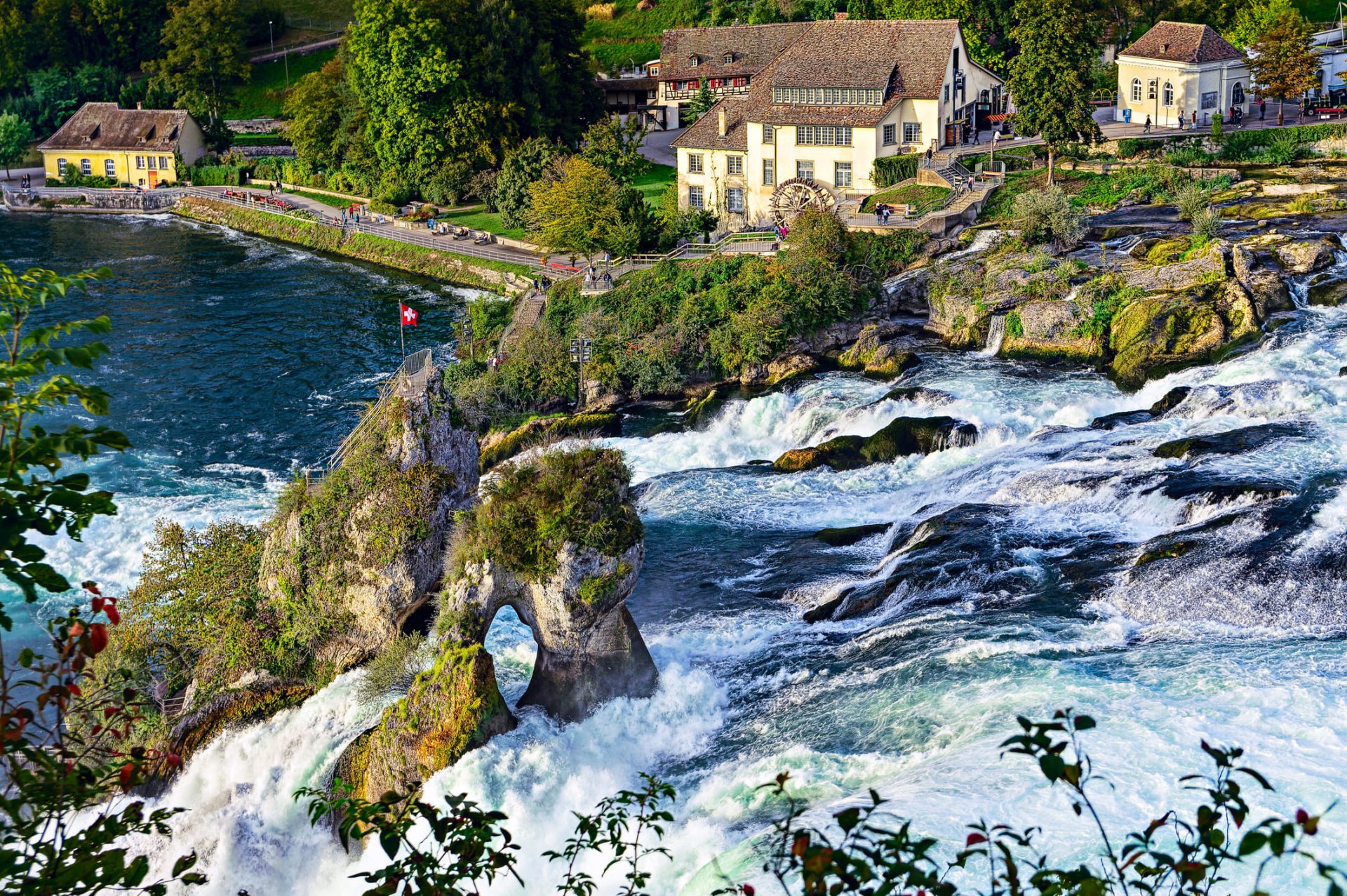
In the afternoon you cross the border into Switzerland, your fifth country, and stop at the Rhine Falls near Schaffhausen. The Rhine is one of the great rivers of Europe, flowing from the Swiss Alps to the North Sea, and here it drops over a wide rock ledge in a roaring curtain of white water. Even in winter, when the flow is lower than in summer, the sheer power is breathtaking. Walk the paths along the riverbank, stand on the viewing platforms and feel the cold mist on your face as the water crashes into the pool below. Above the falls, Laufen Castle looks down from the cliffs, and in the middle of the river the old rock stands firm against the torrent, just as it has for thousands of years.

From the falls, you drive on into Central Switzerland, where you check in to your hotel for the next three nights. After dinner, step outside for a moment: the air is crisp, the stars are bright, and tomorrow you go to the Top of Europe.

Included today: Heidelberg Old Town, Black Forest cuckoo clock demonstration, a slice of Black Forest cake, Rhine Falls, breakfast, lunch, dinner.

Good to know: the boat ride at the Rhine Falls usually pauses over Christmas and New Year, so on this departure you see the falls from the viewing platforms. Traditional Black Forest cake contains a little cherry brandy; let your tour manager know if you'd prefer to skip it. Pavements in Heidelberg's Old Town can be icy in winter, so wear shoes with a good grip.

Day 7
28 Dec · Interlaken and Jungfraujoch – Top of Europe | The highlight of the tour

28 Dec · Interlaken and Jungfraujoch – Top of Europe | The highlight of the tour

⌖ Central Switzerland 🍽 Meals: Breakfast, Lunch, Dinner

If there is one day that people remember from a trip to Switzerland, it's this one. Today you travel up to Jungfraujoch, the Top of Europe, to stand among snowy peaks and glaciers at almost 3,500 metres. Have a good breakfast, put on your warmest clothes, and keep your sunglasses and camera within reach.

The journey begins with the drive to Interlaken. As the name suggests, this town lies "between the lakes", on a strip of flat land between two glacier lakes, Lake Thun and Lake Brienz, whose water is a striking milky turquoise. Interlaken has been a holiday resort since the 19th century, when wealthy travellers came here to admire the mountains. In the middle of town is a large open meadow, and from it you get a perfect view of the Jungfrau, the snow-covered 4,158-metre peak whose name means "the maiden".

For Indian travellers, Interlaken holds a special place. Generations of Bollywood films have used these mountains and lakes as their dream backdrop, and Yash Chopra, the director who did more than anyone to make Switzerland famous in India, is honoured here with a bronze statue in the town's Kursaal gardens. Walking through Interlaken, many visitors have the strange feeling that they've seen this place before, and in a way they have.

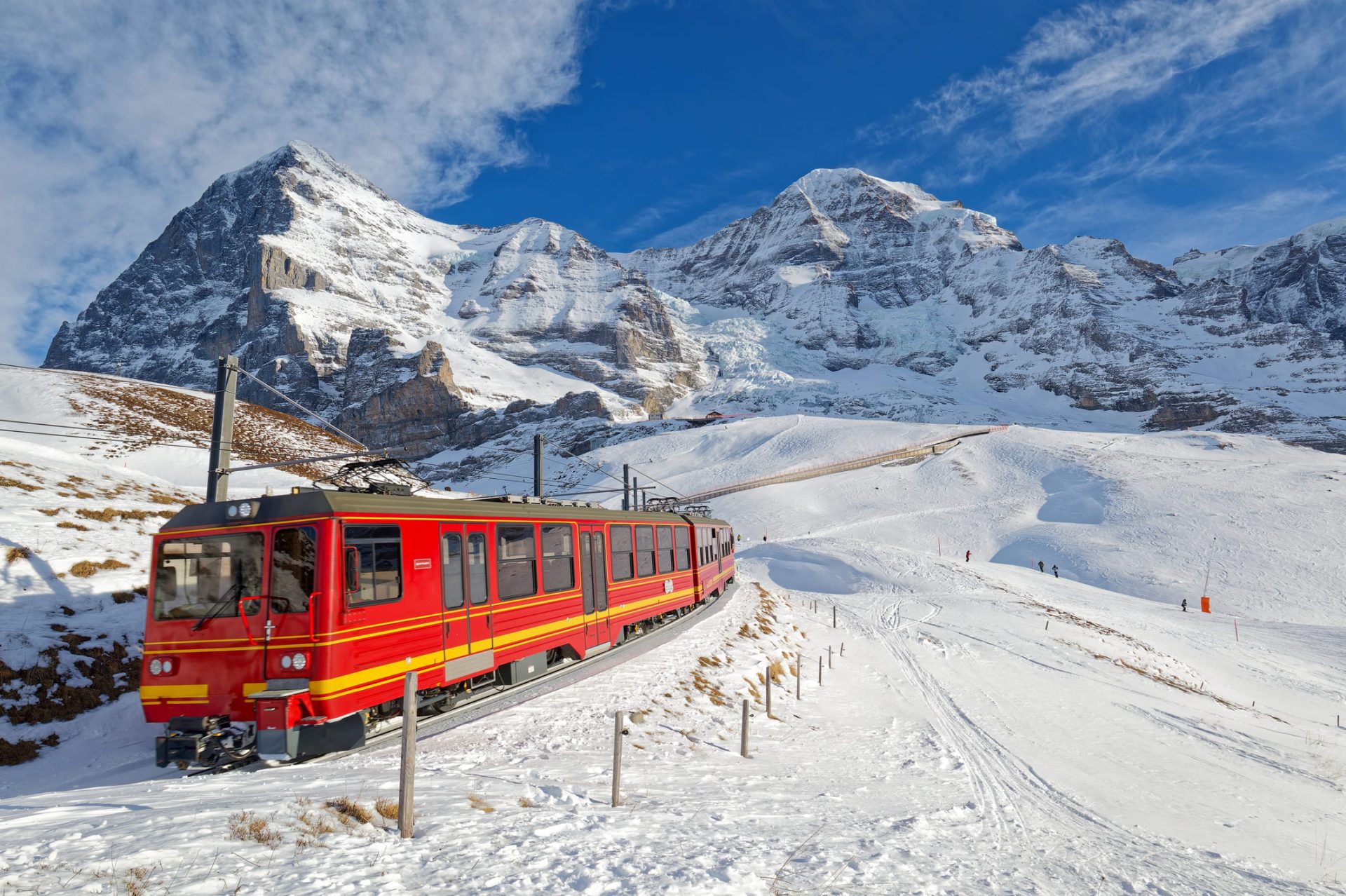
From Interlaken the coach climbs into the valley to Grindelwald, a mountain village of wooden chalets, and the Grindelwald Terminal, where the real adventure begins. Here you board the Eiger Express, a modern tri-cable gondola opened in 2020. Your cabin swings gently up the mountainside, rising above snowy forests and slopes, and right beside you towers the dark, sheer north face of the Eiger. This is one of the most famous and feared climbing walls in the world. It was not climbed until 1938, and mountaineers still speak of it with respect. In about fifteen minutes you reach Eigergletscher station, and from there you continue by train.

The Jungfrau Railway is an engineering marvel. It took sixteen years to build, and when it opened in 1912, it was hailed as one of the wonders of the age. Most of the route runs inside a tunnel blasted through the solid rock of the Eiger and the Mönch mountains. The cogwheel train climbs steadily through the mountain until it arrives at Jungfraujoch, at 3,454 metres the highest railway station in Europe. When you step off the train, take it slowly: the air is thinner up here, so walk gently, drink some water and give yourself a few minutes to adjust.

Then a fast lift whisks you up to the Sphinx observation terrace, and the view takes your breath away, in more ways than one. All around you is a world of snow, rock and ice. On one side the Aletsch Glacier, the longest glacier in the Alps at about 20 kilometres, flows away like a frozen motorway between white peaks. On the other, on a clear day, you can look far out over the mountains of Switzerland and even towards France, Germany and Italy. The whole area is a UNESCO World Heritage Site, protected as one of the most spectacular high-mountain landscapes on earth. The silence is deep, broken only by the wind, and the sunlight on the snow is dazzling.

Inside the mountain, the Ice Palace is a series of tunnels and halls carved into the glacier, with walls, floors and ceilings of blue-white ice. Ice sculptures of eagles, bears and penguins glow in the soft light. Walk carefully, as the floor is slippery, and touch the walls: this ice is many years old. Outside on the snow plateau, you can step out onto the glacier itself, crunch through the snow, throw a snowball and wave a Swiss flag for that perfect picture. For many travellers, especially those seeing real snow for the first time, this is a joyful, childlike moment.

Jungfraujoch also has a few surprises. There's a chocolate shop, Lindt Swiss Chocolate Heaven, which is one of the highest chocolate shops in Europe, and a restaurant called Bollywood serving Indian food, a welcome sight for many travellers on a cold day. Lunch is included today, so you can warm up before the journey down.

In the afternoon you descend by train and gondola, watching the glaciers and peaks slowly fade behind you, and return to the coach. Some groups stop briefly in Interlaken on the way back for shopping, with Swiss watches, chocolates and souvenirs on offer. By evening you're back at your hotel, tired, happy and full of stories. Over dinner, everyone will compare photographs, and you'll probably agree that today was the highlight of the whole holiday.

Included today: Interlaken, Jungfraujoch – Top of Europe excursion with the Eiger Express gondola and Jungfrau Railway, Ice Palace, Sphinx terrace, breakfast, lunch, dinner.

Good to know: it is very cold at the top in December, often well below zero, so wear thermal layers, a warm jacket, gloves, a hat and sunglasses. The weather in the mountains can change quickly, and on rare days the excursion order may be adjusted for safety. Travellers with heart or breathing conditions should check with their doctor before going to high altitude.

Day 8
29 Dec · Mt. Titlis, Lucerne and Lindt Home of Chocolate | Snow, a lakeside town and chocolate

29 Dec · Mt. Titlis, Lucerne and Lindt Home of Chocolate | Snow, a lakeside town and chocolate

⌖ Central Switzerland 🍽 Meals: Breakfast, Lunch, Dinner

Your last full day in Europe is a perfect Swiss mix: a glacier mountain in the morning, a medieval lakeside town in the afternoon, and chocolate to finish. The coach drives through Central Switzerland to the mountain village of Engelberg, whose name means "angel mountain". Engelberg grew up around a Benedictine monastery founded in 1120, and its white monastery buildings still stand at the heart of the village. Above it rises Mt. Titlis, its summit glacier glistening at more than 3,200 metres.

The ascent is an adventure in itself, made in stages. First, small gondolas carry you up over snowy pine forests and meadows to the middle stations. Then you board the Rotair, the world's first revolving cable car, introduced in 1992. As it glides up the final steep climb, the floor of the cabin slowly turns a full circle, so wherever you stand, you get a 360-degree view: sheer rock walls, deep crevasses in the glacier, and the valley shrinking far below. There's usually a gasp from the cabin as the glacier comes into view right beneath you.

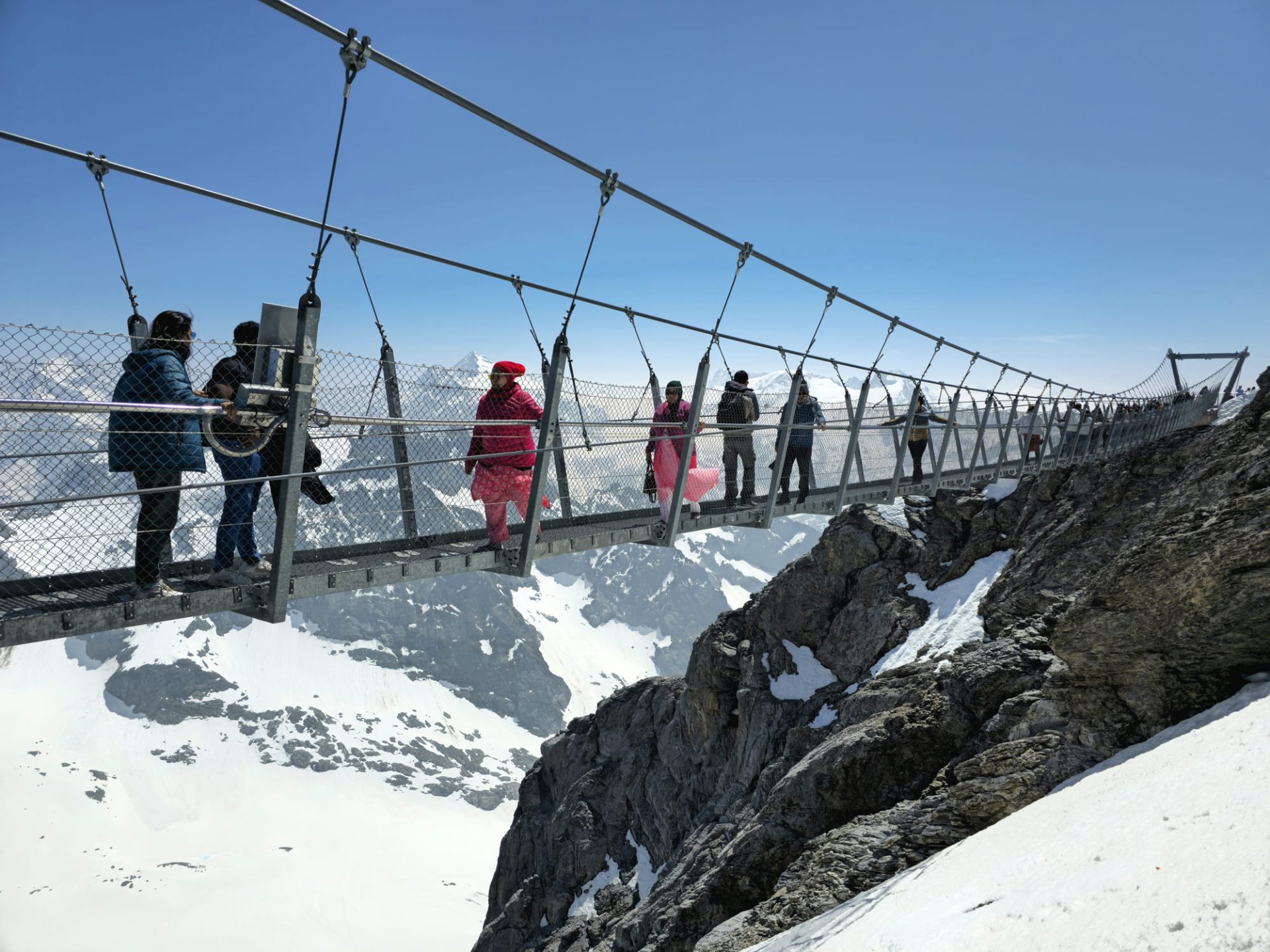
At the top station, at 3,020 metres, you step out into a world of snow and sunlight. The first adventure for many is the Titlis Cliff Walk, Europe's highest suspension bridge. It stretches about 100 metres along the cliff face, with a drop of around 500 metres beneath your feet. It sways gently as you walk, and the view down through the mesh is not for the faint-hearted, but crossing it, and taking a photo in the middle, is something you'll talk about for years.

Then go inside the Glacier Cave, a tunnel cut deep into the ice of the Titlis glacier, glowing blue under the lights. It's cold and silent, and walking through it feels like being inside the mountain's frozen heart. Outside, depending on conditions, you can play in the snow, slide on the snow park, or ride the Ice Flyer chairlift, which floats over the glacier's crevasses. For Indian visitors, Titlis has a special Bollywood connection too: it's one of the places linked to the classic film Dilwale Dulhania Le Jayenge, and you'll find a life-size cut-out of its stars waiting for selfies. Even if you're not a film fan, it's fun to see how much Switzerland means to Indian travellers.

After lunch you drive down to Lucerne, which many people consider the most beautiful town in Switzerland. It sits at the edge of the lake where the River Reuss flows out, with mountains rising on all sides, including Mt. Pilatus, which, according to old legends, was home to dragons. Lucerne's old town is a maze of cobbled lanes and squares, with houses whose fronts are covered in colourful painted scenes from history and folklore.

The symbol of Lucerne is the Chapel Bridge, a covered wooden footbridge built in the 1300s across the river. It's one of the oldest covered wooden bridges in Europe. As you walk across, look up: under the roof hang dozens of triangular paintings from the 1600s showing scenes from Lucerne's history and the lives of the town's patron saints. Halfway across stands the stone Water Tower, which over the centuries has served as a prison, a treasury and a watchtower. In 1993 a fire destroyed much of the bridge and many paintings, and the town rebuilt it carefully; look closely and you'll still see some blackened panels.

A short walk away is the Lion Monument, carved into a sandstone cliff above a quiet pond. A huge dying lion lies on its shield, pierced by a spear. It honours the Swiss Guards who died defending the French royal family in Paris during the Revolution in 1792. Mark Twain called it the most mournful and moving piece of stone in the world. Visitors often fall silent here, even on a busy day.

Lucerne is also the best place in Switzerland to shop. Its streets are lined with watch shops, from famous brands to everyday Swiss models, along with Swiss Army knives, cuckoo clocks, embroidery and, of course, chocolate. You'll have free time to browse and pick up gifts.

The day ends at the Lindt Home of Chocolate in Kilchberg, on the shores of Lake Zurich, right next to Lindt's chocolate factory. Here you learn why Switzerland is the world's chocolate capital. Milk chocolate was invented in Switzerland in 1875 by Daniel Peter, who had the idea of mixing chocolate with the condensed milk made by his neighbour Henri Nestlé. A few years later, Rodolphe Lindt discovered how to make chocolate smooth and melting. Today the Swiss eat more chocolate per person than almost anyone else in the world. The exhibition takes you from the cocoa bean to the finished bar, with tastings along the way, and the giant chocolate fountain in the entrance hall is a sight in itself. Then it's back to the hotel for your farewell dinner with the group.

Included today: Mt. Titlis with the Rotair revolving cable car, Cliff Walk and Glacier Cave, Lucerne orientation tour, Lindt Home of Chocolate, breakfast, lunch, farewell dinner.

Good to know: the Ice Flyer and snow activities at Titlis depend on weather and snow conditions. It's very cold at the top, so wear warm layers, gloves and sunglasses.

Day 9
30 Dec · Departure from Zurich | Home with five countries of memories

30 Dec · Departure from Zurich | Home with five countries of memories

⌖ Zurich 🍽 Meals: Breakfast

Nine days, five countries, and countless memories later, it's time to go home. Today is 30 December, so you'll be back with your family and friends just in time to welcome the New Year, with a suitcase full of gifts and a phone full of photographs.

Take a moment this morning before the rush of checking out. Look out of the window at the Swiss countryside one last time: neat farmhouses with wooden balconies, snow on the hills, and the clear, crisp light of a mountain winter. Over breakfast, sit back and think how much ground you've covered. Nine days ago you landed in Paris, not knowing anyone in the group. Since then you've seen the city from the top of the Eiffel Tower and from a boat on the Seine, walked through the Hall of Mirrors at Versailles, and spent Christmas Eve at Disneyland® with a gala dinner to follow. You stood in the golden Grand Place of Brussels on Christmas Day, ate a real Belgian waffle, and walked among the windmills of Holland. You glided along Amsterdam's canals, touched the lucky monkey in Heidelberg, heard the cuckoo clocks of the Black Forest, felt the spray of the Rhine Falls, and stood in the snow at the Top of Europe and on the glacier of Mt. Titlis. That's a lot of Europe for nine days.

Now, a little packing advice. After five countries of shopping, your suitcase is probably fuller than when you arrived. Put chocolates in a cool place, away from the heaters in your room. Wrap watches, cuckoo clocks and fragile souvenirs in clothes and put them in the middle of the bag. Any knives, including Swiss Army knives, and any liquids over 100 ml must go in your checked baggage. Keep your passport, tickets, phone charger and a warm jacket in your hand luggage. If you made a large purchase in Switzerland and the shop gave you a tax-free form, keep it handy with your receipts and goods, as you'll need to have it stamped at customs at the airport before you check in your bags.

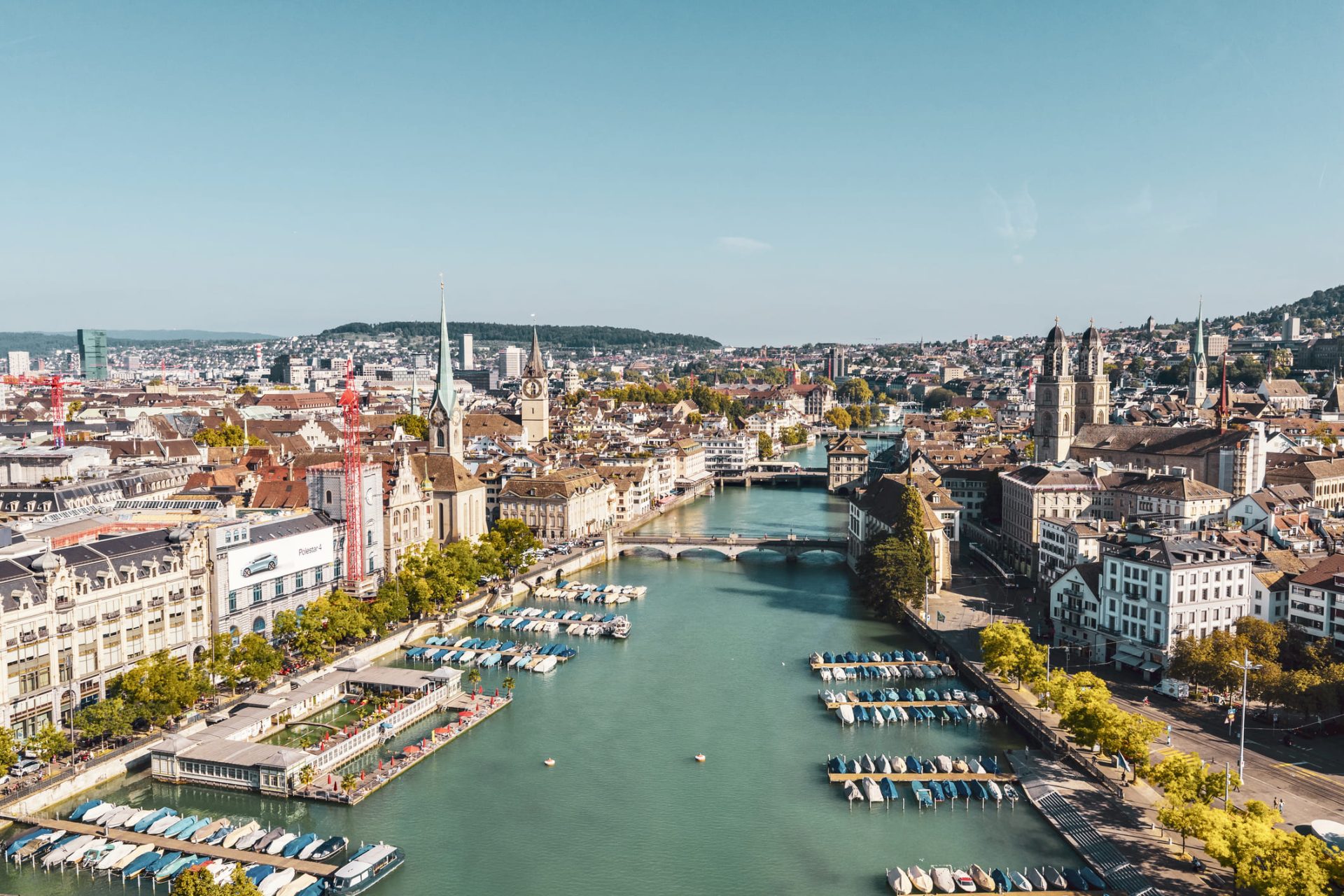
After checking out, the coach takes you to Zurich airport. On the way you'll pass through the green, rolling countryside of the Swiss Plateau, the gentle heartland of Switzerland between the Alps and the Jura mountains, where most of the country's people live. Swiss towns and villages here look tidy and quiet, with church towers, orchards and farms. Watch for the famous Swiss trains gliding past; they're known around the world for running exactly on time.

This drive is also your chance to say goodbye to the people who have made the trip run so smoothly. Your tour manager has been with you since Paris, handling everything from hotel check-ins to tickets, early starts and snowy roads, and your coach driver has carried you safely across five countries. A warm thank-you means a lot to them. Before you reach the airport, swap numbers and social media details with the families you've become friends with. Group photos will be flying around your chat within hours.

Zurich Airport is calm and well organised, and once you're through check-in and security, you'll find plenty of places to spend your last Swiss francs or euros: chocolate shops, watch boutiques and cafes. If anyone at home is still waiting for a gift, this is your final chance to find one. Then find a seat by the window, order a last hot chocolate, and watch the planes take off over the snowy hills.

As your flight lifts off and Switzerland disappears beneath the clouds, you'll be carrying more than souvenirs. You'll be carrying a Christmas you'll talk about for years: the year you saw the Eiffel Tower sparkle, met Mickey on Christmas Eve, ate waffles in Brussels, sailed through Amsterdam and touched the snow at the Top of Europe. Tomorrow, when the clock strikes midnight and India welcomes the New Year, you'll have the best stories at the party.

You leave Switzerland on 30 December, just as the Swiss get ready to welcome the New Year in their own ways. In Zurich, crowds gather on the lakefront at midnight on 31 December for fireworks over the water. In the rural canton of Appenzell, in the east of the country, an ancient custom called Silvesterchlausen takes place on New Year's Eve. Groups of men dressed in huge headdresses and costumes, some made of leaves, branches and moss, walk from farm to farm ringing heavy cowbells and singing a wordless yodel to wish families a good year. It's one of the most unusual winter traditions in Europe.

If you're flying later in the day and have some time at the airport, take a final look at the things that make Switzerland Switzerland: watches in the shop windows, rows of chocolate bars wrapped in red and gold, and the calm precision with which everything works. The Swiss are famous for punctuality, and their trains, buses and boats run like clockwork. After nine days of seeing it for yourself, you'll understand why.

Included today: breakfast, group departure transfer to Zurich airport (arriving by about 11 am).

Good to know: we recommend booking a flight that leaves Zurich after 2:30 pm. The group transfer leaves the hotel at a fixed time.

Hotel confirmation

Hotel names will be provided after booking, subject to availability and confirmation. We do not hold hotel confirmations before booking.

Inclusions

Accommodation

8 nights in superior 4-star hotels:

  • 3 nights Paris – B&B / Millennium CDG or similar
  • 1 night Netherlands – Amrath / Van der Valk or similar
  • 1 night Germany (Frankfurt area) – Intercity / Elaya or similar
  • 3 nights Central Switzerland – La Maison / Radisson or similar

Meals

  • Daily continental buffet breakfast
  • 7 lunches (Indian / local, Jain / vegetarian / non-vegetarian), packed on the Disneyland day
  • 8 dinners (Indian / local, Jain / vegetarian / non-vegetarian)
  • 500 ml mineral water bottle per person daily

Sightseeing and entrances

  • Guided Paris city tour
  • Eiffel Tower top (3rd) level
  • Guided tour of Versailles Palace
  • River Seine cruise
  • Paris by Night tour
  • Full day at Disneyland® Paris
  • Brussels Grand Place and Manneken Pis
  • Mini-Europe, Brussels
  • Traditional Dutch windmill village
  • Amsterdam glass-top canal cruise
  • Heidelberg Old Town
  • Black Forest cuckoo clock demonstration
  • Rhine Falls
  • Jungfraujoch – Top of Europe and Interlaken
  • Mt. Titlis with the Rotair revolving cable car and Cliff Walk
  • Lucerne orientation tour
  • Lindt Home of Chocolate, Zurich

Services

  • Services of a professional tour manager throughout the tour
  • Air-conditioned coach for all transfers and sightseeing
  • Tips for coach drivers
  • Free group airport transfer on arrival at Paris (CDG) for flights landing between 8 am and 2 pm, and on departure to Zurich (ZRH) with drop by 11 am (see booking terms)
  • Christmas gala dinner included
  • Little extras: a glass of champagne in France, a souvenir in Holland, a waffle in Brussels, Black Forest cake in Germany, Swiss chocolate ice cream, and masala tea in select cities

Exclusions

  • Flights to Paris and back from Zurich (we can quote these separately)
  • Schengen visa fee, passport and overseas travel insurance
  • 5% GST and 2% TCS on the tour cost (TCS is credited to your PAN and can be claimed in your income tax return)
  • Private airport transfers for flights outside the group transfer timings
  • Porterage, laundry, alcohol, mini-bar, phone calls and other personal expenses
  • Meals other than those listed; menus are pre-set
  • Sightseeing, entrance fees or guides not mentioned in the itinerary
  • Any increase in local taxes, entrance fees or fuel costs, and surcharges on some departure dates
  • Anything not listed under inclusions

Important Terms

Starts: Paris (CDG)   Ends: Zurich (ZRH)

Booking and payment

  • At booking: 30% of the tour cost per person, with clear copies of the passport and PAN card of every traveller.
  • 30 days before departure: the full balance.
  • Booking within 30 days of departure: 30% to book, and the balance as soon as your booking is confirmed.

Price and taxes

  • Prices are per person on twin sharing. Children below 12 years on the whole tour pay child rates; a third person in a triple room usually gets a rollaway bed in a standard-size room.
  • The tour cost is set in euros. The final rupee amount is fixed at the exchange rate on the date of your final payment.
  • Indian passport holders paying in rupees pay 5% GST and 2% TCS on the tour cost. Foreign passport holders and NRIs, please ask us, as different tax rules apply.

Airport transfers

  • Free group transfers run only for flights landing at Paris (CDG) between 8 am and 2 pm. You may wait up to 2–3 hours in the arrival hall for other guests.
  • On the last day the coach drops the group at Zurich (ZRH) by 11 am, which can be up to 6 hours before your flight.
  • If these timings don't suit your flights, we can book a private transfer at extra cost. No refund is given for an unused group transfer.

On tour

  • Passports must be valid for at least 6 months after your return date, with two blank pages.
  • Please carry one check-in bag and one hand bag per person; luggage space on the coach is limited.
  • The order of days may change, or the tour may run in reverse, on some dates. All listed sightseeing is still covered unless an attraction is closed, in which case an alternative is arranged.
  • If the Eiffel Tower queue is very long, the group may visit Montparnasse Tower for the city view instead.
  • On some dates your group may join another group, and a local representative may assist instead of the tour manager for the first part of the tour.
  • Tours run subject to government rules. Changes caused by weather, strikes or other events beyond our control, and any extra costs from them, are payable by the traveller.

Cancellation charges

When you cancelCancellation charge
From booking until 36 days before departure₹30,000 per person
35 to 29 days before departure₹60,000 per person
28 to 15 days before departure50% of the tour cost
14 to 8 days before departure75% of the tour cost
7 days or less before departure, or no-show100% of the tour cost
  • Visa refusal: if your visa is refused and you cancel more than 45 days before departure, the charge is ₹12,000 per person instead of the above, and the rest of your payment is refunded. Please send us the refusal letter. Within 45 days of departure the table above applies.
  • Please send cancellations in writing by email or WhatsApp. The date we receive it decides the charge.
  • No refund is given for unused services, missed sightseeing or leaving the tour early.
  • Refunds are paid to the account the payment came from, within 30 days of cancellation. GST and TCS are adjusted as per Government of India rules.

Christmas on this tour

The group is in Paris for Christmas Eve, when the city is at its most festive, and spends Christmas Day in Brussels, whose Grand Place hosts one of Europe's best-known Christmas light shows and markets. A Christmas gala dinner is included, and the Swiss Alps are deep in snow for the Jungfraujoch and Titlis excursions.

Some attractions keep holiday hours around Christmas, so the order of days may be adjusted. Everything listed is still covered.

Europe Christmas Tour – 5 Countries, 8 Nights / 9 Days FAQs

When does this Christmas tour depart?
It departs on 22 December 2026 and returns on 30 December 2026 (8 nights / 9 days). The tour starts at Paris Charles de Gaulle airport and ends at Zurich airport.
Which countries does this tour cover?
France, Belgium, the Netherlands, Germany and Switzerland.
Is a Christmas gala dinner included?
Yes. One Christmas gala dinner is included, along with dinners every night and lunches on seven days.
Are flights included?
No, this is a land package starting in Paris and ending in Zurich. Our team can quote return flights from Delhi or your city separately.
Is Jain or vegetarian food available?
Yes. Lunches and dinners include Jain, vegetarian and non-vegetarian options, and breakfast is a continental buffet at the hotel.
Will we see the Keukenhof tulip gardens?
Keukenhof is open only in spring, so on this December departure the group visits a traditional Dutch village with windmills and wooden houses instead.
What is the weather like in late December?
Expect cold, short days. Paris and Amsterdam are usually around 2–8°C, Swiss towns around freezing, and the mountain tops at Jungfraujoch and Titlis well below zero with snow. Pack thermals, a warm coat, gloves, a cap and shoes with good grip.
Is Amsterdam included in this Europe tour?
Yes. You stay in the Netherlands and visit Amsterdam with a canal cruise, plus Keukenhof in spring or a windmill village later in the season.
How much does this 9-day Europe tour cost from India?
It depends on the departure and number of travellers; flights are extra. Send us an enquiry for an exact quote.
Gallery

Europe photos: Europe Christmas Tour – 5 Countries, 8 Nights / 9 Days

Plan your Europe holiday with Dreamland Vacations

Share your dates, travellers and comfort preference. Our team will guide you with the next best step.

Book now – pay 30%
Continue to booking
Itinerary Book now – pay 30%
WhatsApp