Grand Wonders of Europe – 10 Countries, 15 Nights / 16 Days
Standard Package

Grand Wonders of Europe – 10 Countries, 15 Nights / 16 Days

Our most complete Europe tour: 10 countries in 15 nights / 16 days from London to Rome, with the Tower of London and a Thames cruise, Paris and Disne…

⌖ Europe ✦ Family & senior friendly planning
Package snapshot
DestinationEurope
Travel styleStandard Package

Want to customize this package?

Share your dates and travellers. This enquiry is free. Small changes to a standard itinerary—such as a date change or an extra day—can be discussed with our team.

We’ll send verification codes to your WhatsApp number and email. Indian numbers can be entered without +91; for other countries, include the country code.
Verification required before submitting.
Your holiday

Grand Wonders of Europe – 10 Countries, 15 Nights / 16 Days: overview

Ten countries, sixteen days: the complete European journey

If you want to see Europe properly in one holiday, this Europe 15 days tour package is the one. Imagine seeing the Crown Jewels in the Tower of London, the lights of Paris by night, the tulips of Holland, the glaciers of the Swiss Alps, the tiny principality of Liechtenstein, the canals of Venice and the masterpieces of the Vatican, all in one unhurried journey.

Three nights in London bring a guided city tour, Madame Tussauds, Lord's, the Tower of London, the London Eye and a Thames cruise, before the Eurostar takes you to three nights in Paris with Versailles, the Eiffel Tower top level, Paris by night and Disneyland® Paris. Continue through Brussels and Mini-Europe to the Netherlands, with Keukenhof until 10 May or a windmill village later and a canal cruise in Amsterdam, then Heidelberg, the Black Forest, the Rhine Falls and three nights in Switzerland for Jungfraujoch, Titlis and the Lindt Home of Chocolate. A mini train ride in Vaduz, Liechtenstein, and the Swarovski Crystal Worlds in Austria lead to Italy: a gondola ride in Venice, Florence and Pisa, and Rome with the Vatican Museums and Sistine Chapel or the Colosseum.

A professional tour manager travels with the group, you stay in superior 4-star hotels, and Indian meals are included on most days, with treats such as Belgian waffles, Black Forest cake and Italian gelato. You need a UK visa and a Schengen visa, and our team helps with both. See all our Europe tour packages.

Good to know

Package typeStandard Package
Planning supportSmall changes by enquiry
Best forFamilies, couples & seniors
Get a free quote
Trip highlights
✦ Arrive in London | The start of a sixteen-day adventure
✦ London city tour, Madame Tussauds, the London Eye and a Thames cruise | London from the streets, the sky and the river
✦ Lord's Cricket Ground, the Tower of London and Oxford Street | Cricket's home, the Crown Jewels and a shopping spree
✦ The Eurostar to Paris | Under the sea to the City of Light
✦ Paris city tour, the top of the Eiffel Tower, Versailles, a Seine cruise and Paris by night | From royal palaces to the city's golden lights
✦ Disneyland® Paris | A full day of fun and fairy tales
Day-wise plan

Europe itinerary: day by day

Day 1
Arrive in London | The start of a sixteen-day adventure

Arrive in London | The start of a sixteen-day adventure

⌖ London 🍽 Meals: Dinner

Today your journey across ten countries of Europe begins. As your flight approaches London, look down at the green English countryside and the great city spread along the curves of the River Thames. Somewhere down there are royal palaces, ancient churches, world-famous museums and the cricket ground every Indian fan dreams of visiting, and over the next three days, you'll see them all.

After landing, clearing immigration and collecting your luggage, you walk out to meet your tour manager, who will be your guide, organiser and friend for the next sixteen days. From here on, everything is arranged for you: transfers, trains, hotels, sightseeing, entrance tickets and most of your meals. All you need to do is relax and enjoy each day as it comes.

This is the longest and most complete of our European tours, and its pace allows you to enjoy each country rather than rush through it. You'll spend three nights in London, three in Paris and three in Switzerland, giving you time to settle in, unpack properly and take in the atmosphere of each place. Between these longer stays, you'll travel through Belgium, the Netherlands, Germany, Liechtenstein, Austria and Italy, ending in Rome, the Eternal City, with a visit to the Vatican, the world's smallest country.

As your coach drives into the city, London unfolds around you. Its long history is visible everywhere. Romans founded the city nearly two thousand years ago; William the Conqueror built the Tower of London after his victory in 1066; Shakespeare's plays were first performed in theatres on the south bank of the Thames; and in the 19th century, London became the largest city in the world and the capital of an empire. Today it's a lively, multicultural city of around nine million people, where you'll find food from every corner of the world, including some excellent Indian restaurants.

In summer, London is at its best. The days are long, with daylight lasting until well after nine in the evening around midsummer, and the parks, gardens and riverbanks are full of life. Flowers bloom in window boxes and hanging baskets, open-air concerts and theatre performances take place in the parks, and on warm evenings, Londoners spill out of the pubs onto the pavements with their drinks. It's a wonderful time to explore.

Once you've checked in to your hotel, take some time to rest after your journey. It's a good idea to stay awake until the evening, as this will help your body clock adjust to the local time, which is four and a half hours behind India in summer. A short walk outdoors in the daylight helps too.

A few useful things to know: in Britain, cars drive on the left, as in India, but in the rest of Europe, they drive on the right, so always look carefully before crossing the road. The currency here is the pound sterling, while most of the countries you'll visit later use the euro, and Switzerland uses the Swiss franc; cards are accepted almost everywhere. British plugs have three square pins, so you'll need a UK adapter here and a European adapter for the rest of the trip. Tap water is safe to drink in all the countries on this tour, so carry a refillable bottle.

In the evening, you meet your fellow travellers over dinner. Many of them, like you, will have dreamed of this journey for years. Your tour manager will share the plans for the next few days and answer any questions. Then it's time to rest: tomorrow, you'll explore the best of London.

If you have energy left after resting, a gentle walk is a lovely way to begin. London is one of the greenest big cities in the world, and there's almost always a park or garden square within a few minutes' walk. In summer, the parks are full of life: families picnicking on the grass, children feeding the ducks, office workers lying in the sun at lunchtime, and dogs chasing balls across the lawns. The scent of roses fills the gardens, and in the long evening light, the city takes on a soft, golden glow.

You'll also start to notice the little things that make London feel so different from home: the polite queues at the bus stop, the shop assistants who call you "love" or "mate", the pigeons strutting fearlessly across the pavements, and the cheerful conversations about the weather, which is Britain's favourite topic of small talk. Britain is also famous for its tea, and if you'd like to try a proper English cup, ask for it "with milk", the way the British drink it. Many visitors from India are pleased to discover that the British love their tea almost as much as Indians do.

This evening is also a chance to start getting to know your tour manager. Over the coming sixteen days, they'll look after every detail, from hotel check-ins and tickets to restaurant bookings and local tips, and they'll share stories about each place you visit. Don't hesitate to ask them anything, whether it's about the history of a monument or where to buy the best souvenirs.

Included today: arrival transfer, dinner.

Good to know: hotel check-in is usually mid-afternoon. London's summer temperatures are usually 18–26°C, with occasional showers, so pack a light jacket and umbrella. Bring both a UK and a European plug adapter.
Day 2
London city tour, Madame Tussauds, the London Eye and a Thames cruise | London from the streets, the sky and the river

London city tour, Madame Tussauds, the London Eye and a Thames cruise | London from the streets, the sky and the river

⌖ London 🍽 Meals: Breakfast, Lunch, Dinner

Today you see London from every angle. After breakfast, your expert local guide joins you for a city tour of the capital's most famous sights.

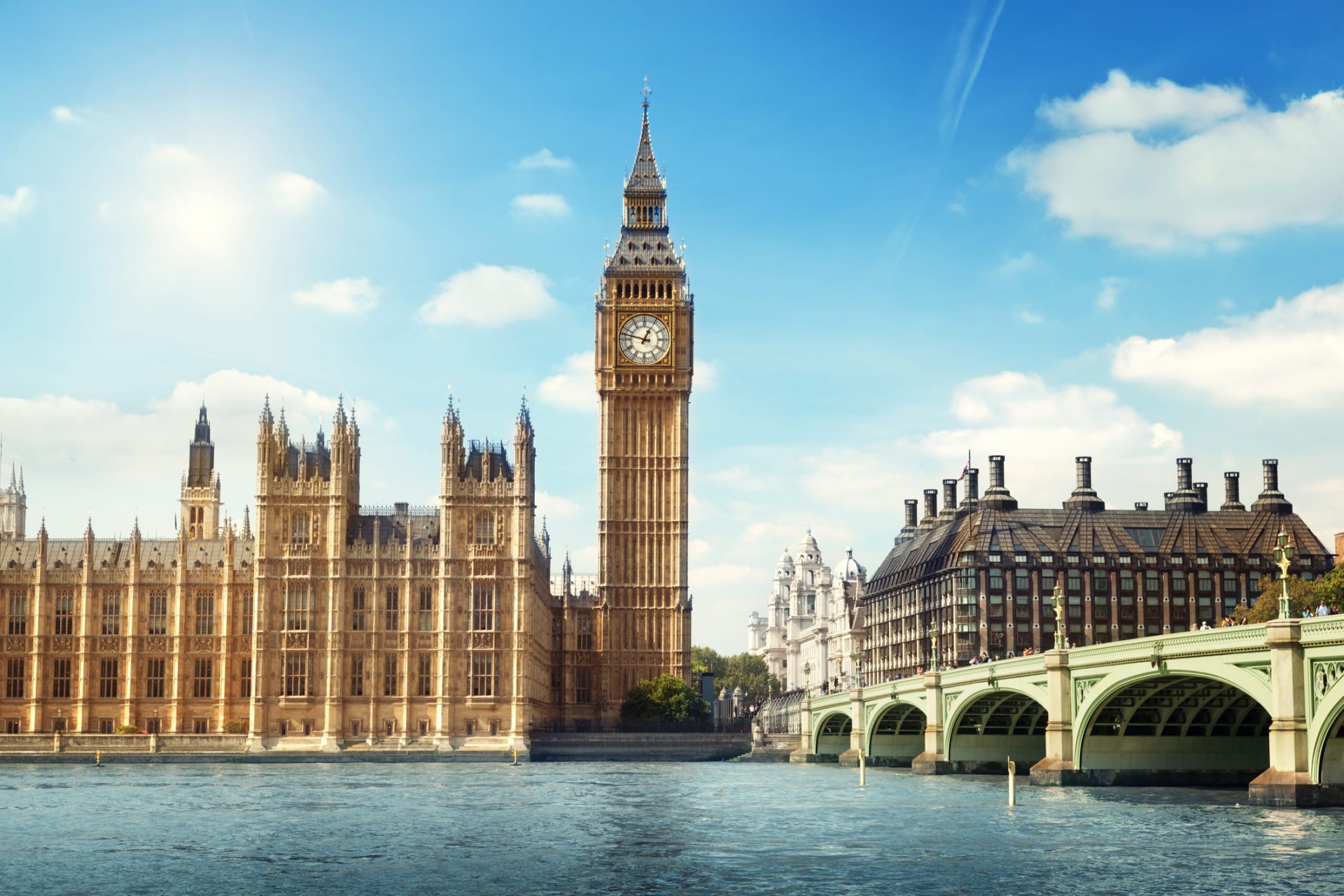
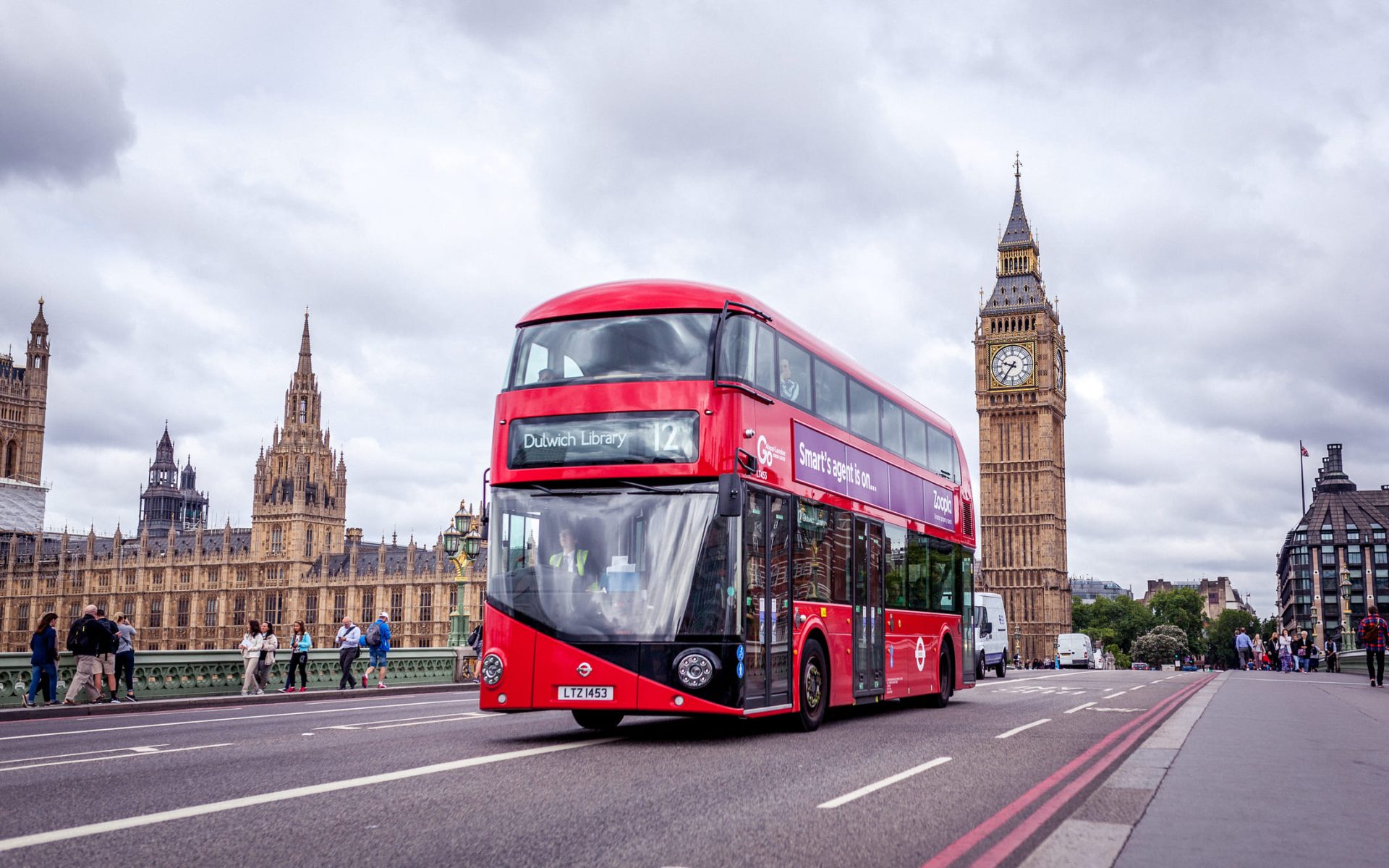
You begin at Parliament Square, surrounded by some of the most important buildings in Britain. On one side stand the Houses of Parliament, a great Gothic palace on the bank of the Thames, with the clock tower of Big Ben at its northern end. On another stands Westminster Abbey, the church where kings and queens have been crowned and married for almost a thousand years, and where many of Britain's greatest figures are buried or commemorated, including Isaac Newton, Charles Darwin and Charles Dickens. In the square itself, statues of famous statesmen stand on the lawn, among them Winston Churchill, Nelson Mandela and Mahatma Gandhi, whose statue was unveiled in 2015.

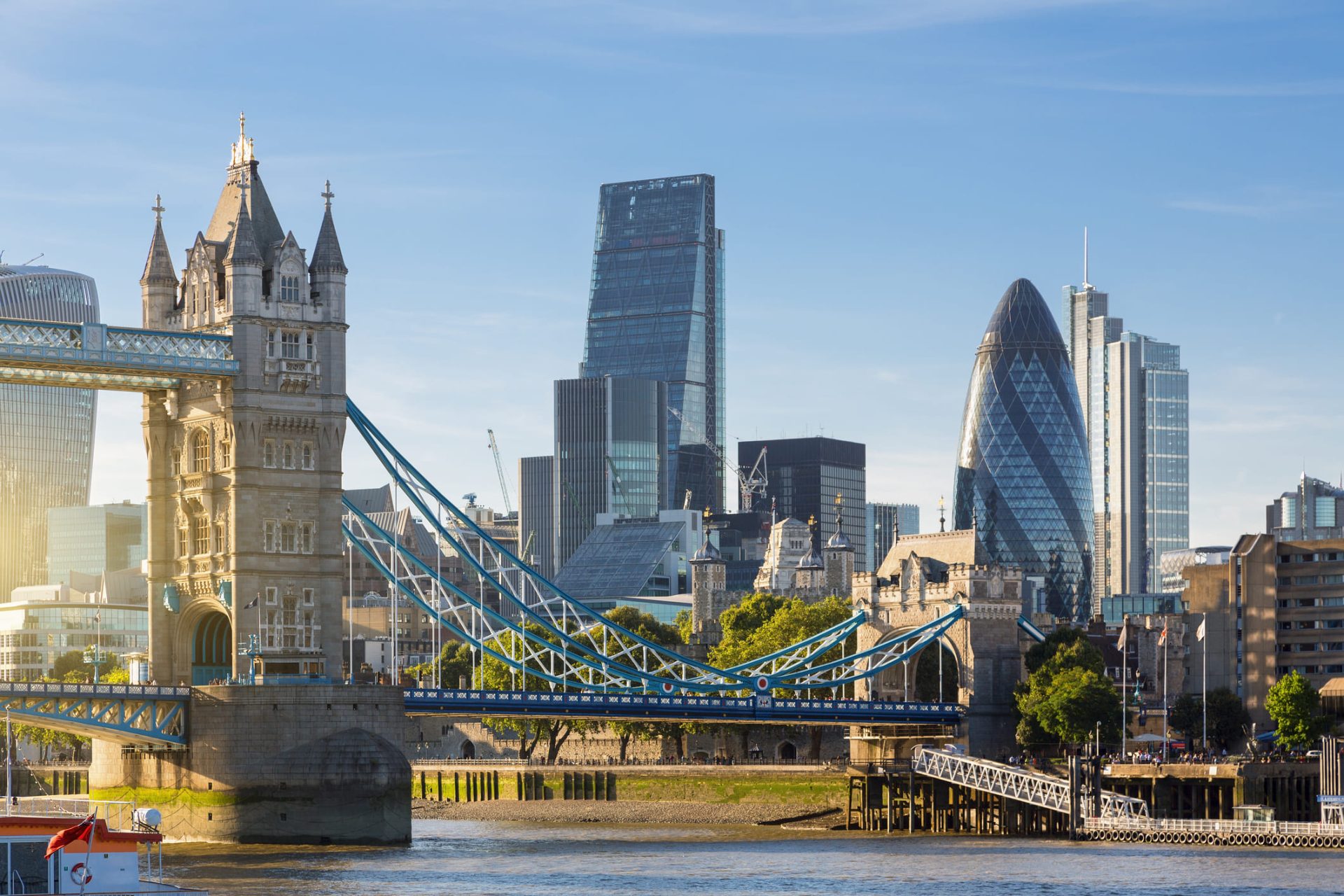
Your tour continues through Whitehall, past the government offices and the gates of Downing Street, where the Prime Minister lives at No. 10, and the Horse Guards, where mounted soldiers in shining breastplates and plumed helmets stand on duty. You see Trafalgar Square, with Nelson's Column rising 52 metres above the fountains; Piccadilly Circus, with its giant illuminated screens; and Hyde Park, the largest of central London's Royal Parks. You'll also see Tower Bridge, the great Victorian bridge whose two halves can be raised to let tall ships pass along the river.

At Buckingham Palace, you watch the Changing of the Guard, the famous ceremony in which the soldiers of the King's Guard, in red tunics and tall bearskin hats, hand over the duty of guarding the palace to a new guard, accompanied by a military band. Hundreds of people gather to watch the colourful spectacle, and it's one of the most memorable sights in London.

Next, you visit Madame Tussauds, the world-famous wax museum on Marylebone Road. Founded by Marie Tussaud, who learned her art in Paris before the French Revolution, the museum has been delighting visitors in London since 1835. Here you can meet hundreds of incredibly lifelike figures of famous people, from members of the royal family and world leaders to sporting legends, pop stars and the biggest names of Hollywood and Bollywood. Each figure takes months to make, and every hair is inserted by hand, one at a time. It's a place for fun, for laughter and for plenty of photographs, as you pose beside your favourite stars.

In the afternoon, you ride the London Eye, the giant observation wheel on the South Bank. As your glass capsule rises slowly to 135 metres, the view opens up over the river, the Houses of Parliament, Buckingham Palace, St. Paul's Cathedral and the skyscrapers of the City. On a clear day, you can see for 40 kilometres.

The day ends with a cruise on the River Thames. For centuries, the Thames was London's main highway, busy with ships carrying goods from around the world, and the river remains the best way to understand how the city grew. As your boat glides along, you pass many of London's famous landmarks: the Houses of Parliament, the London Eye, the dome of St. Paul's Cathedral, the reconstructed Shakespeare's Globe theatre, HMS Belfast, a Second World War warship now moored as a museum, and the Tower of London. Passing beneath Tower Bridge is a highlight, as its two Gothic towers rise high above you. In the evening, you return to your hotel for dinner.

Throughout the day, your guide will share the stories behind what you see. You'll learn why the clock tower of Big Ben leans very slightly to the north-west, by about half a metre at the top, because of the ground beneath it; why the Prime Minister's front door at Downing Street can only be opened from the inside; and why the soldiers in their bearskin hats stand so still that they barely blink, even when tourists stand right beside them for photographs. You'll hear how London survived the Great Plague, the Great Fire and the Blitz, and how each disaster led to the city being rebuilt bigger and better than before.

London also has more free museums than almost any other city in the world, including the British Museum, the Natural History Museum, the National Gallery and the Science Museum, and your guide can tell you which ones to visit if you come back with more time. The British Museum alone holds around eight million objects from every corner of the world, including the Rosetta Stone, which helped scholars to decipher Egyptian hieroglyphs, and a fine collection of Indian sculptures and paintings.

As the day comes to an end, you'll have seen London from its streets, from the sky and from its river, and you'll already feel that you know the city a little.

Included today: guided London city tour, Changing of the Guard (subject to schedule), Madame Tussauds entry, London Eye ride, Thames river cruise, breakfast, lunch, dinner.

Good to know: the Changing of the Guard doesn't take place every day and can be cancelled in bad weather or for state events. Wear comfortable shoes, as there's a fair amount of walking.

Day 3
Lord's Cricket Ground, the Tower of London and Oxford Street | Cricket's home, the Crown Jewels and a shopping spree

Lord's Cricket Ground, the Tower of London and Oxford Street | Cricket's home, the Crown Jewels and a shopping spree

⌖ London 🍽 Meals: Breakfast, Lunch, Dinner

Today combines sport, history and shopping. After breakfast, you visit Lord's Cricket Ground in St John's Wood, known around the world as the Home of Cricket.

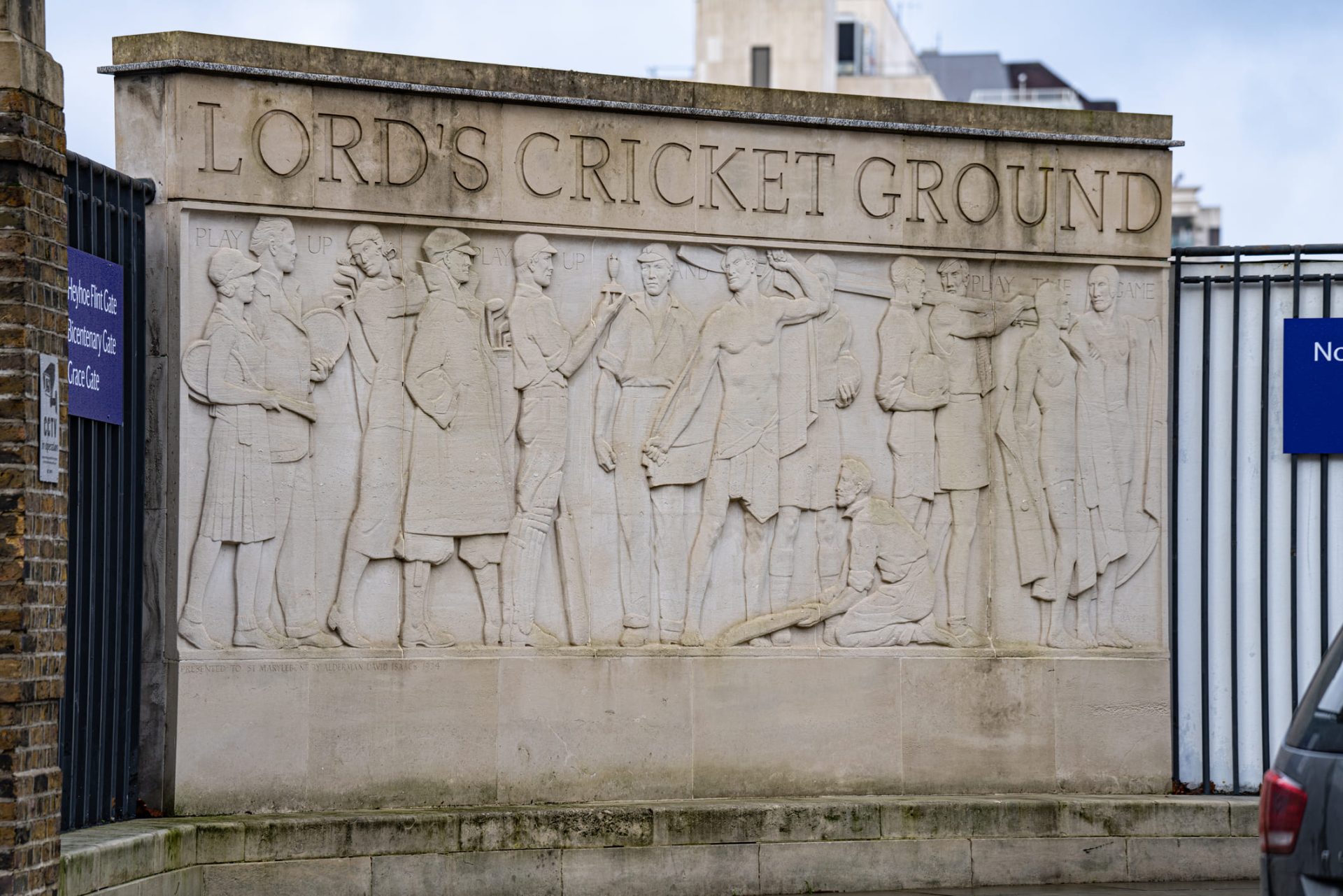
Lord's is named after Thomas Lord, a businessman and cricketer who opened his first ground in London in 1787. The ground moved to its present site in 1814, and it's home to the Marylebone Cricket Club, which has been the guardian of the Laws of Cricket for more than two centuries. For Indian fans, Lord's is a place of pilgrimage. It was here that India played its first Test match in 1932, and here, on 25 June 1983, that Kapil Dev's team beat the West Indies to win the World Cup, a victory that transformed cricket in India.

On your guided tour, you go behind the scenes. You walk through the Pavilion, a grand Victorian building with red-brick walls and cream terracotta decoration, and into the Long Room, its walls lined with paintings of cricketing heroes. Every batsman who plays at Lord's walks through this room on the way to the crease, past the members watching from the windows. You visit the players' dressing rooms, where the famous honours boards record every century and every five-wicket haul in Test cricket at Lord's, and you look out from the balcony over the pitch, with its famous slope and the futuristic white Media Centre on the opposite side. In the MCC Museum, you see bats, balls, caps and paintings from the long history of the game, and the tiny Ashes urn, the most famous trophy in cricket.

In the afternoon, you visit the Tower of London, a fortress, royal palace and prison on the bank of the Thames that has stood for almost a thousand years. It was begun by William the Conqueror after 1066, and its great stone keep, the White Tower, was built to impress and intimidate the people of London. Over the centuries, the Tower has been a royal residence, an armoury, a mint, a zoo and a notorious prison, where famous prisoners including Queen Anne Boleyn and Sir Walter Raleigh were held, and some were executed.

Today, the Tower is guarded by the Yeoman Warders, known as Beefeaters, in their dark blue and red Tudor uniforms, who lead tours and tell stories of the Tower's dark and fascinating past. Look out for the ravens: legend says that if the ravens ever leave the Tower, the kingdom will fall, so at least six of them are always kept here, cared for by a special Ravenmaster.

The highlight of your visit is the Crown Jewels, displayed in the Jewel House. You move past the glittering collection of crowns, sceptres, orbs, swords and robes used at coronations, including St. Edward's Crown, used to crown King Charles III in 2023, and the Imperial State Crown, set with nearly 3,000 diamonds. For Indian visitors, there's a special interest: the Kohinoor diamond, one of the most famous diamonds in the world, which came from India and is set in the crown made for Queen Elizabeth, the Queen Mother, in 1937. Its long history, passing through the hands of Mughal emperors, Persian rulers and the Sikh Maharaja Ranjit Singh before coming to Britain in 1849, is a story of empires.

In the evening, you have free time on Oxford Street, London's busiest shopping street, about two kilometres long and lined with more than 300 shops, from huge department stores such as Selfridges, opened in 1909, to flagship fashion stores and souvenir shops. Nearby, Regent Street and Carnaby Street offer even more choice, and Hamleys, one of the oldest and largest toy shops in the world, founded in 1760, is a favourite with children. Then it's back to your hotel for dinner.

The Tower of London is full of fascinating stories. The White Tower, its oldest building, is about 900 years old, and its walls are up to 4.5 metres thick at the base. Inside, the Royal Armouries display suits of armour made for kings, including the huge armour of King Henry VIII, made when he was older and much heavier, and the tiny armour made for a child. The Traitors' Gate, a water entrance from the Thames, was where many prisoners arrived by boat, never to leave again. The Beefeaters, who still live with their families inside the Tower walls, hold an ancient ceremony every night, the Ceremony of the Keys, in which the gates are locked, a tradition that has continued without a break for around 700 years.

For cricket lovers, today will be a highlight of the trip. Even if you're not a fan, standing in the Long Room or on the players' balcony at Lord's gives you a sense of the history and tradition that make cricket so special to millions of people around the world.

Included today: Lord's Cricket Ground tour (or the Oval if Lord's is hosting a match), Tower of London entry with the Crown Jewels, free time on Oxford Street, breakfast, lunch, dinner.

Good to know: if a match is scheduled at Lord's, the group visits the Oval cricket ground instead. Queues for the Crown Jewels can be long in summer. Keep an eye on your bags in crowded shopping areas.

Day 4
The Eurostar to Paris | Under the sea to the City of Light

The Eurostar to Paris | Under the sea to the City of Light

⌖ Paris 🍽 Meals: Breakfast, Packed Lunch, Dinner

Today you leave Britain for continental Europe, travelling by the Eurostar high-speed train through the Channel Tunnel. After breakfast and check-out, your coach takes you to St Pancras International station.

St Pancras is one of the great railway stations of the world. Opened in 1868, its vast train shed, with a single arched roof of iron and glass, was the largest enclosed space in the world at the time. At the front stands a fairy-tale building of red brick, with towers, spires, pointed windows and a clock tower, built as the Midland Grand Hotel. After decades of neglect, and a narrow escape from demolition in the 1960s, the station was beautifully restored and reopened in 2007 as the London terminus of the Eurostar. Under the great roof, look out for the statue of the poet Sir John Betjeman, who campaigned to save the station, and the giant bronze statue of a couple embracing, called The Meeting Place.

After passing through security and border checks, you board the train. The Eurostar leaves London and speeds through the countryside of Kent, past orchards, hop gardens and villages with ancient churches, before plunging into the Channel Tunnel near Folkestone. For about twenty minutes, you travel beneath the English Channel, through one of the greatest engineering projects of the 20th century, completed in 1994. Then the train bursts out into the light of northern France, near Calais, and races across the wide, flat farmland of the north, at speeds of up to 300 kilometres an hour. You'll pass golden fields of wheat and barley, green fields of sugar beet and potatoes, and villages clustered around their church towers.

You'll have your packed lunch on the journey, and you can sit back and watch the landscape slip by. The whole journey from London to Paris takes only around two hours and twenty minutes, city centre to city centre.

You arrive at the Gare du Nord in Paris, one of the busiest railway stations in Europe, and your coach takes you through the city to your hotel. Paris needs no introduction: it's the city of the Eiffel Tower and the Louvre, of fashion and perfume, of grand boulevards, pavement cafés and romantic bridges over the Seine. As you drive, look out for the elegant buildings with their wrought-iron balconies and grey rooftops, the bakeries with their displays of croissants and pastries, and the Parisians sitting at café tables, watching the world go by.

Paris has been the capital of France for more than a thousand years, and it has been at the centre of art, fashion, ideas and revolution for much of that time. The French Revolution began here in 1789 with the storming of the Bastille prison, and its ideals of liberty, equality and fraternity changed the world. In the 19th century, the city was rebuilt with wide boulevards, parks and grand buildings, and artists such as Monet, Renoir, Van Gogh and Picasso came here to paint. Today, Paris is one of the most visited cities in the world.

After checking in at your hotel, you have time to rest or take a short walk in the neighbourhood. In the evening, you enjoy dinner with the group. Over the next two days, you'll discover the best of Paris, and a day of magic at Disneyland.

Paris has a special place in the imagination of travellers everywhere, and for many visitors, simply being here is a dream fulfilled. It's a city made for walking, where every street seems to have a beautiful building, a little park, a bookshop or a café worth stopping at. The city is divided into twenty districts called arrondissements, which spiral outwards from the centre like the shell of a snail, and each one has its own character, from the grand avenues of the 8th to the artists' hill of Montmartre in the 18th.

Food is at the heart of Parisian life. The French take their meals seriously, and lunch can be a long and leisurely affair. Look out for the boulangeries, bakeries where Parisians queue every morning and evening for fresh baguettes, and the pâtisseries, whose windows are filled with colourful macarons, glossy fruit tarts, chocolate éclairs and delicate cakes that look almost too beautiful to eat. A warm croissant or pain au chocolat with a café crème at a pavement café is one of the simple pleasures of Paris.

The city is also a great place for shopping. The grand department stores on Boulevard Haussmann, Galeries Lafayette and Printemps, are famous for their beautiful architecture as well as their fashion: the Galeries Lafayette has a spectacular stained-glass dome, and a free rooftop terrace with views across the city to the Eiffel Tower. French perfume, cosmetics, scarves and wine make wonderful gifts to take home.

Tonight, as you fall asleep in Paris, remember that the next two days are among the most exciting of your whole tour: the Eiffel Tower, Versailles, the Seine, Paris by night and Disneyland, all still to come.

Included today: Eurostar from London to Paris, breakfast, packed lunch, dinner.

Good to know: border checks for France take place at St Pancras before boarding, so keep your passport handy. You must carry your own luggage onto the Eurostar. From today, you need a European plug adapter.
Day 5
Paris city tour, the top of the Eiffel Tower, Versailles, a Seine cruise and Paris by night | From royal palaces to the city's golden lights

Paris city tour, the top of the Eiffel Tower, Versailles, a Seine cruise and Paris by night | From royal palaces to the city's golden lights

⌖ Paris 🍽 Meals: Breakfast, Lunch, Dinner

Today is a long and wonderful day in Paris, from morning until the lights come on at night. After breakfast, your local guide joins you for a tour of the city's most elegant streets and squares.

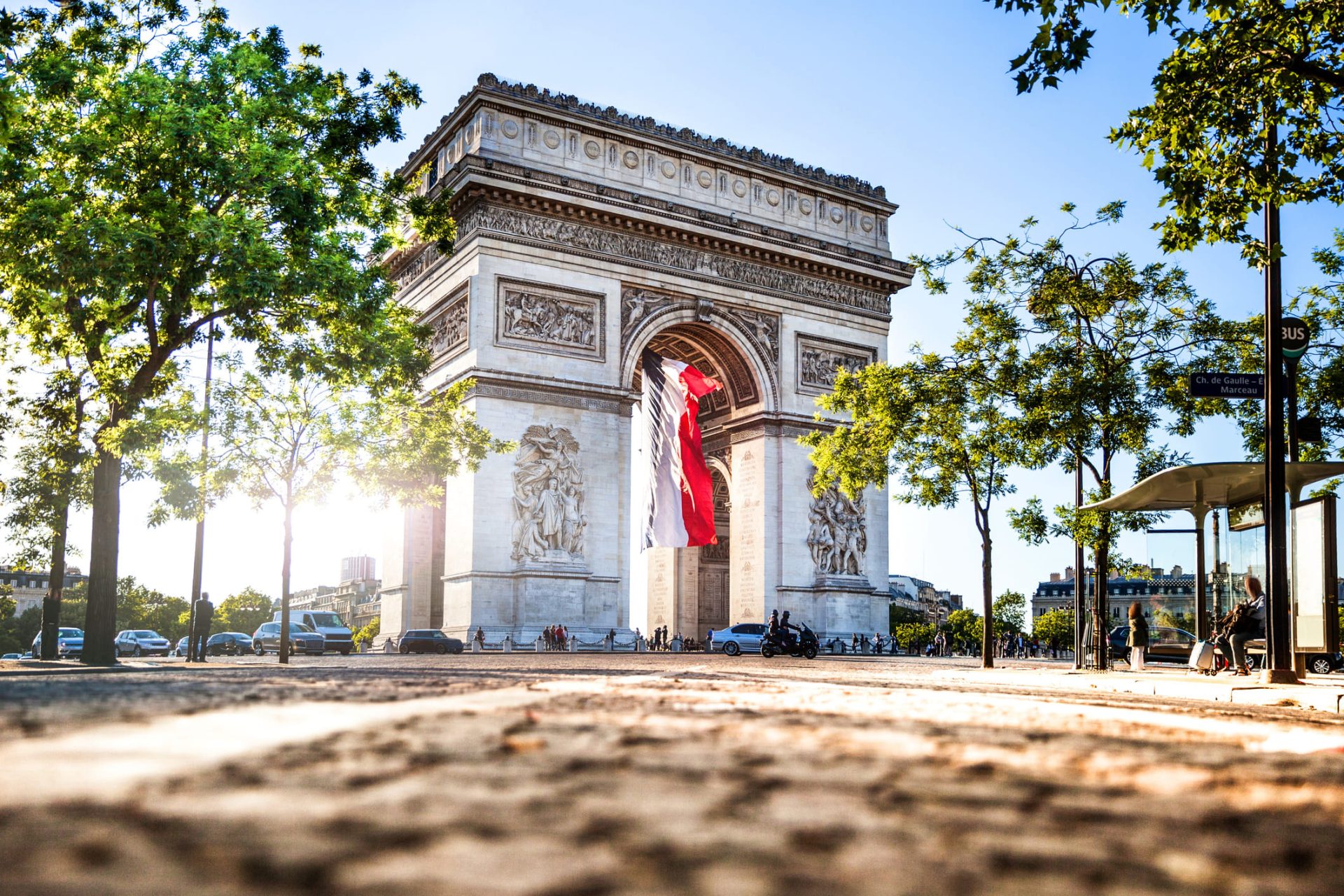
You see the Place Vendôme, a perfectly proportioned square surrounded by the shops of the world's most famous jewellers, and the Palais Garnier, the opulent opera house with its gilded statues and green copper dome. You drive past the Musée d'Orsay, a former railway station transformed into one of the world's great museums of Impressionist art, home to masterpieces by Monet, Renoir, Degas and Van Gogh. You see the Place de la Concorde, the largest square in Paris, with its 3,000-year-old Egyptian obelisk, and drive up the Champs-Élysées, the most famous avenue in the world, to the Arc de Triomphe, built to honour the armies of Napoleon. You'll also pass the Pont Alexandre III, with its golden winged horses, and Les Invalides, the vast military hospital built by Louis XIV, under whose golden dome Napoleon lies in a giant red stone tomb.

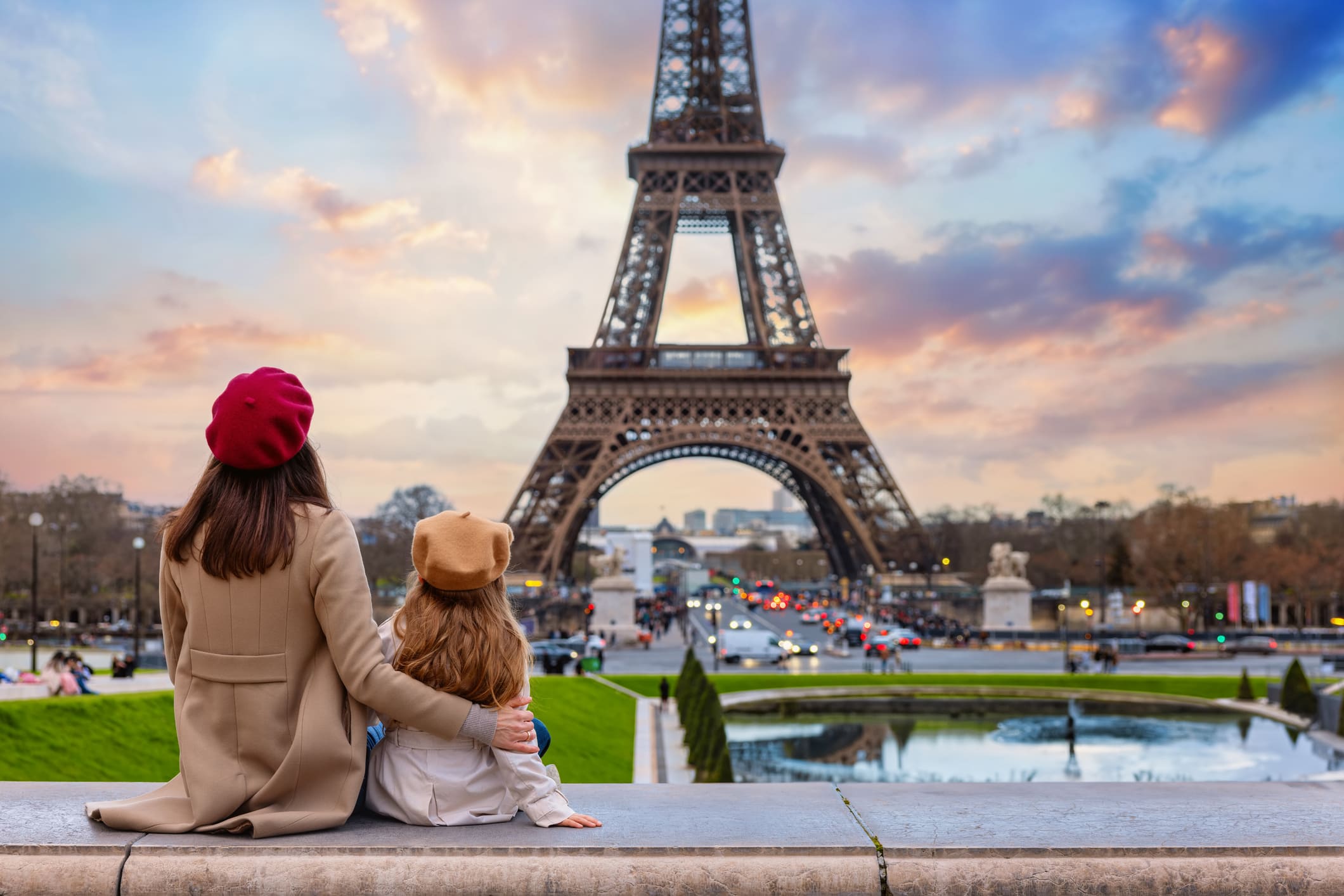
Then it's time for the Eiffel Tower. You ride the lifts to the second level, and then a second lift carries you all the way to the top, 276 metres above Paris. As you step onto the top platform, the city lies beneath you in every direction, with the Seine curving through it like a ribbon. You can pick out Montmartre and the white domes of the Sacré-Cœur to the north, the towers of La Défense to the west, and the parks, rooftops and monuments of the city all around. For many visitors, this view is the moment they've been dreaming of for years.

The Eiffel Tower was built by the engineer Gustave Eiffel for the 1889 World's Fair, and at 300 metres high, it was the tallest structure in the world for more than forty years. It was meant to be temporary, and many artists of the time thought it ugly, but today it's the most visited paid monument in the world and the beloved symbol of France.

In the afternoon, you visit the Palace of Versailles, west of Paris. Versailles was the home of the kings of France from 1682 until the Revolution in 1789, and it was designed to dazzle. King Louis XIV, the Sun King, turned a hunting lodge into the grandest palace in Europe, where thousands of nobles lived in luxury and competed for the king's attention. You walk through the magnificent State Apartments, each room named after a Greek god or goddess, to the Hall of Mirrors, where 357 mirrors and dozens of crystal chandeliers reflect the light from the gardens. Outside, the gardens stretch away in perfect symmetry, with lawns, flower beds, fountains, statues and the long Grand Canal. Marie Antoinette, the last queen of France before the Revolution, had her own private retreat in the grounds, a little village of thatched cottages where she could escape the formality of court life.

Back in Paris, you take a cruise on the River Seine, gliding past the Louvre, Notre-Dame, the Musée d'Orsay and the Eiffel Tower, under some of the city's most beautiful bridges. Seeing Paris from the river gives you a completely different view of the city, with its grand monuments lining both banks.

Then, as darkness falls, comes the magic of Paris by night. Paris earned the name City of Light partly because it was one of the first cities in Europe to light its streets, and at night, it truly shines. Your coach takes you on a tour of the illuminated city: the Champs-Élysées glittering with lights, the Arc de Triomphe glowing gold, the fountains of the Place de la Concorde, the Louvre's glass pyramid lit from within, and the floodlit façade of Notre-Dame. The highlight is the Eiffel Tower itself, bathed in golden light, and at the start of every hour after dark, sparkling with thousands of flashing lights for five minutes. It's a sight that leaves everyone smiling. Then you return to your hotel, tired but happy, after a truly unforgettable day.

Many travellers say that seeing Paris at night is when they truly fall in love with the city. The cafés glow with warm light, couples stroll arm in arm along the river, and street musicians play the accordion on the bridges. It's the Paris of films and dreams, and tonight, you'll see it for yourself.

Included today: guided Paris city tour, Eiffel Tower top (3rd) level, Palace of Versailles visit, Seine cruise, Paris by night tour, breakfast, lunch, dinner.

Good to know: access to the top level depends on its being open; if it's closed, we visit the second level instead. Days 5 and 6 may be swapped depending on ticket slots. This is a long day, so wear comfortable shoes.

Day 6
Disneyland® Paris | A full day of fun and fairy tales

Disneyland® Paris | A full day of fun and fairy tales

⌖ Paris 🍽 Meals: Breakfast, Packed Lunch, Dinner

Today is all about fun, for children and for the child inside every adult. After breakfast, you travel east of Paris to Disneyland® Paris, Europe's most visited theme park, for a full day of rides, shows, parades and characters.

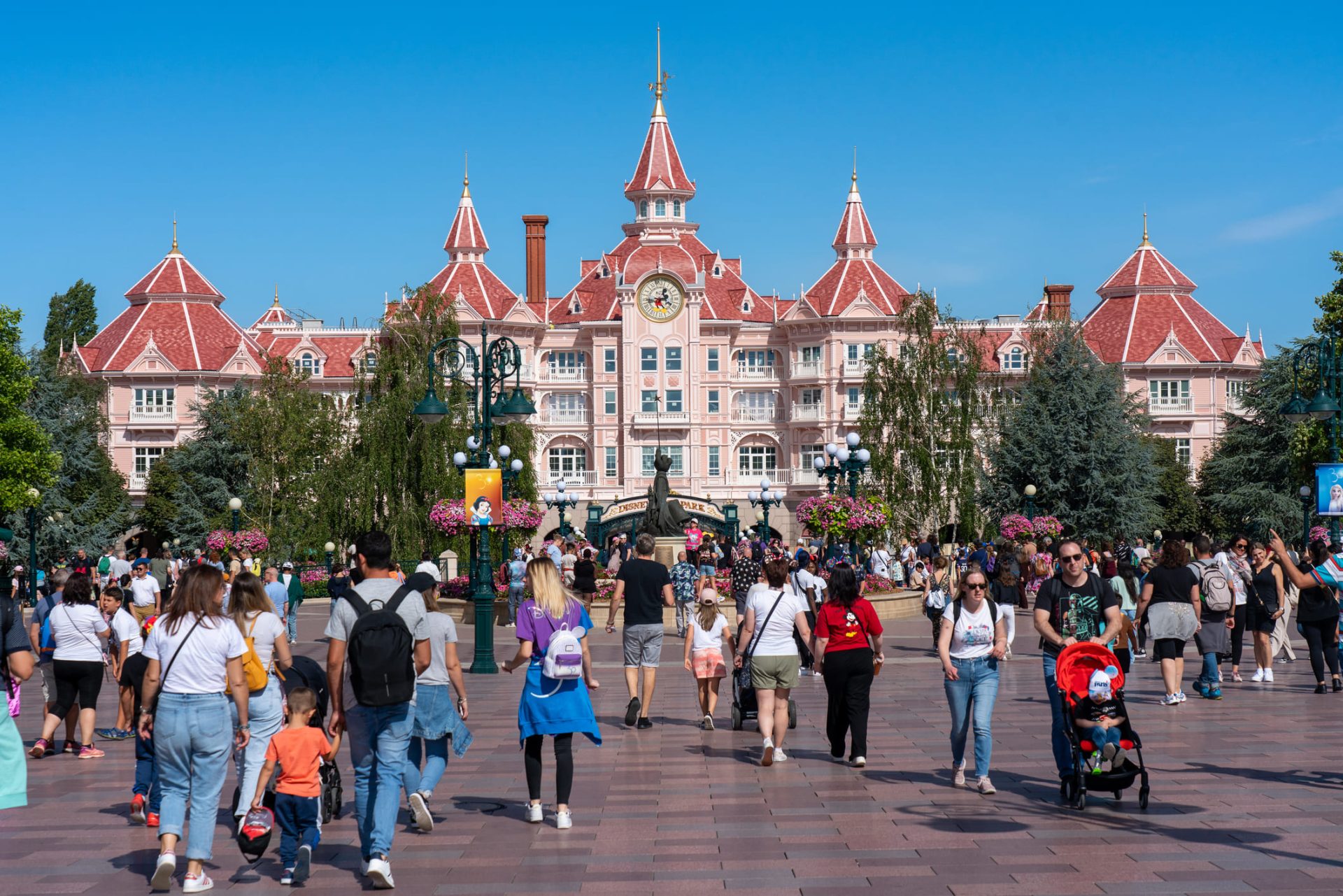
You can choose between the two Disney parks. Disneyland® Park is the classic Disney experience, built around the pink-towered Sleeping Beauty Castle, with five themed lands to explore. Main Street, U.S.A. recreates a small American town of the early 20th century, with old-fashioned shops, a bakery, an ice-cream parlour and the smell of popcorn in the air. Frontierland takes you to the Wild West, where you can ride Big Thunder Mountain, a runaway mine train racing around a red-rock mountain in the middle of a lake. In Adventureland, you'll find pirates, jungles and hidden treasure, and in Fantasyland, the gentle rides of classic Disney stories: Peter Pan's Flight, Dumbo the Flying Elephant, the Mad Hatter's Tea Cups and "it's a small world". Discoveryland, inspired by the futuristic visions of writers such as Jules Verne and H.G. Wells, has the thrilling Star Wars Hyperspace Mountain and the Buzz Lightyear Laser Blast, where you shoot at targets to save the galaxy.

Throughout the day, you'll meet Disney characters around the park, from Mickey and Minnie Mouse to princesses and Pixar heroes, all ready to pose for photographs. The afternoon parade along Main Street, with its colourful floats, music and dancers, is one of the highlights of the day.

The second park, Walt Disney Studios® Park, is all about the magic of film. Here you can join the Avengers at Avengers Campus, shrink to the size of a rat in Ratatouille: The Adventure, take a spin in Cars-themed rides and enjoy spectacular live shows. It's especially popular with teenagers and with families who love Marvel and Pixar films.

Disneyland® Paris opened in 1992, and it was built on a huge scale. The resort covers more than 2,000 hectares, about a fifth of the size of Paris itself, and includes hotels, restaurants, a shopping and entertainment district called Disney Village, and even a golf course. Every year, millions of visitors come here from all over Europe and the world.

To make the most of your day, arrive early and head straight for the most popular rides, when the queues are shortest. The official Disneyland Paris app shows waiting times for every ride, which helps you plan your route. In summer, carry water, sunscreen and a hat, and take breaks in the shade or in an air-conditioned show. Your packed lunch means you can eat whenever you like, without wasting time in restaurant queues. Look out for the little details everywhere: the costumes of the staff, the music that changes as you move from one land to another, and the hidden Mickey shapes that the designers have tucked away all over the park.

For families travelling with grandparents, there are plenty of gentle rides and shows to enjoy together, and the steam train of the Disneyland Railroad, which circles the park, is a relaxing way to see it all. Many grandparents say that the best part of the day is watching their grandchildren's faces light up when they meet their favourite characters.

In the evening, you return to your hotel in Paris for dinner, full of happy memories and probably carrying a few souvenirs, from Mickey ears to soft toys.

Food is part of the fun, too. Around the park, you'll find stands selling popcorn, ice cream, churros and cotton candy, and restaurants themed on the different lands, from a Wild West saloon to a pirate-ship restaurant in Adventureland. Mickey-shaped waffles and Mickey-shaped ice-cream bars are favourites with children, and with plenty of adults too.

Shopping is another highlight. Main Street, U.S.A. is lined with shops selling Disney souvenirs of every kind: plush toys, Mickey and Minnie ears, princess dresses, Star Wars and Marvel merchandise, mugs, T-shirts, Christmas decorations and sweets. If you don't want to carry your shopping around all day, you can buy it near the end of your visit, just before you leave.

The parks are especially beautiful in the late afternoon and early evening, when the sun casts a warm golden light on Sleeping Beauty Castle and the crowds begin to thin. In summer, the park stays open late into the evening, and on many nights, the day ends with a spectacular night-time show of fireworks, music, lights and projections on the castle, a magical finale that many families say is the best moment of the whole day. If the show takes place during your visit and the group's schedule allows, your tour manager will let you know.

Whatever your age, a day at Disneyland® Paris is a reminder of how much fun it is to simply play, laugh and be amazed. It's a perfect break in the middle of a busy sightseeing tour, and a day that children especially will talk about for years.

Included today: Disneyland® Paris one-day ticket for one park of your choice, return transfers, breakfast, packed lunch, dinner.

Good to know: some rides have height restrictions for small children. Shows, parades and opening hours change with the season, and individual rides may close for maintenance. Days 5 and 6 may be swapped depending on ticket slots.

Day 7
Brussels and Mini-Europe | Golden squares, a cheeky statue and Europe in miniature

Brussels and Mini-Europe | Golden squares, a cheeky statue and Europe in miniature

⌖ Netherlands 🍽 Meals: Breakfast, Lunch, Dinner

Today you leave France for Belgium, and finish the day in the Netherlands. After breakfast and check-out, you drive north through the farmland of northern France, crossing into Belgium, a small country with a big personality, famous for its chocolates, waffles, fries, comic strips and beautiful old towns.

You arrive in Brussels, the capital of Belgium and the headquarters of the European Union. Brussels is a city of two languages, French and Dutch, and street signs are written in both. It's home to the European Commission and the Council of the European Union, and the European Parliament also meets here, so you'll hear dozens of languages spoken on its streets.

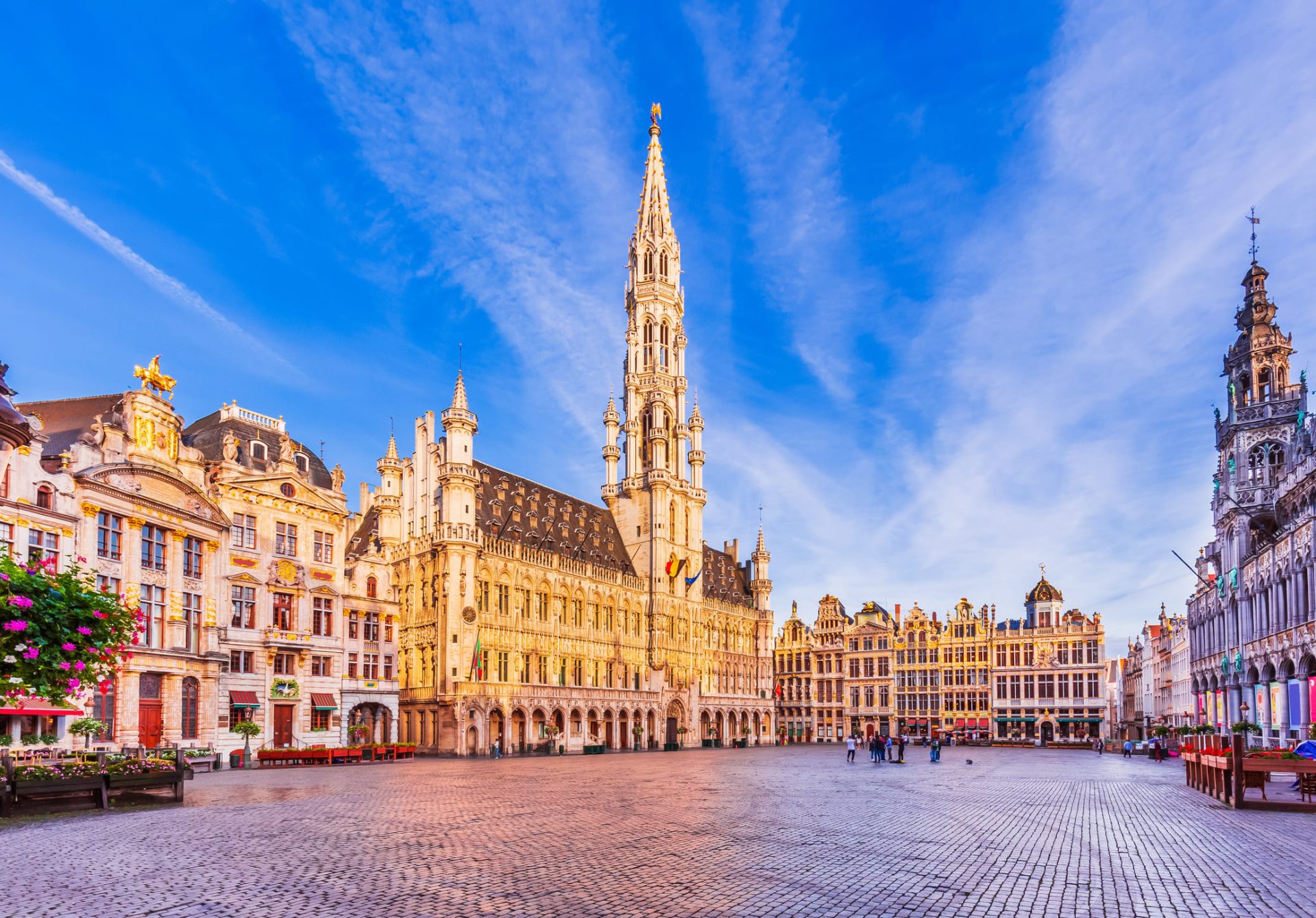
Your first stop is the Grand Place, the city's magnificent central square, which many people consider the most beautiful square in Europe. As you step into it from the narrow streets around it, you're surrounded by grand buildings decorated with gold leaf, carved stone and statues. The Gothic Town Hall, with its lace-like spire nearly 100 metres tall, was built in the 15th century, and the ornate guildhalls around the square were built by the city's merchants and craftsmen, the bakers, brewers, tailors and boatmen, each trying to outdo the others. In the evening, the square is beautifully lit, and in summer, it often hosts concerts and events.

A few minutes' walk away is the Manneken Pis, a small bronze statue of a little boy, only about 60 centimetres tall, which has become one of the symbols of Brussels. The Belgians are famous for their sense of humour, and the little statue reflects it. He has a wardrobe of more than a thousand costumes, given by countries and organisations from around the world, and is dressed up for special occasions throughout the year.

While you're here, you must taste the treats that Belgium is famous for. Belgian chocolate is among the finest in the world, and the chocolate shops near the Grand Place are a feast for the eyes, with beautiful pralines, truffles and chocolate sculptures. Belgian waffles, crisp on the outside and soft on the inside, are sold hot from little stands, with toppings of chocolate, strawberries and cream.

In the afternoon, you visit Mini-Europe, a miniature park at the foot of the Atomium, the giant model of an iron crystal, magnified 165 billion times, built for the Brussels World's Fair of 1958. Its nine silver spheres, connected by tubes, are one of the most unusual landmarks in Europe. At Mini-Europe, you can take a tour of the continent in an hour or two, walking among more than 350 detailed models of famous buildings and sights from across the European Union, built at a scale of 1:25. You'll see Big Ben and the Houses of Parliament, the canals and gondolas of Venice, and many more, with moving trains, boats and even an erupting volcano. Some of the models cost hundreds of thousands of euros to build, and every detail is reproduced with incredible care. It's a fun way to preview some of the places you'll visit later on your tour, and to discover some you haven't seen yet.

In the late afternoon, you continue north into the Netherlands, a country famous for its flat green landscapes, canals, windmills, tulips and bicycles, to your hotel for dinner and an overnight stay.

Belgium may be small, but it has given the world a surprising number of things. The saxophone was invented by a Belgian, Adolphe Sax, in the 1840s. The comic-strip hero Tintin, created by the Brussels artist Hergé, has been translated into more than a hundred languages, and as you walk around the city, you'll spot giant comic-strip murals painted on the walls of buildings, part of the Brussels Comic Book Route. The famous Belgian fries are a national passion; Belgians fry them twice to make them perfectly crisp, and serve them in paper cones with a choice of sauces, mayonnaise being the most popular.

Near the Grand Place, look into the Galeries Royales Saint-Hubert, one of the oldest covered shopping arcades in Europe, opened in 1847. Under its glass roof, you'll find elegant chocolate shops, bookshops, cafés and boutiques. Some of the most famous Belgian chocolatiers have shops here, and many offer free tastings.

The drive to the Netherlands takes you through Flanders, the Dutch-speaking northern half of Belgium, a flat land of farms, canals and historic towns such as Antwerp, famous for its diamond trade and the paintings of Rubens. As you cross the border into the Netherlands, there's no border post and often no sign at all, only a change in the style of the houses and the road signs. You'll soon see the classic Dutch landscape: wide, flat green fields divided by narrow ditches, black-and-white cows, rows of tall poplar trees and long, straight canals reflecting the sky. Much of this land lies below sea level, and it has been protected for centuries by dykes, pumps and the hard work of generations of Dutch people.

Tonight, you'll stay in the Netherlands, ready for a day of flowers, windmills and canals tomorrow.

Included today: Brussels visit with the Grand Place and the Manneken Pis, Mini-Europe entry, breakfast, lunch, dinner.

Good to know: the Grand Place is busy in summer; keep an eye on your belongings. The Atomium is seen from outside; entry is not included.

Day 8
Keukenhof or a Dutch windmill village, and an Amsterdam canal cruise | Tulips, windmills and the city of canals

Keukenhof or a Dutch windmill village, and an Amsterdam canal cruise | Tulips, windmills and the city of canals

⌖ Germany 🍽 Meals: Breakfast, Lunch, Dinner

Today you discover the Netherlands, from its colourful countryside to its famous capital. After breakfast and check-out, your day begins with one of two experiences, depending on when you travel.

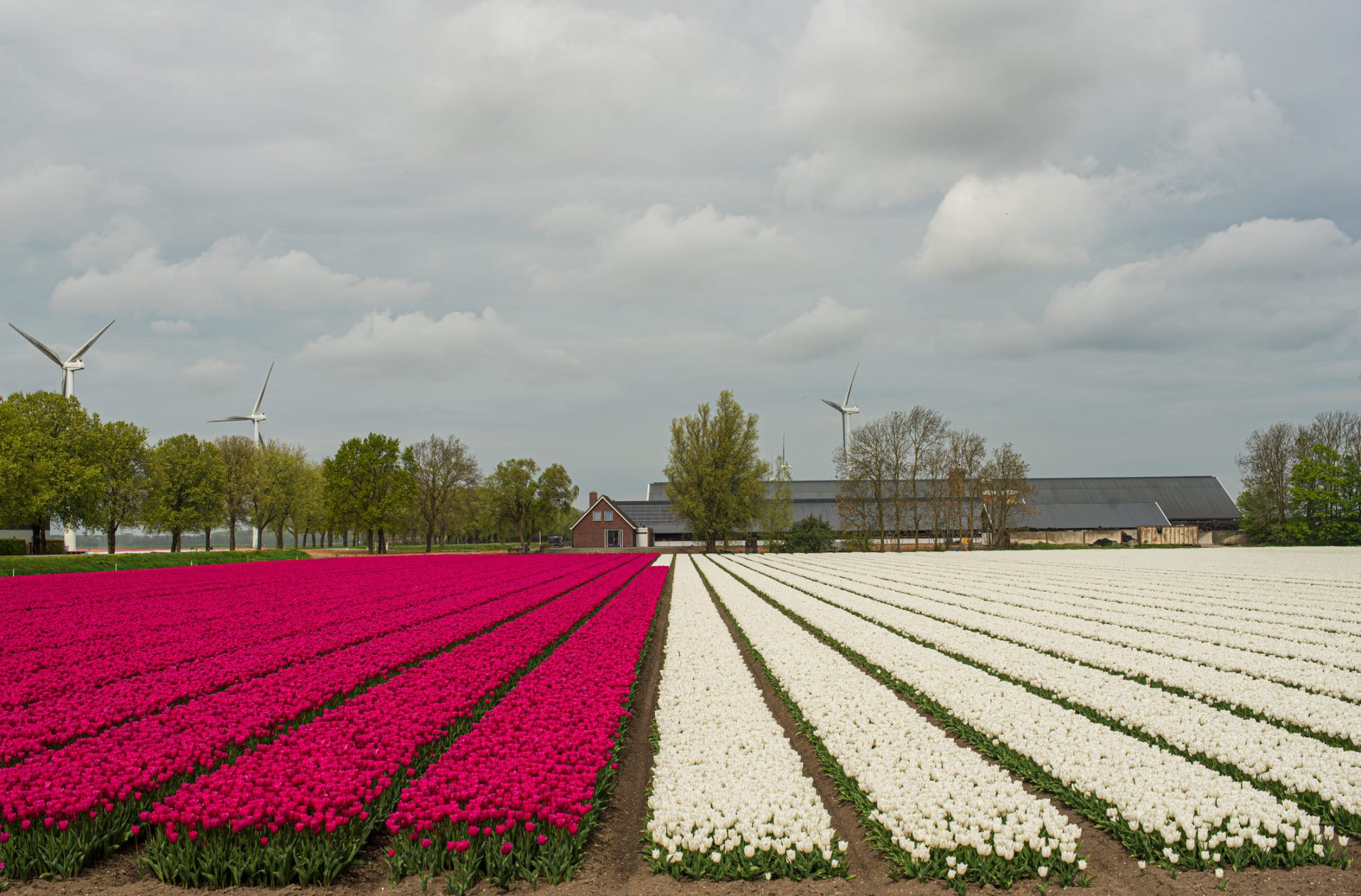
If you're travelling on or before 10 May, you visit Keukenhof Gardens in Lisse, the most famous spring flower garden in the world. For only about eight weeks each spring, Keukenhof's 32 hectares bloom with around seven million tulips, daffodils, hyacinths and other bulbs, planted by hand each autumn. You'll walk along winding paths beside ponds and streams, through great rivers of colour, red and yellow tulips, purple and pink hyacinths, white narcissi, and see flower shows in the pavilions. Around the garden, the bulb fields of the surrounding countryside are striped with brilliant colours. It's one of the most beautiful sights in the world.

If you're travelling from 11 May onwards, you visit a traditional Dutch village of windmills near Amsterdam, where wooden houses painted green, historic windmills, a clog workshop and a cheese farm give you a glimpse of Dutch life in the 18th and 19th centuries. In the past, hundreds of windmills along the river here powered the first industrial area in the world, grinding grain, spices and pigments, pressing oil and sawing wood. Today, several of them still turn, and you can see how they work. At the clog workshop, you'll see how traditional wooden shoes, still worn by some Dutch farmers, are carved from a single block of poplar wood, and at the cheese farm, you can taste Gouda and other Dutch cheeses.

Next, you drive to Amsterdam, the capital of the Netherlands, one of the most charming cities in Europe. Amsterdam began as a small fishing village on the River Amstel in the 13th century, and in the 17th century, the Dutch Golden Age, it became the richest city in the world, the centre of a trading empire stretching from the Americas to Asia. The wealthy merchants of that time built the tall, narrow canal houses that still line the city's waterways, with their gabled tops and hooks at the top for hauling furniture up through the windows, because the staircases are too steep and narrow.

You board a glass-topped boat for a canal cruise. Amsterdam has around 100 kilometres of canals and more than 1,500 bridges, and its ring of 17th-century canals is a UNESCO World Heritage Site. As you glide along, you'll see the elegant merchants' houses, some leaning slightly with age, houseboats with flower-filled decks, little bridges lit at night with strings of lights, and bicycles everywhere, leaning against railings and chained to bridges. You'll pass the Skinny Bridge over the Amstel and see the old harbour where ships once set sail for the East Indies. Your guide will tell you about the city's history, from the Golden Age to the present.

After your cruise, you continue east and south into Germany, following the River Rhine for part of the way, to your hotel in the Frankfurt area for dinner and an overnight stay.

Amsterdam is a city of contrasts, both historic and modern, calm and lively. It's home to some of the world's great museums: the Rijksmuseum, with Rembrandt's famous painting The Night Watch and many works by Vermeer; the Van Gogh Museum, with the largest collection of the artist's paintings in the world; and the Anne Frank House, where a young Jewish girl and her family hid from the Nazis during the Second World War, and where she wrote her famous diary. From the canal, your guide may point out some of these as you pass.

The Dutch are famous for their love of cycling, and Amsterdam is the cycling capital of the world. There are said to be more bicycles in the city than people, and you'll see them everywhere: parked in huge bicycle garages, chained to every railing, and ridden by people of all ages in all weathers, often carrying children, shopping or even pets. If you walk around, be careful to stay off the red bicycle lanes, as cyclists move quickly and expect pedestrians to keep clear.

The Dutch are also famous for their cheese. Gouda and Edam, named after two Dutch towns, are known around the world, and the Netherlands is one of the world's largest exporters of cheese. You'll see round wheels of cheese in markets and shops, often with tasting samples, as well as stroopwafels, thin waffles filled with caramel syrup, which make a delicious snack with a cup of coffee.

As you leave the Netherlands behind, look out of the window for the windmills, canals and church towers of the Dutch countryside, before the land rises gently into the hills and forests of Germany. Germany is the most populous country in the European Union, home to more than 80 million people, and it's famous for its engineering, its cars, its castles, its beer and its Christmas markets. The motorways, called Autobahns, are famous because on some stretches there's no general speed limit, though your coach travels at a steady, safe pace.

Tonight, you stay in the Frankfurt area, near Germany's financial capital, whose cluster of skyscrapers has earned it the nickname "Mainhattan", after the River Main that flows through it. Frankfurt is also the birthplace of the writer Goethe, Germany's most famous poet.

Included today: Keukenhof (until 10 May) or a Dutch windmill village visit (from 11 May), Amsterdam canal cruise, breakfast, lunch, dinner.

Good to know: Keukenhof's opening dates are set each year and the flowers depend on the weather. Today involves a long drive into Germany in the evening.

Day 9
Heidelberg, the Black Forest and the Rhine Falls by boat | A romantic old town, cuckoo clocks and a thundering waterfall

Heidelberg, the Black Forest and the Rhine Falls by boat | A romantic old town, cuckoo clocks and a thundering waterfall

⌖ Central Switzerland 🍽 Meals: Breakfast, Lunch, Dinner

Today takes you through some of the most beautiful scenery in Germany and into Switzerland. After breakfast and check-out, you drive south to Heidelberg, a historic university town on the River Neckar, framed by forested hills.

Heidelberg's Altstadt, or Old Town, spreads out around the Market Square and along the river, a maze of narrow cobbled streets lined with old houses, shops, cafés and student taverns. The town is home to Germany's oldest university, founded in 1386, and students have been part of its life for more than six centuries. In the old days, students who misbehaved were locked in the university's own prison, the Studentenkarzer, and they covered its walls with drawings and graffiti that can still be seen today. Heidelberg was largely spared from bombing in the Second World War, so its old town has kept its historic character.

In the Market Square stands the Church of the Holy Spirit (Heiliggeistkirche), Heidelberg's main church, a Gothic building with a tall red sandstone tower that rises above the rooftops. Built between the late 14th and early 16th centuries, it once housed the famous Palatine Library, one of the most important collections of books and manuscripts in Europe, until it was taken to Rome during the Thirty Years' War in 1623. Little shops were built between the church's buttresses centuries ago, and some still trade there today. Above the town, you can see the red stone ruins of Heidelberg Castle, half-hidden among the trees, one of the most famous castle ruins in Germany, which inspired generations of Romantic poets and painters. The writer Mark Twain stayed in Heidelberg in 1878 and wrote fondly about the town and its castle in his book A Tramp Abroad.

Next, you drive into the Black Forest, a region of mountains covered in dark pine and fir forests, deep valleys, sparkling streams and pretty villages. The forest is so dense in places that very little light reaches the ground, which is how it got its name. It's the land of fairy tales, cuckoo clocks and Black Forest cake, and the traditional farmhouses, with their huge sloping roofs that almost touch the ground, look like something from a storybook. You'll see villagers' gardens full of flowers, sawmills powered by streams and wooden signs carved in the local style.

In a Black Forest village, you watch a demonstration of how traditional cuckoo clocks are made, a craft that has been practised here since the 1700s. The clockmakers carve the wooden cases by hand, decorating them with leaves, birds, deer and little chalets, and inside, a clever mechanism of weights, gears and tiny bellows makes the cuckoo pop out and call every hour. You can also taste a slice of Black Forest cake, the famous chocolate gateau layered with cherries, whipped cream and kirsch, the cherry spirit of the region, and browse for a clock or carving to take home.

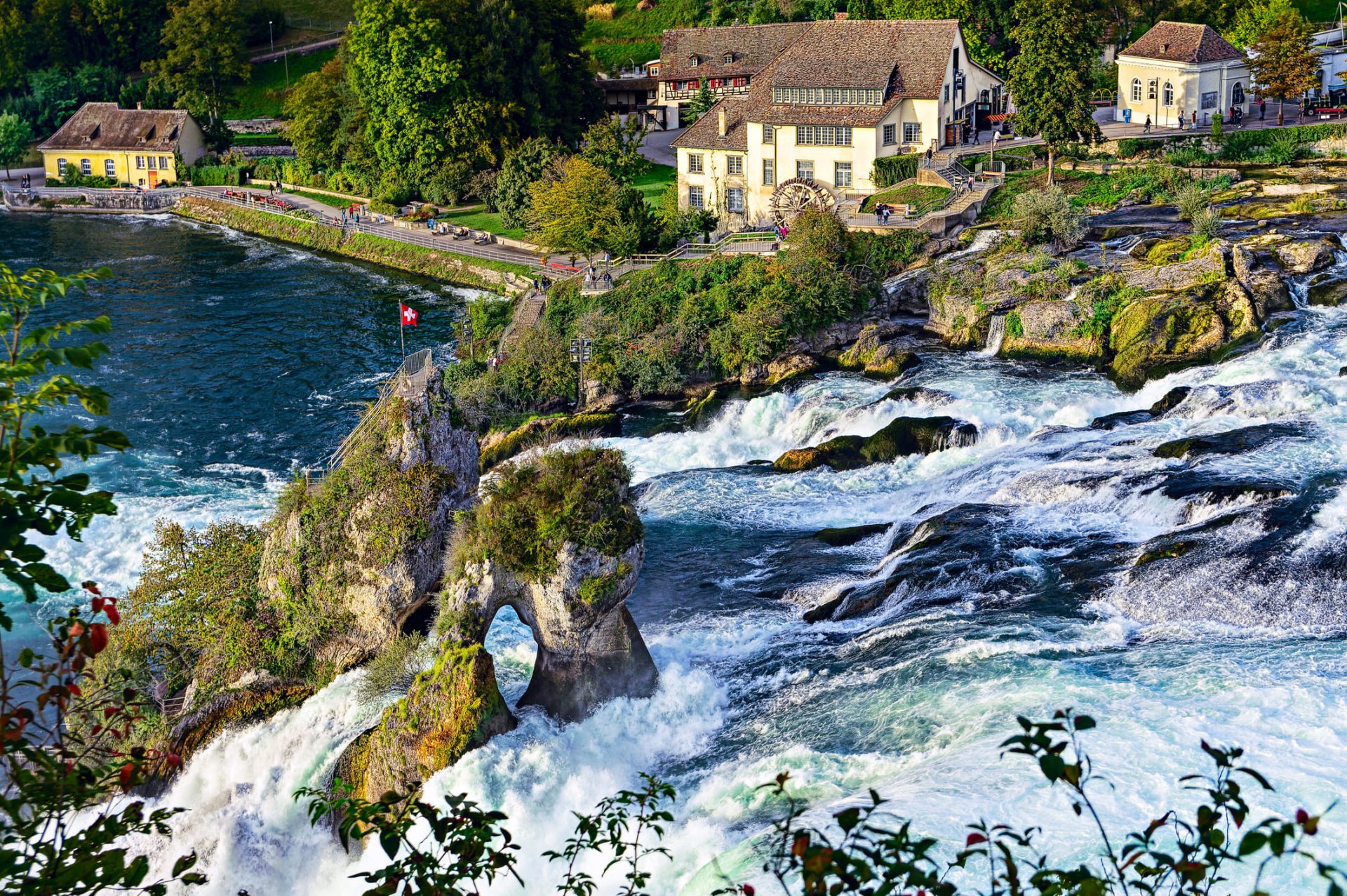
In the afternoon, you cross into Switzerland and arrive at the Rhine Falls, near Schaffhausen, the most powerful waterfall in Europe. Here, the Rhine, which flows all the way from the Swiss Alps to the North Sea, suddenly drops over a ledge of rock 150 metres wide and 23 metres high, roaring and foaming. Today, you get even closer than most visitors, with a boat ride on the river below the falls. The boat takes you right into the swirling water at the foot of the falls, where you feel the spray on your face, hear the thunder of the water all around you and see the full power of the falls up close. Some boats even take visitors to the great rock in the middle of the falls, where steps lead up to a viewing platform surrounded by rushing water. It's an exhilarating experience.

After your visit, you continue through the green hills and orchards of northern Switzerland to your hotel in Central Switzerland, which will be your home for the next three nights. Unpack, relax and enjoy dinner after a wonderful day.

As you cross into Switzerland, you'll notice the change straight away: the houses become neater, with window boxes full of red geraniums, the roads are spotless, and the meadows are dotted with cows wearing large bells, whose gentle ringing carries across the fields. Switzerland is a small country, smaller than the Indian state of Haryana, but it packs in an extraordinary variety of landscapes, from lakes and rolling farmland to some of the highest mountains in Europe.

Included today: Heidelberg Old Town visit with the Church of the Holy Spirit (outside view), Black Forest cuckoo clock demonstration, Rhine Falls boat ride, breakfast, lunch, dinner.

Good to know: today is a long day on the coach with several stops. Bring a light rain jacket for the boat ride, and keep your camera protected from the spray. Switzerland uses Swiss francs; euros and cards are widely accepted.

Day 10
Jungfraujoch, the Top of Europe, and Interlaken | The crowning jewel of your tour

Jungfraujoch, the Top of Europe, and Interlaken | The crowning jewel of your tour

⌖ Central Switzerland 🍽 Meals: Breakfast, Lunch, Dinner

Today is the highlight of many travellers' European tour: an excursion to Jungfraujoch, the Top of Europe, included in your tour cost. After breakfast, you drive to Interlaken, a picturesque town nestled between two lakes, Lake Thun and Lake Brienz, with the snowy peak of the Jungfrau gleaming in the distance.

Interlaken, whose name means "between the lakes", has been one of Switzerland's most popular resorts since the 19th century. Its main street, the Höheweg, is lined with grand old hotels, shops and cafés, and runs alongside a large green meadow, the Höhematte, where paragliders land after drifting down from the mountains. Interlaken has a special place in the hearts of Indian travellers. Many Bollywood films were shot in the region, especially by the director Yash Chopra, and a statue of him stands in the town.

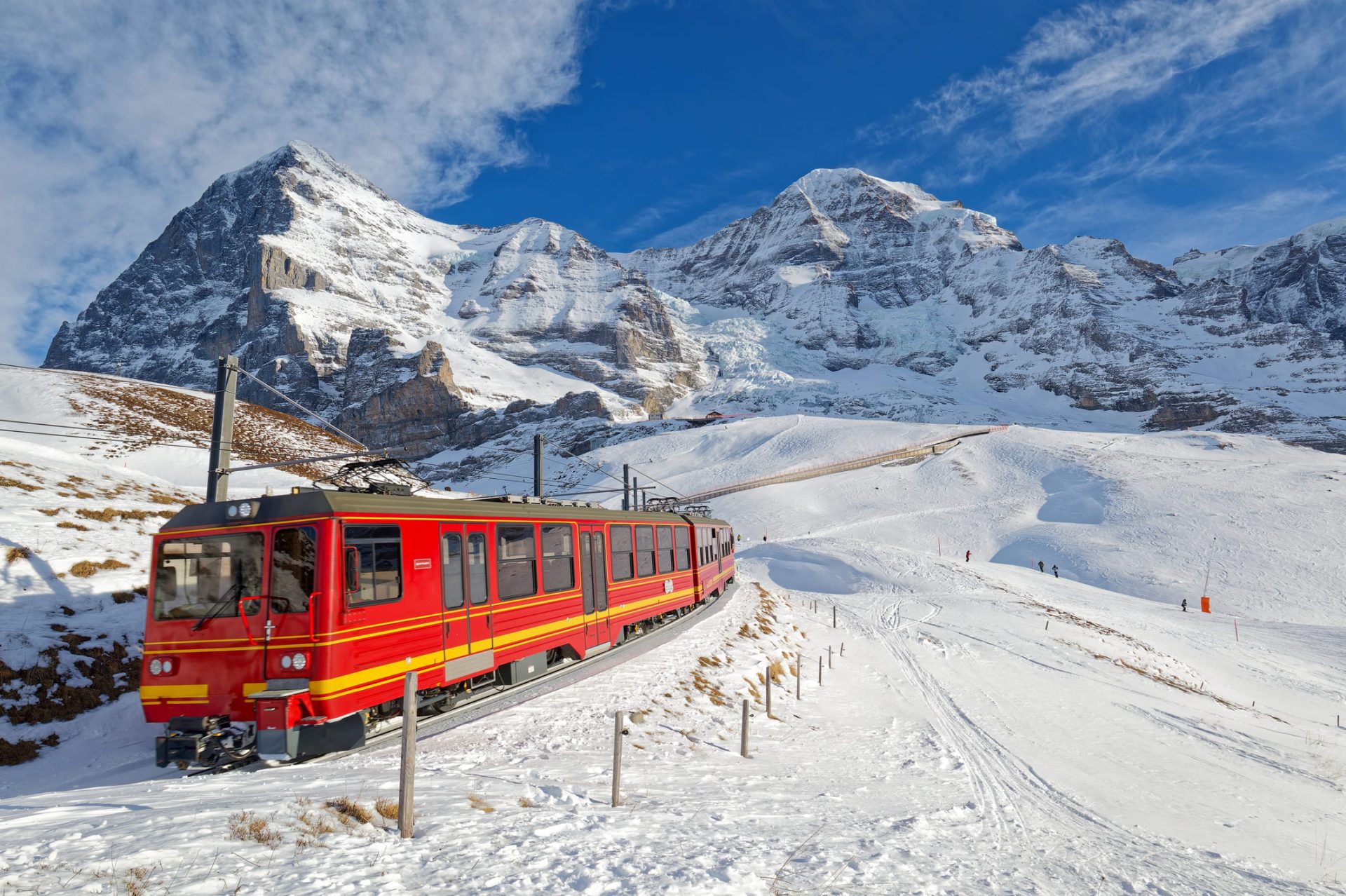
From Interlaken, you continue to the Grindelwald Terminal, the starting point for your journey up the mountain. The Eiger Express, a high-tech gondola opened in 2020, carries you in just 15 minutes up to the Eigergletscher station, gliding past the dramatic North Face of the Eiger, a sheer wall of rock and ice that has challenged mountaineers for generations. From Eigergletscher, you board the cogwheel train of the Jungfrau Railway, which climbs through tunnels deep inside the Eiger and Mönch mountains. Built between 1896 and 1912, this railway was one of the greatest engineering achievements of its time.

You arrive at Jungfraujoch, at 3,454 metres (11,333 feet), the highest railway station in Europe, in a world of eternal ice and snow. A lift takes you up to the Sphinx Observatory, where the view is simply breathtaking. Below you stretches the Aletsch Glacier, the longest glacier in the Alps, a vast river of ice around 20 kilometres long, flowing between the mountains, with dark lines of rock running along it. All around rise great snowy peaks, and on a clear day, the view reaches as far as France, Germany and Italy. The area is part of the Swiss Alps Jungfrau-Aletsch UNESCO World Heritage Site.

Inside the mountain, you explore the Ice Palace, a series of tunnels and caves carved into the glacier, where ice artists have created sculptures of animals and figures. The temperature here is always below freezing, and the walls of ice glow with a soft blue light. Then step outside onto the Plateau, where you can stand on the glacier, play in the snow and take pictures with the mountains behind you. At the Lindt Swiss Chocolate Heaven, you can see how Swiss chocolate is made and buy some to take home, and there's an Indian restaurant where you can warm up with a hot meal.

The air is thin at this altitude, so move slowly, avoid running and drink plenty of water. Some people feel slightly dizzy or short of breath at first; if you do, sit down and rest. The sun is strong on the snow, so sunglasses and sunscreen are essential.

In the afternoon, you descend back to the valley and return to your hotel for dinner, with memories of a day spent on top of Europe.

The story of the Jungfrau Railway is a remarkable one. In 1893, the Swiss industrialist Adolf Guyer-Zeller was hiking in the mountains when he had the idea of building a railway to the summit of the Jungfrau. Most people thought it was impossible. Work began in 1896, and hundreds of workers, many of them from Italy, spent years drilling and blasting through the hard rock of the Eiger and the Mönch, often in freezing conditions, with only simple tools and dynamite. Guyer-Zeller died in 1899, before the railway was finished, and in the end it stopped at the Jungfraujoch, the saddle between the Mönch and the Jungfrau, rather than the summit itself. It finally opened on 1 August 1912, Swiss National Day, and has carried millions of visitors since.

The mountains around you are famous in the history of mountaineering. The Eiger's North Face, which you passed on the way up, was first climbed in 1938, after many climbers had lost their lives trying. Its dark, sheer wall, nearly 1,800 metres high, is still one of the greatest challenges in climbing, and in German its name, Nordwand, "north wall", is often jokingly changed to Mordwand, "murder wall". The three peaks of the Eiger, Mönch and Jungfrau, which mean "ogre", "monk" and "maiden", have a local legend: the monk stands between the ogre and the maiden to protect her.

At the top, don't forget to send a postcard from the post office at Jungfraujoch, one of the highest in Europe; family and friends at home will love receiving a card stamped at the Top of Europe.

As your train descends, look out for the green meadows, waterfalls and chalets of the valleys below, a striking contrast to the white world of the summit. If the weather is clear, the views on the way down are among the most beautiful in Switzerland.

Included today: Interlaken visit, Jungfraujoch excursion with the Eiger Express and the Jungfrau Railway, Ice Palace, Sphinx Observatory, breakfast, lunch, dinner.

Good to know: it's cold at the top even in summer, so take warm layers, gloves, sunglasses and sunscreen. Guests with heart or breathing conditions should check with their doctor before going to high altitude. On cloudy days, the views may be limited.

Day 11
Mt. Titlis, Lucerne and the Lindt Home of Chocolate | Snow, a city on the lake and a world of chocolate

Mt. Titlis, Lucerne and the Lindt Home of Chocolate | Snow, a city on the lake and a world of chocolate

⌖ Central Switzerland 🍽 Meals: Breakfast, Lunch, Dinner

Today brings another Alpine summit, a beautiful lakeside city and a sweet treat to finish the day. After breakfast, you drive to Engelberg, a village tucked into a valley at the foot of Mt. Titlis, and begin your ascent of the mountain.

The journey up is made in stages, by gondola and cable car, over meadows, forests and the little mountain lake of Trübsee, and then up the steep rock face. The final stage is on the Titlis Rotair, the world's first revolving cable car, which slowly rotates through 360 degrees as it climbs, so that everyone on board enjoys an uninterrupted view of the cliffs, glaciers and peaks. At the top, at 3,020 metres, you step out into a world of snow, even in the middle of summer.

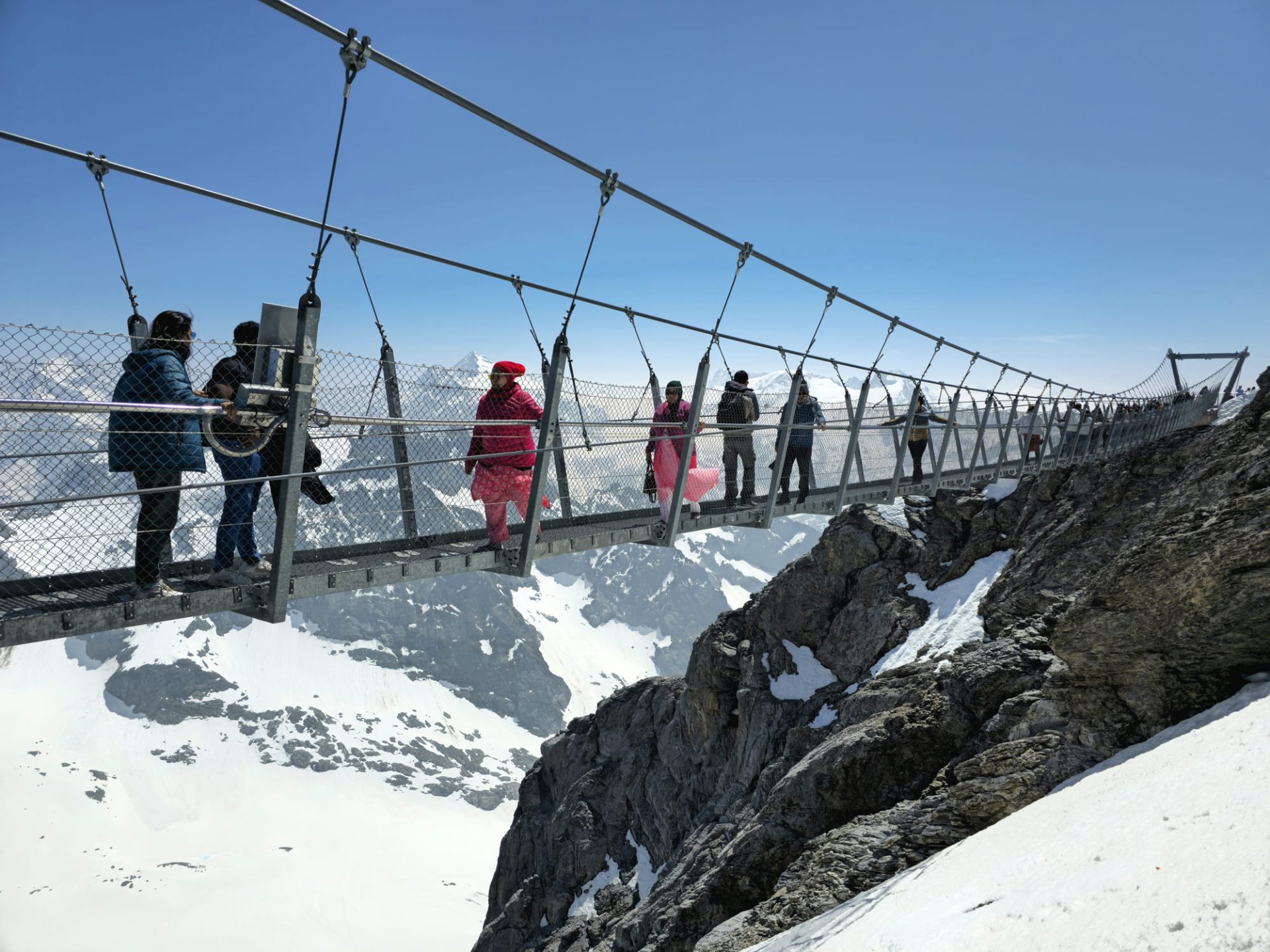
At the summit, you'll find plenty to do. Walk through the Glacier Cave, a tunnel cut into the glacier, where the ice glows blue around you. Test your nerves on the Titlis Cliff Walk, the highest suspension bridge in Europe, which hangs over a sheer drop of 500 metres, swaying gently as you cross. Play in the snow at the Glacier Park, where you can slide down the slopes on snow tubes and sledges. And from the viewing terraces, you can look out over a sea of peaks, with the Bernese Alps on the horizon.

In the afternoon, you drive to Lucerne, one of the most beautiful cities in Switzerland, on the shores of Lake Lucerne. On a brief orientation tour, you see the Lion Monument, a huge sculpture of a dying lion carved into a sandstone cliff, a memorial to the Swiss Guards who died defending the French king and queen in Paris in 1792. You also see the Chapel Bridge (Kapellbrücke), a wooden covered bridge from the 14th century, which crosses the River Reuss at an angle, decorated with flowers along its sides and painted panels under its roof, with the stone Water Tower standing beside it in the river. The old town, with its painted houses, fountains and little squares, is perfect for a stroll.

Then it's time for a treat: the Lindt Home of Chocolate in Kilchberg, near Zurich, on the shore of Lake Zurich, the world's largest chocolate museum, opened in 2020. As you enter, you're greeted by the world's largest free-standing chocolate fountain, about nine metres high, in which around 1,500 litres of liquid chocolate flows down from a giant golden whisk into a huge Lindor ball. The interactive exhibition takes you on a journey through the history of chocolate, from the cocoa plantations of Ghana and Ecuador to the inventions that made Swiss chocolate famous. You'll learn how the Swiss chocolatier Rodolphe Lindt invented the conching machine in 1879, which made chocolate smooth and melt-in-the-mouth for the first time. Along the way, there are tastings of different chocolates, and at the end, you can visit the largest Lindt chocolate shop in the world, where it's very hard to resist filling a bag with treats for friends and family back home.

Switzerland and chocolate go together like the Alps and snow. The Swiss eat more chocolate per person than almost any other country, around 11 kilograms each a year, and Swiss inventors were behind many of the great developments in chocolate making, including milk chocolate, created by Daniel Peter in 1875 using the condensed milk of his neighbour Henri Nestlé. After this sweet end to a busy day, you return to your hotel for dinner.

Lucerne is a city that seems made for postcards. It sits where the River Reuss flows out of Lake Lucerne, with the old town on both banks, connected by wooden bridges, and the mountains of Pilatus and Rigi rising on either side. The city's medieval walls, the Musegg Wall, still stand on a hill above the old town, with nine towers, several of which you can climb in summer for views over the rooftops and the lake. One of them, the Zyt Tower, has the oldest clock in the city, which is allowed to strike each hour one minute before all the others.

In the old town, the squares are surrounded by houses whose fronts are painted with colourful scenes from history and legend, and little fountains splash in the middle of the cobbled streets. The shops along the river sell everything that Switzerland is famous for: watches from the great Swiss brands, Swiss Army knives with dozens of tools, cuckoo clocks, music boxes, embroidered linens and, of course, chocolate.

As you leave Lucerne, take one last look at the lake, with its old paddle steamers, white sails and the snowy peaks reflected in the clear blue water. It's one of the most beautiful views in Switzerland.

Included today: Mt. Titlis with the Rotair cable car and Cliff Walk, Lucerne orientation tour with the Lion Monument and the Chapel Bridge, Lindt Home of Chocolate entry, breakfast, lunch, dinner.

Good to know: bring warm clothes for Titlis and lighter ones for Lucerne. The Cliff Walk may close in bad weather. Remember that chocolate melts in the summer heat, so pack it carefully.

Day 12
Vaduz, Liechtenstein, Swarovski Crystal Worlds and Innsbruck | A tiny principality, a sparkling wonderland and an Alpine city

Vaduz, Liechtenstein, Swarovski Crystal Worlds and Innsbruck | A tiny principality, a sparkling wonderland and an Alpine city

⌖ Innsbruck / Seefeld 🍽 Meals: Breakfast, Lunch, Dinner

Today you visit three countries in one day. After breakfast, you check out of your hotel and leave Switzerland, driving east along the Rhine valley to Vaduz, the capital of Liechtenstein.

Liechtenstein is one of the smallest countries in the world, only about 160 square kilometres, about 25 kilometres from north to south, with a population of around 40,000. It lies entirely within the Alps, between Switzerland and Austria, and it's one of only two countries in the world that are doubly landlocked, surrounded entirely by countries that are themselves landlocked; the other is Uzbekistan. Liechtenstein is a principality, ruled by a prince whose family, the House of Liechtenstein, has given the country its name. It has no army of its own, uses the Swiss franc as its currency, and is one of the richest countries in the world per person. It's also famous for its postage stamps, which collectors around the world prize for their beautiful designs, and for being the world's largest producer of false teeth.

In Vaduz, a small, peaceful town with a population of about 6,000, you take a guided ride on a mini tourist train, which winds through the town and up into the vineyards on the hillside. As the train glides along, you'll see the modern government buildings and museums in the town centre, the neo-Gothic St. Florin's Cathedral, the vineyards of the prince, and above them all, Vaduz Castle, perched on a cliff overlooking the town, the official residence of the Prince of Liechtenstein. The castle isn't open to the public, because the prince's family still lives there, but its white walls and red-roofed towers make a wonderful photograph. From the train, you'll also see beautiful views across the Rhine valley to the Swiss mountains on the other side.

After your visit, you drive on into Austria, through the Arlberg region and the mountains of the Tyrol, to Wattens, home of the Swarovski Crystal Worlds. Swarovski was founded in 1895 by Daniel Swarovski, who invented an electric machine for cutting crystal glass with great precision, and the Crystal Worlds were created for the company's 100th anniversary. You enter through the mouth of a giant, grass-covered head with glittering crystal eyes, and inside, you walk through the Chambers of Wonder, rooms designed by famous artists and designers, each one filled with light, mirrors and crystal. In the Crystal Dome, you stand inside a sparkling, mirrored dome that makes you feel as if you're inside a crystal yourself. Outside, the gardens feature a crystal cloud of hundreds of thousands of crystals floating above a mirror pond, a playground for children, and the store, where you can shop for jewellery, figurines and gifts.

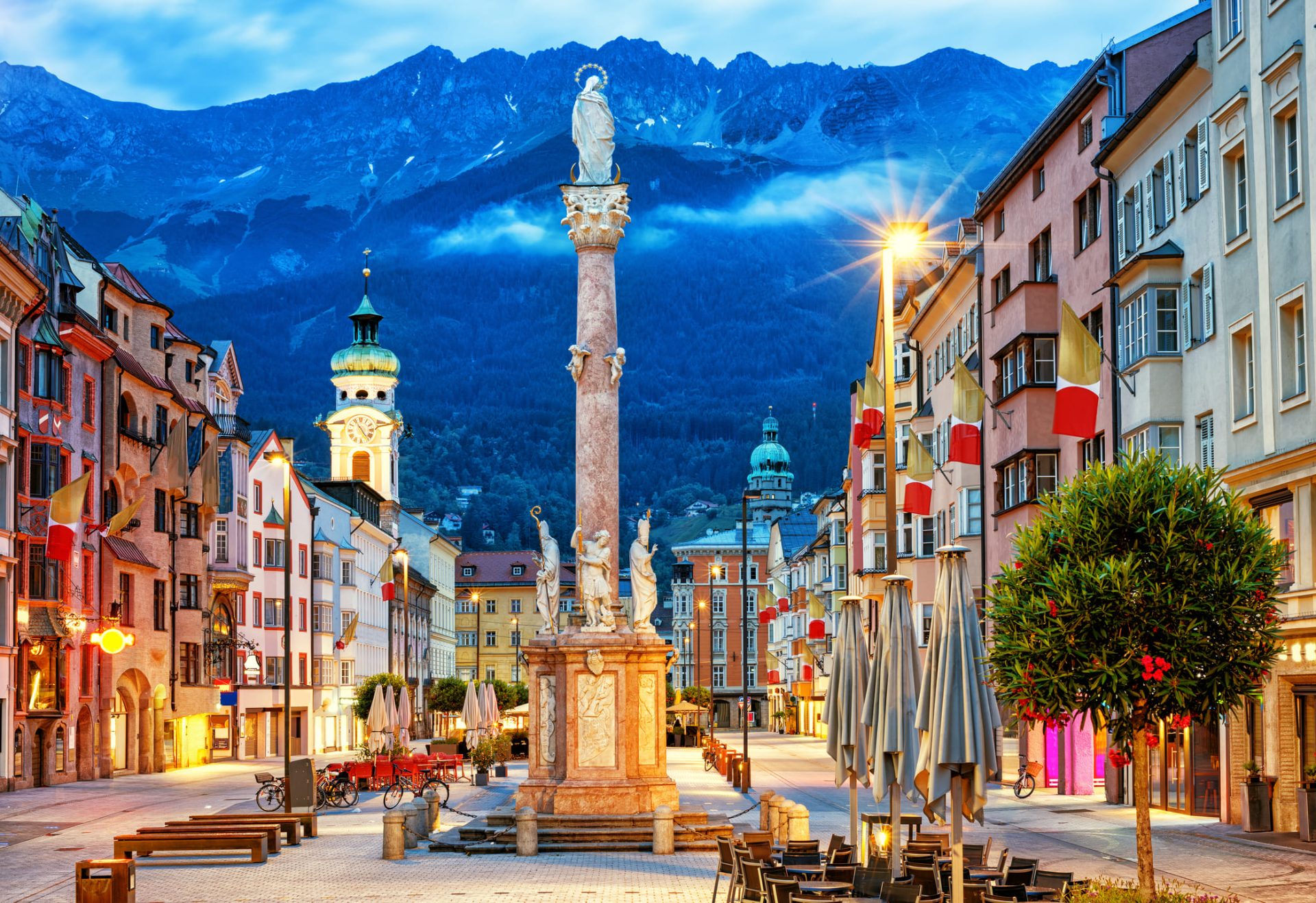
In the late afternoon, you arrive in Innsbruck, the capital of the Tyrol, a lively city surrounded by mountains, which has hosted the Winter Olympics twice. On your orientation tour, you see the Golden Roof, a balcony covered with 2,657 fire-gilded copper tiles, built around 1500 for Emperor Maximilian I, and you stroll along the Maria-Theresien-Strasse, with its colourful baroque buildings, outdoor cafés and stunning view of the mountains at the end of the street. It's the perfect place to try Austrian apple strudel or a slice of Sachertorte.

In the evening, you check in to your hotel in Innsbruck or the Alpine village of Seefeld for dinner and the night.

The drive from Liechtenstein to Innsbruck is one of the most scenic of the whole tour. The road climbs out of the Rhine valley into the Austrian province of Vorarlberg and passes beneath the Arlberg mountains, home to some of the most famous ski resorts in the Alps, such as St. Anton and Lech. In summer, these resorts are green and peaceful, with wildflowers covering the slopes where skiers race down in winter. Then the road follows the valley of the River Inn eastwards, past castles on rocky outcrops, onion-domed churches, wooden farmhouses with balconies overflowing with geraniums, and meadows where cows graze beneath the mountains.

Austria is a country with a rich musical and imperial history. For more than six centuries, it was ruled by the Habsburg family, one of the most powerful dynasties in European history, whose empire once stretched across much of central Europe. Vienna, its capital, was the home of Mozart, Beethoven, Haydn and Strauss, and the country is still famous for its classical music, its grand coffee houses and its pastries. The Tyrol, the region you're visiting, is proud of its mountain traditions: folk music, yodelling, traditional costumes such as lederhosen and dirndls, and hearty food such as dumplings and strudel.

Innsbruck itself has a lively, youthful feel, thanks to its large university, and it's one of the few cities in the world where you can take a funicular and cable car from the city centre to a mountain ridge at more than 2,000 metres in about half an hour. Locals often go skiing or hiking before work, and the mountains are part of everyday life.

Included today: Vaduz visit with a guided mini train ride, Swarovski Crystal Worlds entry, Innsbruck orientation tour with the Golden Roof and Maria-Theresien-Strasse, breakfast, lunch, dinner.

Good to know: today you visit three countries, so keep your passport handy, although there are usually no border checks. Liechtenstein uses the Swiss franc; Austria uses the euro.

Day 13
Venice and a gondola ride | A floating city of canals, palaces and bridges

Venice and a gondola ride | A floating city of canals, palaces and bridges

⌖ Padova/ Ferrara 🍽 Meals: Breakfast, Lunch, Dinner

Today you cross the Alps into Italy, the ninth country of your journey, and arrive in Venice, one of the most extraordinary cities on earth. After breakfast and check-out, you drive south over the Brenner Pass, the gateway between the German-speaking north and the Italian south, through the vineyards and orchards of the South Tyrol, and down onto the plains of the Veneto.

At the pier, you board a private boat and set off across the lagoon. Few arrivals anywhere in the world are as magical as this: as the boat skims over the water, Venice appears ahead of you, its bell towers and domes rising straight out of the sea, its palaces glowing pink, cream and gold in the sunlight.

Venice is built on 118 small islands in a shallow lagoon, linked by more than 400 bridges. The city has no cars, no motorbikes and not even bicycles in its historic centre; everyone walks or travels by boat. Water buses called vaporetti carry passengers along the canals, water taxis speed between the islands, and delivery boats bring everything the city needs, from fruit and vegetables to building materials. For more than a thousand years, Venice was an independent republic, a great sea power that traded with Constantinople, Egypt and the East, and its wealth paid for the magnificent palaces, churches and works of art you see all around you.

You land near St. Mark's Square, the grandest square in Venice and the only one called a piazza; all the others are called campi. Here you see St. Mark's Basilica, a breathtaking example of Byzantine architecture, with its five domes, its marble columns and its golden mosaics glittering in the sunlight. You see the Bell Tower, the tallest building in Venice, from whose top Galileo is said to have demonstrated his telescope to the leaders of Venice in 1609, and the Clock Tower, with its blue and gold dial showing the hour, the signs of the zodiac and the phases of the moon. Beside the Doge's Palace, the former seat of Venice's government, you see the Bridge of Sighs, the white limestone bridge over the Rio di Palazzo that connected the courtrooms to the prison. Its name comes from the romantic idea that prisoners sighed as they caught their last glimpse of beautiful Venice through its small windows.

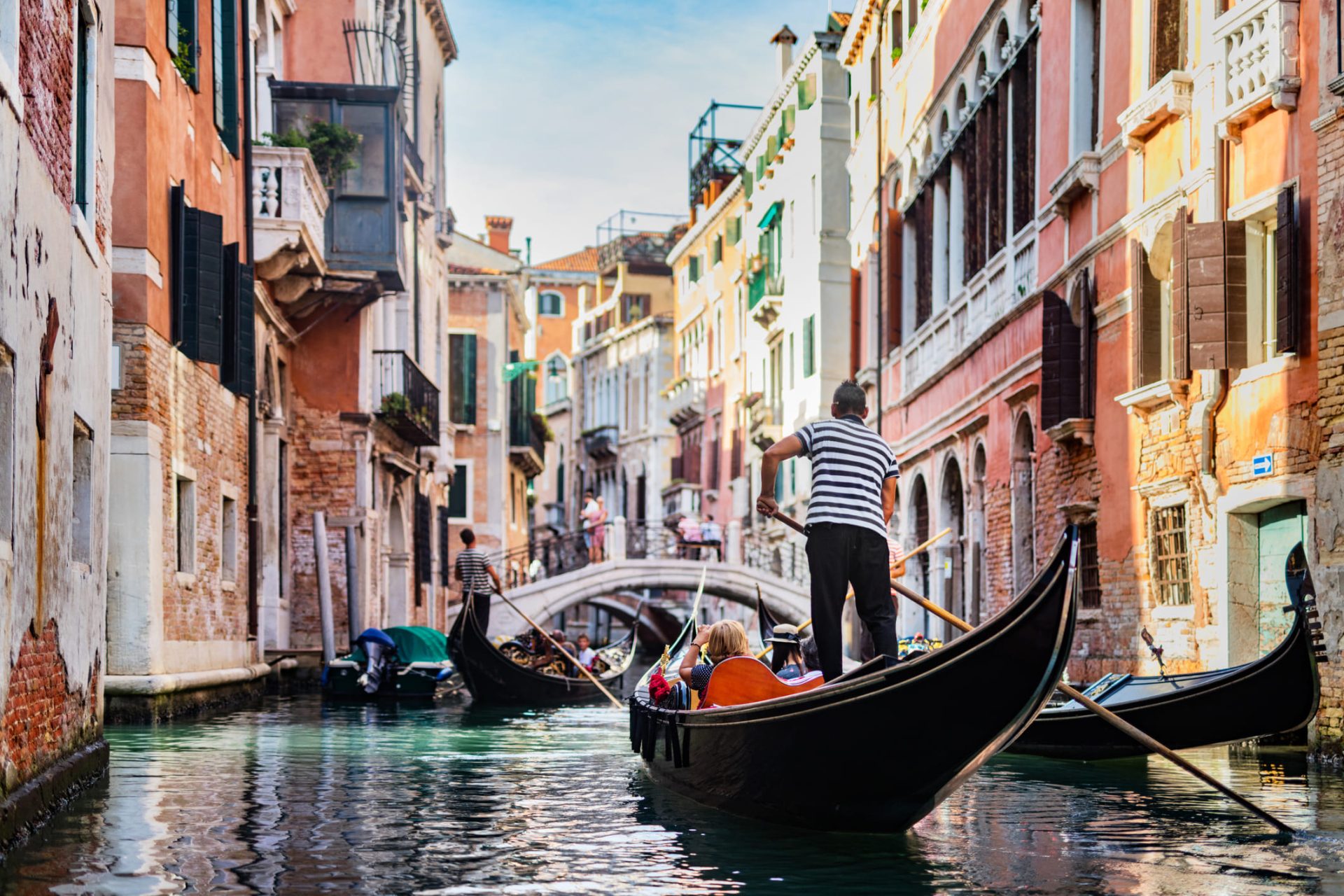
Then comes the moment everyone looks forward to: a gondola ride. You step into the sleek black gondola, settle back on the cushioned seats and let the gondolier, in his striped shirt and straw hat, steer you gently through the narrow canals. The only sounds are the splash of the oar, the calls of the gondoliers warning each other at blind corners, and perhaps the distant music of an accordion. You glide under little stone bridges, past old palaces with their doorsteps at water level, washing hanging from windows high above, and window boxes full of flowers. It's quiet, romantic and utterly unforgettable, and it's the best way to see the hidden heart of Venice.

Gondolas have been part of Venetian life for nearly a thousand years. In the 16th century, there were thousands of them, many richly decorated, until a law ordered that they should all be painted black, to stop wealthy families from competing to show off. Each gondola is about 11 metres long and is built by hand from several types of wood in a traditional boatyard called a squero.

After your ride, enjoy some free time to wander the lanes. Try a scoop of Italian gelato, browse the shops selling Murano glass and carnival masks, or simply sit in a café and watch the life of the city. In the evening, you return to the pier and drive to your hotel in the Padova or Ferrara area for dinner.

Venice's famous Grand Canal winds through the city in a graceful S-shape for nearly four kilometres. It's lined with more than 170 grand palaces, built over many centuries by the city's wealthy merchant families, and crossed by only four bridges, the most famous being the Rialto, a single stone arch lined with shops, completed in 1591. Every September, the Grand Canal hosts the Regata Storica, a historic boat race and parade of beautifully decorated boats, with rowers in Renaissance costumes.

As you leave Venice behind across the lagoon, turn around for one last look: the domes and bell towers glowing in the late afternoon light make one of the most beautiful farewells in Italy.

Included today: private boat transfer to St. Mark's Square, Venice orientation tour with St. Mark's Basilica, the Bell Tower, the Clock Tower and the Bridge of Sighs (outside views), gondola ride, breakfast, lunch, dinner.

Good to know: gondolas are shared, usually by up to five or six guests. Venice may charge a day-visitor access fee on some peak days; we'll let you know if it applies. Venice is crowded in summer, so keep your belongings close.

Day 14
Florence and the Leaning Tower of Pisa | Renaissance treasures and Italy's most famous tower

Florence and the Leaning Tower of Pisa | Renaissance treasures and Italy's most famous tower

⌖ Tuscany region 🍽 Meals: Breakfast, Lunch, Dinner

Today you travel into Tuscany to visit Florence, the cradle of the Renaissance, and Pisa, home of the famous Leaning Tower. After breakfast and check-out, you drive south through the Apennine mountains, which form the backbone of Italy, and down into the valley of the River Arno.

Florence is a city that changed the world. In the 14th and 15th centuries, it was one of the richest cities in Europe, and its bankers, merchants and rulers, above all the Medici family, spent their fortunes on art, architecture and learning. Under their patronage, artists such as Giotto, Brunelleschi, Botticelli, Leonardo da Vinci and Michelangelo created works that are still admired as some of the greatest in history. The ideas of the Renaissance, the "rebirth" of the art and learning of ancient Greece and Rome, spread from here across Europe.

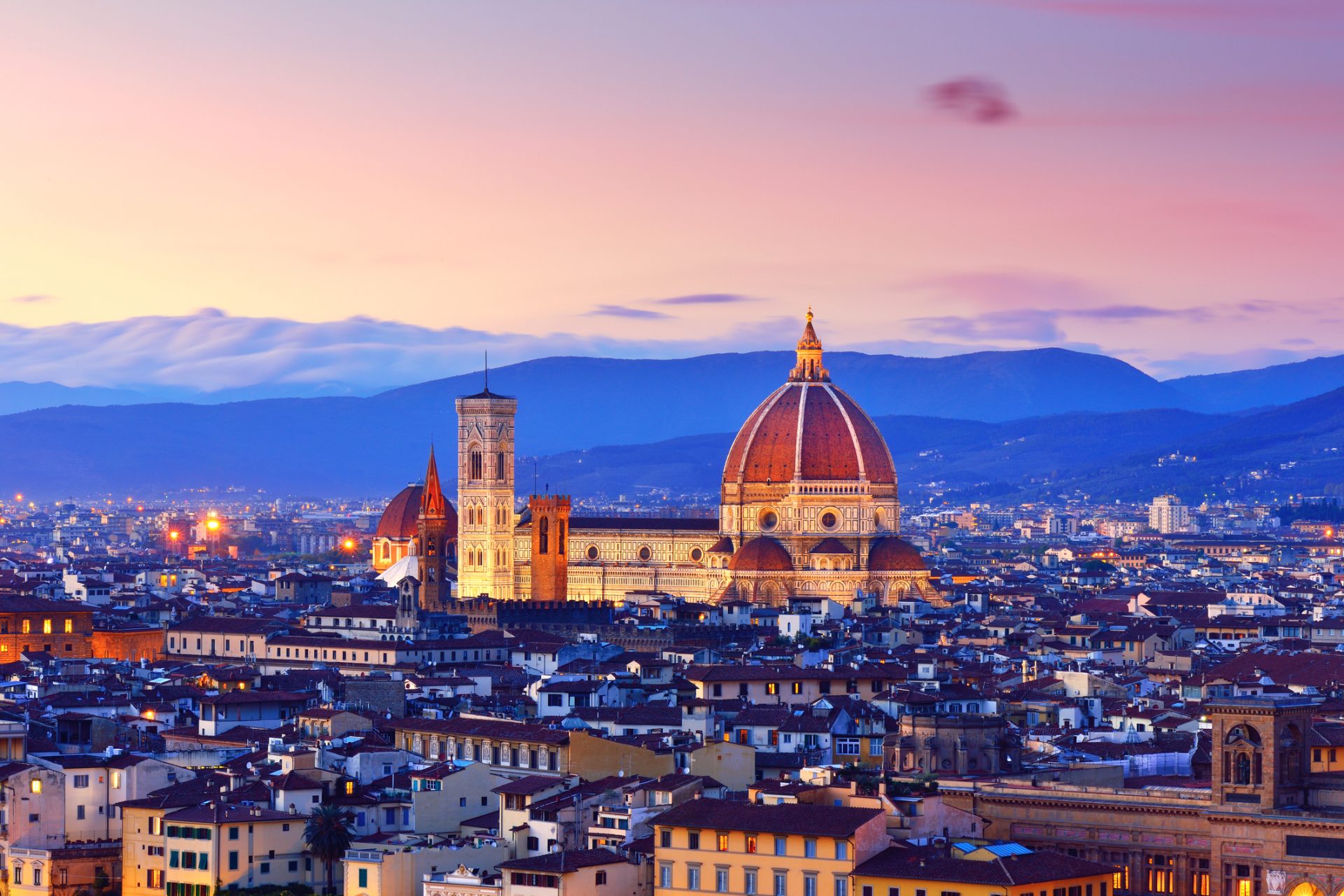
With your English-speaking local guide, you walk through the historic centre. You begin at the Duomo, the Cathedral of Santa Maria del Fiore, the city's most recognisable symbol. Its exterior is covered in green, white and pink marble, and its enormous red dome, designed by Filippo Brunelleschi and completed in the 15th century, still dominates the skyline of Florence. More than 4 million bricks were used to build it, and Brunelleschi invented new machines and techniques to raise them without wooden scaffolding from the ground. Beside the cathedral rises the Campanile, the bell tower designed by the painter Giotto, 85 metres tall, and opposite stands the octagonal Baptistery, with its famous gilded bronze doors by Lorenzo Ghiberti, which Michelangelo is said to have called the Gates of Paradise.

You then walk to the Piazza della Signoria, the city's main square, which is like an open-air museum filled with Renaissance sculptures. Here stands the Palazzo Vecchio, the fortress-like town hall with its slender tower, and in front of it a copy of Michelangelo's David, along with other statues and the Neptune Fountain. Beside the square is the Uffizi Gallery, one of the most famous art museums in the world, home to Botticelli's Birth of Venus. Finally, you reach the Ponte Vecchio, the medieval bridge over the Arno, lined with little shops that have sold gold and jewellery since the 16th century, when the Medici ruler ordered the butchers who traded there to move out and make way for goldsmiths.

Florence is also famous for its leather goods, and the city's markets and workshops are full of bags, belts, jackets and wallets. It's also a good place to taste real Italian gelato, as the Florentines claim to have invented it.

In the afternoon, you drive to Pisa and walk into the Square of Miracles, a vast green lawn where the city's great white marble buildings stand together: the cathedral, the baptistery, the cemetery and the bell tower that has made Pisa famous around the world, the Leaning Tower. Construction began in 1173, and the tower began to lean when only three of its eight storeys had been built, because the ground beneath it was too soft. Work stopped for almost a hundred years, and when it resumed, the builders tried to compensate by making the upper storeys taller on the lower side. The tower has leaned ever since, and in the late 20th century, engineers spent years stabilising it so that it won't fall. Today, it leans by about four degrees, and visitors from around the world come to take the classic photo, pretending to hold it up or push it over.

In the evening, you check in to your hotel in the Tuscany region for dinner, perhaps with views of the Tuscan hills in the golden evening light.

Tuscany is one of the most beautiful regions of Italy, and the drive between Florence and Pisa gives you a glimpse of its countryside: rolling green hills, rows of tall, dark cypress trees, olive groves with silvery leaves, vineyards and old stone farmhouses with terracotta roofs. The region is famous for its food and wine, including Chianti wine, extra virgin olive oil, rustic bread, beans and the famous Florentine steak. Tuscan cooking is simple and based on excellent local ingredients, and many of Italy's best-loved dishes come from here.

Pisa itself was once a great maritime republic, a rival of Venice and Genoa, whose ships traded across the Mediterranean in the Middle Ages. Its wealth paid for the magnificent buildings of the Square of Miracles. The city is also home to one of Italy's oldest and most respected universities, founded in 1343, and the great scientist Galileo Galilei was born here in 1564.

Included today: guided walking tour of Florence, visit to the Square of Miracles in Pisa with the Leaning Tower (outside view), breakfast, lunch, dinner.

Good to know: the Florence tour covers the sights from outside; museum and cathedral entries are not included. Florence can be very hot in summer, so carry water and a hat.

Day 15
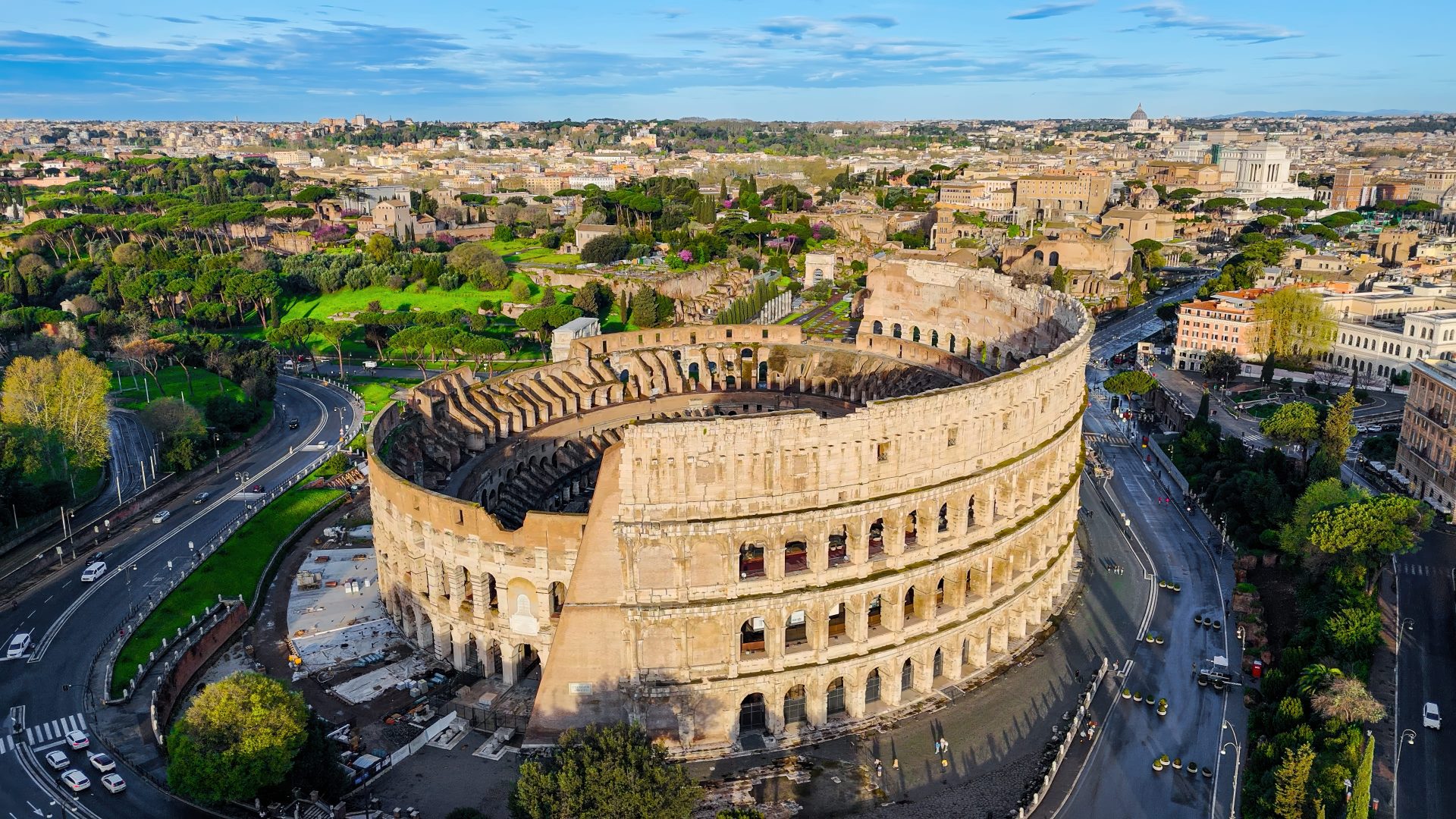
Rome: the Vatican, the Sistine Chapel or the Colosseum, and the Trevi Fountain | The Eternal City

Rome: the Vatican, the Sistine Chapel or the Colosseum, and the Trevi Fountain | The Eternal City

⌖ Rome 🍽 Meals: Breakfast, Lunch, Dinner

Today you arrive in Rome, the Eternal City, for the grand finale of your sixteen-day journey. After breakfast and check-out, you drive south through Tuscany, Umbria and Lazio, past hilltop towns, olive groves and vineyards, to the Italian capital.

Your orientation tour of Rome begins with the Vatican City, the smallest country in the world, the spiritual centre of the Catholic Church and the home of the Pope. The tenth country of your tour, it covers just 44 hectares, with a population of only a few hundred people, yet it holds some of the greatest treasures of art and history on earth.

On most departures, you enter the Vatican Museums, one of the largest and most important museum collections in the world, gathered by the Popes over five centuries. You walk through long galleries lined with ancient Roman and Greek statues, past walls hung with tapestries and maps, and through the rooms painted by Raphael, before entering the Sistine Chapel. Here, on the ceiling, Michelangelo painted the stories of Genesis between 1508 and 1512, lying on scaffolding high above the floor, including the famous Creation of Adam, in which God reaches out to give life to the first man, their fingers almost touching. On the altar wall is his huge and powerful painting of The Last Judgement, completed more than twenty years later. The Sistine Chapel is also where the cardinals meet in secret to elect a new Pope, and the world watches the chapel's chimney for the white smoke that announces their choice.

You then visit St. Peter's Basilica, the largest church in Christendom, built over the tomb of St. Peter. Inside, you'll see Michelangelo's beautiful Pietà, his great dome soaring above the altar, and Bernini's magnificent bronze canopy, as well as countless marble statues, mosaics and tombs of Popes. Outside, St. Peter's Square, embraced by Bernini's colonnades, is where crowds gather to hear the Pope speak.

If tickets for the Vatican Museums aren't available on your date, your tour manager will let you know in advance, and you'll visit the inside of the Colosseum instead. The Colosseum is the largest amphitheatre ever built, opened in AD 80, where up to 50,000 spectators watched gladiator fights and wild animal hunts. Walking inside, you can see the arena floor, the tiers of seats and the underground tunnels where gladiators and animals once waited.

Your tour continues past the Colosseum and the Roman Forum, the heart of ancient Rome, where the ruins of temples, basilicas and triumphal arches mark the place where senators debated and emperors paraded in triumph. You see the Victor Emmanuel II Monument, a huge white marble monument built to honour the first king of a united Italy, nicknamed "the wedding cake" or "the typewriter" by Romans. It also holds Italy's Tomb of the Unknown Soldier. Then you visit the Trevi Fountain, the most beautiful fountain in Rome, where Ocean rides his shell-shaped chariot, pulled by sea horses, over cascading water. Turn your back to the fountain and toss a coin over your shoulder: legend says this ensures you'll return to Rome one day.

In the evening, you check in to your hotel and enjoy a farewell dinner with your fellow travellers, sharing your favourite memories of the past sixteen days.

Rome is a city where three thousand years of history are layered on top of one another. Ancient ruins stand beside medieval churches, Renaissance palaces and baroque fountains, and modern life carries on all around them. Romans drive their scooters past two-thousand-year-old temples, have their morning coffee in squares designed by Bernini, and walk their dogs past monuments that once belonged to emperors. According to legend, the city was founded in 753 BC by Romulus, who was raised with his twin brother Remus by a she-wolf, and the image of the wolf feeding the twins is still a symbol of Rome today, seen on everything from street signs to the badge of the city's football team.

Rome is also a city of piazzas and fountains. There are around 2,000 fountains in the city, from great baroque masterpieces to the small iron drinking fountains on street corners, called nasoni, which pour fresh, cold drinking water from the hills. Fill your bottle at one of them as you explore.

And of course, Rome is a city of food. Roman cooking is famous for its simple, delicious pasta dishes, such as carbonara and cacio e pepe, its thin, crispy pizza, and its gelato, which you'll find in every neighbourhood. In the evening, Romans take their passeggiata, a leisurely stroll through the streets and squares before dinner, and it's lovely to join them if you have a few free minutes.

Included today: Rome orientation tour, Vatican Museums and Sistine Chapel entry (or the Colosseum with entry if Vatican tickets are unavailable), St. Peter's Basilica, views of the Colosseum, Roman Forum and Victor Emmanuel Monument, Trevi Fountain, breakfast, lunch, dinner.

Good to know: shorts and sleeveless tops are not allowed in the Vatican, so dress with shoulders and knees covered. Queues at the Vatican Museums can take around 1.5 hours in summer. Photography is not allowed in the Sistine Chapel.

Day 16
Departure from Rome | The end of a grand European journey

Departure from Rome | The end of a grand European journey

⌖ Rome 🍽 Meals: Breakfast

Your sixteen-day European journey comes to an end today. After breakfast, you check out of your hotel, say goodbye to the friends you've made along the way and to your tour manager, and transfer to the airport for your flight home.

As you travel, think back over everything you've experienced. You've visited ten countries: the United Kingdom, France, Belgium, the Netherlands, Germany, Switzerland, Liechtenstein, Austria, Italy and the Vatican City. You've seen the Crown Jewels and the Kohinoor in the Tower of London, stood in the Long Room at Lord's and watched the Changing of the Guard. You've crossed under the sea, stood at the top of the Eiffel Tower, seen Paris sparkle by night and spent a magical day at Disneyland. You've admired the Grand Place in Brussels, walked among the miniature monuments of Mini-Europe, seen the tulips or windmills of Holland and cruised along the canals of Amsterdam. You've strolled through Heidelberg, watched cuckoo clocks being made in the Black Forest and felt the spray of the Rhine Falls from a boat. You've stood on the glacier at Jungfraujoch, crossed the Cliff Walk on Titlis and tasted chocolate at the Lindt Home of Chocolate. You've ridden a mini train in Liechtenstein, marvelled at Swarovski's crystals and seen the Golden Roof of Innsbruck. And in Italy, you've glided through Venice in a gondola, gazed at Brunelleschi's dome, held up the Leaning Tower of Pisa and seen Michelangelo's masterpieces in the Vatican.

That's a remarkable amount of history, art, culture and natural beauty for one holiday, and it's the kind of journey that stays with you for the rest of your life.

If you have a little time before your transfer, enjoy one last Italian cappuccino and a cornetto at a café, or buy a few final souvenirs, such as olive oil, pasta, limoncello or a small leather item. As you drive to Leonardo da Vinci Airport at Fiumicino, near the coast where the Tiber reaches the sea, you may see the umbrella pines that line the roads around Rome and the ancient walls of the city.

When you get home, take a day or two to rest and recover from the journey, and then enjoy sharing your photographs and stories with your family and friends. Many travellers say that the memories of a trip like this grow even richer with time, as you remember the little moments: a conversation with a fellow traveller, the taste of a waffle in Brussels, the hush of the gondola in a quiet canal, the first sight of the snow at Jungfraujoch.

Thank you for travelling with Dreamland Vacations. We hope to welcome you back on another journey soon. Arrivederci, and safe travels home!

A journey of this length also teaches you a lot about Europe and its people. You'll have noticed how quickly the language, the food, the architecture and even the landscape change as you cross from one country to the next, often within a few hours' drive. In London, you heard English and drank tea; in Paris, you were greeted with "bonjour" and tasted fresh croissants; in Brussels, you heard French and Dutch side by side; in the Netherlands, you saw bicycles everywhere; in Germany and Austria, you heard German and saw half-timbered houses and onion-domed churches; in Switzerland, you met a country of four languages and admired its precision; and in Italy, you were swept up in the warmth, the food and the beauty of a land that has given the world so much art.

You'll also have noticed how much these countries share. Many of them use the same currency, the euro; travellers cross their borders without passport checks, thanks to the Schengen agreement; and their history is deeply interwoven, from the days of the Roman Empire through the Renaissance, the age of kings and emperors, and the wars of the 20th century, to the peaceful cooperation of the European Union today.

Most of all, you'll carry home the memories of the people you travelled with. Over sixteen days, a group of strangers who met over dinner in London often becomes a group of friends, sharing jokes on the coach, helping each other with photographs and exchanging stories over meals. Many of our travellers stay in touch long after the tour ends, and some even plan their next journey together.

Before you fly, check that you have your passport, tickets and any tax-free shopping forms in your hand luggage, and make sure any liquids you're carrying, such as olive oil or limoncello, are packed in your checked baggage. Allow plenty of time at the airport, which can be busy in summer.

And when you're ready for your next adventure, whether it's the fjords of Scandinavia, the castles of Scotland, the cities of Spain and Portugal or somewhere further afield, we'll be here to help you plan it.

Included today: departure transfer, breakfast.

Good to know: hotel check-out is usually around 11 am. We'll confirm your transfer time when you book; please book a flight that leaves at least 3 hours after the transfer reaches the airport. If you've shopped in Italy, allow time to claim your VAT refund at the airport before check-in.

Hotel confirmation

Hotel names will be provided after booking, subject to availability and confirmation. We do not hold hotel confirmations before booking.

Inclusions

Hotels: Guaranteed 04 Star

Meals: All Meals Included

Sightseeing: All Tours included

Exclusions

Flights

Visa

Insurance

GST

TCS

Important Terms

Booking and payment

  • At booking: 30% of the tour cost per person.
  • 30 days before departure: the full balance.
  • Booking within 30 days of departure: 30% to book, and the balance as soon as your booking is confirmed.

Cancellation charges

From booking until 36 days before departure₹42,000 per person35 to 29 days before departure₹60,000 per person28 to 15 days before departure50% of the tour cost14 to 8 days before departure75% of the tour cost7 days or less before departure, or no-show100% of the tour cost


Is 15 days too long for Europe?

Not with this pace: you spend three nights each in London, Paris and Switzerland, so the longest stretches are broken up with full days in one place. It suits travellers who prefer one long trip to two shorter ones, including retired couples and families in the summer holidays.

Grand Wonders of Europe – 10 Countries, 15 Nights / 16 Days FAQs

Which 10 countries does this tour cover?
The United Kingdom, France, Belgium, the Netherlands, Germany, Switzerland, Liechtenstein, Austria, Italy and Vatican City.
Is the Vatican Museum visit included?
Yes, with a local guide; if it is closed on your date, the Colosseum is visited instead.
How much does a 2-week Europe trip cost from India?
It depends on the departure, room sharing and flights. Send us an enquiry for an exact quote.
Are flights included?
No. This is a land tour that starts in London and ends in Rome. We can add return flights from Delhi, Mumbai or your city, timed to match the group transfers.
Is Jain or vegetarian food available?
Yes. Most lunches and dinners are Indian meals with Jain, vegetarian and non-vegetarian options, and breakfast is a continental buffet at the hotel.
Gallery

Europe photos: Grand Wonders of Europe – 10 Countries, 15 Nights / 16 Days

Plan your Europe holiday with Dreamland Vacations

Share your dates, travellers and comfort preference. Our team will guide you with the next best step.

Get a free quote
Itinerary Get a quote
WhatsApp