Grand European Highlights – London to Rome, 9 Countries, 11 Nights / 12 Days
Standard Package

Grand European Highlights – London to Rome, 9 Countries, 11 Nights / 12 Days

Nine countries from London to Rome in 11 nights / 12 days at a good price: London and Lord's, Paris with the Eiffel Tower and a Seine cruise, Brussel…

⌖ Europe ✦ Family & senior friendly planning
Package snapshot
DestinationEurope
Travel styleStandard Package

Want to customize this package?

Share your dates and travellers. This enquiry is free. Small changes to a standard itinerary—such as a date change or an extra day—can be discussed with our team.

We’ll send verification codes to your WhatsApp number and email. Indian numbers can be entered without +91; for other countries, include the country code.
Verification required before submitting.
Your holiday

Grand European Highlights – London to Rome, 9 Countries, 11 Nights / 12 Days: overview

From the Thames to the Tiber, nine countries in twelve days

Imagine starting your holiday watching the guards march at Buckingham Palace and ending it tossing a coin into the Trevi Fountain in Rome, with the Eiffel Tower, the tulips of Holland, the Swiss Alps and the canals of Venice in between. This London to Rome tour package is the best-value way to combine Britain and the continent, and it's planned so that every day brings something new without you having to arrange a thing.

After two nights in London with a guided city tour, the Changing of the Guard, Lord's, the London Eye and Madame Tussauds, you take the Eurostar to Paris for the Eiffel Tower, a Seine cruise, Versailles and a city tour. You continue through Brussels to the Netherlands for Keukenhof (until 10 May) or Madurodam, then Heidelberg, the Black Forest, the Rhine Falls and two nights in Switzerland with Lucerne, Mt. Titlis and an optional Jungfraujoch day. You cross the Alps via Innsbruck to Venice and finish in Rome with the Vatican, St. Peter's Basilica, the Colosseum and the Trevi Fountain.

A professional tour manager travels with the group, you stay in 3 and 4-star hotels, and Indian lunches and dinners are included on most days. You need a UK visa and a Schengen visa, and our team helps with both. See all our Europe tour packages.

Good to know

Package typeStandard Package
Planning supportSmall changes by enquiry
Best forFamilies, couples & seniors
Get a free quote
Trip highlights
✦ Arrive in London | The first step of a journey across Europe
✦ London city tour, Changing of the Guard, Lord's Cricket Ground and the London Eye | Royal London and the Home of Cricket
✦ Madame Tussauds and the Eurostar to Paris | Stars in wax and a train under the sea
✦ Eiffel Tower, Seine cruise, Versailles and Paris city tour | A day of palaces, river views and the City of Light
✦ Brussels: the Grand Place and the Manneken Pis | Golden guildhalls, chocolate and waffles
✦ Keukenhof or Madurodam, then on to Germany | Flowers in bloom and Holland in miniature
Day-wise plan

Europe itinerary: day by day

Day 1
Arrive in London | The first step of a journey across Europe

Arrive in London | The first step of a journey across Europe

⌖ London 🍽 Meals: Dinner

Your grand journey from London to Rome begins today. As your plane descends towards London, look out of the window at the English countryside: a soft green patchwork of fields divided by hedgerows, small villages with church spires, and then the great sprawl of the city, with the River Thames curling through it like a silver ribbon. On a clear summer day, you may pick out the London Eye, the dome of St. Paul's and the glass towers of the City.

After you clear immigration and collect your bags, walk out into the arrivals hall, where your tour manager is waiting to greet you. From now on, everything is arranged: coaches, trains, hotels, guides, tickets and meals, across nine countries. All you need to do is enjoy the journey.

As the coach drives into the city, London unfolds around you: red double-decker buses and black taxis, grand terraces of white stucco houses, Victorian red-brick buildings, leafy squares, and pubs with flower baskets hanging over their doors. London has survived and reinvented itself many times. In 1666, the Great Fire of London began in a bakery on Pudding Lane and burned for four days, destroying much of the medieval city, including the old St. Paul's Cathedral; a tall stone column called the Monument, 61 metres high, still marks the spot, its height exactly matching its distance from where the fire started. The city was rebuilt, largely by the architect Sir Christopher Wren, who designed the new St. Paul's and dozens of other churches. Centuries later, during the Second World War, London endured months of bombing in the Blitz, and again it rebuilt itself. Today it's one of the world's great global cities, and the only one to have hosted the Summer Olympic Games three times, in 1908, 1948 and 2012.

Summer is a wonderful time to be in London. The days are long, with the sun setting after nine in the evening in June and July, and the city lives outdoors: in its great parks, on the banks of the Thames, at outdoor theatres and concerts, and at the tables outside its pubs and cafés. In June, the King's official birthday is celebrated with Trooping the Colour, a magnificent military parade of hundreds of soldiers, horses and musicians, followed by a fly-past of aircraft over Buckingham Palace. In July, the Wimbledon tennis championships fill the city with excitement, and in August, the Notting Hill Carnival brings a riot of music, costumes and dancing to the streets of west London.

For Indian travellers, London has a familiar warmth. More than a million people of Indian heritage live in Britain, and Indian culture is woven into the life of the city, from the temples of Neasden and the gurdwaras of Southall to the curry houses of Brick Lane and the Diwali celebrations in Trafalgar Square. Many Indian visitors are surprised by how at home they feel here.

Once you reach your hotel and check in, take time to rest after your long journey. If you have energy later, take a gentle walk around your neighbourhood to stretch your legs and get a feel for the city. You'll notice that Londoners walk fast, queue patiently, and say "sorry" and "thank you" a great deal; politeness is very much part of British life.

A few practical tips will help you settle in. Cars drive on the left, as in India, so look right first when crossing the road. The currency is the pound sterling, and cards and contactless payments are accepted almost everywhere. British plugs have three rectangular pins, so you'll need a UK adapter here, and a European adapter for the rest of the tour. And always carry a light jacket or small umbrella: London's weather can change several times in a day, even in summer.

In the evening the group meets for dinner, your first chance to get to know your fellow travellers and to hear your tour manager outline the adventure ahead: nine countries, from the Thames to the Tiber. Then it's back to the hotel for a good night's rest. Tomorrow, London's greatest sights await.

Before you fall asleep tonight, it's worth taking a moment to picture the route ahead. Over the coming days, you'll travel by coach, by high-speed train under the sea, by cable car up snowy mountains and by boat across a lagoon. You'll hear English, French, Dutch, German and Italian, eat everything from Belgian waffles to Italian gelato, and see some of the most famous sights on earth. Every journey has a first night, and this is yours: rest well, because tomorrow the adventure begins in earnest.

Included today: arrival transfer, dinner.

Good to know: hotel check-in is usually mid-afternoon. London's summer temperatures are usually 18–26°C, with occasional showers. You'll need both a UK and a European plug adapter on this tour.
Day 2
London city tour, Changing of the Guard, Lord's Cricket Ground and the London Eye | Royal London and the Home of Cricket

London city tour, Changing of the Guard, Lord's Cricket Ground and the London Eye | Royal London and the Home of Cricket

⌖ London 🍽 Meals: Breakfast, Lunch, Dinner

Today you explore London's most famous landmarks with an expert local guide. After breakfast, the tour begins at Westminster, the heart of British government.

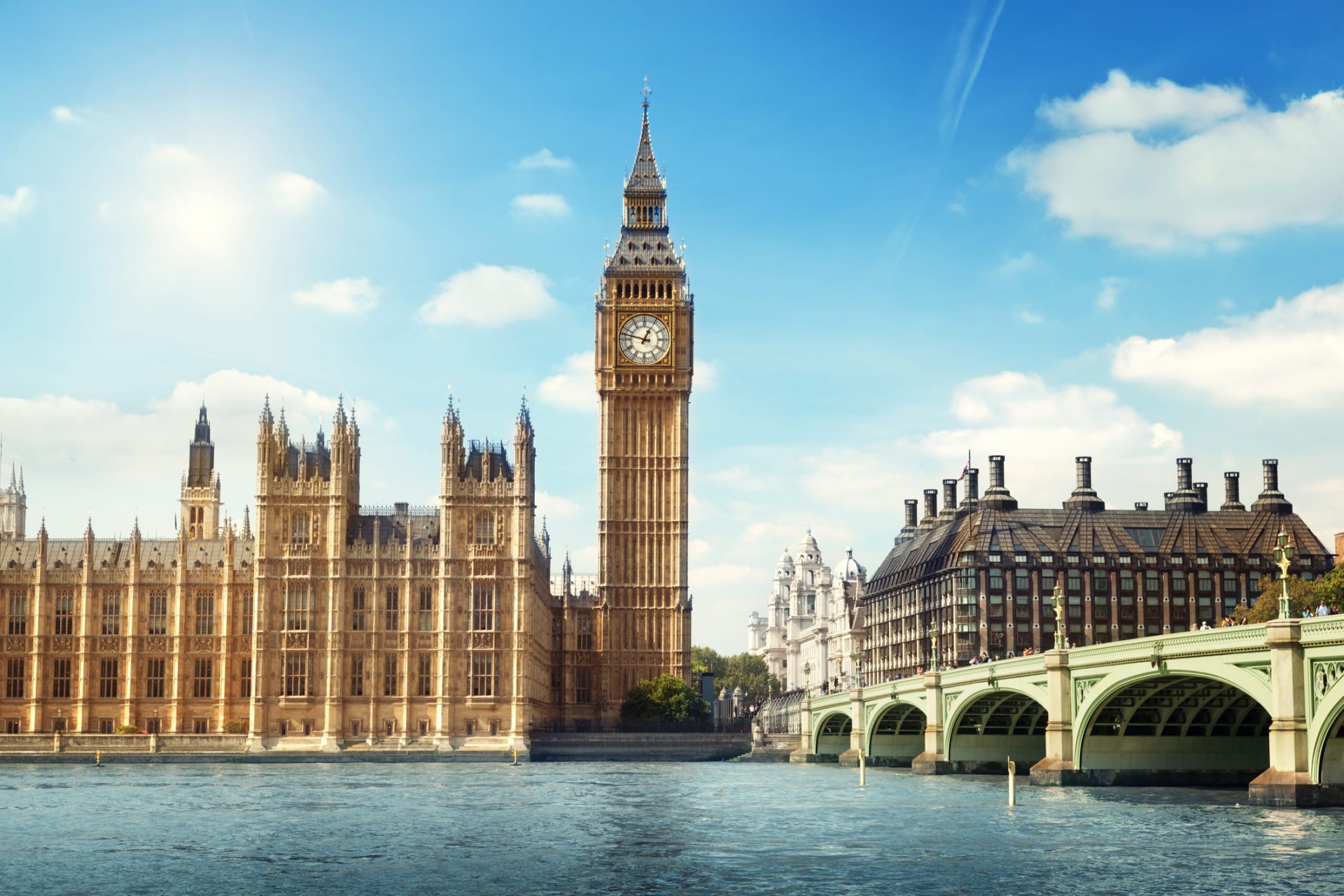
The Houses of Parliament, officially the Palace of Westminster, stand on the bank of the Thames, a magnificent Gothic building with more than a thousand rooms and around three kilometres of corridors. Inside, the House of Commons, where elected Members of Parliament debate, is famous for its green leather benches, while the House of Lords has red ones. On the floor of the Commons, two red lines run in front of the benches, traditionally said to be two sword lengths apart, so that members on opposite sides could never fight each other; members must not cross them during debates. Above the palace rises the famous clock tower, home of Big Ben, the great bell whose deep chimes have marked the hours since 1859. Across the road stands Westminster Abbey, the church where English and British kings and queens have been crowned for nearly a thousand years.

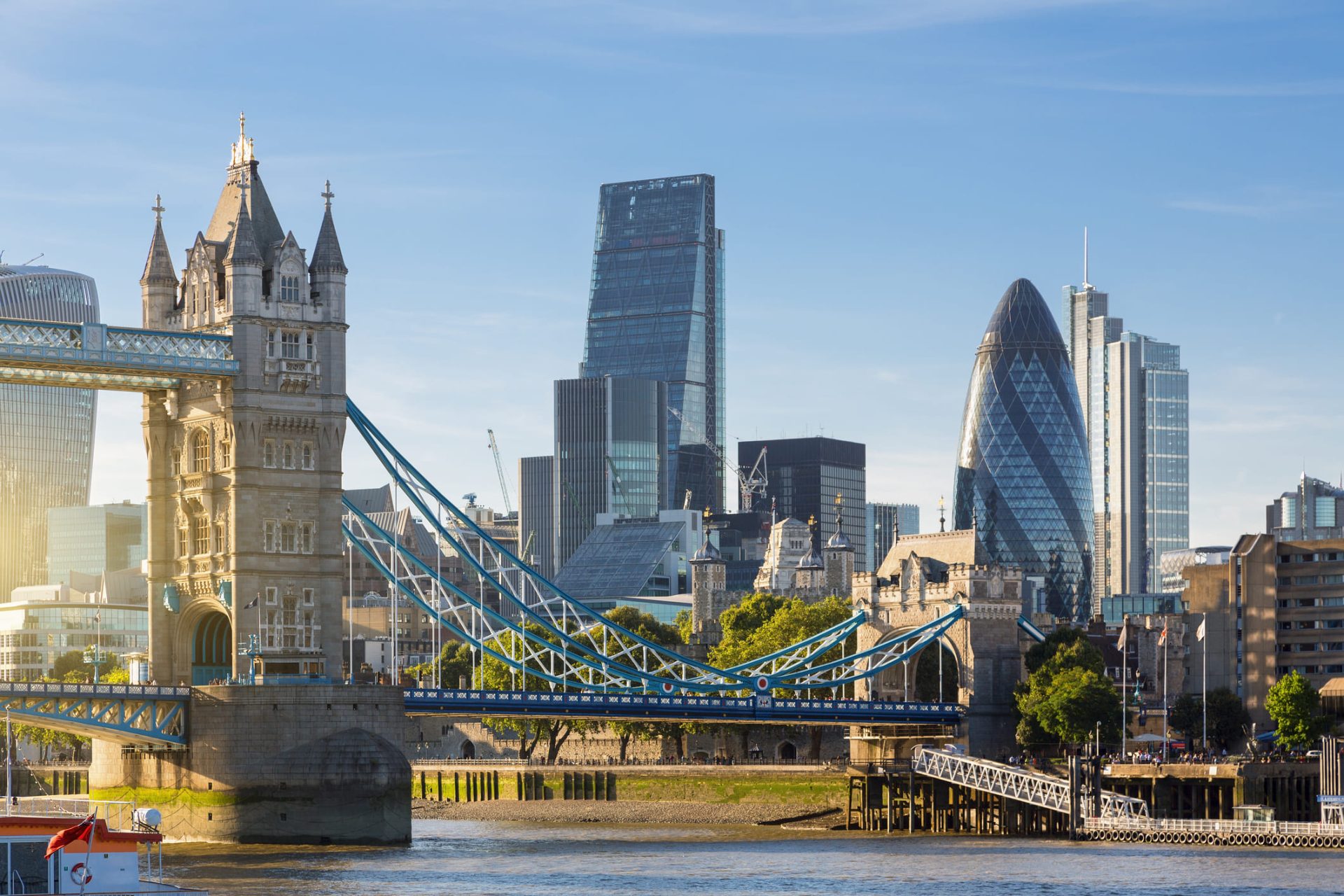
Your tour continues past Trafalgar Square, with Nelson's Column and its four bronze lions, and Piccadilly Circus, with its giant glowing advertising screens. You'll drive through Hyde Park, once a royal hunting ground and now one of the largest parks in London, and see Tower Bridge, the great Victorian drawbridge whose roadway still lifts to let tall ships pass beneath. Then, at Buckingham Palace, you watch the Changing of the Guard, one of the most famous ceremonies in the world, as the soldiers of the King's Guard, in their scarlet tunics and tall bearskin hats, march to the music of a military band.

In the afternoon, you visit Lord's Cricket Ground, the Home of Cricket, a place every Indian cricket lover dreams of seeing. Lord's has a special place in India's cricket history. India played its very first Test match here, in June 1932, under the captaincy of C.K. Nayudu, and it was here, in 1983, that Kapil Dev's team won the World Cup, beating the mighty West Indies in the final, a victory that changed cricket in India forever. On the tour, you go behind the scenes: the grand Victorian Pavilion; the famous Long Room, lined with portraits of cricket legends, through which every batsman walks on the way to the pitch; the players' dressing rooms, with the honours boards listing every Test century and five-wicket haul at Lord's; and the MCC Museum, home of the tiny Ashes urn, cricket's most famous trophy. Standing on the Pavilion balcony, looking out over the famous sloping pitch, you can almost hear the roar of the crowd on that June day in 1983.

The day ends with a ride on the London Eye, the giant observation wheel on the South Bank of the Thames, 135 metres tall. As your glass capsule slowly rises, London spreads out below you: the Houses of Parliament right beneath you, the river curving away under its bridges, the dome of St. Paul's, the Shard and the towers of the City. On a very clear day, you can see up to 40 kilometres, as far as Windsor Castle. A full rotation takes about half an hour, giving you plenty of time to take in the view and pick out the places you saw on today's tour. In the evening you return to your hotel for dinner.

Between the sights, look out for the small details that make London special. You'll see blue plaques on the walls of houses, marking the homes of famous people who once lived there: scientists, writers, musicians and politicians. Among them is a plaque in Pimlico marking where Swami Vivekananda stayed in 1896, and in Primrose Hill, the house where Dr B.R. Ambedkar lived as a student is now a museum in his memory. Mahatma Gandhi and Jawaharlal Nehru also studied in London, and a statue of Gandhi now stands in Parliament Square, facing the Houses of Parliament, beside statues of Winston Churchill, Abraham Lincoln and Nelson Mandela.

You'll also notice how green London is. Almost half of the city is made up of green spaces, parks, gardens and rivers, and its eight Royal Parks, once the private hunting grounds and gardens of kings and queens, are now open to everyone. In summer, the lawns of St. James's Park and Green Park, right beside Buckingham Palace, are dotted with striped deckchairs, and the pelicans of St. James's Park, first given to King Charles II by a Russian ambassador in 1664, still parade around the lake. By the time you return to your hotel, you'll have seen the London of postcards, and a little of the London that Londoners love.

Included today: guided London city tour, Changing of the Guard (subject to schedule), Lord's Cricket Ground tour, London Eye ride, breakfast, lunch, dinner.

Good to know: the Changing of the Guard doesn't take place every day and can be cancelled in bad weather or for state events. Lord's tours may change on match days.

Day 3
Madame Tussauds and the Eurostar to Paris | Stars in wax and a train under the sea

Madame Tussauds and the Eurostar to Paris | Stars in wax and a train under the sea

⌖ Paris 🍽 Meals: Breakfast, Lunch, Dinner

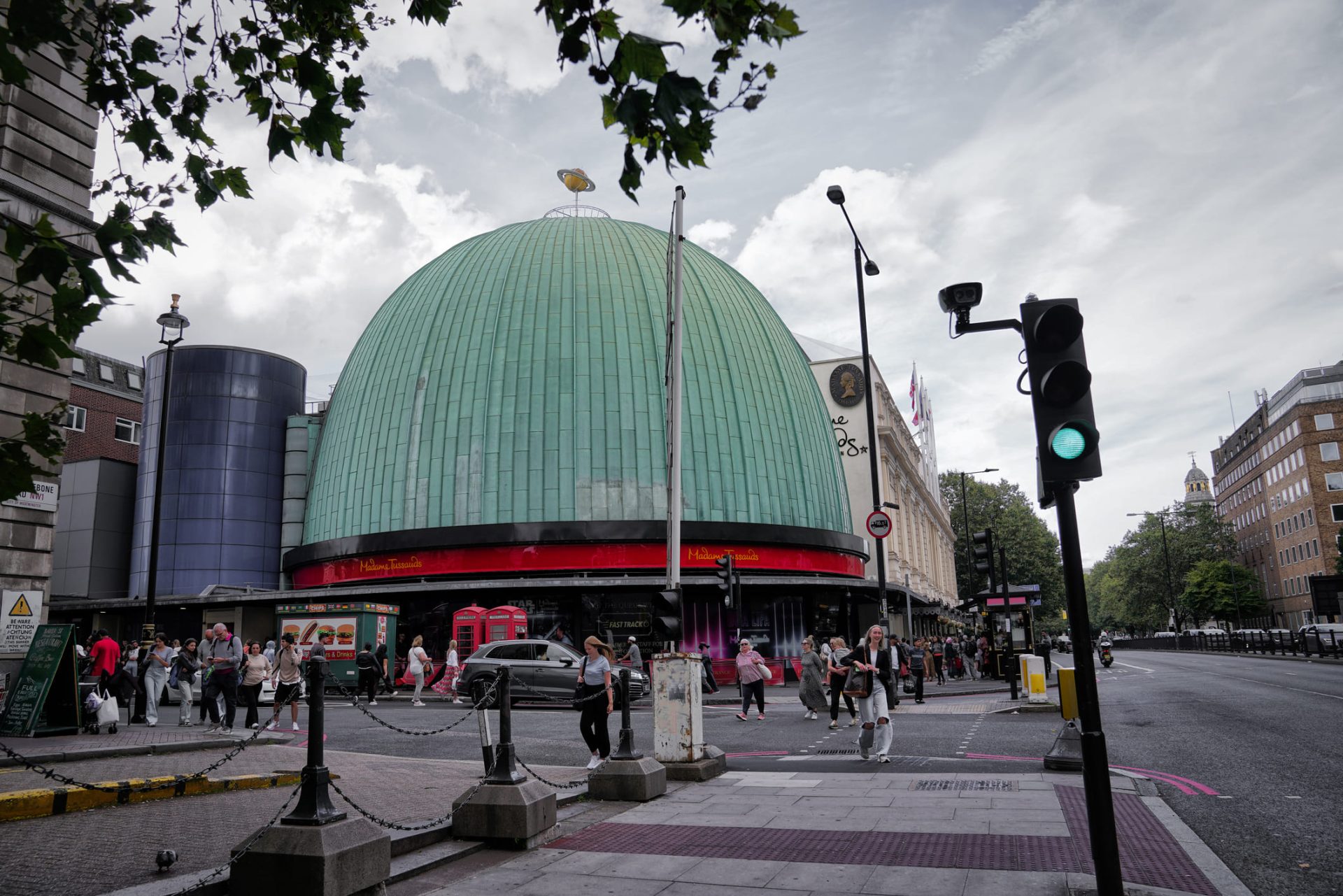
Today you meet the stars in London and then cross under the sea to Paris. After breakfast, you check out of your hotel and drive to Marylebone Road for Madame Tussauds, the most famous wax museum in the world.

Madame Tussauds has a remarkable history. Its founder, Marie Tussaud, learned wax modelling in Paris in the 18th century and lived through the French Revolution, when she was asked to make death masks of victims of the guillotine, including, it's said, King Louis XVI and Queen Marie Antoinette. She brought her collection to Britain in 1802 and toured the country for decades before opening a permanent exhibition in London in 1835. Today, the London museum displays hundreds of lifelike figures of royals, world leaders, sports stars, musicians and film stars from Hollywood and Bollywood, each one made with incredible care, from hundreds of measurements and photographs, with every strand of hair inserted by hand.

Inside, you walk through a series of themed zones, from a glittering red-carpet party with film stars to a gallery of world leaders and the British royal family. You can pose with your favourite stars, shake hands with presidents, stand beside sporting heroes and take photographs that will fool your friends back home. For many Indian visitors, the highlight is meeting the Bollywood stars, honoured here alongside the biggest names in world entertainment.

In the afternoon you head to St Pancras International station, a magnificent red-brick Victorian Gothic building with a soaring roof of iron and glass, to board the Eurostar to Paris. The first Eurostar passenger trains ran through the Channel Tunnel in November 1994, and since then, millions of travellers have made the journey between London and Paris in just over two hours, a trip that once took most of a day by train and ferry.

As the train leaves London, you'll glide through the green countryside of Kent, with its orchards, sheep pastures and hop fields, before entering the Channel Tunnel near Folkestone. For around twenty minutes, you travel through the tunnel deep beneath the seabed of the English Channel, nearly 38 kilometres of it under the sea, the longest undersea section of any railway tunnel in the world. It's a strange and exciting thought: above you, ships are sailing across the Channel, while you sit comfortably in your seat with a cup of tea. Then the train emerges into the daylight of northern France, and the landscape changes to wide fields of wheat, barley and sugar beet, dotted with villages and church spires, as the train races on at up to 300 kilometres an hour.

You arrive at the Gare du Nord in Paris, one of the busiest railway stations in Europe, and step out into the City of Light, famous for its fashion, its art, its monuments and its cabarets. The coach takes you through the streets to your hotel, past tree-lined boulevards, café terraces and elegant cream-stone buildings with wrought-iron balconies. After checking in, you enjoy dinner with the group.

Before you leave London, take a good look at St Pancras station itself, because it's one of the most beautiful railway stations in the world. When it opened in 1868, its great train shed was the largest single-span roof ever built, a vast arch of iron and glass more than 70 metres wide. In front of it stands the former Midland Grand Hotel, a fairy-tale building of red brick, pointed arches, towers and spires, designed by the architect George Gilbert Scott. By the 1960s, the station had fallen into decline and was nearly demolished, but a campaign led by the poet John Betjeman helped save it. Today, a bronze statue of Betjeman, holding on to his hat and gazing up at the roof, stands on the upper level of the station. Nearby, a nine-metre bronze statue called The Meeting Place shows a couple embracing under the station clock, a fitting symbol for a station where travellers meet and part every day.

The station is also home to what was once the longest champagne bar in Europe, and the upper concourse has shops, cafés and a fine view of the sleek Eurostar trains waiting at the platforms below. Once you've cleared security and passport control, you'll wait in the departure lounge until your train is called.

It's worth remembering what an achievement the Channel Tunnel was. For centuries, people dreamed of linking Britain and France by a tunnel: Napoleon's engineers drew up plans in 1802, and work actually started in the 1880s before it was abandoned. The tunnel was finally built between 1988 and 1994 by thousands of workers digging from both sides of the Channel. When the British and French tunnelling teams met deep under the sea in December 1990, they shook hands through a small hole in the rock, a moment celebrated in both countries. The Channel Tunnel has since been named one of the seven wonders of the modern world by the American Society of Civil Engineers.

Your first evening in Paris is a chance to feel the rhythm of the city. Parisians love to linger over a meal and to watch the world go by from a café terrace, and as night falls, the city's monuments are lit up one by one. Tomorrow, you'll see them all up close.

Included today: Madame Tussauds entry, Eurostar from London to Paris, breakfast, lunch, dinner.

Good to know: passport and border checks for the Eurostar take place at St Pancras before boarding, so keep your passport handy and arrive in good time. Luggage space on the Eurostar is limited to what you can carry. Switch to your European plug adapter in Paris.

Day 4
Eiffel Tower, Seine cruise, Versailles and Paris city tour | A day of palaces, river views and the City of Light

Eiffel Tower, Seine cruise, Versailles and Paris city tour | A day of palaces, river views and the City of Light

⌖ Paris 🍽 Meals: Breakfast, Lunch, Dinner

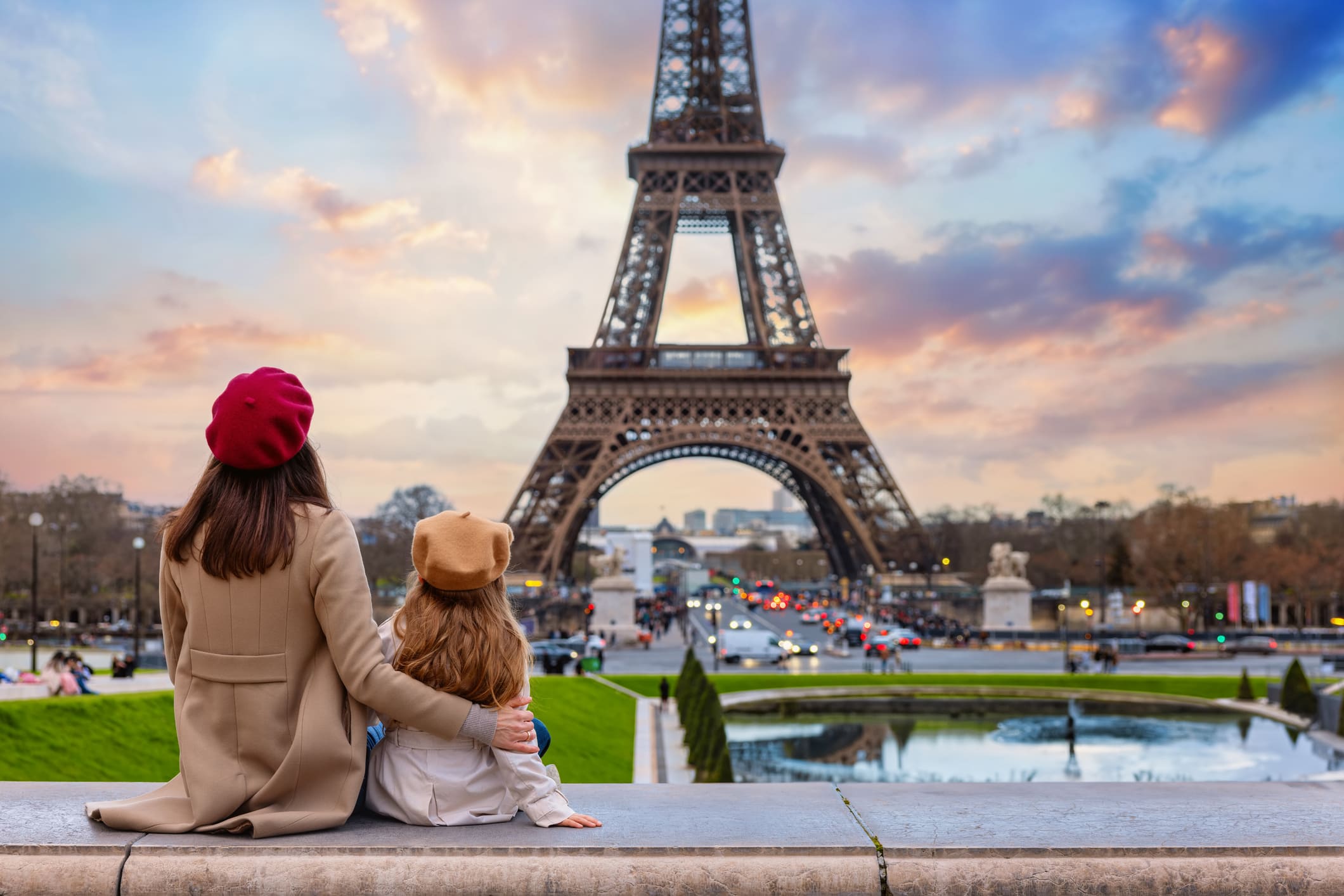
Today is your day in Paris, and it begins with the most famous monument in the world. After breakfast, the coach takes you to the Champ de Mars, the long green park that stretches out in front of the Eiffel Tower.

When it was built for the World's Fair of 1889, to mark the centenary of the French Revolution, the Eiffel Tower was the tallest structure in the world, and many Parisians hated it. A group of famous artists and writers signed a letter of protest, calling it a useless and monstrous tower. Gustave Eiffel's company had permission to keep it for only twenty years, after which it was supposed to be taken down. It survived because it proved useful as a radio antenna, and today it's impossible to imagine Paris without it. The tower is made of more than 18,000 iron parts held together by about 2.5 million rivets, and it's repainted by hand every few years, using around 60 tonnes of paint. On hot summer days, the iron expands in the sun, and the top of the tower can lean slightly away from the sun by several centimetres.

You ride the lift up to the second level, about 115 metres above the ground, and step out onto the viewing platform. From here, Paris spreads out in every direction: the River Seine winding through the city under its bridges, the golden dome of Les Invalides, where Napoleon lies buried, the white domes of the Sacré-Cœur on the hill of Montmartre, the Arc de Triomphe at the top of the Champs-Élysées, and the endless grey rooftops of the city's elegant buildings. Most visitors find that this level gives the best views of Paris, close enough to see the details of the streets and monuments below.

Next, you board a boat for a cruise on the Seine. Gliding along the river is one of the most relaxing ways to see Paris, because many of the city's greatest monuments line its banks. You pass under graceful bridges, including the Pont Alexandre III, with its golden statues and ornate lamps, and the Pont Neuf, which, despite its name, meaning "new bridge", is the oldest standing bridge in Paris. You glide past the Louvre, once a royal palace and now the world's most visited museum, home of the Mona Lisa; the Musée d'Orsay, a museum of Impressionist art inside an old railway station; and the Île de la Cité, the island where Paris was born more than two thousand years ago, where the Gothic towers of Notre-Dame Cathedral rise above the river. Notre-Dame was badly damaged by fire in 2019, and after five years of painstaking restoration, it reopened its doors in December 2024.

In the afternoon, you drive about 20 kilometres to the Palace of Versailles, the most magnificent royal palace in Europe. Versailles was built by King Louis XIV, the Sun King, who transformed his father's hunting lodge into a vast palace and moved the entire royal court here in 1682. At its height, thousands of courtiers, servants and officials lived at Versailles, and the king's every action, from waking up in the morning to going to bed at night, was a public ceremony. The palace's most famous room is the Hall of Mirrors, 73 metres long, with 357 mirrors facing seventeen tall windows that look out over the gardens, and ceilings painted with scenes celebrating the king's glory. It was here, in 1919, that the Treaty of Versailles was signed, officially ending the First World War. Outside, the gardens stretch towards the horizon, with geometric flower beds, clipped hedges, statues, fountains and the Grand Canal, a huge cross-shaped lake where the king once held boating parties. On certain summer days, the fountains are switched on to music, just as they were in the Sun King's time.

Back in Paris, you enjoy an orientation tour of the city's most famous sights: the Arc de Triomphe, built to celebrate Napoleon's victories, which stands at the centre of a huge star-shaped junction of twelve avenues; the Champs-Élysées, the grand avenue of shops, cafés and cinemas; the Place de la Concorde, with its ancient Egyptian obelisk more than 3,000 years old; and the opera house, the Palais Garnier, whose underground lake inspired the story of The Phantom of the Opera. In the evening, as the sun goes down and the city's lights come on, you return to your hotel for dinner.

If you look up at the Eiffel Tower after dark, you may see it sparkle: for five minutes at the start of every hour, thousands of flashing lights make the whole tower glitter, a sight that delights visitors every night.

Included today: Eiffel Tower second level, Seine cruise, Palace of Versailles visit, Paris orientation tour, breakfast, lunch, dinner.

Good to know: Versailles involves a lot of walking and can be crowded in summer, so wear comfortable shoes. Some rooms may close without notice for events or restoration.

Day 5
Brussels: the Grand Place and the Manneken Pis | Golden guildhalls, chocolate and waffles

Brussels: the Grand Place and the Manneken Pis | Golden guildhalls, chocolate and waffles

⌖ Netherlands 🍽 Meals: Breakfast, Lunch, Dinner

Today you leave Paris and travel north to Belgium, a small country with a big reputation for chocolate, waffles, beer and comic books. After breakfast, you check out of your hotel, and the coach heads out of the city across the gentle farmland of northern France. As you cross the border, the signs change and you hear French and Dutch, Belgium's two main languages. (A small region in the east also speaks German.)

You arrive in Brussels, the capital of Belgium and the home of the European Union's main institutions. The European Commission, the Council of the European Union and the European Parliament all have their headquarters here, and thousands of diplomats, officials and journalists from all over Europe live and work in the city. But Brussels is far more than a city of politics: it's a lively, friendly place with a beautiful old town, cosy cafés and a famous sense of humour.

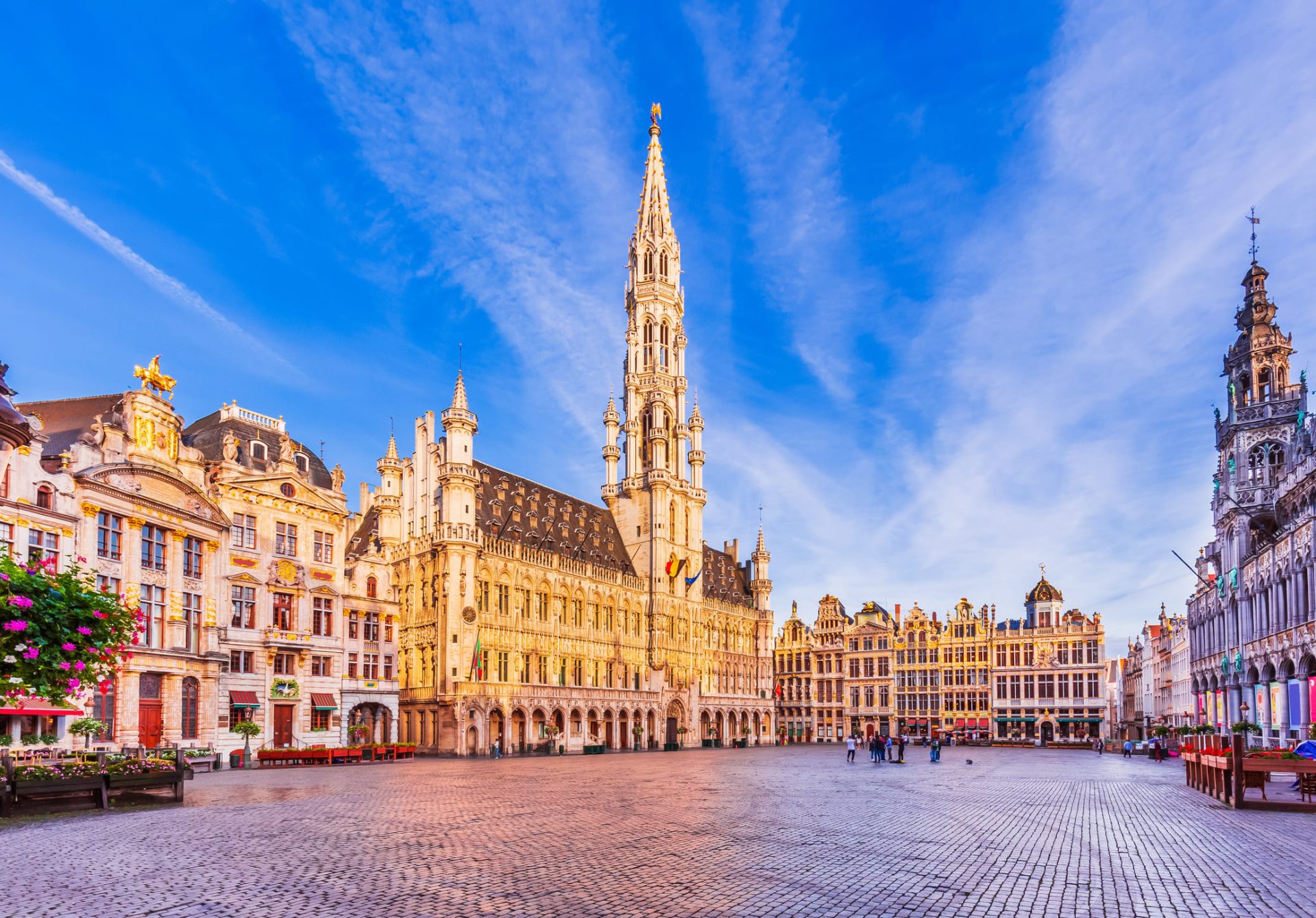
Your first stop is the Grand Place, the central square of Brussels and one of the most beautiful squares in the world. As you walk in from one of the narrow cobbled streets, the square opens up before you, surrounded on all sides by tall, richly decorated buildings with golden statues, carved stone, gables and gilded details glittering in the sunlight. On one side rises the Town Hall, a masterpiece of Gothic architecture built in the 15th century, with a delicate spire 96 metres high topped by a golden statue of St. Michael, the patron saint of Brussels, slaying a dragon. Facing it is the King's House, which, despite its name, never housed a king, and is now the city museum. Around the rest of the square stand the guildhalls, built by the city's rich trade guilds of bakers, brewers, butchers, carpenters and boatmen. Most were rebuilt after 1695, when the French army bombarded Brussels and destroyed much of the city centre; the guilds quickly rebuilt them in the grand style you see today. Victor Hugo, the author of Les Misérables, called the Grand Place "a marvel", and it's a UNESCO World Heritage Site.

If you're lucky enough to visit in August of an even-numbered year, you may see the famous Flower Carpet, when the entire square is covered by a giant carpet made of hundreds of thousands of begonias arranged in colourful patterns.

A short walk from the Grand Place, at the corner of two narrow streets, stands one of the most famous small statues in the world: the Manneken Pis, a bronze statue of a little boy about 60 centimetres tall. Many visitors are surprised by how small it is. There are many legends about him: one says he saved the city by putting out a burning fuse, another that he was a lost boy found by his father. The statue has a large wardrobe of costumes, more than a thousand of them, which are displayed in a nearby museum, and on special days, the little boy is dressed in uniforms, national costumes or outfits sent by countries from around the world.

There's time to explore the old town on your own and taste some of Belgium's famous treats. Belgian chocolate is world-famous, and the shops around the Grand Place are filled with beautiful pralines, a Belgian invention, in every shape and flavour. You might also try a Brussels waffle, light and crispy and served with powdered sugar, cream or fruit, or the sweeter, denser Liège waffle, with crunchy pieces of caramelised sugar. Belgian fries, served in a paper cone with sauces, are another local favourite; Belgians insist that fries were invented here, not in France. Nearby, the Galeries Royales Saint-Hubert, one of the oldest covered shopping arcades in Europe, opened in 1847, offers elegant shops and cafés under a glass roof.

In the afternoon, you continue north into the Netherlands, a country of windmills, canals, tulips and bicycles. The land becomes flatter and greener, crossed by canals and dotted with farms, black-and-white cows and, here and there, a windmill. About a quarter of the Netherlands lies below sea level, protected by dykes and pumping stations, and much of the land you see has been reclaimed from the sea over the centuries. As the Dutch saying goes, "God created the world, but the Dutch created the Netherlands." You arrive at your hotel in the evening for dinner and a good night's rest.

Brussels also loves comic strips. Tintin, the young reporter with his white dog Snowy, was created here by the Belgian artist Hergé in 1929, and as you walk around the city, you'll spot giant comic-strip murals painted on the sides of buildings.

Included today: Brussels visit with the Grand Place and the Manneken Pis, breakfast, lunch, dinner.

Good to know: the Grand Place is busy in summer; keep an eye on your bag in crowded areas. The Manneken Pis is small and usually surrounded by visitors, so be patient for photos.

Day 6
Keukenhof or Madurodam, then on to Germany | Flowers in bloom and Holland in miniature

Keukenhof or Madurodam, then on to Germany | Flowers in bloom and Holland in miniature

⌖ Germany 🍽 Meals: Breakfast, Lunch, Dinner

Today you discover the Netherlands' most colourful side. Depending on your travel date, you visit either the Keukenhof gardens or the miniature city of Madurodam, before driving into Germany.

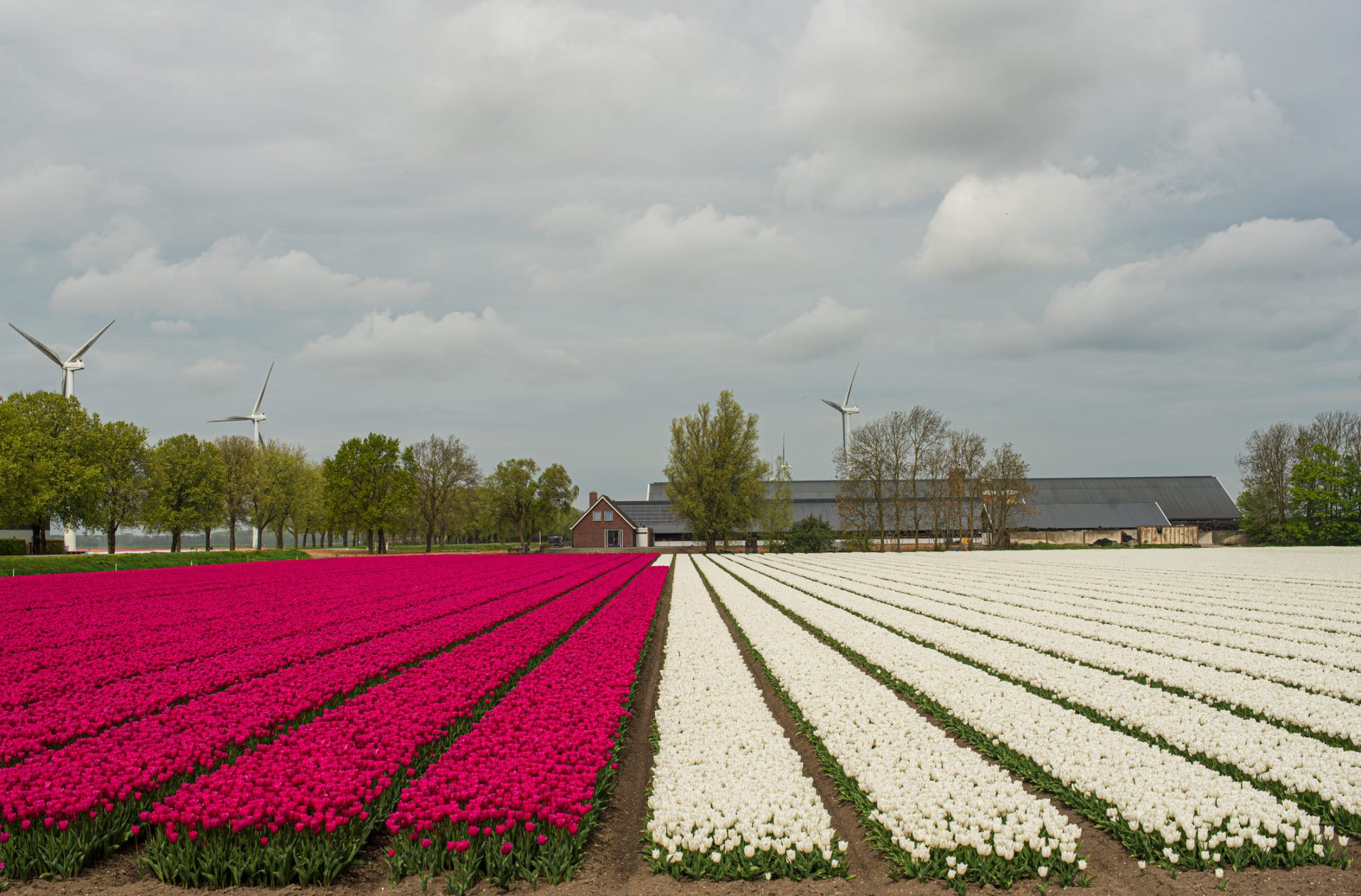
If you're travelling on or before 10 May, you visit Keukenhof, the most famous flower garden in the world. Keukenhof opens for only about eight weeks every spring, from late March to mid-May, when around seven million bulbs, of tulips, daffodils, hyacinths and many other flowers, come into bloom across 32 hectares of parkland. The name means "kitchen garden", because in the 15th century the land was used to grow herbs and vegetables for the kitchen of a countess's castle. The garden as we know it today opened in 1950, as a showcase for Dutch flower growers.

Walking through Keukenhof is like walking through a painting. Rivers of tulips in red, yellow, pink, purple, orange and white flow between the trees, beside ponds and along winding paths, arranged in bold patterns and colour combinations. There are hundreds of varieties of tulips here, from classic single tulips to frilly parrot tulips and fringed ones, and the scent of hyacinths fills the air. Inside the pavilions, you can see flower shows and the latest varieties, and there's an old windmill from which you can see the surrounding bulb fields. In the countryside nearby, the flower fields stretch out in long stripes of brilliant colour, one of the most beautiful sights in Europe in spring.

The Dutch love of tulips goes back to the 17th century, when the flowers, originally from Central Asia and Turkey, became a luxury in the Netherlands. During the period known as "tulip mania", in the 1630s, the price of rare tulip bulbs rose to extraordinary levels; it's said that a single bulb of the most prized variety could cost as much as a fine house in Amsterdam, before the market suddenly collapsed. Today, the Netherlands is the world's largest producer of tulip bulbs.

If you're travelling from 11 May onwards, you visit Madurodam in The Hague, a miniature park where the whole of the Netherlands is recreated at a scale of 1:25. Walking through Madurodam, you're like a giant striding across the country. You can see the canal houses of Amsterdam, the Peace Palace of The Hague, windmills, cheese markets, Schiphol Airport with its planes, the busy port of Rotterdam with its container ships, and the great Delta Works, which protect the country from the sea, all in incredible detail, with moving trains, boats and cars. The park was opened in 1952 and was named after George Maduro, a young Dutch law student who fought bravely against the German invasion in 1940 and later died in a concentration camp; his parents donated the money to build the park in his memory. Madurodam is fun for all ages, and it's a wonderful way to understand how the Dutch have shaped their land and their water.

After your visit, you begin the drive into Germany. The coach crosses the border, and the landscape gradually changes from flat polders to gentle hills, forests and vineyards. You pass through the Rhineland, along the River Rhine, one of Europe's greatest rivers, which flows from the Swiss Alps all the way to the North Sea. The Rhine has been a vital trade route for centuries, and its banks are lined with castles, vineyards and pretty riverside towns. In the evening you arrive at your hotel in the Frankfurt region for dinner and an overnight stay.

Wherever you go in the Netherlands, you'll notice bicycles. There are more bicycles than people in the country, around 23 million of them for about 18 million people, and the Dutch cycle everywhere, to work, to school and to the shops, on a network of dedicated cycle paths that covers the whole country. You'll see parents carrying children in wooden boxes on the front of their bikes, business people cycling in suits and elderly people pedalling calmly along country lanes. Cycling is so much a part of life that even the Dutch prime minister has often been seen cycling to work.

As you drive through the countryside, look out for the windmills. There were once around 10,000 of them in the Netherlands, used to pump water out of the low-lying land, grind grain and saw wood, and around 1,000 still stand today. Many are still in working order and are lovingly cared for by volunteer millers. The Dutch also invented a way of telling news with their windmills: the position of the sails, when the mill is at rest, could signal a celebration, such as a birth or wedding, or a time of mourning to the people of the surrounding villages.

The Netherlands is also famous for its cheese. Gouda and Edam, named after two Dutch towns, are known all over the world, and in the countryside, you may see farms selling round yellow wheels of cheese at the roadside.

Included today: Keukenhof (until 10 May) or Madurodam (from 11 May) entry, breakfast, lunch, dinner.

Good to know: Keukenhof's opening dates are set each year and the flowers depend on the weather. The drive to Germany is long, so keep snacks, water and a neck pillow handy.

Day 7
Heidelberg, the Black Forest and the Rhine Falls | Romantic Germany and Europe's mightiest waterfall

Heidelberg, the Black Forest and the Rhine Falls | Romantic Germany and Europe's mightiest waterfall

⌖ Central Switzerland 🍽 Meals: Breakfast, Lunch, Dinner

Today is one of the most varied days of the tour, taking you from a romantic German university town through the dark forests of fairy tales to the most powerful waterfall in Europe, and on into Switzerland.

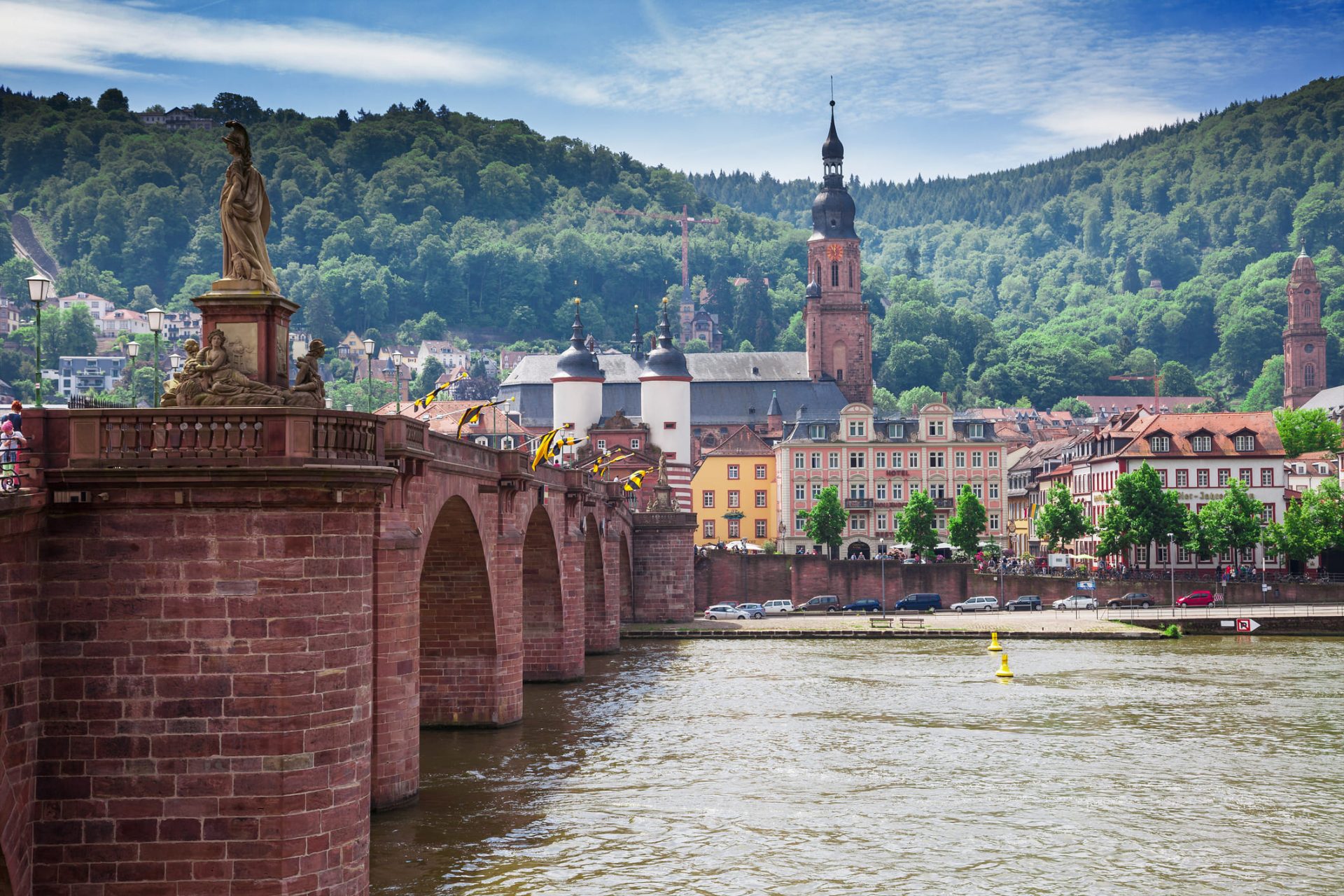
After breakfast, you drive to Heidelberg, one of Germany's most romantic towns, set on the banks of the River Neckar beneath wooded hills. Heidelberg is home to Germany's oldest university, founded in 1386, and the old town is full of students, bookshops, cafés and historic buildings. High above the town stands Heidelberg Castle, a magnificent red sandstone ruin that was once the home of the rulers of the Palatinate. The castle was destroyed in wars in the 17th century and later struck by lightning, and its romantic ruins inspired poets and painters, including the English artist J.M.W. Turner. Inside the castle is the Heidelberg Tun, one of the largest wine barrels in the world, which can hold more than 200,000 litres of wine. From the town, you can see the castle rising above the rooftops and the Old Bridge with its gate towers spanning the river, a view that has made Heidelberg one of Germany's most photographed towns.

You continue south into the Black Forest, a region of thick, dark pine forests, green valleys, rushing streams and traditional farmhouses with huge sloping roofs. The Black Forest is the land of fairy tales: the Brothers Grimm collected many of their stories in Germany, and the forest's dark woods and lonely valleys feel just like the setting of Hansel and Gretel or Little Red Riding Hood. The region is famous for Black Forest gateau, a rich chocolate cake layered with cream and cherries and flavoured with cherry brandy, and for its cuckoo clocks.

At a traditional workshop, you watch a demonstration of how cuckoo clocks are made. Black Forest clockmakers have been making them since the 18th century, during the long winters when farm work was impossible. The classic cuckoo clock is carved from wood in the shape of a small chalet or hunting lodge, decorated with leaves, birds and deer, and every hour a little wooden bird pops out of a door to call "cuckoo". Some of the more elaborate clocks have dancers, musicians, water wheels and beer drinkers that move to music. You'll learn how the clocks work, using weights shaped like pine cones and tiny bellows that make the cuckoo's call. If you'd like a souvenir, this is the place to buy an authentic one.

In the afternoon, you cross the border into Switzerland and stop at the Rhine Falls, the largest waterfall in Europe by the volume of water. Near the town of Neuhausen, the River Rhine suddenly plunges over a rocky ledge about 150 metres wide and 23 metres high. In summer, when the snow is melting in the Alps, around 600,000 litres of water pour over the falls every second, roaring and foaming and throwing up clouds of spray in which rainbows often shimmer. In the middle of the falls stands a large rock, worn away by the water over thousands of years, and above them rises the medieval Laufen Castle. The falls were formed about 15,000 years ago, at the end of the last Ice Age. From the viewing platforms along the riverbank, you can feel the spray on your face and the thunder of the water beneath your feet.

The coach then continues into Central Switzerland, through rolling green hills, neat villages and farms with cows grazing in the meadows, and you catch your first glimpses of lakes and snowy mountains ahead. In the evening you arrive at your hotel for dinner and an overnight stay.

Along today's route, you'll notice how quickly the scenery and the culture change. In Germany, villages have half-timbered houses, with dark wooden beams set into white walls, and window boxes full of red geraniums. Germans are proud of their bread, with hundreds of varieties, and their pretzels, which you'll find in every bakery. As you cross into Switzerland, the houses become neater still, the roads are spotless and the cows wear large bells around their necks, which ring softly as they graze in the meadows.

Switzerland is a small country, smaller than the state of Haryana, but it has four national languages: German, French, Italian and Romansh. Most people in the region you're staying in speak Swiss German, a dialect so different from standard German that even Germans sometimes struggle to understand it. Switzerland is famous for its neutrality, having stayed out of both world wars, and for its precision: Swiss trains, buses and boats run exactly on time, and the country's watchmakers have been famous for centuries.

Included today: Heidelberg visit, Black Forest cuckoo clock demonstration, Rhine Falls visit (boat ride not included), breakfast, lunch, dinner.

Good to know: today is a long day on the coach with several stops. The spray at the Rhine Falls can be heavy, so keep a light rain jacket handy and protect your camera. Switzerland uses Swiss francs, though euros and cards are widely accepted.

Day 8
A free day or Jungfraujoch, then Lucerne | The Top of Europe and Switzerland's most charming city

A free day or Jungfraujoch, then Lucerne | The Top of Europe and Switzerland's most charming city

⌖ Central Switzerland 🍽 Meals: Breakfast, Lunch, Dinner

Today you wake up in the heart of Switzerland, a country of lakes, mountains, chocolate, watches and trains that run exactly on time. The day is yours to enjoy at your own pace, or you can join an optional excursion to Jungfraujoch, the Top of Europe, one of the most spectacular experiences in the Alps.

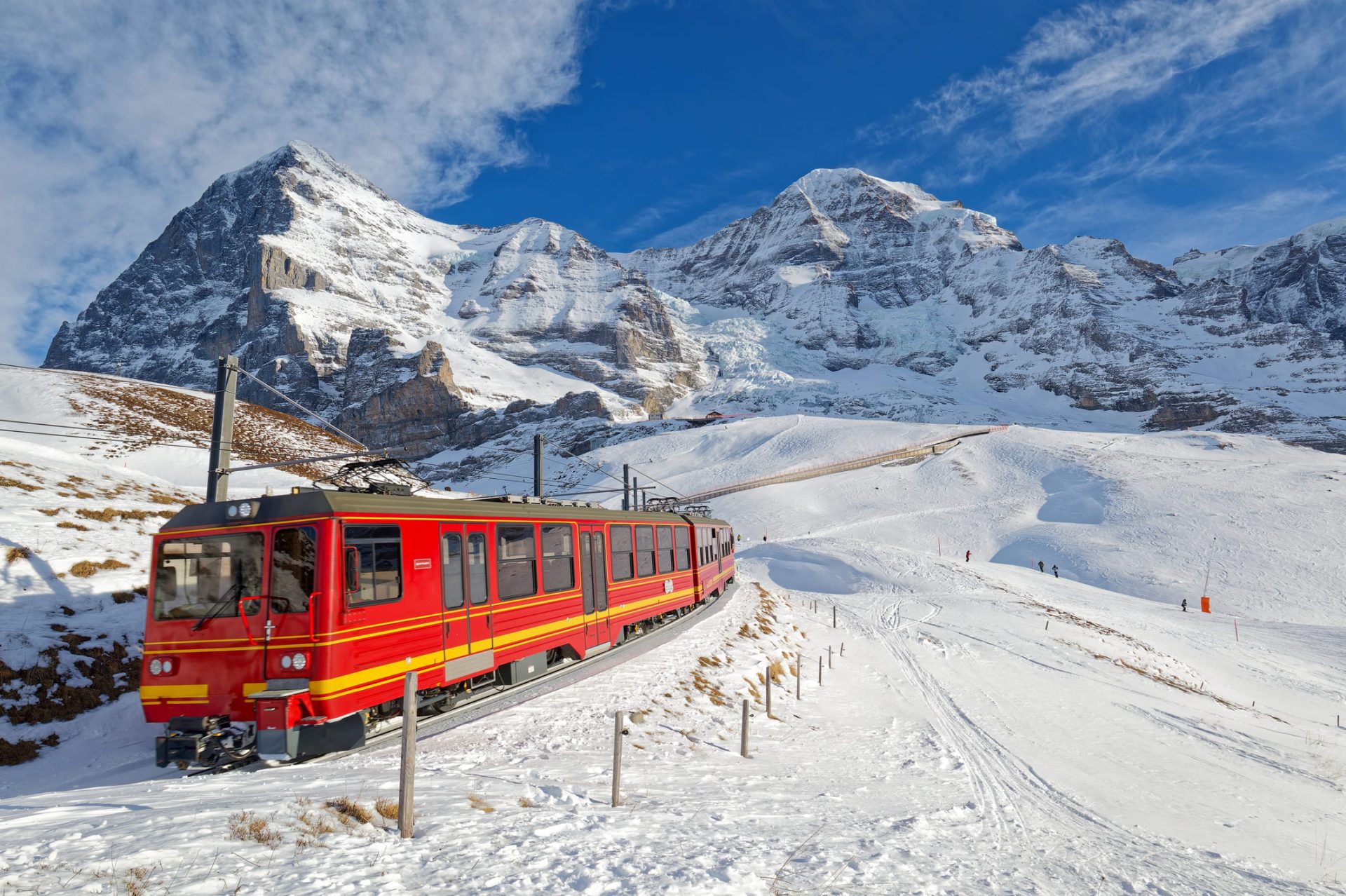
If you choose Jungfraujoch, you set off early through the Bernese Oberland, a region of deep valleys, thundering waterfalls and wooden chalets with flower-filled balconies, towards the town of Interlaken, which lies on a strip of land between two shimmering lakes, Thun and Brienz. From the nearby valley, you travel up into the mountains by cable car and cogwheel train. The last part of the railway, the Jungfrau Railway, was a marvel of engineering when it was built: it took sixteen years, from 1896 to 1912, to tunnel through the rock of the Eiger and the Mönch, and the railway climbs through a tunnel more than seven kilometres long to the highest railway station in Europe, at 3,454 metres above sea level.

When you step out at the top, you're in a world of ice and snow, even in the middle of summer. From the Sphinx Observatory terrace, you look out over the Aletsch Glacier, the longest glacier in the Alps, a vast frozen river of ice about 20 kilometres long, flowing away between the peaks. Around you rise the great summits of the Jungfrau, Mönch and Eiger, and on a clear day, you can see as far as the Vosges mountains in France and the Black Forest in Germany. The whole region, the Swiss Alps Jungfrau-Aletsch, is a UNESCO World Heritage Site. You can walk through the Ice Palace, a series of halls and tunnels carved into the glacier, filled with sculptures of ice; step out onto the snow plateau to play in the snow; and visit the Lindt chocolate shop, the highest in the world. Many Indian visitors love the Bollywood connection here too: the Swiss Alps featured in many classic Hindi films, and at Jungfraujoch there's even a life-size cutout of the actors from Dilwale Dulhania Le Jayenge, the 1995 film that made Switzerland a dream destination for a generation of Indian travellers.

Remember that the air at this altitude is thin, so walk slowly, drink plenty of water and don't overexert yourself. The sun is also very strong on the snow, so sunglasses and sunscreen are essential.

If you prefer to relax, you can spend the morning at leisure, enjoying the peace of the Swiss countryside, strolling by the lake or simply resting after a busy week of travel.

In the afternoon, everyone enjoys an orientation tour of Lucerne, perhaps the most charming city in Switzerland, set on the shore of Lake Lucerne with snowy mountains rising behind it. You visit the Lion Monument, a huge dying lion carved into a sandstone cliff in 1820–21, to honour the Swiss Guards who were killed in 1792 while defending King Louis XVI and his family at the Tuileries Palace in Paris during the French Revolution. The lion lies with a broken spear in its side, its paw resting protectively on a shield bearing the French royal lily. The American writer Mark Twain called it "the most mournful and moving piece of stone in the world".

You walk across the Chapel Bridge (Kapellbrücke), a covered wooden bridge built in the 14th century across the River Reuss, the oldest covered wooden bridge in Europe. In summer, its sides are lined with flower boxes, and inside, under the roof, triangular paintings from the 17th century tell stories from the history of Lucerne and the lives of its patron saints. Many of these paintings were lost in a fire in 1993, but the bridge was quickly rebuilt. Next to the bridge stands the Water Tower, an eight-sided stone tower that once served as a prison, treasury and lookout post. In the old town, the narrow streets open into small squares, where the houses are decorated with colourful paintings. There's time to browse the shops for Swiss watches, Swiss Army knives and Swiss chocolate before returning to your hotel for dinner.

As the evening light softens, walk down to the lakeside promenade. Swans glide across the water, paddle steamers, some more than a hundred years old, sail out towards the mountains, and the peaks of Pilatus and Rigi glow in the setting sun. It's one of the most peaceful scenes in Switzerland.

Included today: Lucerne orientation tour with the Lion Monument and the Chapel Bridge, breakfast, lunch, dinner. Jungfraujoch is optional, at extra cost.

Good to know: book Jungfraujoch in advance if you'd like to go; on cloudy days the views may be limited. Take warm clothing, sunglasses and sunscreen, even in summer. People with heart or breathing problems should check with their doctor before going to high altitude.

Day 9
Mt. Titlis and Innsbruck | The revolving cable car and the capital of the Alps

Mt. Titlis and Innsbruck | The revolving cable car and the capital of the Alps

⌖ Seefeld 🍽 Meals: Breakfast, Lunch, Dinner

Today you go up into the snow at Mt. Titlis and then cross into Austria for the charming city of Innsbruck. After breakfast, you drive to Engelberg, a mountain village whose name means "angel mountain", set in a green valley surrounded by peaks. The village grew up around a Benedictine monastery founded here in 1120, and the monks still live and work there today.

From Engelberg, you ride a series of cable cars up the mountain. The last stage is the Titlis Rotair, the world's first revolving cable car, opened in 1992. As it climbs towards the summit, the floor of the cabin slowly turns through a full circle, so that every passenger enjoys a 360-degree view of the mountains, glaciers, cliffs and valleys. You arrive at the top station at about 3,020 metres, in a world of permanent snow and ice. Even in the height of summer, you'll find snow here.

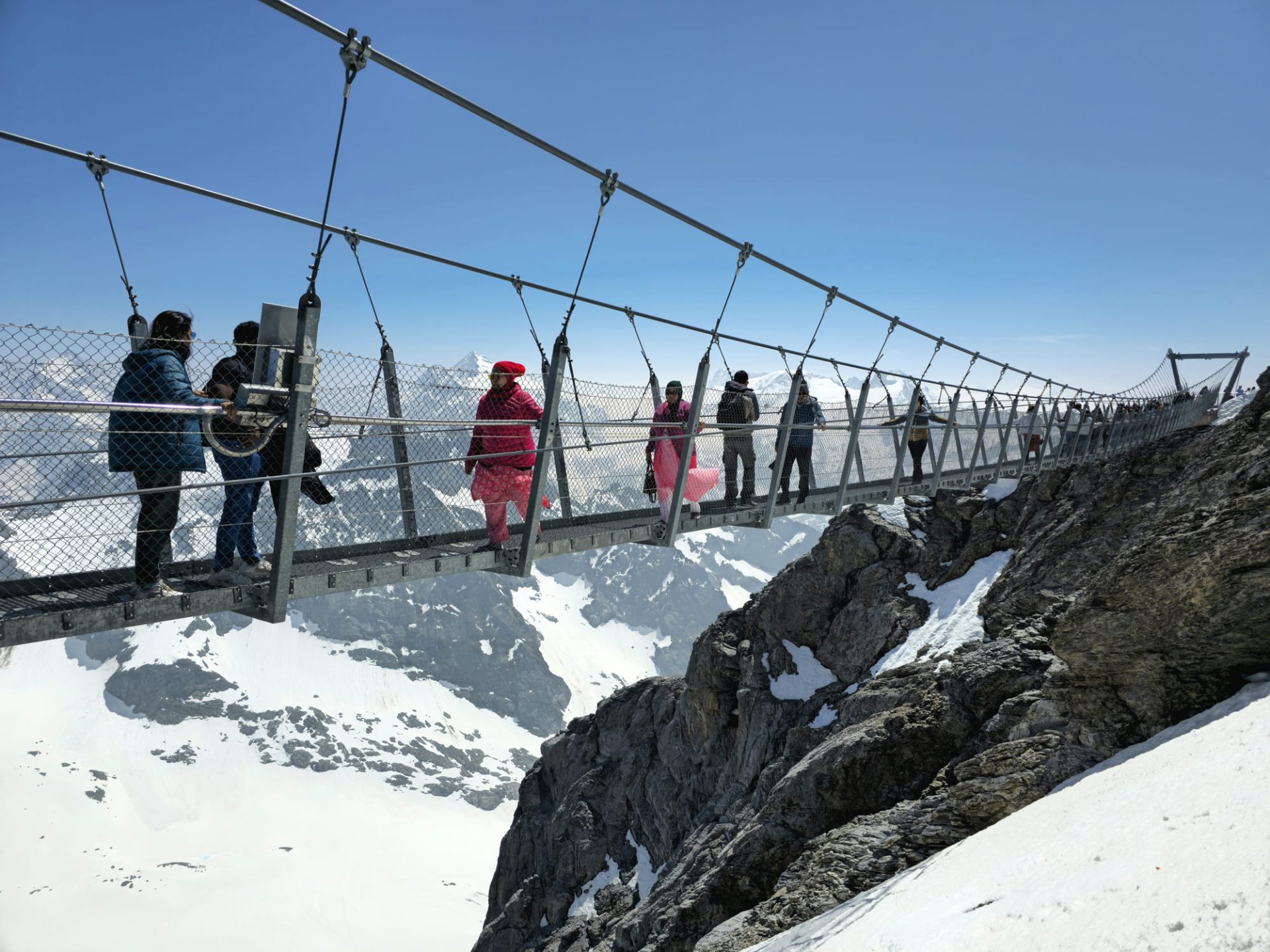
At the summit, you can walk through the Glacier Cave, a tunnel carved into the ice of the glacier, lit with a soft blue light, where the walls of ice are thousands of years old. For the brave, the Titlis Cliff Walk is the highest suspension bridge in Europe, about 100 metres long and only one metre wide, hanging over a drop of 500 metres. Walking across it, as the bridge sways gently in the wind, is an unforgettable thrill. On a clear day, the views reach across the Bernese Alps and into the distance. The snow park offers sledging and snow tubes, and children and adults alike love to throw snowballs in the middle of summer. Mt. Titlis is a favourite of Indian visitors, and you may even spot familiar Indian dishes on the menu at the restaurant at the top.

In the afternoon, you drive east along the Alpine valleys into Austria, through spectacular mountain scenery, past wooden farmhouses, onion-domed churches and green pastures. You arrive in Innsbruck, the capital of the Tyrol region, a beautiful city on the River Inn surrounded by mountains on all sides. Innsbruck has hosted the Winter Olympic Games twice, in 1964 and 1976, and the ski jump on the edge of town is a reminder of its love of winter sports.

Innsbruck is also home to the headquarters of Swarovski, the famous Austrian crystal company, founded in 1895 by Daniel Swarovski, an inventor who created a machine for cutting crystal more precisely than ever before. You visit the Swarovski Crystal Shop, where you can admire and buy sparkling jewellery, figurines and gifts.

You then explore the old town, walking along the Maria-Theresien-Strasse, Innsbruck's main street, named after the 18th-century Empress Maria Theresa, lined with colourful baroque houses and cafés, with the mountains rising dramatically at the end of the street. You also see the Golden Roof (Goldenes Dachl), Innsbruck's most famous landmark, a balcony roof covered with 2,657 gilded copper tiles. It was built around 1500 for Emperor Maximilian I, who used the balcony to watch festivals, tournaments and processions in the square below. Today, the Golden Roof still glitters in the sun, and it's one of the most photographed sights in Austria. Around the corner, you can try a slice of Austrian apple strudel or Sachertorte, the famous chocolate cake, at a traditional café.

In the evening, you drive up to Seefeld, a mountain resort on a sunny plateau above Innsbruck, surrounded by peaks and forests, for dinner and an overnight stay.

Seefeld itself is a lovely place to spend the night. Set at about 1,200 metres above sea level, on a wide, sunny plateau ringed by the peaks of the Wetterstein and Karwendel mountains, it's a popular resort all year round: for cross-country skiing in winter, when it has twice hosted the Nordic events of the Winter Olympics held in Innsbruck, and for hiking, cycling and golf in summer. The village has a pretty pedestrian centre with painted houses, flower-filled balconies, shops and cafés, and a small lake, the Wildsee, surrounded by meadows and forest. After dinner, take a short stroll in the cool mountain air: the night sky here is often clear and full of stars, and the only sounds are cowbells and the wind in the pine trees.

The Tyrol is famous for its warm hospitality and hearty mountain food. Look out for Tyrolean specialities such as Knödel, large bread dumplings, Kaiserschmarrn, a fluffy shredded pancake served with powdered sugar and plum compote, and Speck, a smoked ham. Many hotels in the region are family-run, passed down from generation to generation, and you'll often be greeted with a friendly "Grüß Gott", the traditional Austrian greeting.

Included today: Mt. Titlis with the Rotair cable car and Cliff Walk, Innsbruck orientation tour with the Golden Roof and Maria-Theresien-Strasse, Swarovski Crystal Shop visit, breakfast, lunch, dinner.

Good to know: it's cold at the top of Titlis, even in summer, so bring warm layers. The Cliff Walk may close in bad weather. Austria uses the euro.

Day 10
Venice | The city that floats on water

Venice | The city that floats on water

⌖ Padova 🍽 Meals: Breakfast, Lunch, Dinner

Today you cross the Alps into Italy to visit Venice, the most unusual city in the world. After breakfast, you drive south from Seefeld, over the Brenner Pass, one of the oldest and most important routes through the Alps, and down through the South Tyrol, where vineyards and apple orchards cover the valleys and castles stand on the hilltops. Gradually, the mountains give way to the flat, sunny plains of the Veneto region.

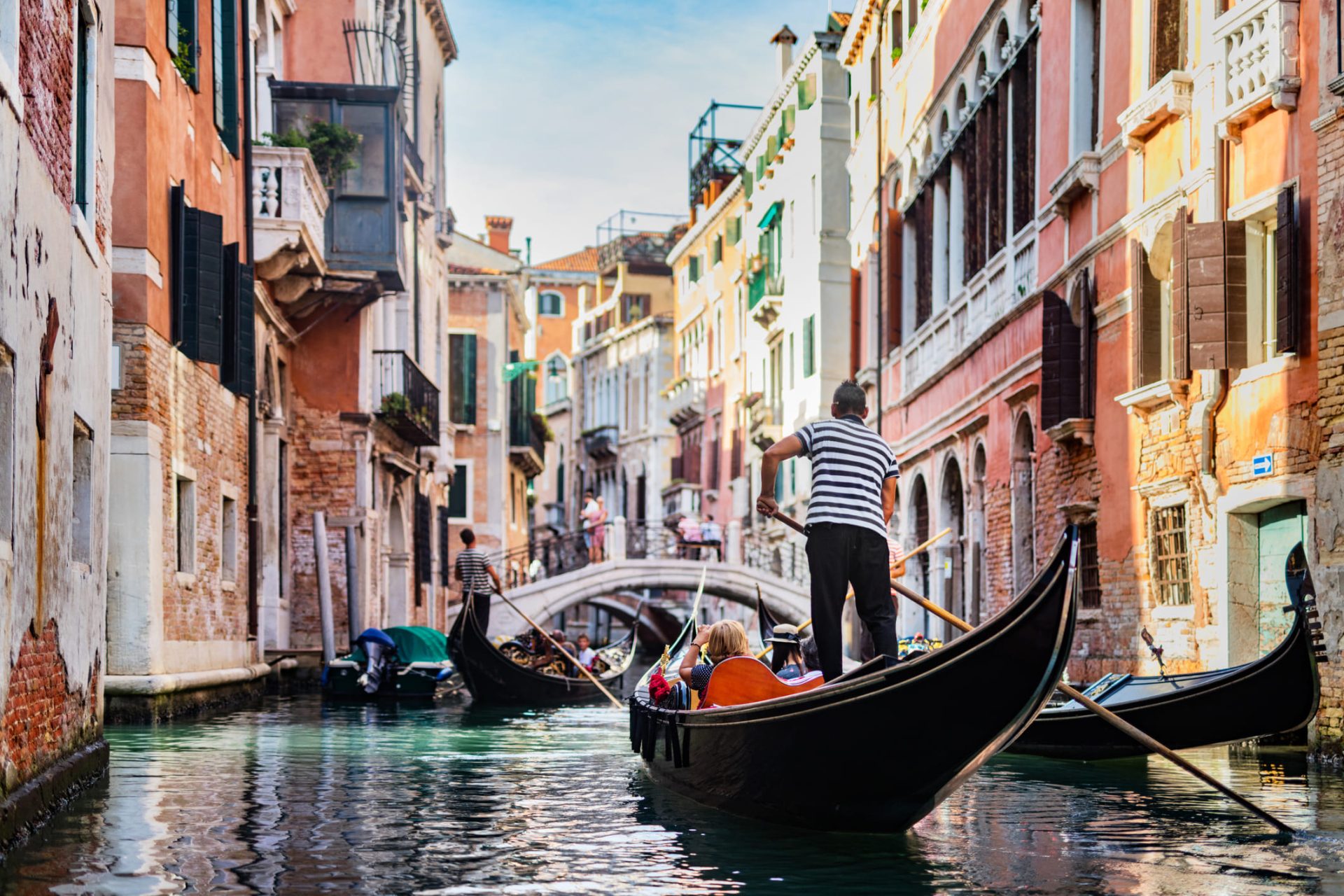
Venice is built on more than a hundred small islands in a shallow lagoon, connected by more than 400 bridges and divided by around 150 canals. There are no cars in Venice; people travel on foot or by boat, and even the ambulances, police and rubbish collectors use boats. The city was founded about 1,500 years ago, when people from the mainland fled to the islands of the lagoon to escape invading armies. Over the centuries, Venice grew into a powerful republic and one of the richest trading cities in the world, controlling trade between Europe and the East. Merchants brought silk, spices and treasures from Asia, and the explorer Marco Polo, born in Venice, travelled all the way to China in the 13th century.

You travel to Venice by private boat across the lagoon, the best way to arrive. As the boat glides across the water, the city appears on the horizon, its bell towers, domes and palaces seeming to float on the sea. You land near St. Mark's Square (Piazza San Marco), the heart of Venice, which Napoleon is said to have called "the drawing room of Europe". The square is surrounded by elegant arcades, cafés with orchestras playing on their terraces, and some of the most famous buildings in Italy.

At one end of the square stands St. Mark's Basilica, one of the most beautiful churches in the world, with its five domes, its golden mosaics glittering on the walls and ceilings inside, and its marble columns brought from all over the Mediterranean. It was built to hold the remains of St. Mark, the patron saint of Venice, which Venetian merchants smuggled out of Alexandria in Egypt in 828, hidden, according to legend, under a load of pork so that the Muslim guards would not search it. The four bronze horses above the main door are copies; the originals, more than 2,000 years old, are kept safely inside.

Beside the basilica rises the Bell Tower (Campanile), nearly 99 metres tall. In 1902, the old tower suddenly collapsed into a pile of rubble, but it was rebuilt exactly as it had been, "where it was and how it was", and reopened ten years later. Across the square, the Clock Tower shows the time, the phases of the moon and the signs of the zodiac on its beautiful blue and gold face, and on its roof two bronze figures, known as the Moors, have struck the bell every hour for more than 500 years.

Next to the basilica stands the Doge's Palace, the pink and white Gothic palace from which the doges, the elected rulers of Venice, governed the republic for centuries. From the waterfront, you can see the Bridge of Sighs, a small enclosed white stone bridge that connected the palace's courtrooms with the prison across the canal. Legend says it got its name from the sighs of prisoners taking a last look at beautiful Venice through its small barred windows before being taken to their cells.

You have free time to explore the narrow lanes and little bridges of Venice on your own. You might take a gondola ride along the canals (optional), a classic Venetian experience, as the gondolier steers the long black boat through the narrow waterways. You could shop for Murano glass and Venetian carnival masks, or enjoy an Italian gelato in a little square. In the late afternoon, you return by boat to the mainland and drive to your hotel in the Padova region for dinner.

As you wander, notice how life in Venice is shaped by the water. Shopkeepers receive their deliveries by boat, children ride the vaporetto, the water bus, to school, and in some neighbourhoods, laundry hangs on lines strung across the narrow canals. Venice's most famous waterway, the Grand Canal, winds through the city in a great S-shape for nearly four kilometres, lined with more than 170 palaces built by Venice's wealthy merchant families, and crossed by only four bridges. The oldest and most famous of these is the Rialto Bridge, a single stone arch covered with shops, completed in 1591.

Included today: private boat transfer to St. Mark's Square, Venice orientation tour with St. Mark's Basilica, the Bell Tower, the Clock Tower and the Bridge of Sighs (outside views), breakfast, lunch, dinner.

Good to know: Venice may charge a day-visitor access fee on some peak days; we'll let you know if this applies. Gondola rides are optional and extra. Dress modestly to enter St. Mark's Basilica (shoulders and knees covered).

Day 11
Rome: the Vatican, the Colosseum and the Trevi Fountain | The Eternal City

Rome: the Vatican, the Colosseum and the Trevi Fountain | The Eternal City

⌖ Rome 🍽 Meals: Breakfast, Lunch, Dinner

Today you arrive in Rome, the Eternal City, the final stop of your journey across Europe. After an early breakfast, you drive south through the heart of Italy, across the plains of the Po and through the green hills of Tuscany and Umbria, with their cypress trees, olive groves, vineyards and medieval hilltop towns, to Rome, a city that has been at the centre of world history for almost three thousand years.

According to legend, Rome was founded in 753 BC by Romulus, one of twin brothers who were raised by a she-wolf. From a small town on the banks of the River Tiber, Rome grew into the capital of a vast empire stretching from Britain to Egypt and from Spain to the Middle East. The Romans built roads, bridges, aqueducts, temples, theatres and baths across their empire, and their language, laws and architecture shaped the whole of Western civilisation. Later, Rome became the centre of the Catholic Church, and during the Renaissance, great artists such as Michelangelo, Raphael and Bernini filled the city with masterpieces.

Your first stop is the Vatican City, the smallest independent country in the world, covering only about 44 hectares, and the home of the Pope. You visit St. Peter's Basilica, one of the largest churches in the world and one of the holiest places in Christianity, built over the tomb of St. Peter. As you walk into St. Peter's Square, designed by Bernini in the 17th century, two great curving colonnades of 284 columns reach out like the arms of the Church to embrace visitors. Inside the basilica, the scale is breathtaking: the nave is about 187 metres long, and the great dome, designed by Michelangelo, rises 136 metres above the floor. Near the entrance is Michelangelo's Pietà, a beautiful marble statue of the Virgin Mary holding the body of Jesus, carved when the artist was only in his early twenties. Above the altar stands Bernini's huge bronze canopy, supported by four twisting columns, and everywhere you look there are mosaics, marble statues and gold.

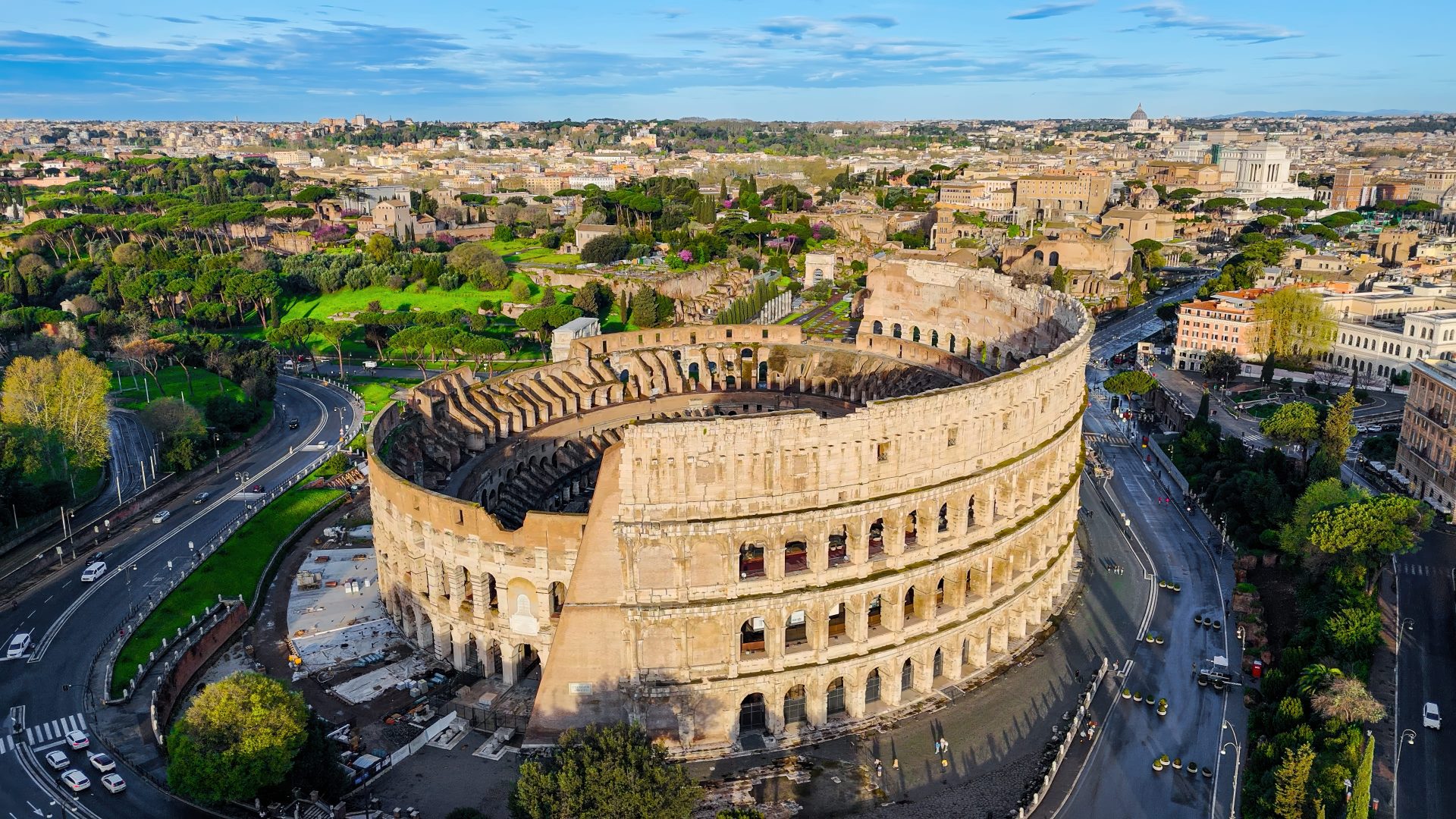
In the afternoon, you visit the Colosseum, the largest amphitheatre ever built, and the greatest symbol of ancient Rome. It was completed in AD 80 and could hold around 50,000 spectators, who came to watch gladiator fights, wild animal hunts and public spectacles. Beneath the arena floor was a maze of tunnels and cages where gladiators and animals waited before being raised into the arena by lifts. Despite earthquakes and the removal of its stone over the centuries for other buildings, much of the Colosseum still stands, and walking around its great arches, you can imagine the roar of the crowd two thousand years ago. Nearby are the Roman Forum, the centre of political and religious life in ancient Rome, and the Arch of Constantine.

Your last stop is the Trevi Fountain, the most famous fountain in Rome, completed in 1762. Ocean, the god of the sea, stands in the centre in a chariot shaped like a shell, pulled by sea horses and tritons, while water pours over the rocks into a large basin of turquoise water. Tradition says that if you throw a coin over your left shoulder with your right hand into the fountain, you'll return to Rome one day. Visitors throw in so many coins, thousands of euros every day, that the money is collected and donated to charity.

In the evening, you enjoy a farewell dinner with your fellow travellers, sharing memories of your journey from the Thames to the Tiber, across nine countries and countless unforgettable moments.

As you travel between the sights, look around you, because Rome is a city where every street tells a story. You may pass ancient columns built into the walls of modern buildings, Renaissance palaces with grand courtyards, and baroque churches with domes rising above the rooftops. Romans call the little iron drinking fountains on street corners nasoni, "big noses", after their curved spouts, and they which pour fresh, cold drinking water day and night. There are more than 2,500 of them across the city, so you can refill your water bottle for free as you explore.

As evening falls, the city takes on a golden glow, and Romans head out for their evening passeggiata, a leisurely stroll, before dinner. It's a lovely time to be in Rome, as the heat of the day fades and the piazzas fill with families, couples and friends, street musicians and the smell of pizza and coffee.

It's a fitting place to end a journey that began beside the Thames: Rome was once the capital of an empire that stretched all the way to Britain, where the Romans founded the city they called Londinium, the London where your tour began.

Included today: St. Peter's Basilica visit, Colosseum, Trevi Fountain, breakfast, lunch, dinner.

Good to know: the Vatican Museums and Sistine Chapel are not included. Dress modestly for St. Peter's (shoulders and knees covered). Keep your valuables safe in crowded areas around the Trevi Fountain.

Day 12
Departure from Rome | Arrivederci, Roma

Departure from Rome | Arrivederci, Roma

⌖ Rome 🍽 Meals: Breakfast

Today your grand European adventure comes to an end. After breakfast, you have some time to relax, pack and say goodbye to your fellow travellers and your tour manager before you're transferred to the airport for your flight home.

As you leave, take a moment to look back on the journey you've made. In just twelve days, you've travelled from London to Rome, through nine countries: England, France, Belgium, the Netherlands, Germany, Switzerland, Austria, Italy and the Vatican City, each with its own language, food, history and character. You've watched the guards march outside Buckingham Palace, stood in the Long Room at Lord's, crossed under the English Channel, looked out over Paris from the Eiffel Tower and walked through the Hall of Mirrors at Versailles. You've admired the golden guildhalls of Brussels, walked among the flowers of Holland, heard the cuckoo clocks of the Black Forest and felt the spray of the Rhine Falls. You've stood in the snow on Swiss mountaintops in the middle of summer, glided across the lagoon to Venice and thrown a coin into the Trevi Fountain.

If your flight is later in the day and you have free time before your transfer, you can enjoy a final walk around the area near your hotel. Have one last Italian espresso or cappuccino in a café, the way Romans do, standing at the bar. Italians take their coffee seriously: cappuccino is a morning drink, and many Italians would never order one after lunch, while an espresso can be enjoyed at any time. You might also buy some final souvenirs: Italian olive oil, balsamic vinegar, pasta, leather goods or a bottle of limoncello.

As you travel to the airport, through the outskirts of Rome, you may pass the remains of the ancient Roman aqueducts that once carried water into the city from the hills, a reminder that Rome's history is everywhere, even on the way to the airport. Rome's main airport, Fiumicino, is named after Leonardo da Vinci, the great Renaissance artist and inventor.

We hope you return home with a camera full of photographs, a suitcase full of souvenirs and a heart full of memories, and that one day, as the Trevi Fountain promises, you'll come back to Rome. Until then, arrivederci, and thank you for travelling with Dreamland Vacations.

This journey has also been a journey through European history. In London, you saw where Britain's parliament has met for centuries and where India's cricketers made history. In Paris, you saw the palace of the Sun King and the city that gave the world the ideas of liberty, equality and fraternity. In Brussels, you visited the capital of the European Union, which brings together the countries that fought each other for centuries. In Switzerland, you saw a country of four languages living peacefully together, and in Italy, you walked in the footsteps of the Roman emperors, the Renaissance artists and the merchants of Venice. Few journeys can show you so much of what has shaped the modern world in so short a time.

Along the way, you've also learned a little about how Europeans live: the Londoners queuing patiently for the bus, the Parisians lingering over coffee at a café terrace, the Dutch cycling in all weathers, the Swiss catching trains that leave exactly on time, and the Italians gathering in the piazza in the evening. You've tasted Belgian chocolate, Dutch cheese, Black Forest cake, Austrian strudel and Italian gelato, and, thanks to the Indian meals on most days, never had to miss the flavours of home.

Perhaps most importantly, you've shared the journey with your fellow travellers. Many groups that begin as strangers in London end the tour as friends, sharing photographs and stories long after they return home. The jokes on the coach, the shared surprise at the snow on Titlis in summer, the laughter at the Manneken Pis and the quiet moments looking out over the Alps are memories you'll carry with you.

As your plane takes off and Rome disappears beneath you, you may already be thinking about where you'd like to go next. Europe has so much more to explore: the fjords of Norway, the castles of Scotland, the cities of Spain and Portugal, the old capitals of Vienna, Budapest and Prague, and much more. Wherever your next journey takes you, we'd be delighted to help you plan it.

Before you fly, check that you have your passport, tickets and any tax-free shopping forms in your hand luggage; if you've bought goods in Italy, you may be able to claim back some of the VAT at the airport before you check in. Allow enough time to have your purchases stamped by customs.

Included today: departure transfer, breakfast.

Good to know: hotel check-out is usually around 11 am. We'll confirm your transfer time when you book; please book a flight that leaves at least 3 hours after the transfer reaches the airport, as security queues can be long at Rome Fiumicino in summer.

Hotel confirmation

Hotel names will be provided after booking, subject to availability and confirmation. We do not hold hotel confirmations before booking.

Inclusions

Hotels: Guaranteed 04 Star

Meals: All Meals Included

Sightseeing: All Tours included

Exclusions

Flights

Visa

Insurance

GST

TCS

Important Terms

Starts: London Heathrow (LHR)   Ends: Rome (FCO)

Booking and payment

  • At booking: 30% of the tour cost per person.
  • 30 days before departure: the full balance.
  • Booking within 30 days of departure: 30% to book, and the balance as soon as your booking is confirmed.

Price and taxes


Airport transfers


On tour


Cancellation charges

From booking until 36 days before departure₹42,000 per person35 to 29 days before departure₹60,000 per person28 to 15 days before departure50% of the tour cost14 to 8 days before departure75% of the tour cost7 days or less before departure, or no-show100% of the tour cost


Good value, more countries

Using comfortable 3 and 4-star hotels and making Jungfraujoch optional keeps this tour's price lower than our other London tours, while still covering nine countries with a tour manager and Indian meals.

Grand European Highlights – London to Rome, 9 Countries, 11 Nights / 12 Days FAQs

Is Jungfraujoch included?
It is optional on this tour. You can book it through your tour manager on the free day in Switzerland; Mt. Titlis is included.
Which countries does this tour cover?
The United Kingdom, France, Belgium, the Netherlands, Germany, Switzerland, Austria, Italy and Vatican City.
Are flights included?
No. This is a land tour that starts in London and ends in Rome. We can add return flights from Delhi, Mumbai or your city, timed to match the group transfers.
Is Jain or vegetarian food available?
Yes. Most lunches and dinners are Indian meals with Jain, vegetarian and non-vegetarian options, and breakfast is a continental buffet at the hotel.
Gallery

Europe photos: Grand European Highlights – London to Rome, 9 Countries, 11 Nights / 12 Days

Plan your Europe holiday with Dreamland Vacations

Share your dates, travellers and comfort preference. Our team will guide you with the next best step.

Get a free quote
Itinerary Get a quote
WhatsApp