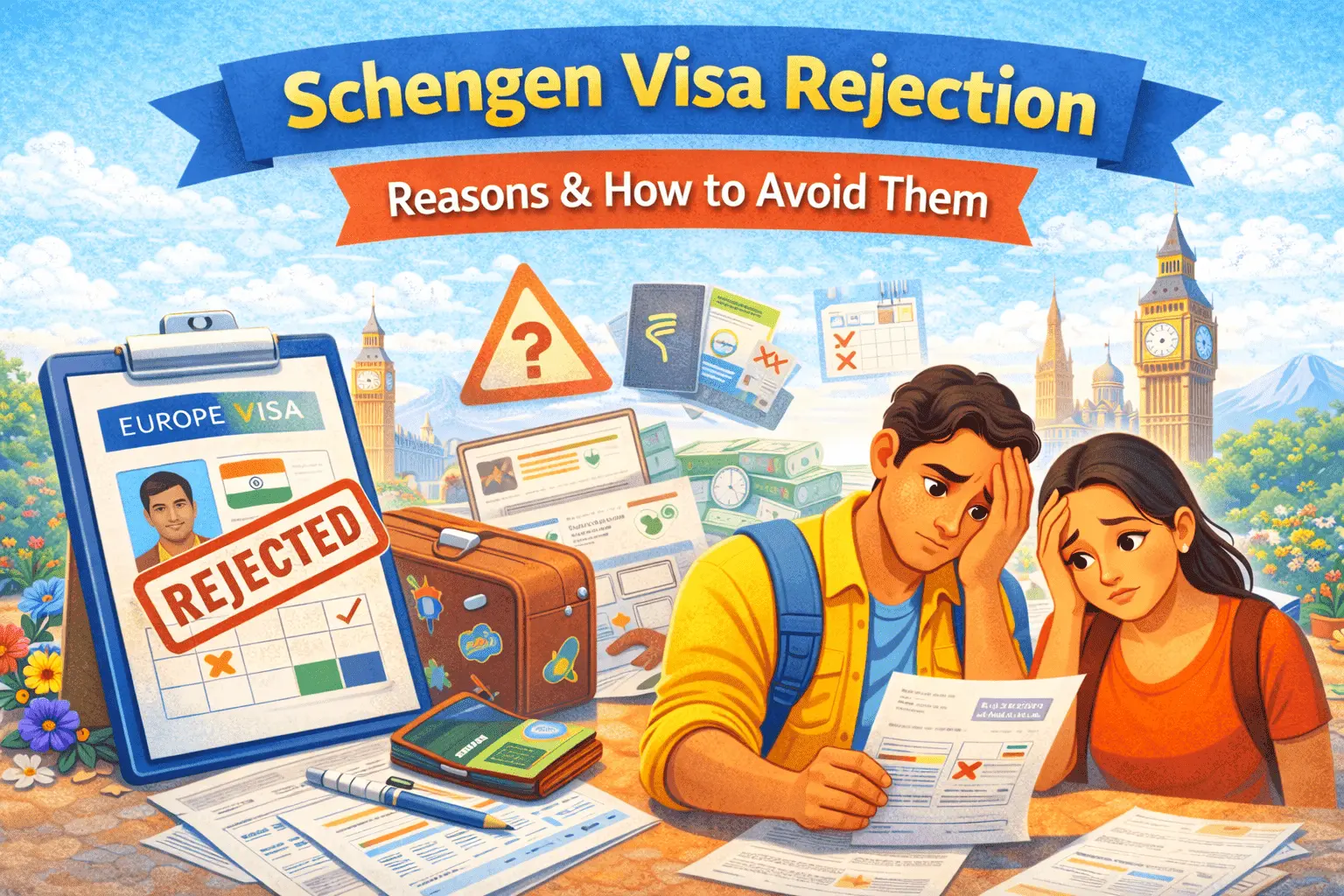
A Schengen visa rejection can be frustrating—especially after spending time, money, and effort planning your Europe trip. The good news is that most visa rejections for Indians are preventable once you understand the real reasons behind them.
In this guide, we explain the most common Schengen visa rejection reasons for Indian travellers and, more importantly, how to avoid them.
Why Do Schengen Visas Get Rejected?
Contrary to popular belief, most rejections are not random.
They usually happen due to documentation gaps, weak explanations, or avoidable mistakes .
Let’s break them down clearly.
1. Incomplete or Incorrect Documentation
Why this causes rejection:
Missing documents
Incorrect forms
Mismatch between itinerary, hotel bookings, and travel dates
Even a small inconsistency can raise doubts.
How to avoid it:
Double-check every document
Ensure dates align across flights, hotels, and insurance
Submit clear, readable copies
Travellers booking Europe tour packages from India usually avoid this issue because documentation is structured professionally.
2. Weak Proof of Financial Stability
Why this causes rejection:
Embassies must be confident that you can:
Fund your trip
Return to India
Not overstay illegally
Insufficient bank balance or unclear financial history is a common rejection trigger.
How to avoid it:
Maintain sufficient bank balance before applying
Submit clear bank statements
Include income proof (salary slips, ITR, business documents)
3. Unclear Travel Purpose
Why this causes rejection:
If the embassy cannot clearly understand:
Where you’re going
Why you’re going
How long you’ll stay
They may doubt your intent.
How to avoid it:
Provide a clear, logical itinerary
Avoid vague or unrealistic plans
Ensure your cover letter explains your trip simply
Structured itineraries—especially in Europe group tours—reduce ambiguity.
4. Weak Ties to India
Why this causes rejection:
Embassies want assurance that you will return to India after your trip.
Red flags include:
No stable job or business
No family or financial commitments
Recent job changes without explanation
How to avoid it:
Submit employment letters or business proofs
Mention family ties clearly
Include return flight plans
5. Travel Insurance Issues
Why this causes rejection:
Travel insurance is mandatory for Schengen visas.
Rejections happen if:
Insurance coverage is insufficient
Policy dates don’t cover the full trip
Policy does not meet Schengen requirements
How to avoid it:
Buy Schengen-compliant insurance
Ensure coverage for entire travel duration
Double-check policy wording
6. Previous Visa Rejections or Overstays
Why this causes rejection:
Past immigration issues—anywhere in the world—can impact your application.
How to avoid it:
Be honest about past rejections
Provide explanations if required
Strengthen your current application
Transparency matters more than perfection.
7. Applying Too Late or in a Hurry
Why this causes rejection:
Last-minute applications often lead to:
Incomplete documents
Poor appointment availability
Rushed submissions
How to avoid it:
Apply 4–6 weeks in advance
Even earlier for summer travel
Avoid peak appointment rush
Does a Rejection Mean You Can’t Apply Again?
No.
A Schengen visa rejection does not mean permanent refusal.
You can:
Reapply after correcting issues
Strengthen documentation
Apply with clearer intent
Many travellers get approved on their second attempt when mistakes are addressed properly.
Does Booking a Tour Reduce Rejection Risk?
A tour booking does not guarantee approval, but it helps because:
It shows clear travel intent
It includes structured itinerary & accommodation
It reduces documentation errors
This is why first-time travellers often prefer Europe tour packages from India when applying for their Schengen visa.
Final Thoughts: Rejections Are Avoidable
Most Schengen visa rejections happen due to preventable reasons, not bad luck.
With:
Proper documentation
Clear travel plans
Timely application
Your chances of approval improve significantly.
If you’re unsure about documentation, itinerary clarity, or visa timing, getting guidance before applying can save both time and money.
 Get Detailed Itinerary & Visa Guidance
(Aligned with your travel plan—no false promises.)