Moscow & St Petersburg Tour – 7 Nights / 8 Days
Standard Package

Moscow & St Petersburg Tour – 7 Nights / 8 Days

Our best-selling Moscow & St Petersburg tour package: Red Square, the Kremlin and the Moscow Metro, then the Sapsan high-speed train to St Petersburg…

⌖ Russia ✦ Family & senior friendly planning
Package snapshot
DestinationRussia
Travel styleStandard Package
From ₹174,286 per person (twin sharing), land only, GST extra

Price updated 10 Nov 2026, 6:00 AM IST at today's exchange rate. Vendor payments are in foreign currency, so the final amount is fixed at our selling exchange rate on the date of full payment. GST 5% and TCS 2% extra at checkout.

Your holiday

Moscow & St Petersburg Tour – 7 Nights / 8 Days: overview

Two great Russian cities, one unforgettable journey

Picture yourself standing in Red Square as the painted domes of St Basil's Cathedral glow in the evening light, riding an escalator down into a Moscow Metro station lit by crystal chandeliers, and walking through the golden halls of the Winter Palace where the Tsars once held their balls. This Moscow and St Petersburg tour package shows you Russia's two great cities in 7 nights / 8 days at a comfortable pace, as a private tour for your family or group, with guaranteed departures from Delhi every Friday; other days are possible on request.

You spend three nights in Moscow, Russia's vast and energetic capital, for Red Square, St Basil's Cathedral, the Kremlin and its cathedrals and the palace-like stations of the Moscow Metro. Then the Sapsan high-speed train carries you to St Petersburg in about four hours, for four nights in Peter the Great's elegant city of canals and palaces: a city tour, the Peter and Paul Fortress, the Hermitage in the Winter Palace and a trip to Peterhof, the summer residence of the Tsars on the Gulf of Finland.

In summer, St Petersburg's famous white nights mean the sky barely darkens at all, and Peterhof's golden fountains are in full flow. In winter, the cities are dusted with snow, the rivers freeze and the cathedrals' domes shine against crisp blue skies. Whenever you travel, you stay in 4-star hotels with daily breakfast, an English-speaking guide leads every sightseeing day, private transfers are included, and our team helps you with the Russian e-visa. Return flights from Delhi, Mumbai or your city can be added on request.

Before you go, read our guides to the top places to visit in Moscow, Peterhof Palace and its fountains, the best time to visit Russia and the Russia visa for Indians. For more options, see all our Russia tour packages.

From Ashok's travels

I lived in Russia for 19 years, from 1991 to 2010, mostly in Moscow. Moscow is a business city and St Petersburg the cultural one, and to me St Petersburg is even more beautiful. Summer is lovely, and winter is just as beautiful under white, crunchy snow. In winter, dress warmly and never go out on an empty stomach.

Ashok Saini, Founder, Dreamland Vacations

Good to know

Package typeStandard Package
Planning supportSmall changes by enquiry
Best forFamilies, couples & seniors
Book now – pay 30%
Trip highlights
✦ Arrive in Moscow | First steps in Russia's great capital
✦ Moscow city tour – Red Square, St Basil's Cathedral and the Metro | Golden domes and underground palaces
✦ The Kremlin and its cathedrals | Inside the fortress of the Tsars
✦ Sapsan high-speed train to St Petersburg | From the capital to the city of the Tsars
✦ St Petersburg city tour and Peter and Paul Fortress | Canals, cathedrals and the birthplace of the city
✦ The Hermitage and the Winter Palace | Three million treasures in the palace of the Tsars
Day-wise plan

Russia itinerary: day by day

Day 1
Arrive in Moscow | First steps in Russia's great capital

Arrive in Moscow | First steps in Russia's great capital

⌖ Moscow

Your Russian adventure begins with a flight from Delhi to Moscow, a journey of around six and a half hours that carries you north over the Himalayas, Central Asia and the endless plains of southern Russia. As the plane descends, look out of the window: in summer, Moscow is surrounded by dark green forests of birch and pine, dotted with villages and the wooden country houses, called dachas, where Muscovites spend their weekends; in winter, the same landscape lies under a thick blanket of snow, the forests dark against the white, the rivers frozen into silver ribbons. Either way, it's a sight that tells you that you've arrived somewhere very different from home.

On arrival, after passport control and collecting your bags, you're met by our representative and taken to your hotel by private transfer. The drive into the city takes you along wide avenues lined with tall apartment blocks, past parks and churches with golden onion domes, and into the heart of one of the largest cities in Europe. Moscow is home to around 13 million people, and it feels enormous: its boulevards are many lanes wide, its buildings are grand and solid, and its energy is unmistakable.

Moscow is first mentioned in the chronicles in 1147, when it was a small wooden fortress on a hill above the Moskva River. Over the centuries, it grew into the capital of a vast empire, survived invasions by the Mongols, the Poles and Napoleon, became the capital of the Soviet Union and, today, is the political, cultural and business heart of Russia. Its history is written in its buildings: medieval churches and monasteries, grand 19th-century mansions, the towering Stalin-era skyscrapers known as the Seven Sisters, and gleaming modern glass towers in the business district of Moscow City.

Remember to set your watch: Moscow is two and a half hours behind India. Depending on your arrival time, you can relax at your hotel and recover from the journey, or head out for a first walk in the Russian capital. If you have energy, a stroll along Tverskaya Street, Moscow's main avenue, or along the pedestrian Arbat, an old street lined with cafés, souvenir shops, street musicians and portrait artists, is a lovely way to feel the city's atmosphere. In the evening, the city's monuments and bridges are beautifully lit, and the Kremlin's red walls and towers glow against the night sky.

In summer, Moscow's evenings are long and light, with the sun setting after 9 PM in June, and the city's parks and riverside promenades fill with people. Gorky Park, along the Moskva River, is especially lively, with gardens, open-air cafés, bicycle paths and outdoor concerts. In winter, the days are short and cold, but the city sparkles with lights, and parks such as Gorky Park are turned into giant skating rinks, where Muscovites glide under strings of coloured lights to music.

A few practical tips will help you settle in. The currency is the Russian rouble. International cards issued outside Russia, including Indian Visa and Mastercard cards, generally don't work in Russia at present, so bring enough cash in US dollars or euros to exchange at banks or official exchange offices; our team will advise you on the latest situation before you travel. Russian plugs are the round two-pin European type. Few people outside hotels speak English, so a translation app on your phone is very useful, and learning a few words, such as "spasibo" (thank you) and "zdravstvuyte" (hello), will earn you warm smiles.

Indian travellers often find Russia surprisingly welcoming. India and Russia have a long friendship, and older Russians fondly remember the Indian films that were hugely popular in the Soviet Union, especially those of Raj Kapoor, whose songs from Awara and Shree 420 were sung across the country. You may well meet someone who hums "Mera Joota Hai Japani" when they hear you're from India. Moscow also has several Indian restaurants, so you won't be far from familiar flavours if you want them.

Get a good night's sleep. Tomorrow, you'll see Red Square, the heart of Russia.

If you arrive with time to spare in the evening, Red Square is worth a first look even before tomorrow's tour. At night, the Kremlin's red walls and towers are floodlit, the domes of St Basil's glow against the dark sky, and the long façade of GUM is outlined with thousands of tiny lights. It's one of the most magical sights in Moscow, and a wonderful welcome to the city.

Then head back to your hotel and rest well.

Included today: arrival transfer by private car or van from Moscow airport to your hotel.

Good to know: hotel check-in is usually from 2 PM. Meals today are not included. Carry cash in US dollars or euros to exchange, as Indian cards generally don't work in Russia.
Day 2
Moscow city tour – Red Square, St Basil's Cathedral and the Metro | Golden domes and underground palaces

Moscow city tour – Red Square, St Basil's Cathedral and the Metro | Golden domes and underground palaces

⌖ Moscow 🍽 Meals: Breakfast

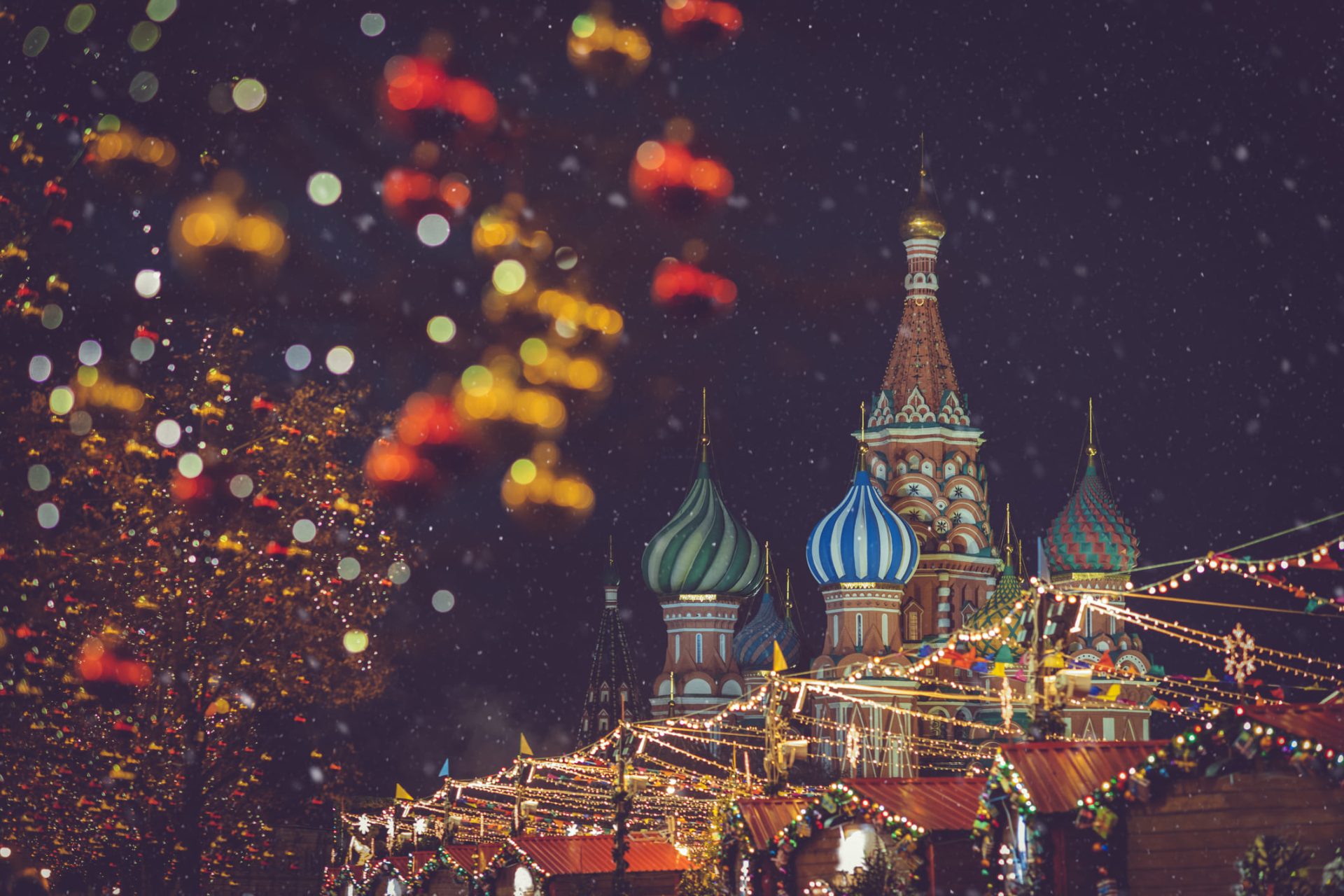
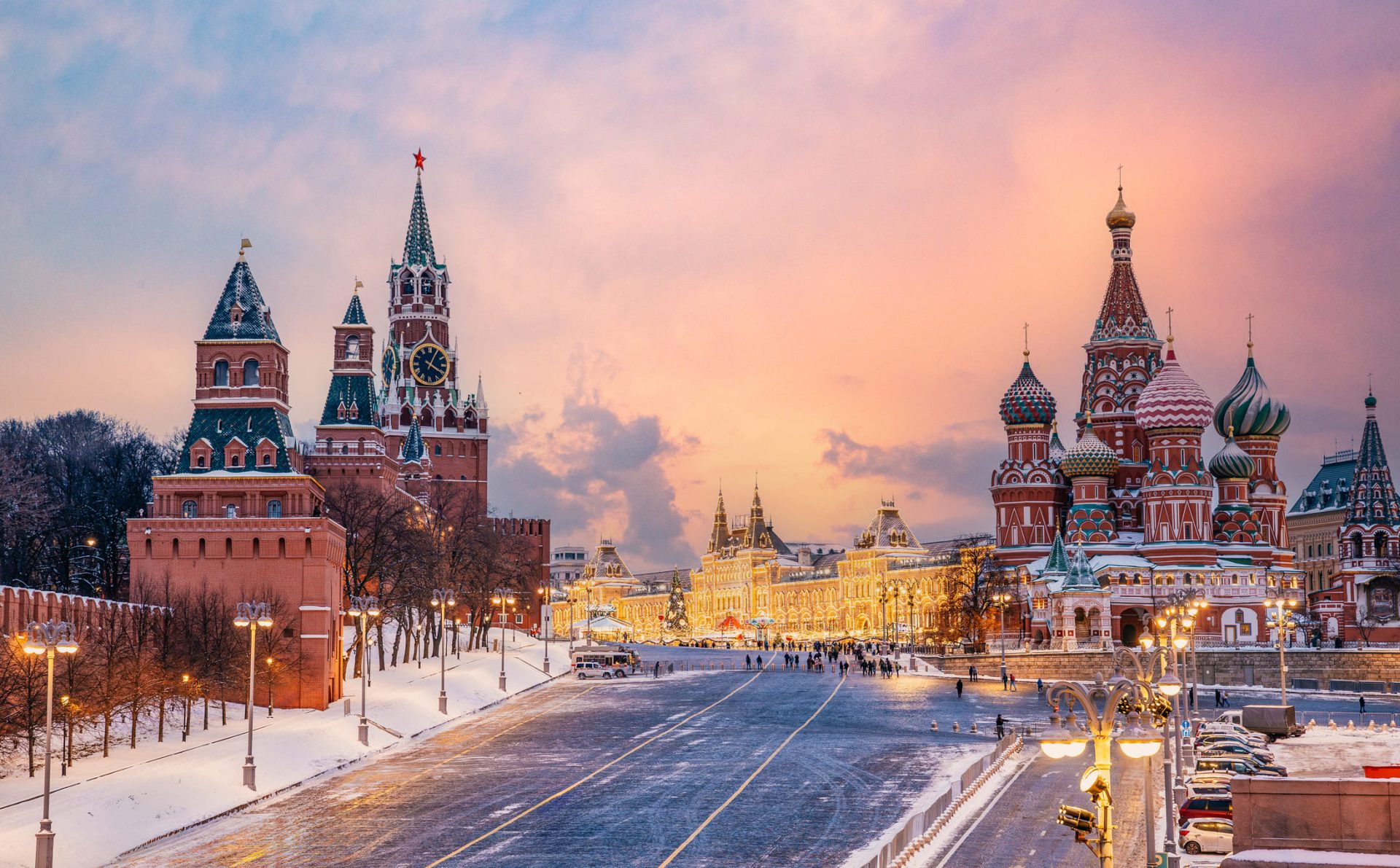
Today you discover the heart of Moscow with your English-speaking guide. After breakfast, you begin at Red Square, the most famous square in Russia, where the history of the country has been played out for more than five hundred years. Its name doesn't come from the colour of the walls or from communism: in old Russian, the word "krasnaya" meant "beautiful" as well as "red", so it was originally simply "the beautiful square". And beautiful it is. As you walk onto its vast cobbled space, you see the red brick walls and towers of the Kremlin on one side, the long façade of the GUM department store on the other, and at the far end, the most famous building in Russia: St Basil's Cathedral.

St Basil's looks like something from a fairy tale, with its cluster of onion domes twisted, striped and patterned in red, green, blue, yellow and gold. It was built between 1555 and 1561 on the orders of Tsar Ivan the Terrible to celebrate his capture of the city of Kazan from the Tatars. Inside, it's not one great hall but a maze of nine small chapels connected by narrow passages, each one decorated with painted flowers and patterns. A famous legend says that Ivan was so amazed by its beauty that he had the architects blinded, so they could never build anything to equal it. Historians doubt the story, but it shows how extraordinary the cathedral seemed even in its own time.

Also on Red Square stands Lenin's Mausoleum, a low pyramid of red and black granite, where the embalmed body of Vladimir Lenin, the leader of the 1917 Revolution, has lain on display since 1924. Facing it is GUM, opened in 1893 as a grand shopping arcade, its three long halls covered by a glass roof and lined with elegant shops, cafés and fountains. It's famous for its ice cream, sold from little carts and made to an old Soviet recipe; Muscovites eat ice cream even in the depths of winter, and you should try it too.

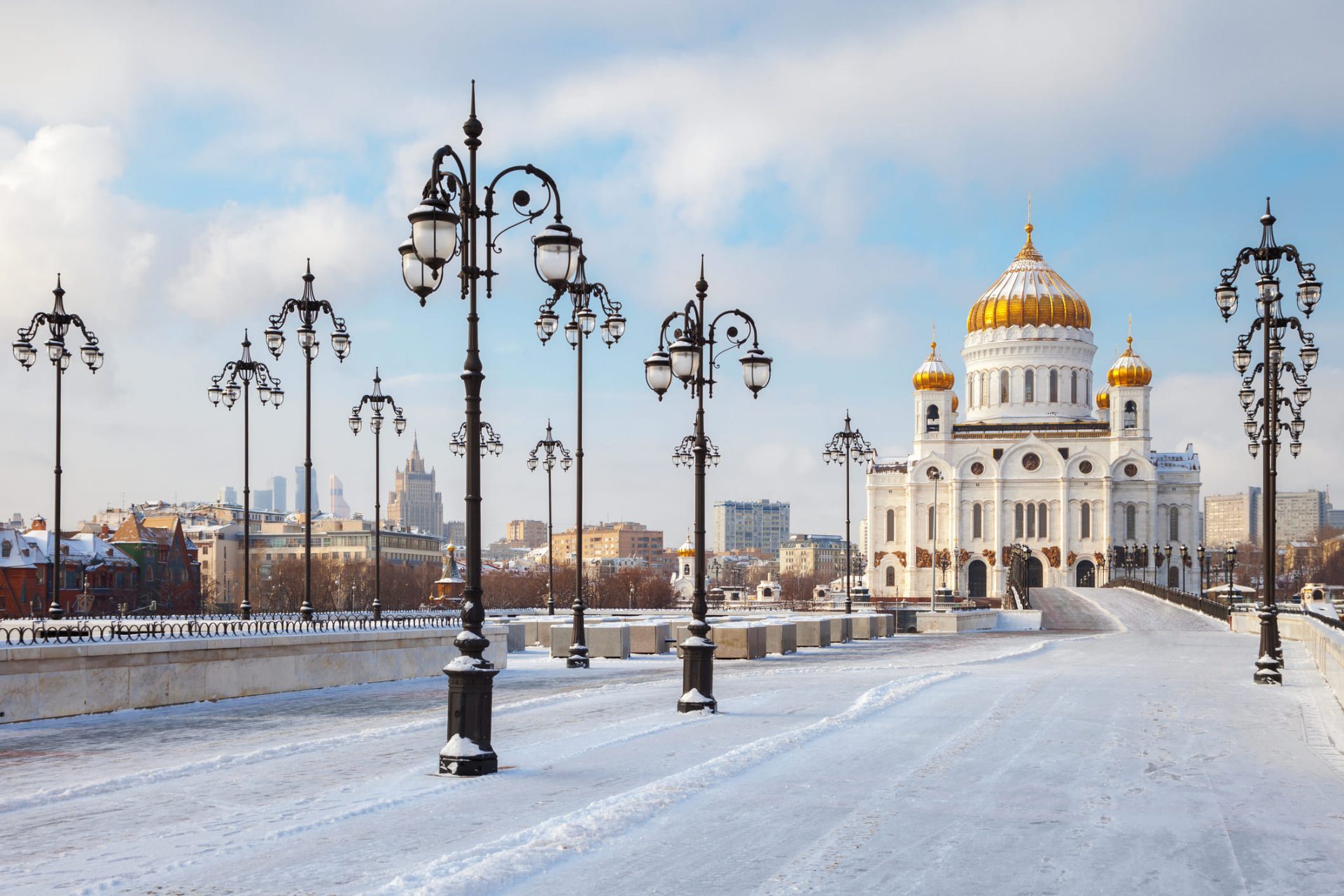
Your tour continues past the Bolshoi Theatre, home of one of the world's most famous ballet companies, with its grand white columns and a bronze chariot of Apollo on the roof; the Lubyanka building, the former headquarters of the KGB, Soviet Russia's feared secret police; and the narrow lanes of Kitay-Gorod, one of Moscow's oldest districts, full of small churches with colourful domes, old merchants' houses and quiet courtyards. You'll also stop at the Cathedral of Christ the Saviour, one of the tallest Orthodox churches in the world, with its gleaming golden domes. The original cathedral was built in the 19th century to give thanks for Russia's victory over Napoleon in 1812, but in 1931, Stalin had it blown up, and for decades, the site was occupied by a huge open-air swimming pool. After the end of the Soviet Union, the cathedral was rebuilt exactly as it had been, and it was consecrated in 2000.

The day ends underground, with a ride through the Moscow Metro, one of the most beautiful public transport systems in the world. When the first line opened in 1935, the Soviet government wanted to give ordinary people "palaces for the people", and many of the stations are breathtaking: marble halls, crystal chandeliers, mosaics, stained-glass panels and bronze statues. At Komsomolskaya, a huge yellow hall with a ceiling decorated with mosaics of Russian heroes feels more like a ballroom than a station. At Mayakovskaya, elegant arches of steel and pink marble frame ceiling mosaics of the Soviet sky. And at Ploshchad Revolyutsii, bronze statues of soldiers, workers, farmers and students line the arches; Muscovites rub the nose of the bronze dog beside a border guard for luck, and you'll see that his nose shines bright gold from millions of hands.

The Metro is also remarkably efficient: trains run every minute or two at busy times, and some of the escalators are so long that the ride down takes several minutes. During the Second World War, the deep stations served as shelters from the bombing. Riding it with your guide, hopping off at the most beautiful stations, is one of the highlights of any visit to Moscow.

For lunch, try a Russian favourite at one of the city's popular cafeteria-style restaurants, where you can point at dishes such as borscht, beetroot soup with sour cream, potato salads, pancakes called blini and buckwheat porridge, and pay at the till.

Included today: Moscow city tour with an English-speaking guide, including Red Square, St Basil's Cathedral (outside), the Cathedral of Christ the Saviour and a guided Metro ride, breakfast.

Good to know: Lenin's Mausoleum and St Basil's interior have their own opening hours and may close for events. Red Square is sometimes closed for official ceremonies. Wear comfortable shoes, and in winter, warm boots, a hat and gloves.

Day 3
The Kremlin and its cathedrals | Inside the fortress of the Tsars

The Kremlin and its cathedrals | Inside the fortress of the Tsars

⌖ Moscow 🍽 Meals: Breakfast

Today you go inside the Kremlin, the fortress at the heart of Moscow since the 12th century and still the seat of Russia's government. The word "kremlin" simply means "fortress", and many old Russian cities have one, but the Moscow Kremlin is the most famous of all. Its massive red brick walls, about two and a quarter kilometres long and up to 19 metres high, were built at the end of the 15th century by Italian architects invited to Moscow by Grand Prince Ivan III, which is why the swallow-tailed battlements look so much like those of castles in Italy. Twenty towers rise along the walls, the tallest of them crowned with glowing red stars.

After breakfast, you enter the Kremlin with your guide and walk through a world of palaces, government buildings, gardens and churches. The highlight is Cathedral Square, one of the most beautiful squares in Russia, surrounded by white stone cathedrals topped with golden domes that gleam in the sun. The Assumption Cathedral, built in the 1470s, was the most important church in Russia, where the Tsars were crowned for centuries. Inside, its walls and pillars are covered from floor to ceiling with frescoes of saints and biblical scenes, glowing in shades of gold, red and blue, and a great iconostasis, a wall of icons, rises in front of the altar. The Archangel Cathedral, with its silver domes, was the burial place of the Grand Princes and Tsars of Moscow, including Ivan the Terrible, whose tomb you can see inside, until Peter the Great moved the capital to St Petersburg. Nearby stands the Annunciation Cathedral, the private chapel of the royal family, with its cluster of golden domes.

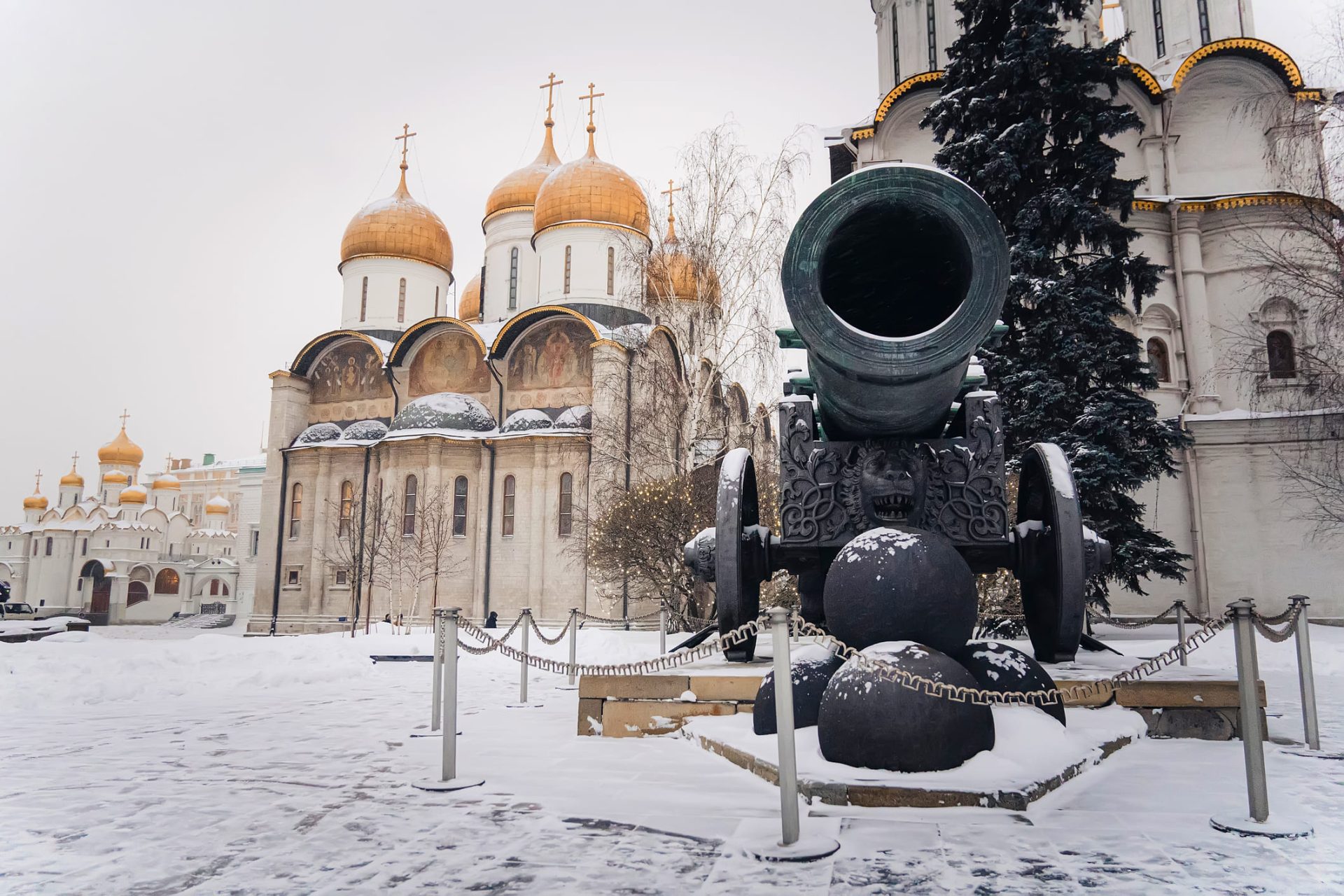
Above the square rises the Ivan the Great Bell Tower, about 81 metres high, which was for centuries the tallest building in Moscow; there was a rule that no building in the city could be taller. At its foot sits the Tsar Bell, the largest bell in the world, weighing about 200 tonnes. It was cast in the 1730s but was damaged by fire before it could ever be rung, and a huge piece, weighing 11 tonnes, broke off; it sits beside the bell today. Nearby is the Tsar Cannon, cast in 1586, one of the largest cannons ever made, though it was never fired in battle. Both are favourite spots for photographs.

As you walk, your guide will point out the Grand Kremlin Palace, the official residence of the Russian President, the Senate building, and the Kremlin gardens, which in summer are filled with flowers and in winter are blanketed with snow. Outside the walls, in the Alexander Garden, is the Tomb of the Unknown Soldier, where an eternal flame honours the millions who died in the Second World War. Every hour, guards perform a precise, slow-stepping changing of the guard ceremony here, which is fascinating to watch.

The afternoon is free for shopping or an optional evening at the Bolshoi or the circus. If you love music and dance, an evening at the Bolshoi Theatre, watching a classic ballet such as Swan Lake or The Nutcracker in its gilded, red-velvet auditorium, is an unforgettable experience. If you're travelling with children, the Moscow circus is a joy, with acrobats, clowns, jugglers and performing animals, a tradition Russians are very proud of. For shopping, the GUM arcade, the Arbat and the stalls of the Izmailovsky market, with its painted wooden matryoshka dolls, lacquered boxes, fur hats and shawls, are all excellent places to find souvenirs.

If you'd like to see more of the Kremlin's treasures, the Armoury Chamber, one of the oldest museums in Russia, can be added with an advance ticket. It holds the crowns, thrones, carriages and robes of the Tsars, priceless weapons and armour, and a dazzling collection of Fabergé eggs, the jewelled Easter eggs made for the last Russian emperors. It's a remarkable collection, and visits are timed, so ask us before you travel if you'd like to include it.

In the evening, a walk along the Moskva River embankment gives you a lovely view back across the water to the Kremlin, its walls and golden domes reflected in the river. In summer, river boats glide past, some of them converted into floating restaurants, and the riverside parks are full of people enjoying the long, light evenings.

As the sun sets, the Kremlin's towers and the domes of its cathedrals catch the last light, a perfect end to a day spent in the heart of Russian history.

Included today: Kremlin visit with an English-speaking guide, including Cathedral Square and entry to its cathedrals, breakfast.

Good to know: the Kremlin is usually closed on Thursdays and may close for state events. Large bags aren't allowed inside, so bring only a small bag. Bolshoi and circus tickets are optional and must be booked in advance; ask us about availability.

Day 4
Sapsan high-speed train to St Petersburg | From the capital to the city of the Tsars

Sapsan high-speed train to St Petersburg | From the capital to the city of the Tsars

⌖ St Petersburg 🍽 Meals: Breakfast

Today you travel from Moscow to St Petersburg, Russia's two great cities, on the Sapsan high-speed train. After breakfast, a private transfer takes you to the station, usually Leningradsky Station, one of Moscow's oldest railway stations, which stands on Komsomolskaya Square, known as the square of three stations because three great railway terminals face each other across it.

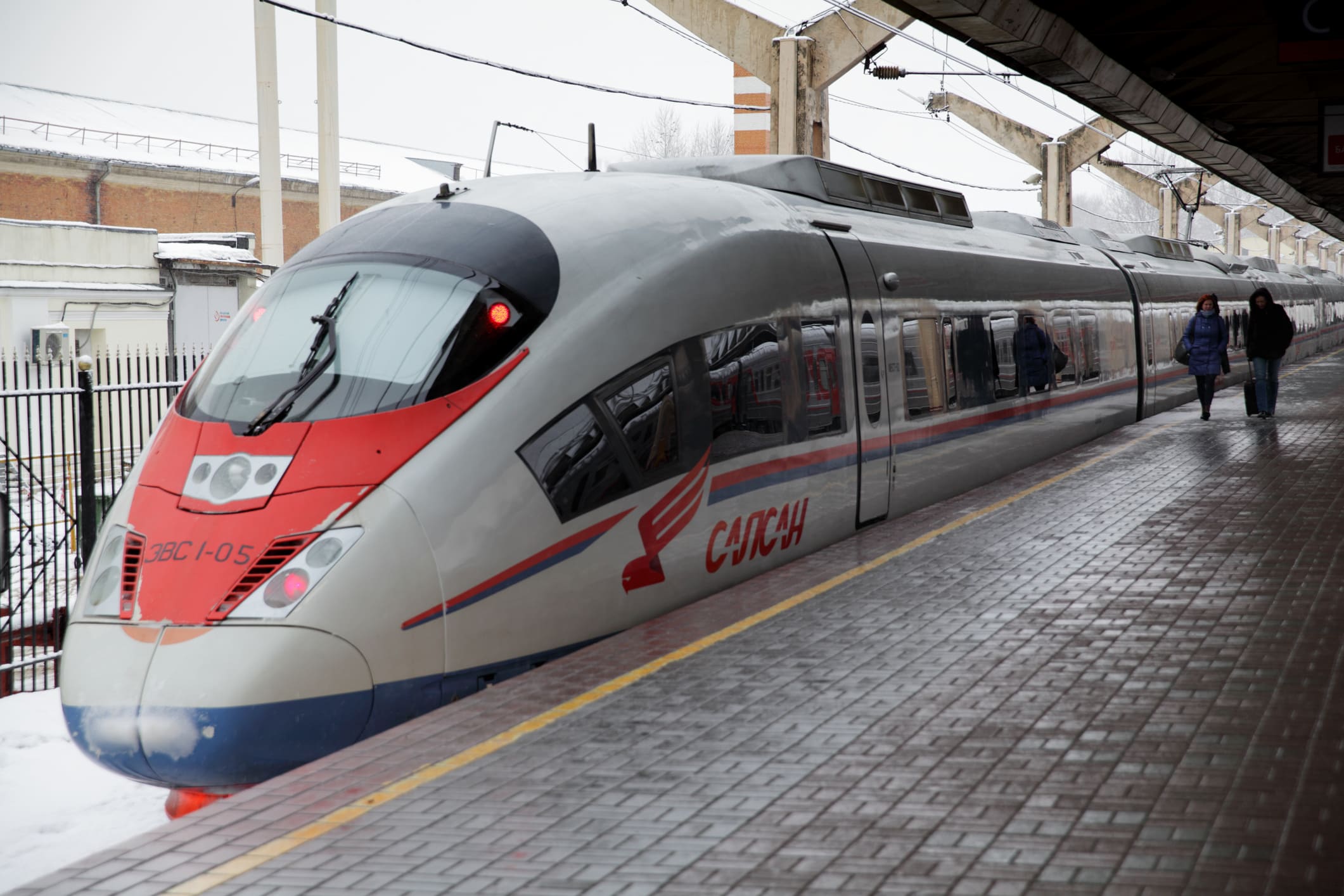
The Sapsan, whose name means "peregrine falcon", the fastest bird in the world, began running in 2009, and it has transformed travel between the two cities. It reaches speeds of up to 250 kilometres an hour, covering the roughly 650 kilometres between Moscow and St Petersburg in about four hours. The trains are modern, quiet and comfortable, with large windows, reclining seats and a buffet car serving snacks and drinks.

As the train speeds north-west, sit back and watch the Russian countryside roll past. You'll see wide fields, wooden villages with brightly painted window frames, small churches with blue and gold domes, rivers and lakes, and endless forests of birch and pine. In summer, the fields are green and golden, and wildflowers bloom along the tracks; in winter, the landscape is white and silent, the birch trees standing like silver lines against the snow, and frozen rivers glint in the low sunlight. You'll pass through the historic city of Tver, on the Volga, Russia's longest river, and cross the gentle Valdai Hills, where the Volga and many other great rivers begin.

The railway line itself has a story. It was built in the 1840s and 1850s on the orders of Tsar Nicholas I, and legend says that when the engineers showed him their plans, he simply took a ruler and drew a straight line between the two cities, which is why the route runs almost perfectly straight. The legend also says that where his finger slipped over the ruler, the line has a small curve, though historians say the bend was really built to manage a steep slope.

You arrive at Moskovsky Station in the heart of St Petersburg, where your guide meets you on the platform and takes you to your hotel. St Petersburg feels completely different from Moscow. Where Moscow is vast and bold, St Petersburg is elegant and harmonious, a city of pastel-coloured palaces, canals and bridges, built in the European style by Peter the Great as his "window on Europe". Your hotel stands close to Nevsky Prospekt, the city's grand main avenue, so you can easily step out for a first walk.

If you're visiting between late May and mid-July, you'll arrive during the famous white nights, when the sun barely sets and the sky stays light all night, glowing pink and gold at midnight. The city's people stay out late, strolling along the embankments and watching the bridges over the Neva River being raised to let ships pass, a spectacle that draws crowds every night. In winter, the city is quiet and beautiful, with snow on the rooftops, ice on the canals and the golden domes of its cathedrals shining against the pale sky.

St Petersburg also has a very different rhythm from Moscow. Life here revolves around the water: in summer, little boats carry visitors along the canals and rivers, people stroll along the granite embankments, and the city's many cafés, bookshops and theatres give it a relaxed, artistic feel. Writers such as Pushkin, Gogol and Dostoevsky lived and worked here, and their novels are full of the city's streets, bridges and courtyards; Dostoevsky's Crime and Punishment is set in the very neighbourhoods near the Haymarket that you may walk through.

For your first evening, take a stroll along Nevsky Prospekt, where the shop windows glow, street musicians play and the great dome of the Kazan Cathedral rises beside the avenue. Stop for dinner at one of the many restaurants nearby; St Petersburg has excellent Georgian restaurants, serving cheese-filled bread called khachapuri and grilled kebabs, as well as several Indian restaurants if you'd like familiar flavours. Then get a good night's rest: tomorrow, you discover the city properly.

If you're travelling in winter, look out for the ice sculptures and festive lights that decorate the city's squares, and warm up with a cup of hot tea or spiced sbiten, a traditional Russian honey drink, in one of the cosy cafés along Nevsky Prospekt. In summer, sit at an outdoor table and watch the crowds stroll by in the long golden evening.

Included today: transfer from your Moscow hotel to the station, Sapsan high-speed train from Moscow to St Petersburg in economy class, transfer from St Petersburg station to your hotel, breakfast.

Good to know: keep your passport with you on the train; it's needed for boarding. Luggage space is limited to what you can carry and place on the racks. Food on the train is at your own cost.

Day 5
St Petersburg city tour and Peter and Paul Fortress | Canals, cathedrals and the birthplace of the city

St Petersburg city tour and Peter and Paul Fortress | Canals, cathedrals and the birthplace of the city

⌖ St Petersburg 🍽 Meals: Breakfast

Today you discover the 'Venice of the North' with your English-speaking guide. St Petersburg was founded in 1703 by Peter the Great, who wanted a modern, European capital and a port on the Baltic Sea. He chose a marshy, flood-prone delta where the River Neva meets the Gulf of Finland, and tens of thousands of workers drained the swamps, drove wooden piles into the mud and built a city of stone from nothing. Within a few years, it had become the capital of the Russian Empire, and it remained so for two centuries, until the government moved back to Moscow in 1918. The city has had three names: St Petersburg, then Petrograd from 1914, then Leningrad from 1924, and St Petersburg again since 1991.

The city is built on dozens of islands, separated by rivers and canals and joined by hundreds of bridges, and its historic centre is a UNESCO World Heritage Site. As you drive along the embankments, you see why it's so often compared with Venice and Amsterdam: elegant palaces painted in pastel shades of yellow, green, blue and pink line the water, their reflections shimmering in the canals, and graceful bridges with iron railings and gilded statues cross the waterways.

Your tour begins on Nevsky Prospekt, the city's grand main avenue, about four and a half kilometres long, lined with palaces, churches, bookshops, cafés and department stores. Along it, you'll see the great curved colonnade of the Kazan Cathedral, inspired by St Peter's in Rome, and, a short walk away, the Church of the Saviour on Spilled Blood, with its colourful onion domes, built on the spot where Tsar Alexander II was assassinated in 1881. Its interior is covered with more than 7,500 square metres of mosaics, one of the largest collections of mosaics in the world.

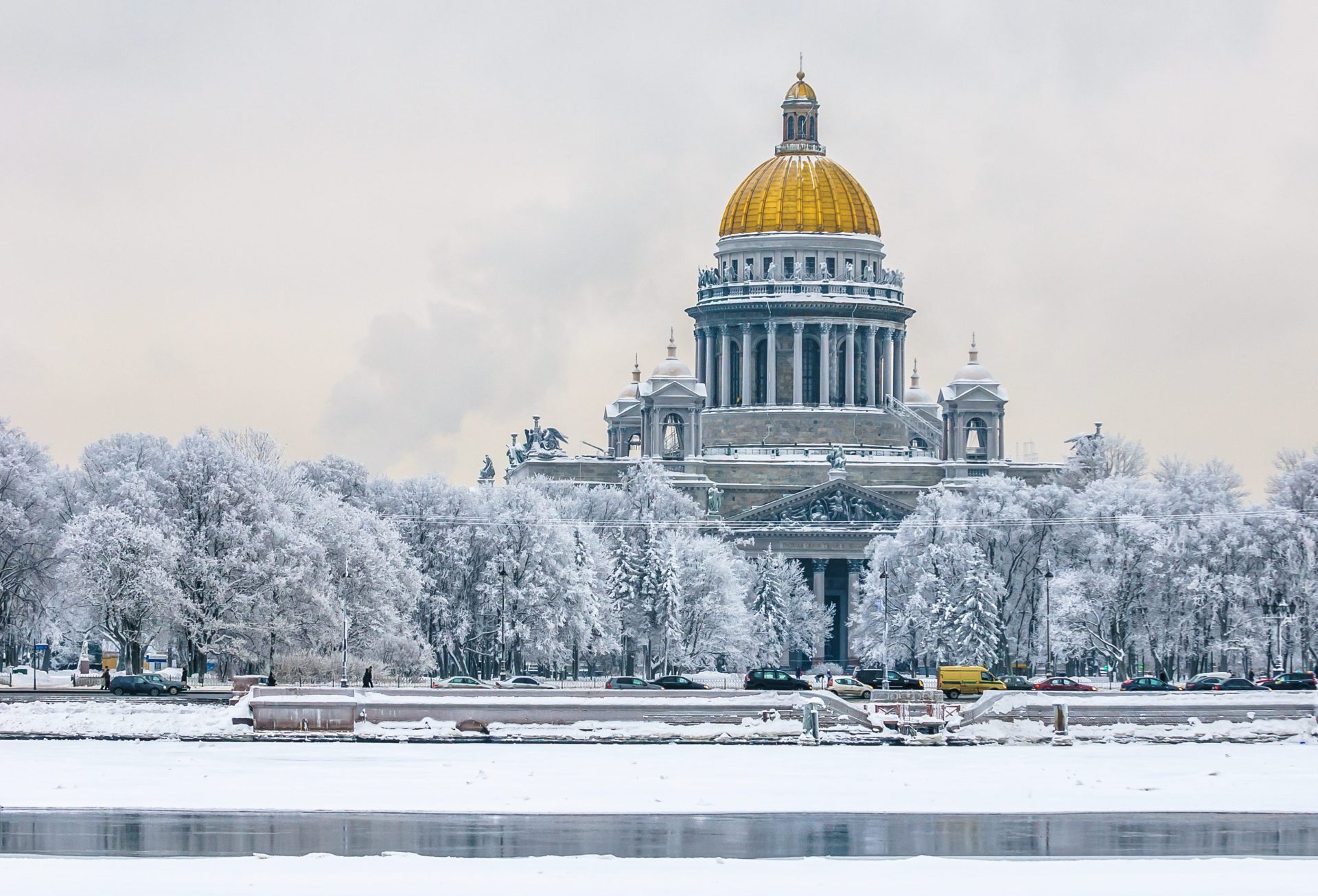
You continue to Vasilievsky Island, where, at its eastern tip, known as the Strelka, two tall red Rostral Columns decorated with the bows of ships once served as lighthouses for the port. From here, you get one of the finest views in the city, across the wide Neva to the Winter Palace and the Peter and Paul Fortress. You pass Theatre Square, home of the famous Mariinsky Theatre, where many of the greatest Russian ballets were first performed, and the St Nicholas Naval Cathedral, a beautiful blue-and-white baroque church with golden domes, built for the sailors of the Russian navy. At St Isaac's Square, you see St Isaac's Cathedral, one of the largest cathedrals in the world, with a dome covered in about 100 kilograms of gold, and nearby, the Bronze Horseman, the famous statue of Peter the Great on a rearing horse, made famous by Pushkin's poem. You'll also see the cruiser Aurora, now a museum ship moored on the Neva, whose gun fired a blank shot in October 1917 that became the signal for the storming of the Winter Palace and the start of the Russian Revolution.

Then you visit the Peter and Paul Fortress, on a small island in the Neva, where St Petersburg was born. The fortress was the first building in the city, begun on 27 May 1703, the date still celebrated as the city's birthday. Its star-shaped walls enclose the Peter and Paul Cathedral, whose slender golden spire, about 122 metres high, is one of the symbols of the city. Inside the cathedral are the tombs of almost all the Russian emperors and empresses from Peter the Great onwards. In a side chapel lie the remains of the last Tsar, Nicholas II, his wife Alexandra and three of their children, who were executed by the Bolsheviks in 1918; their remains were found decades later and buried here in 1998. Standing among the white marble tombs, you feel the whole history of the Russian Empire around you.

Every day at noon, a cannon is fired from the fortress walls, a tradition that goes back to the 18th century, and the boom echoes across the river; if you're nearby, you'll hear it. Look out, too, for the little statue of a hare on a post in the water near the bridge to the fortress, which commemorates the hares that, according to legend, were the island's only inhabitants before the city was built. Visitors toss coins onto its platform for luck. In summer, people sunbathe on the little beach beneath the fortress walls; in winter, hardy locals known as "walruses" swim in holes cut in the ice.

In the evening, enjoy a walk along Nevsky Prospekt or the embankments. During the white nights, the city stays bright until after midnight, and in season, from April to November, the bridges over the Neva are raised at night to let ships pass, a beautiful spectacle that draws crowds every evening.

Included today: St Petersburg city tour with an English-speaking guide, Peter and Paul Fortress and Cathedral, breakfast.

Good to know: the Peter and Paul Cathedral may close on some days of the week and for events. Bridge-raising times are posted daily; if you go out to watch, check that your hotel is on the same side of the river, or you may have to wait until the bridges come down.

Day 6
The Hermitage and the Winter Palace | Three million treasures in the palace of the Tsars

The Hermitage and the Winter Palace | Three million treasures in the palace of the Tsars

⌖ St Petersburg 🍽 Meals: Breakfast

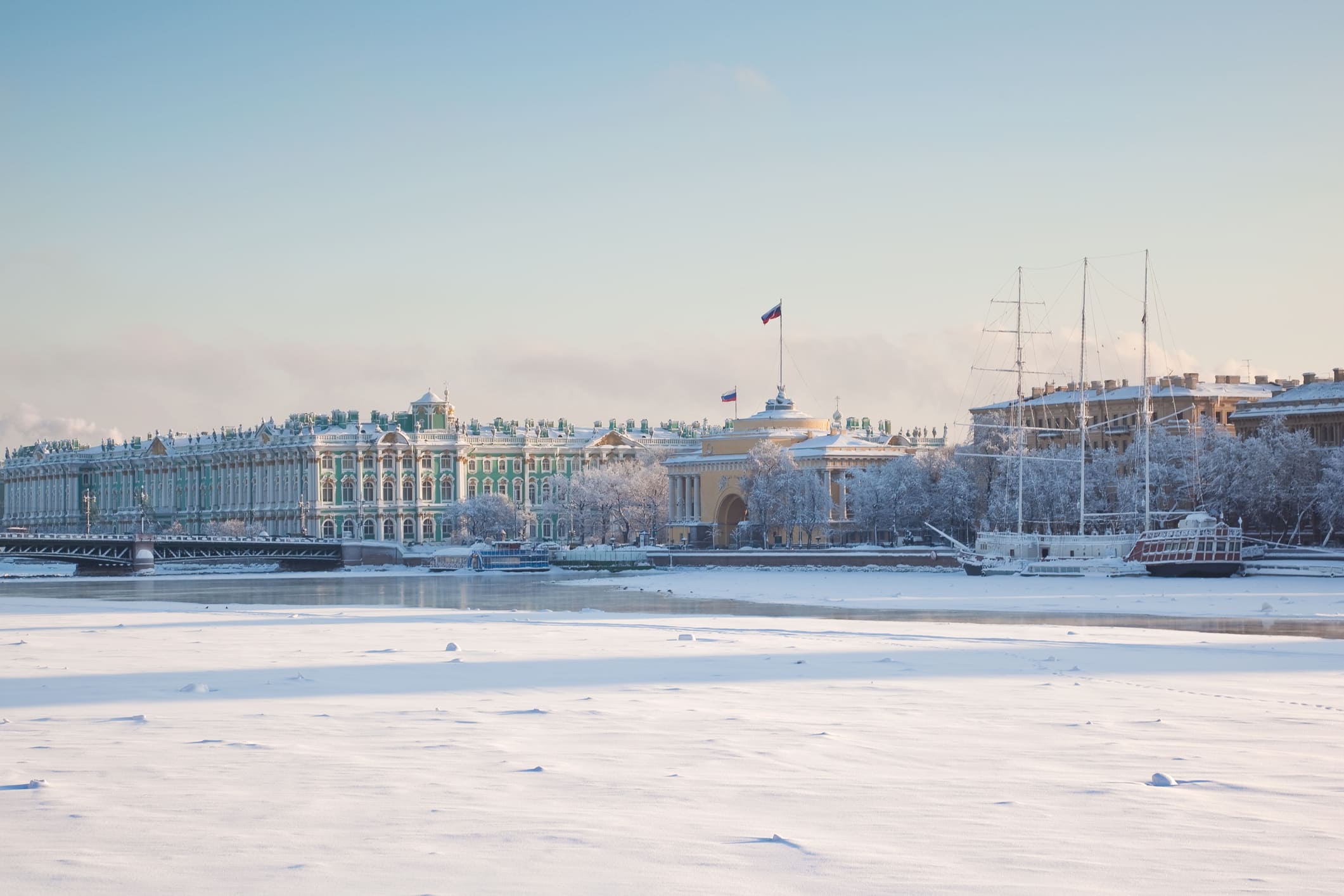
Today you visit one of the greatest museums in the world. After breakfast, you walk with your guide onto Palace Square, a vast open space bordered on one side by the long, curved yellow façade of the General Staff Building, with its great triumphal arch, and on the other by the Winter Palace, painted a soft green and white and decorated with columns and statues. In the centre of the square rises the Alexander Column, a single block of red granite about 25 metres tall, topped by an angel. It weighs around 600 tonnes, and it isn't fixed to its base at all: it stands by its own weight. It's a breathtaking setting, and the square has witnessed some of the most important moments in Russian history, from imperial parades to the revolution of 1917.

The Winter Palace was designed by the Italian architect Bartolomeo Rastrelli and completed in 1762 for Empress Elizabeth, the daughter of Peter the Great, and it was the main residence of the Russian emperors until 1917. It has around 1,500 rooms, more than 1,700 doors and nearly 2,000 windows. Today, it forms the heart of the State Hermitage Museum, which was founded in 1764 by Empress Catherine the Great, when she bought a collection of 225 paintings from a merchant in Berlin. Catherine was a passionate collector, and over the following decades, she and the emperors who followed her filled the palace with art from all over Europe. Today the Hermitage holds around three million objects, and it's said that if you spent just a minute looking at each one, it would take you years to see them all.

With your guide, you walk up the magnificent Jordan Staircase, a vast white-marble staircase decorated with gold, mirrors and painted ceilings, where foreign ambassadors were once received, and through the state rooms of the palace. You'll see the great Throne Room, the Malachite Room, decorated with green malachite stone from the Ural Mountains, and the Pavilion Hall, where the famous Peacock Clock, a golden mechanical clock made in England in the 18th century, still occasionally comes to life, the peacock spreading its tail and the owl turning its head.

Then come the paintings. The Hermitage has works by almost every great European artist. You'll see two rare paintings by Leonardo da Vinci, the Benois Madonna and the Litta Madonna, one of only a handful of Leonardo paintings anywhere in the world; works by Raphael, Titian and Michelangelo; a whole hall of paintings by Rembrandt, including his moving masterpiece, The Return of the Prodigal Son; and, in the General Staff Building across the square, a famous collection of Impressionist and modern art, with works by Monet, Renoir, Van Gogh, Cézanne, Gauguin, Matisse and Picasso, including Matisse's celebrated painting, The Dance.

The Hermitage even has a famous team of cats. For more than two centuries, cats have lived in the palace basements to keep away mice and rats, and today around fifty of them are looked after by the museum's staff. They even have their own annual festival.

The afternoon is free. You might stroll through the Summer Garden, Peter the Great's first formal garden, with its marble statues and shady avenues; take a boat trip along the city's rivers and canals, which in summer is one of the best ways to see St Petersburg; climb the colonnade of St Isaac's Cathedral for a panoramic view over the rooftops; or simply relax in a café on Nevsky Prospekt with a cup of tea and a slice of honey cake, a Russian favourite.

As you walk through the Hermitage, take a moment to look out of the windows. Many of the halls overlook the wide River Neva, and the view across the water to the Peter and Paul Fortress, with its golden spire, and to the Strelka of Vasilievsky Island is one of the loveliest in the city. In winter, the river is frozen solid, and the light reflecting off the snow fills the halls with a soft glow.

It's worth remembering, too, that the Winter Palace was the scene of one of the great turning points of history. In October 1917, revolutionary soldiers and workers stormed the palace, which was the seat of the Provisional Government, and the Russian Empire came to an end. Your guide will point out the rooms where these events took place.

After the museum, you'll understand why many visitors say a single visit to the Hermitage is only the beginning, and promise themselves they'll return.

Included today: guided visit to the Hermitage in the Winter Palace with an English-speaking guide, breakfast.

Good to know: the Hermitage is usually closed on Mondays. Large bags and backpacks must be left in the cloakroom. Some halls may be closed for restoration or exhibitions. In summer, the museum is very busy, so stay close to your guide.

Day 7
Peterhof – summer residence of the Tsars | Golden fountains on the Gulf of Finland

Peterhof – summer residence of the Tsars | Golden fountains on the Gulf of Finland

⌖ St Petersburg 🍽 Meals: Breakfast

Today you travel about 30 kilometres west of the city to Peterhof, on the shore of the Gulf of Finland, the palace and park often called the Russian Versailles. Peter the Great founded Peterhof in the early 18th century, after his great victory over Sweden at the Battle of Poltava in 1709, which made Russia a major European power, and he designed much of it himself. He wanted a summer residence that would rival the palaces of France, and he chose a site on a natural terrace above the sea, where water from springs in the hills could be carried by gravity to feed the fountains.

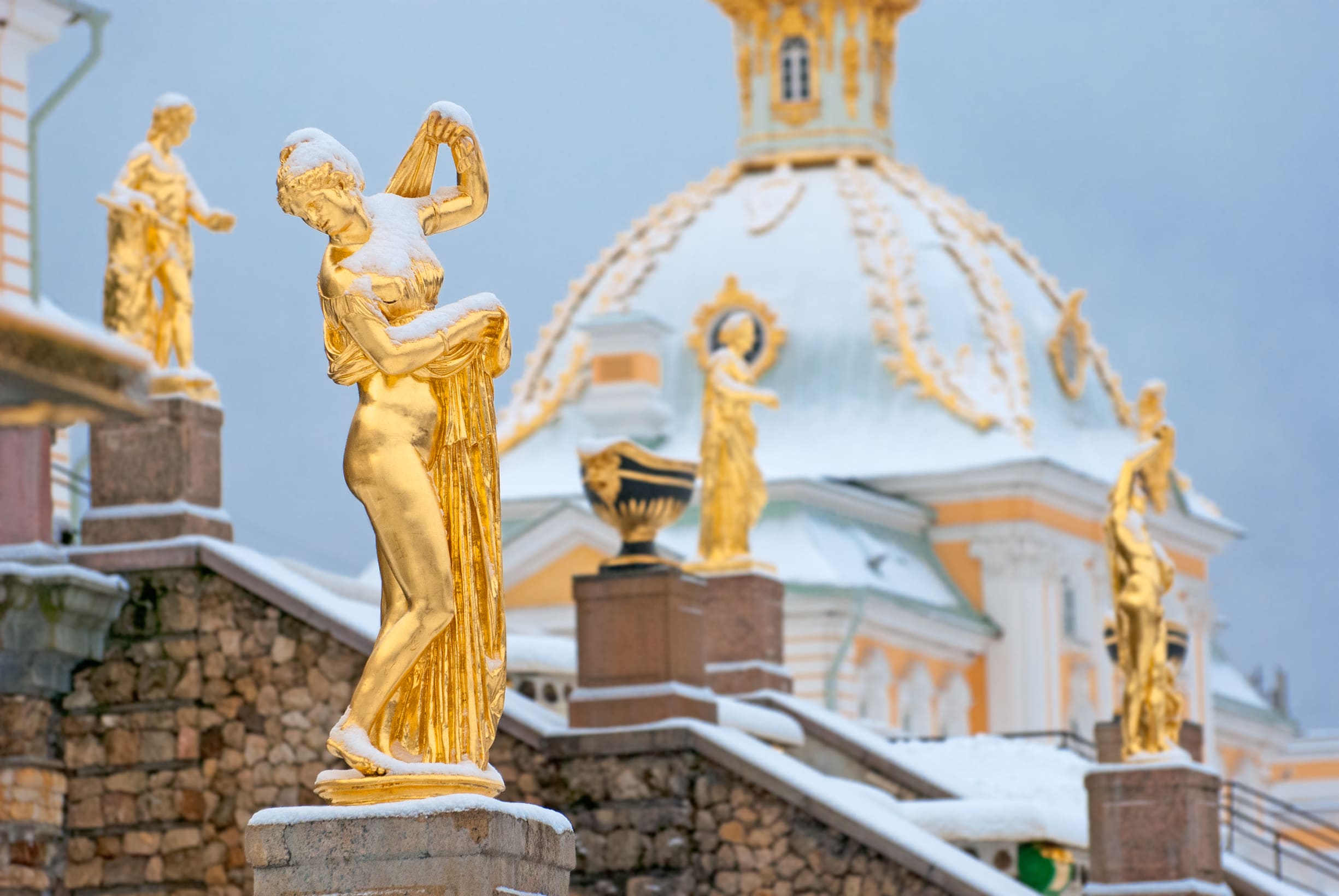
As you arrive, you see the Grand Palace, a long, elegant building painted yellow and white, standing at the top of a slope. In front of it, the Grand Cascade tumbles down a series of terraces towards the sea, one of the most spectacular fountain ensembles in the world. When the fountains are running, from late April to early October, dozens of fountains shoot jets of water into the air between gleaming golden statues of gods, heroes and animals, and the water pours over marble steps into a pool. At its centre stands the famous statue of Samson tearing open the jaws of a lion, from whose mouth a jet of water shoots about 20 metres high, a symbol of Russia's victory over Sweden. From the pool, a long canal, lined with more fountains, leads straight down through the trees to the sea.

Peterhof has more than 150 fountains, and remarkably, none of them uses pumps: the water flows naturally from reservoirs in the hills above, through pipes and channels designed in Peter the Great's time. Walking through the Lower Park, you'll find fountains of every kind, from the golden Adam and Eve fountains to the playful trick fountains, which suddenly spray unsuspecting visitors when they step on a hidden stone or sit on a particular bench. Children love them, and so do many adults. Along the shore, you'll see Monplaisir, the small, charming palace where Peter the Great actually preferred to live, with windows looking straight out over the sea.

Peterhof also has a moving story. During the Second World War, the German army occupied Peterhof and much of it was looted and destroyed, the statues stolen and the palace burned. After the war, restorers spent decades rebuilding the palace and fountains, using old photographs, drawings and fragments, and the fountains were running again within a few years. Today the restoration continues, and it's hard to believe that so much of what you see was rebuilt from ruins.

On winter departures, Peterhof has a different, quieter beauty. The fountains are switched off and the statues covered to protect them from the frost, but the snow-covered park, with its frozen canals, white avenues of trees and the palace glowing yellow against the snow, is magical and peaceful, and the views across the frozen Gulf of Finland are unforgettable.

In the afternoon, you return to St Petersburg for your last evening in Russia. Enjoy a farewell dinner, perhaps trying some Russian classics such as borscht, blini with sour cream, pelmeni dumplings or chicken Kiev, or find one of the city's Indian restaurants. Then take a last walk along the illuminated embankments.

In summer, there's also a wonderful way to reach Peterhof: by hydrofoil from the embankment in front of the Hermitage. These fast boats skim across the Gulf of Finland in about half an hour, giving you views back towards the city and arriving right at the pier at the foot of the Lower Park, just as Peter the Great's guests once arrived by sea. Ask us if you'd like to travel one way by hydrofoil; it's an optional extra, depending on the weather.

While you're in the park, look out for the small details that make Peterhof so special: the gilded statues that seem to glow in the sunlight, the carefully trimmed hedges and flower beds, the chessboard cascade with its dragons, and the pavilions where the Tsars and their guests took tea. On a sunny summer day, the park is full of families, couples and musicians, and the sound of the fountains is everywhere.

As you leave Peterhof, look back at the Grand Palace on its hill, with the fountains glittering in front of it and the sea beyond. It's one of the most beautiful views in Russia, and a perfect last image of the splendour of the Tsars.

Bring a light jacket, as the breeze off the sea can be cool even in summer.

Included today: excursion to Peterhof with an English-speaking guide, including a walk in the Lower Park, breakfast.

Good to know: the fountains run from late April to early October. On winter departures, you see the snow-covered park; the palace interiors are not included. Wear comfortable shoes, as the park is large.

Day 8
Departure from St Petersburg | Do svidaniya, Russia

Departure from St Petersburg | Do svidaniya, Russia

⌖ St Petersburg 🍽 Meals: Breakfast

Your Russian journey comes to an end today. After breakfast, you have some time to relax and pack before your private transfer to Pulkovo Airport for your flight home.

As you head to the airport, look back on everything you've seen in just one week. In Moscow, you stood in Red Square before the painted domes of St Basil's Cathedral, rode the Metro through its underground palaces, and walked among the golden-domed cathedrals of the Kremlin, where the Tsars were crowned and buried. You travelled on the Sapsan across the Russian countryside to St Petersburg, the elegant city that Peter the Great built on the marshes, and explored its canals, bridges and cathedrals. You stood among the tombs of the Romanovs in the Peter and Paul Fortress, walked through the golden halls of the Winter Palace among the treasures of the Hermitage, and saw the fountains of Peterhof sparkling beside the sea, or its park silent under the snow.

Russia is a country of extraordinary contrasts: medieval and modern, imperial and Soviet, grand and intimate. Its two great cities show you different sides of its character: Moscow, bold, powerful and endlessly energetic, and St Petersburg, graceful, artistic and romantic. Many travellers tell us that the trip changed the way they think about Russia, and that the warmth of the people they met surprised them most of all.

If you have time before your transfer, take a final stroll along Nevsky Prospekt or the Moika Embankment, buy some last souvenirs, such as a set of matryoshka dolls, a jar of Russian honey or a box of chocolates, or sit in a café with a cup of tea and watch the city go by. Remember that Russian souvenirs often make wonderful gifts: hand-painted lacquer boxes, Gzhel blue-and-white porcelain, and warm woollen Pavlovo Posad shawls with their bright floral patterns.

Then your private transfer takes you to Pulkovo Airport. As your plane climbs away from St Petersburg, look down for a last glimpse of the city, its rivers and canals shining, and the gold dome of St Isaac's catching the light. You'll fly home with memories of golden domes, grand palaces and two of the most beautiful cities in the world.

Thank you for travelling with Dreamland Vacations. Russia has so much more to offer: the Northern Lights and Arctic landscapes of Murmansk and Teriberka in winter, the Golden Ring of ancient towns around Moscow, Lake Baikal in Siberia, and the journey of a lifetime on the Trans-Siberian Railway. We'd be delighted to help you plan your next Russian adventure.

If your flight leaves in the afternoon or evening, there's time for one more experience in the city. You might visit the Church of the Saviour on Spilled Blood to see its extraordinary mosaics up close, climb the colonnade of St Isaac's Cathedral for a last panoramic view over the rooftops and the river, or wander through the Summer Garden, where marble statues stand among the trees. Your hotel can store your luggage until your transfer.

A few practical tips for the journey home: keep your passport and visa printout together and easy to reach, as you'll need them at check-in and passport control. Russian customs allow you to take home souvenirs freely, but keep receipts for anything valuable, such as amber jewellery or antiques, which may need special permission to export. And spend or change any remaining roubles before you leave, as they can be difficult to exchange in India.

Once you're home, take a little time to look through your photographs and share your favourite moments with family and friends. Many travellers say that it's only when they're back home that they realise how much they saw in just eight days: two great cities, a thousand years of history and some of the most beautiful palaces, cathedrals and works of art in the world.

Russia also has a special place for Indian travellers who enjoy returning to a country again and again. Many come back to see the Golden Ring towns, with their white-walled monasteries and wooden churches, to take a summer cruise along the Volga, or to travel north in winter to Murmansk to see the Northern Lights dancing over the snow. Whatever you choose, you'll find that the warmth of the Russian people, their love of music, literature and hospitality, and the beauty of their cities and countryside make every visit memorable.

As you settle into your seat for the flight home, you'll carry with you the colours of St Basil's domes, the gleam of the Kremlin's gold, the quiet of the Hermitage halls and the sparkle of Peterhof's fountains.

Included today: departure transfer from your St Petersburg hotel to the airport by private car or van, breakfast.

Good to know: hotel check-out is usually at noon. Allow at least three hours at the airport for an international flight, and keep your passport and visa printout together.

Hotel confirmation

Hotel names will be provided after booking, subject to availability and confirmation. We do not hold hotel confirmations before booking.

Inclusions

Hotels

  1. 7 nights in 4★ hotels: 3 nights in Moscow (Holiday Inn Tagansky or similar) and 4 nights in St Petersburg (Novotel St Petersburg Centre or similar), on double/twin sharing

Meals

  1. Daily breakfast (7 breakfasts)

Transport

  1. Arrival transfer, Moscow airport to hotel
  2. Transfer from your Moscow hotel to the railway station
  3. Sapsan high-speed train, Moscow to St Petersburg, in economy class
  4. Transfer from St Petersburg station to hotel
  5. Departure transfer, St Petersburg hotel to airport
  6. Transfers are by private car or van

Guide

  1. English-speaking guide throughout the tour, including meet-and-greet on arrival in Moscow and on the platform in St Petersburg

Sightseeing and entrances, as per the itinerary

  1. Moscow city tour: Red Square, St Basil’s Cathedral (outside view), GUM, the Bolshoi Theatre (outside), Lubyanka, Kitay-Gorod and the Cathedral of Christ the Saviour
  2. Moscow Metro tour
  3. The Kremlin, with entry to the Assumption Cathedral, the Archangel Cathedral and the Ivan the Great Bell Tower area
  4. St Petersburg city tour: Nevsky Prospekt, Vasilievsky Island, St Nicholas Naval Cathedral (entry), St Isaac’s Square and Cathedral (outside), and the cruiser Aurora (outside)
  5. Peter and Paul Fortress
  6. The Hermitage Museum and Winter Palace
  7. Peterhof, park only (the palace interior isn’t included; the fountains are off in winter)

Added by Dreamland

  1. Help with the Russian e-visa application (the visa fee isn’t included)


Exclusions

Not included: international flights (an optional add-on from you), the visa fee, travel insurance, lunches, dinners and drinks, tips, optional excursions and shows, and GST/TCS.

Infants travel with no land cost, but an infant still needs their own visa and air ticket, which are not part of the land package.

Important Terms

  1. Guaranteed departures every Friday; other days are possible on request.
  2. This is a private tour for your group; the price per person depends on the number of travellers.
  3. Hotels are as listed or similar 4-star hotels. Rates aren’t available on some dates during major trade fairs and events in Moscow and St Petersburg.
  4. Transfers are by private car or van; your guide joins you for sightseeing.
  5. Indian-issued Visa and Mastercard cards don’t work in Russia, so carry enough cash in US dollars or euros.


Tour once booked cannot be cancelled. The tour is non refundable.

Moscow to St Petersburg by Sapsan train

On Day 4 you travel between the cities on the Sapsan, Russia's high-speed train, which covers the 650 km from Moscow to St Petersburg in about four hours. Economy class tickets are included, with reserved seats, large windows and space for luggage. It is faster door to door than flying, and your guide meets you on the platform in St Petersburg.

Peterhof and the seasons

Peterhof's famous fountains and the Grand Cascade run from late April or May to early October, so summer departures see the park at its best. From late May to mid-July, St Petersburg also has the White Nights, when it never gets fully dark and the Neva bridges open at night.

From November to March both cities are cold and often snowy, typically between about −10°C and 0°C. Red Square and the Kremlin look magical under snow, and the Hermitage, the Metro and the cathedrals are warm indoors. On winter departures you walk through Peterhof's snow-covered park, or we can swap the day for the Catherine Palace and its Amber Room.

Want to see the Northern Lights too? Our Russia Winter Grand Tour adds Murmansk to Moscow and St Petersburg.

Moscow and St Petersburg trip cost from India

Because this is a private tour, the price per person depends mainly on how many of you travel: it is lowest for groups of seven or more. The season (summer and New Year are busiest), your hotel category and whether you add flights also change the price. Send us your dates and number of travellers for an exact quote.

Add more to your trip

Your tour leaves free time in both cities. Popular extras we can book for you:

  • Moscow: the Bolshoi Theatre, the Moscow Circus, Moscow by Night, the Tretyakov Gallery, and a day trip to Sergiev Posad.
  • St Petersburg: a classical ballet performance, the Catherine Palace and Amber Room in Pushkin, the Fabergé Museum, St Petersburg by Night, and a Russian folk show.

Moscow & St Petersburg Tour – 7 Nights / 8 Days FAQs

When does this Moscow St Petersburg tour depart?
Guaranteed departures run every Friday, with a flight from Delhi arriving in Moscow the same day. Other days are possible on request. We run this tour all year.
How do we travel from Moscow to St Petersburg?
By the Sapsan high-speed train, which takes about four hours. Economy class tickets are included, and your guide meets you on arrival.
Is this a group tour or a private tour?
It is a private tour for your family or group, with your own English-speaking guide for sightseeing. The price per person is lower for larger groups.
How much does a Moscow and St Petersburg trip cost from India?
It depends on the number of travellers, season, hotel category and flights. Send us an enquiry with your dates and we will share an exact price.
Are flights included?
The package covers your stay in Russia. We can add return flights from Delhi, Mumbai or your city, flying into Moscow and home from St Petersburg.
Do Indians need a visa for Russia?
Yes. Indian passport holders can apply online for a Russian e-visa, which allows a stay of up to 30 days and costs about USD 50. It is usually issued within four working days, and our team helps you with the application.
Will I see the Peterhof fountains?
On departures from late April or May to early October, when the fountains run. In winter you visit the snow-covered park instead, or you can ask us to swap the day for the Catherine Palace.
Is Indian food available?
Breakfast is included at the hotels. Moscow and St Petersburg both have Indian restaurants with vegetarian options, and your guide can suggest places near your hotel.
Can I pay with my Indian debit or credit card in Russia?
Usually not. Visa and Mastercard cards issued outside Russia do not work there, so carry US dollars or euros to exchange for roubles.
Gallery

Russia photos: Moscow & St Petersburg Tour – 7 Nights / 8 Days

Plan your Russia holiday with Dreamland Vacations

Share your dates, travellers and comfort preference. Our team will guide you with the next best step.

Book now – pay 30%
Continue to booking
Itinerary Book now – pay 30%
WhatsApp