Singapore Travel Tips for Indians: SIM Card, MRT, Currency, Rules and More
Want to customize this package?
Share your dates and travellers. This enquiry is free. Small changes to a standard itinerary—such as a date change or an extra day—can be discussed with our team.
Singapore is one of the easiest countries in the world to visit: English is spoken everywhere, it is spotlessly clean and very safe, and public transport is excellent. A little preparation still goes a long way, especially on your first trip. These Singapore travel tips for Indians cover the practical things our guests ask about most, from SIM cards and the MRT to money, local rules and the best areas to stay.
Before you fly
- Visa: apply through an authorised agent 2 to 3 weeks before travel. See our Singapore visa guide.
- SG Arrival Card: submit it free online within 3 days before arrival. See our SG Arrival Card guide.
- Passport: valid for at least six months from your arrival date.
- Travel insurance: strongly recommended, as medical care in Singapore is excellent but expensive. Choose a policy that covers medical expenses, trip delays and lost baggage.
- Forex: carry some Singapore dollars and a card that works abroad with low foreign-transaction fees.
SIM cards, eSIMs and Wi-Fi
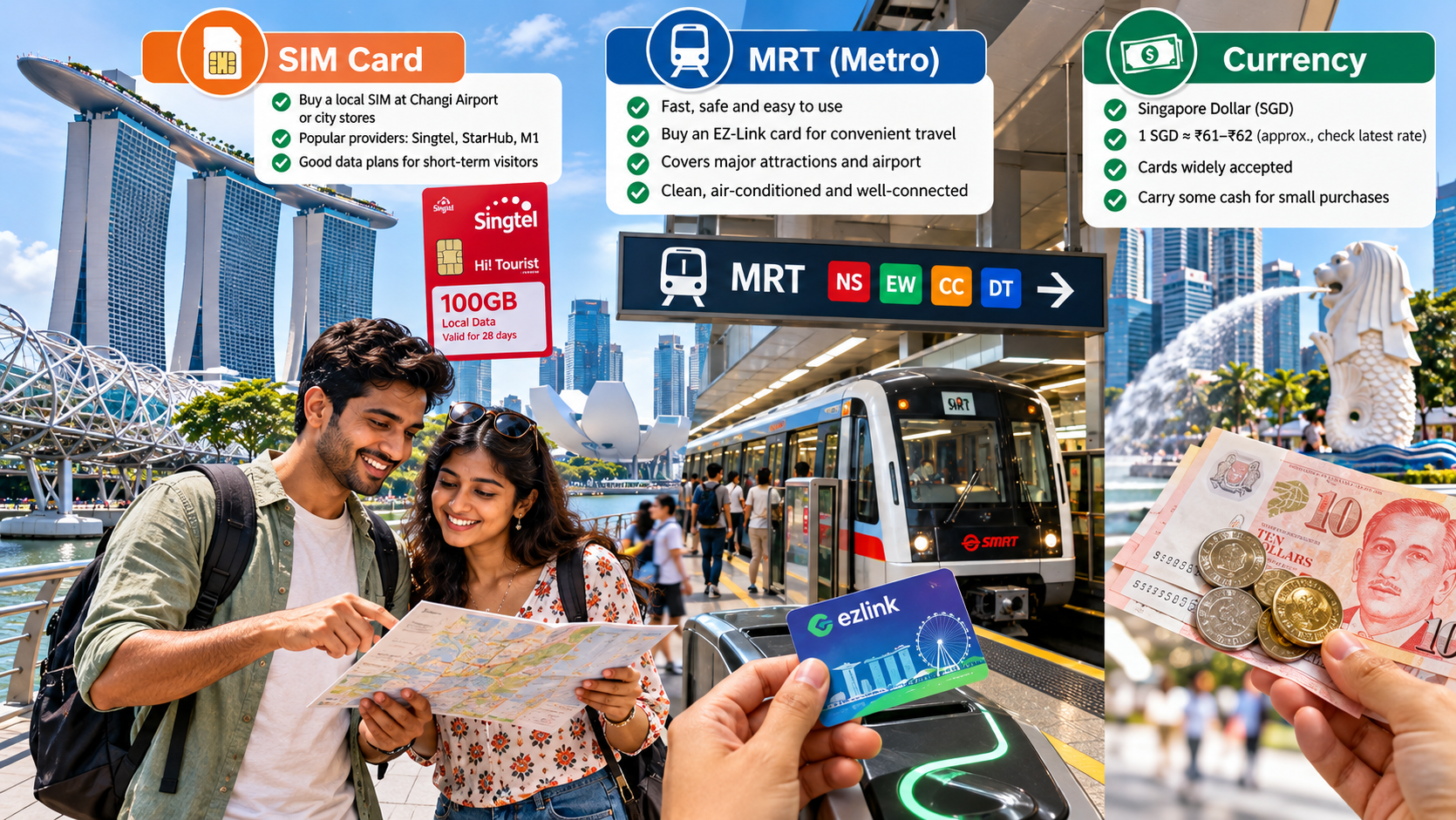
You have three options. International roaming from your Indian operator is simplest but often the most expensive. A local tourist SIM from Singtel, StarHub or M1, sold at Changi Airport and convenience stores, gives generous data for a few days at a low price; you need your passport to buy one. An eSIM, bought online before you travel, works on most recent phones and is ready the moment you land. Free Wi-Fi is available at Changi, in malls and in most hotels.
Getting around: MRT, buses, taxis and Grab
The MRT (metro) is fast, air-conditioned and reaches almost every sight. Fares are distance-based and usually under SGD 2.50 per ride. You can tap a contactless Visa or Mastercard card at the gates (your bank may charge a foreign-transaction fee), use an EZ-Link card, or buy a Singapore Tourist Pass for unlimited rides: SGD 17 for 1 day, SGD 24 for 2 days or SGD 29 for 3 days, plus a refundable SGD 10 card deposit, from TransitLink offices at Changi and major stations.
Buses use the same cards. Taxis are metered and reliable, and the Grab app works like Uber or Ola; it is often the easiest option for families with luggage. On our packages, airport and sightseeing transfers are included, so you only need public transport for your own evening outings.
Currency, cards and money
The currency is the Singapore dollar (SGD). In recent years, one Singapore dollar has cost roughly ₹65 to ₹70; check the day's rate before you exchange. Cards are accepted almost everywhere, including taxis, and contactless payment is common. Carry some cash for hawker centres, small shops and temples. Money changers in Little India and at Mustafa Centre often offer better rates than the airport. Tourists can claim back GST on eligible purchases above the minimum spend at Changi Airport through the electronic tourist refund scheme.
Local rules and fines
Singapore is famous for its rules, and fines are real. Follow these and you will have no trouble:
- Do not litter, including cigarette butts and chewing gum.
- Smoke only in marked smoking areas. E-cigarettes and vapes are banned completely.
- Do not eat or drink on the MRT or in stations.
- Importing chewing gum is restricted (except for medical use), so leave it at home.
- Jaywalking can be fined; use pedestrian crossings.
- Drug offences carry extremely severe penalties.
Areas to stay
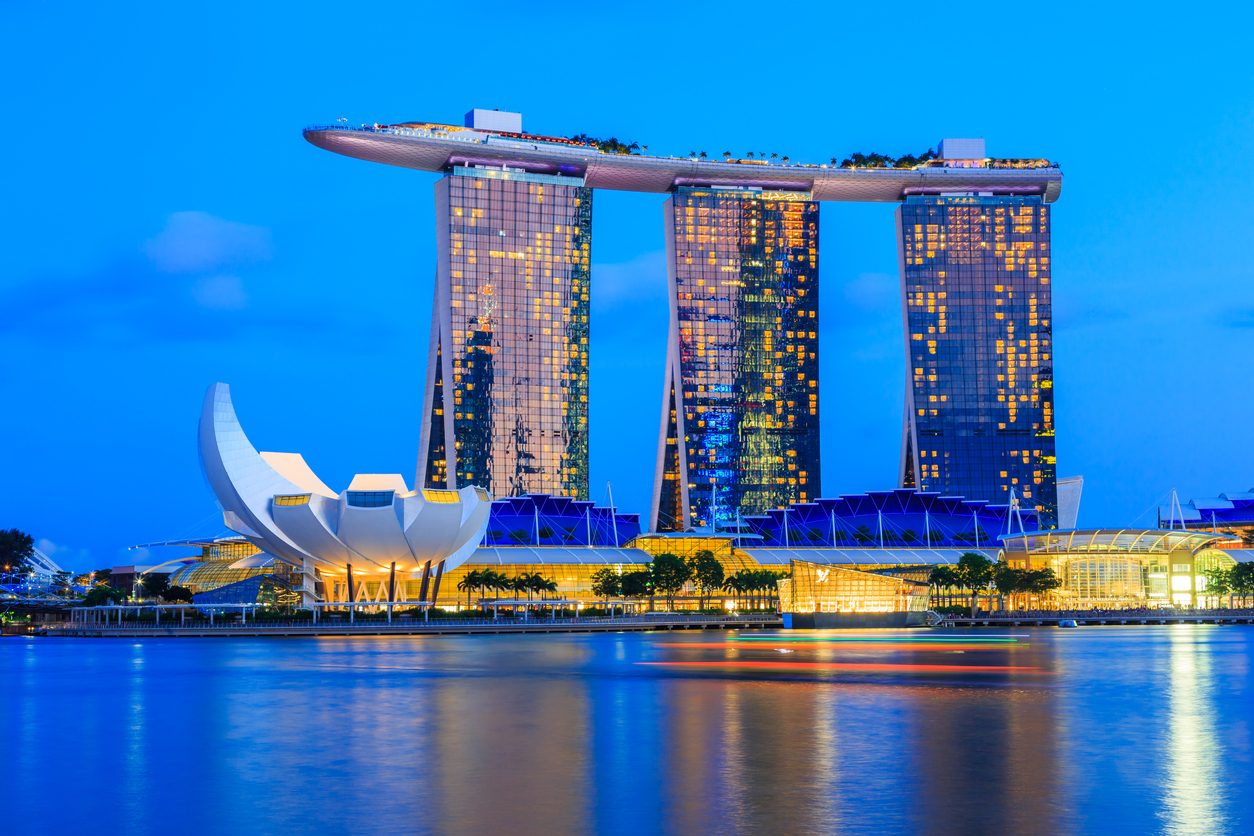
- Marina Bay: skyline views, premium hotels and walking distance to Gardens by the Bay.
- Orchard Road: central, great for shopping and MRT connections.
- Clarke Quay and the riverside: lively evenings, restaurants and river cruises.
- Little India: Indian food, Mustafa Centre and good-value hotels.
- Chinatown: heritage streets, hawker food and mid-range hotels.
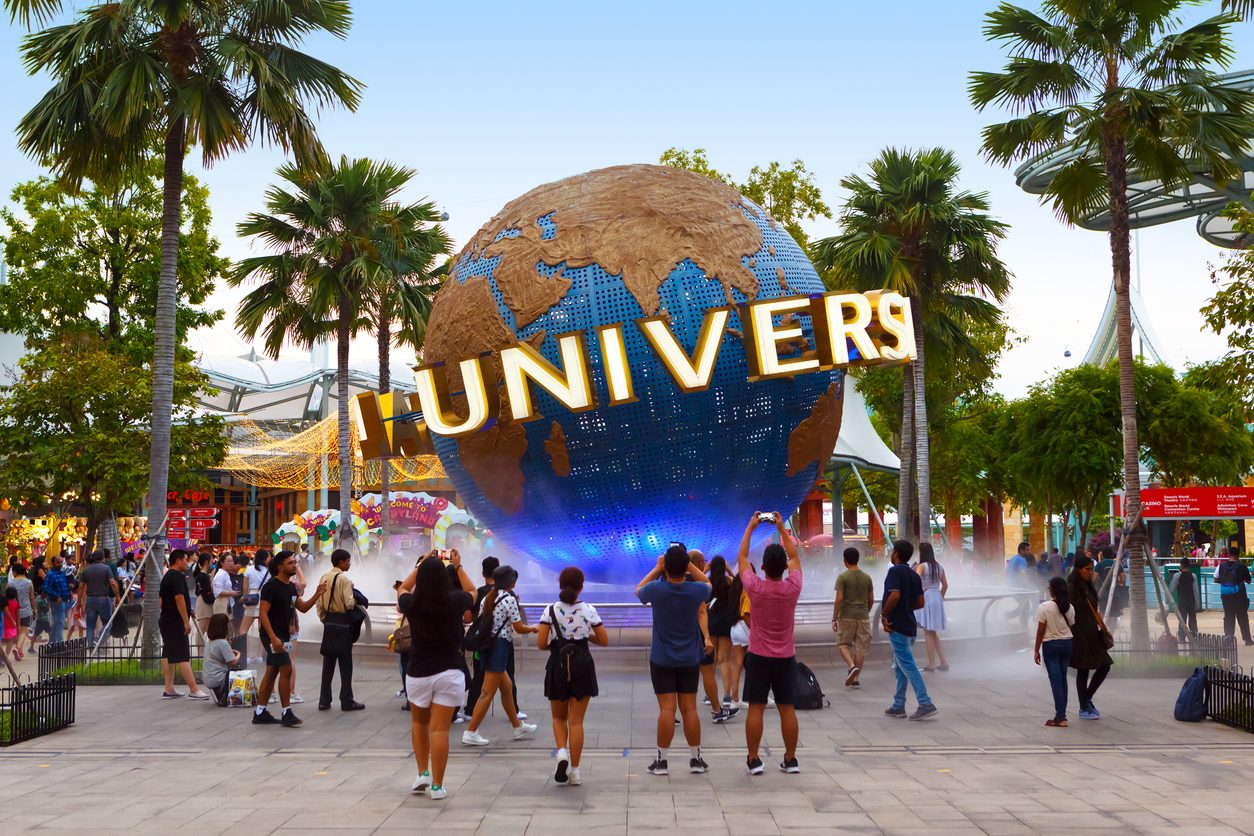
- Sentosa: resorts for families and beach lovers, close to Universal Studios.
Neighbourhoods worth exploring
Little India is a home from home: temples, flower-garland stalls, sari shops and some of the best South and North Indian food in Southeast Asia. Chinatown has the Buddha Tooth Relic Temple, Sri Mariamman Temple and Maxwell Food Centre. Kampong Glam has the Sultan Mosque and the colourful street art of Haji Lane. Clarke Quay is best at night, and Orchard Road is lined with malls. All are easy to reach by MRT.
Changi Airport and Jewel
Changi is regularly voted the world's best airport. Jewel, connected to Terminal 1, has the Rain Vortex, a 40-metre indoor waterfall, a forest valley, Canopy Park and hundreds of shops and restaurants. Arrive early on your departure day to enjoy it; the Rain Vortex is free to see, and has light shows in the evening.
Health and safety
Singapore is one of the safest cities in the world, even late at night, but take normal care of your belongings in crowded places. Pharmacies such as Guardian and Watsons are everywhere for minor needs. Carry prescription medicines in their original packaging with a copy of the prescription, especially for controlled medicines, which may need approval to bring in. Drink plenty of water; the heat and humidity can be tiring, especially for children and older travellers.
Shopping tips
Orchard Road is best for malls and brands, Mustafa Centre for electronics, gold and perfumes, and Bugis Street and Chinatown for souvenirs. Prices are fixed in malls; small bargaining is possible at some markets. Keep receipts and your passport if you plan to claim a GST refund at the airport, and check India's duty-free allowance for goods you bring home.
Etiquette
Singaporeans value politeness and order. Queue patiently, give up priority seats on the MRT to those who need them, keep your voice down on public transport, and remove your shoes before entering temples and homes. Pointing with a finger can seem rude; gesturing with an open hand is more polite.
Other practical tips
- Plugs: three-pin UK-style sockets (Type G), 230 V. Bring an adapter.
- Tipping: not expected; restaurants usually add a service charge.
- Water: tap water is safe to drink.
- Dress: light clothes, with shoulders and knees covered in temples and mosques.
- Time difference: Singapore is 2.5 hours ahead of India.
- Emergency numbers: 999 for police, 995 for ambulance and fire.
Singapore packages
Frequently asked questions
Which SIM card is best for Indian tourists in Singapore?
A local tourist SIM from Singtel, StarHub or M1, or an eSIM bought before you travel, is usually cheaper than roaming.
Is the Singapore Tourist Pass worth it?
If you plan several MRT and bus rides a day, yes. Otherwise, tapping a contactless card is simpler.
Can I use my Indian debit or credit card in Singapore?
Yes, Visa and Mastercard are widely accepted; check that your card is enabled for international use and ask your bank about fees.
Is tap water safe to drink in Singapore?
Yes, Singapore's tap water is safe to drink.
What plug type does Singapore use?
Type G, the three-pin UK-style plug, at 230 volts.
Is travel insurance compulsory for Singapore?
It is not compulsory, but strongly recommended because medical care is expensive.
What is the time difference between India and Singapore?
Singapore is 2 hours 30 minutes ahead of India.
Plan your Singapore trip
Travel stress-free: our Singapore packages include airport transfers, sightseeing and visa assistance.
Get a free quote